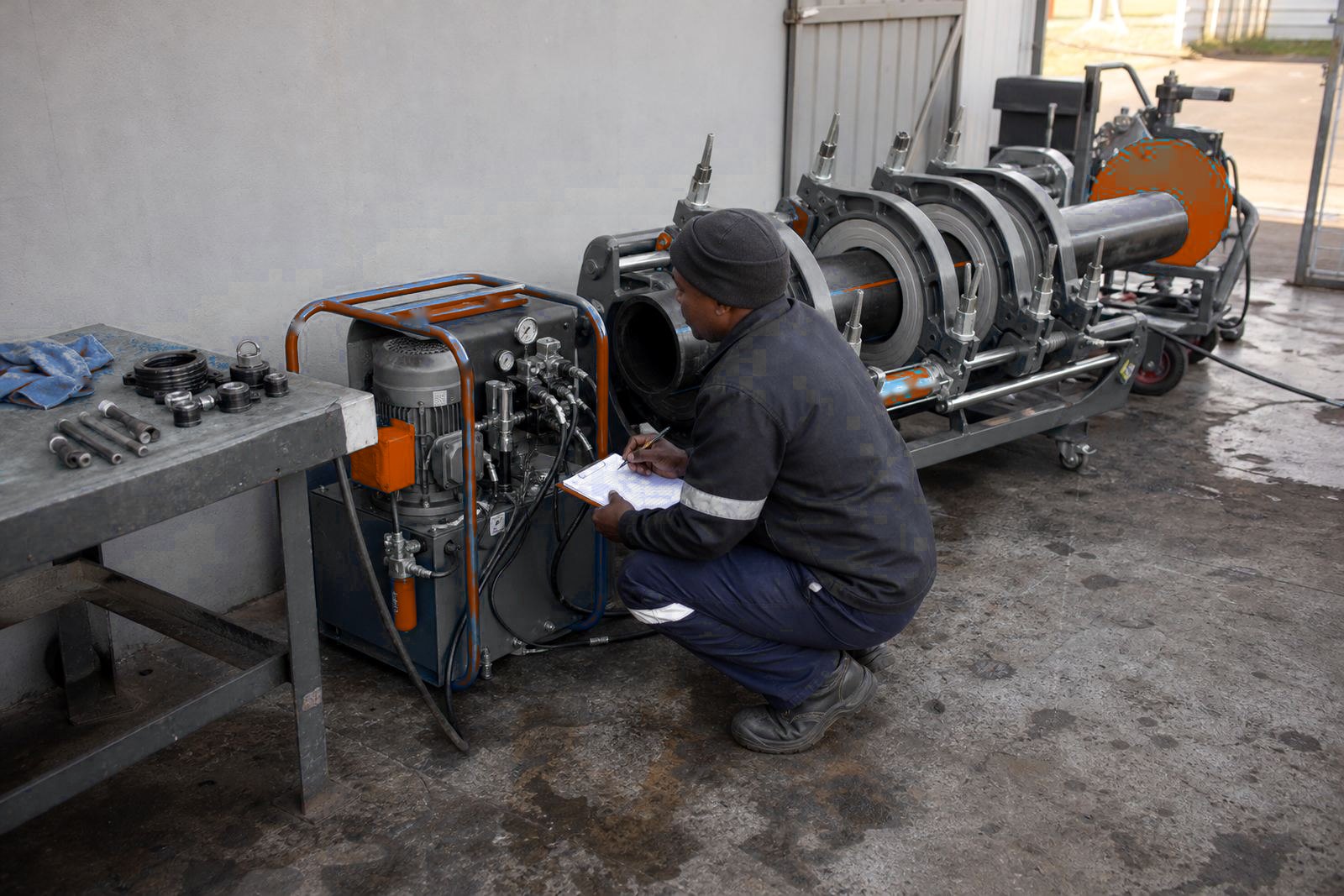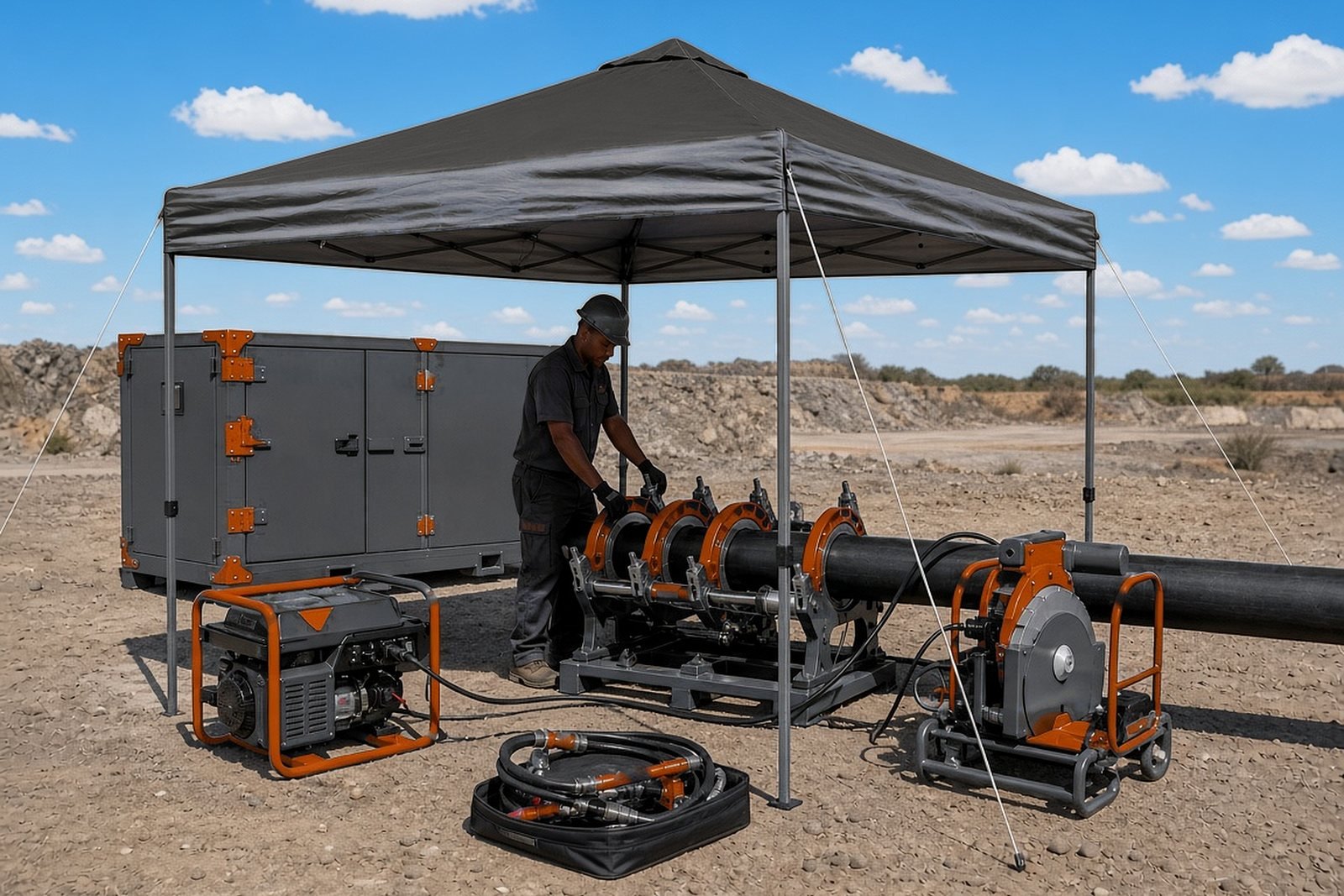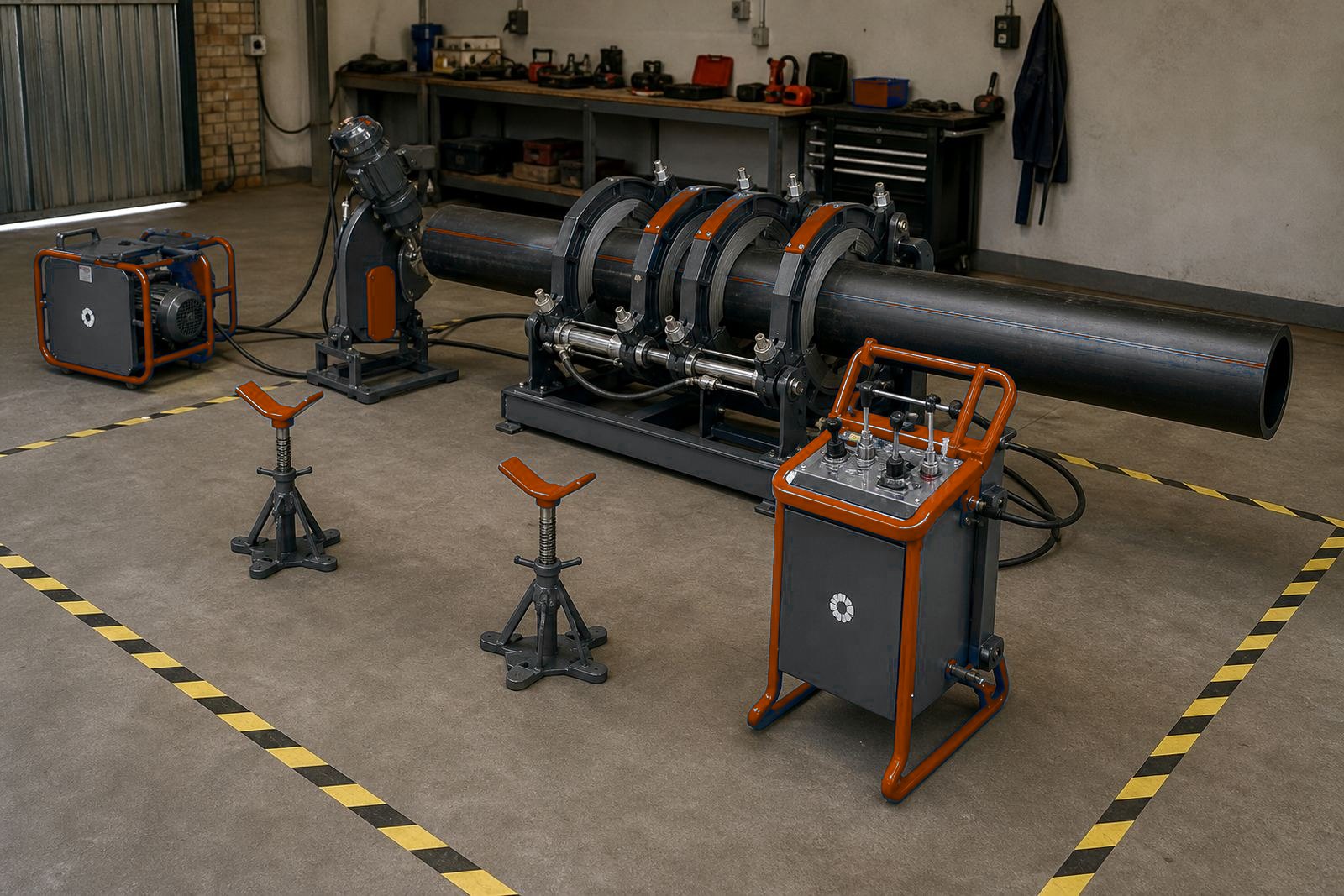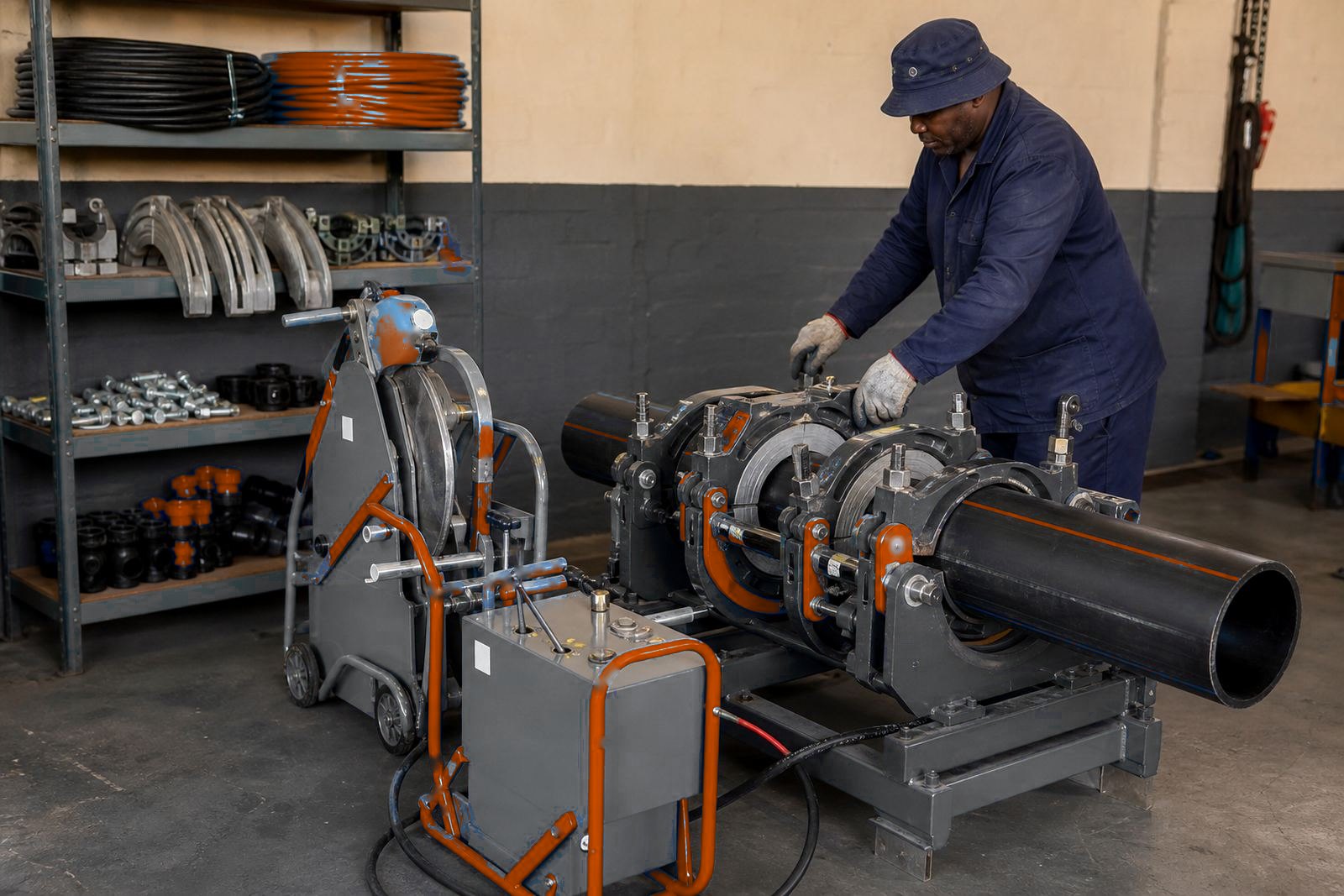
The parts that earn shelf space first
Stock the items touched every shift first. Facing blades, heater plate covers, clamp pads, hydraulic seals, and gauge fittings can all wear long before the main frame does. Dust, heat and wet ground wear small parts faster.
Hold spares for pipe preparation and joint control first. A short spares list covers most jobs: facer blades, heater plate coating, clamp pads and seals. When a seal hardens or a clamp pad slips, the weld can drift out of line, the bead changes shape, and the joint needs more attention before cooling.
- Facer blades and blade fasteners
- Heater plate covers and temperature parts
- Clamp pads, inserts and locating pins
- Hydraulic seals, hoses and fittings
- Pressure gauge and logging accessories
How the weld process points to the spares you need
Butt-fusion means facing the pipe square, cleaning the ends, heating them evenly, and changing over without dragging the molten surface. Each of those steps needs parts that stay true under repeated use.
For smaller pipe sizes, clamp inserts and alignment pieces do much of the work. For heavier wall thickness and larger SDR ranges, the hydraulic system, heater plate surface, and facer drive take more strain. If any of these drift, the fusion bead can become uneven, too thin, or heavily rolled on one side. Keep a spare set in the truck for wear items, so one worn part does not stop a sound machine.
Keep in mind that a site with frequent starts and stops is harder on equipment than a long steady run. Spares see the most use on repair days, when the machine is packed, moved, levelled and checked more than once in a shift.
A practical holding list for a fusion bay
A good spares shelf holds the parts that stop a job when they fail. Keep one set for daily wear, one for measurement and control, and one for the items that get damaged during transport or site setup. Crews often keep the shelf tied to pipe size ranges used most often, so the right insert or clamp part is easy to pull.
- One set of facer blades or cutting edges
- Extra heater plate covers and surface protection parts
- Clamp inserts matched to the pipe sizes used most
- Hydraulic seals, O-rings and hose ends
- Pressure gauge, fittings and logging paper or memory accessories
- Spare handle grips, locking pins and fasteners
Check the shelf against the machine load list before the order is packed. Crews running 110 mm, 160 mm and 225 mm pipe most weeks hold spares for those sizes. The machine stays ready for the next fusion without breaking the sequence to hunt for one small part.
Signs a spare is due before it fails on site
Some parts show wear early. A ragged facer cut, plate hot spots or clamps that need hand correction are warnings. Do not wait for a leak, a slipping insert or a poor bead before treating the part as worn.
When a crew sees the same fault more than once, keep that spare in stock. A tired seal can show as pressure loss, a sticky ram, or slow movement during changeover. A worn clamp or bent guide can show up as a pipe that looks straight at first but shifts when the pressure comes on. Those are the jobs where a spare part protects both time and weld quality.
There is also storage to think about. In hot or coastal areas, rubber parts age faster if left in sunlight, while plates and steel edges rust if they are packed away wet. Clean, dry and label the shelf so the right part does not get confused with scrap.
Field checks before the truck leaves
Keep spares clean, labelled and ready to fit. Before a truck leaves, check that the item matches the machine, the pipe size range, and the job type. Keep a small record for each set so the team can see what was used, what was swapped, and what still needs inspection.
- Match clamp inserts to the job pipe diameter
- Confirm heater plate condition and surface cleanliness
- Check facing parts for edge wear and secure fixing
- Look over hydraulic seals and hose ends for seepage
- Test gauge movement and verify logging accessories
Run this check before any remote job. On a remote site, a missing insert or damaged fitting can turn into a long delay. Pack the spares case neatly so each part is easy to find on site.
Training the crew to use the shelf well
Spare parts work best when the operator understands why each one is there. Training should cover the signs of wear, the normal sequence of a butt-fusion cycle, and the parts that must not be forced into service once they have drifted out of tolerance. Crews should know which parts they can swap on site and which need servicing.
Weld logging helps too in that case. If the team records the heater setting, pipe size, SDR, cooling time and any part change during the shift, it becomes easier to link a faulty joint to the machine condition. Over time, the record shows which spares move quickly, which ones sit too long, and which items deserve a second set on the shelf.
Share the spares list with the whole crew. Keep the holding list with the machine so the crew can see what is in stock.