The job each machine is meant to handle
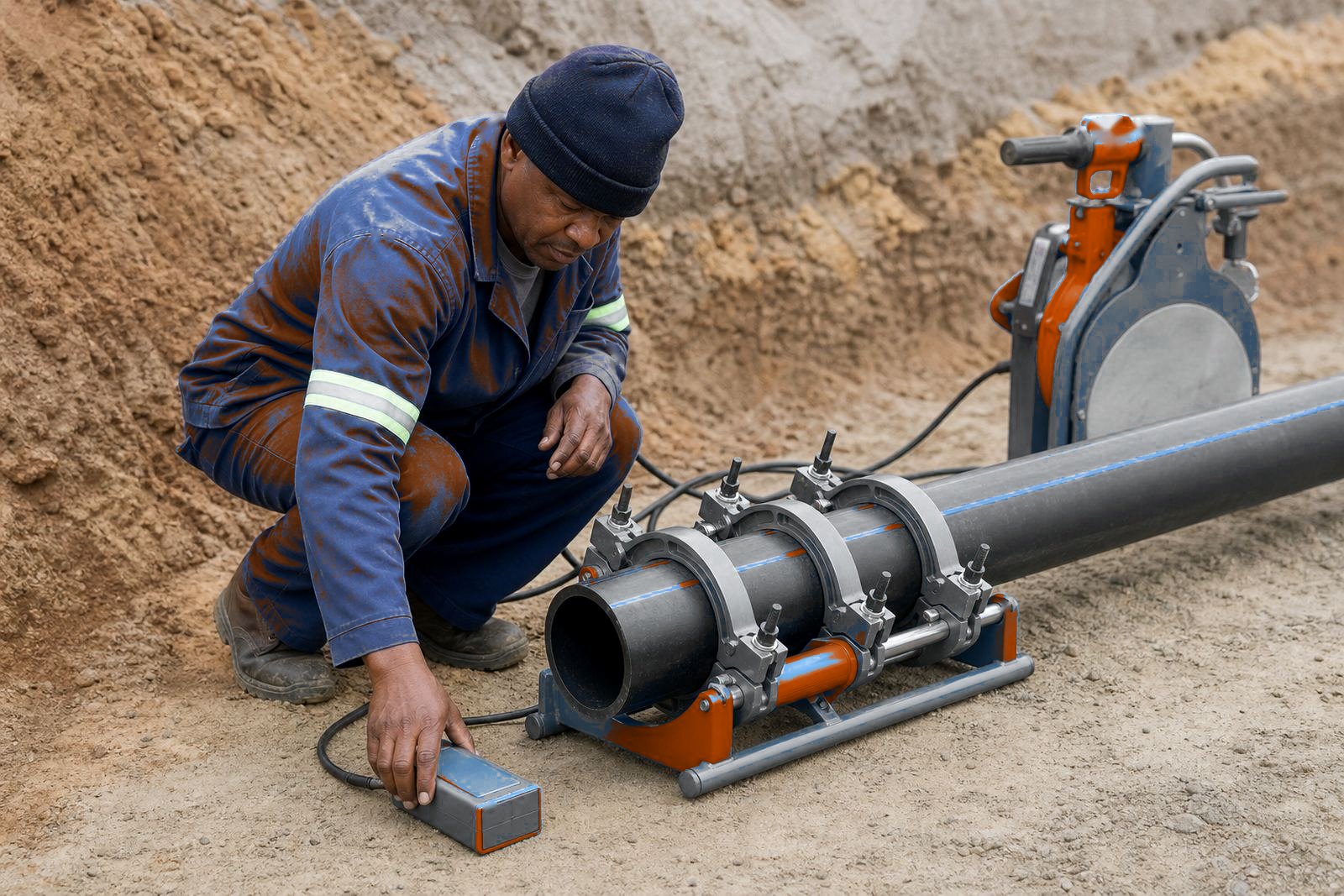
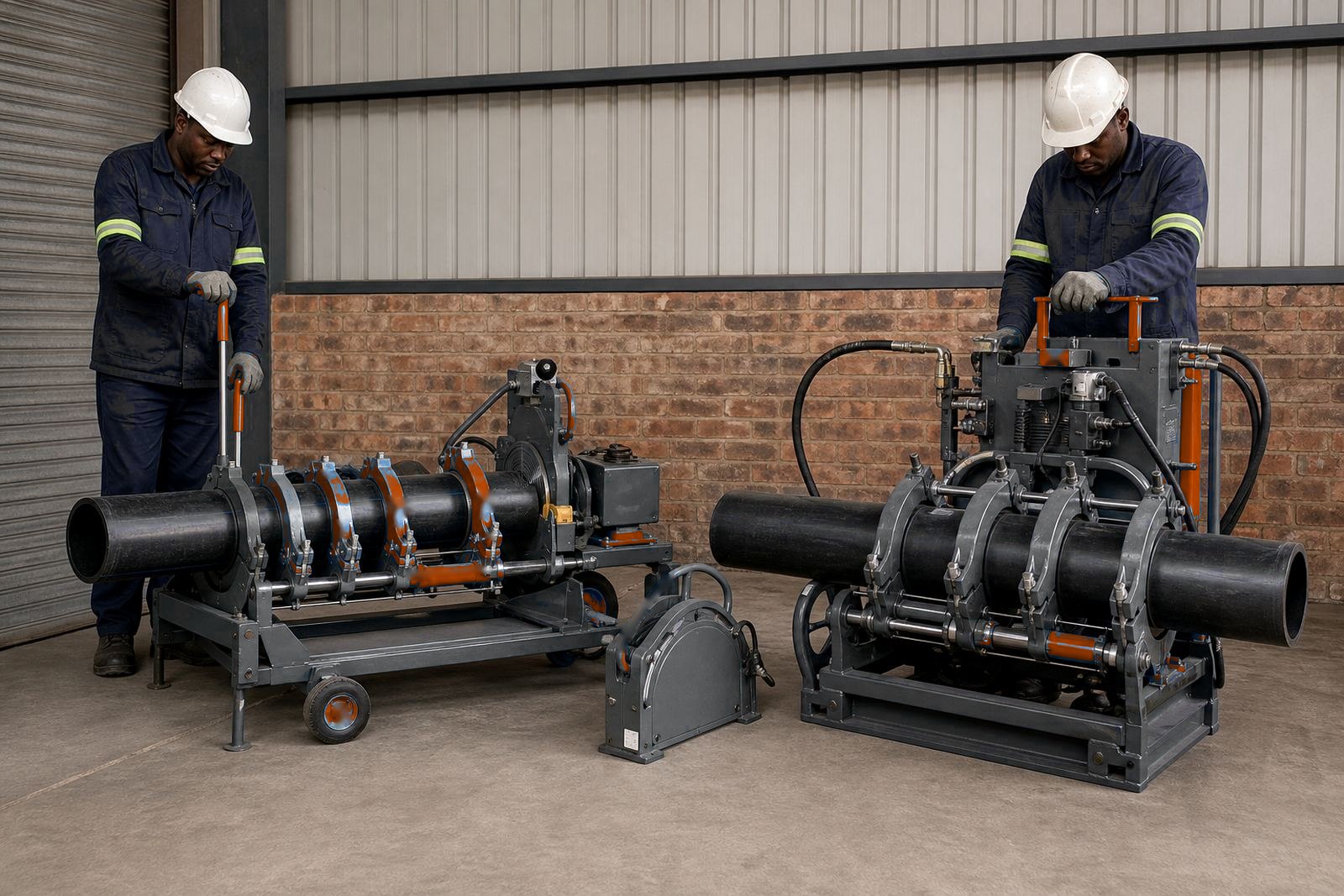
A manual butt-fusion machine keeps the process hands-on. The operator brings the pipe ends together, watches the bead, and works the pressure through the pull on the handles or the pump set-up fitted to the machine. That suits shorter runs, lighter pipe sizes and crews that want a simpler frame on the truck.
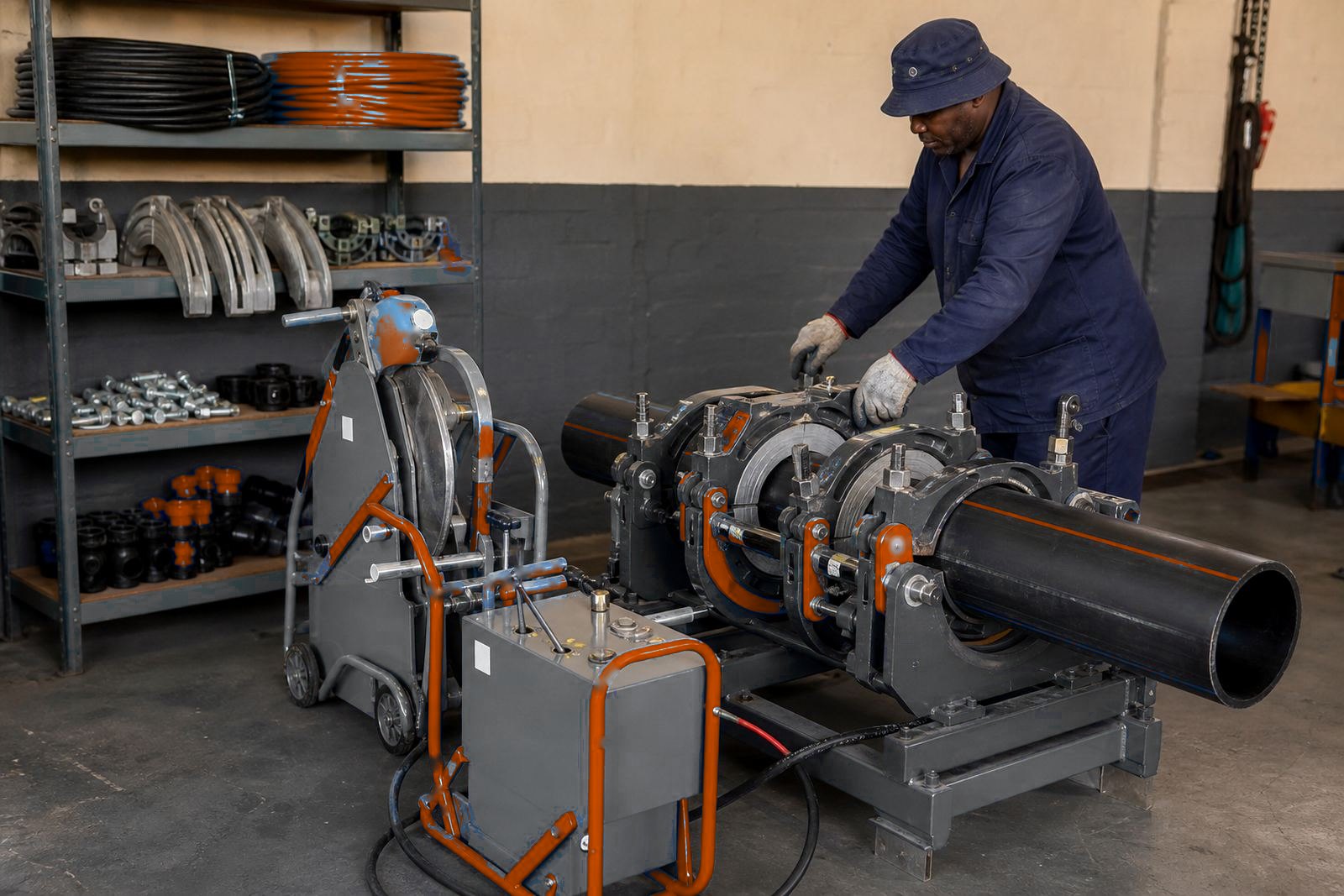
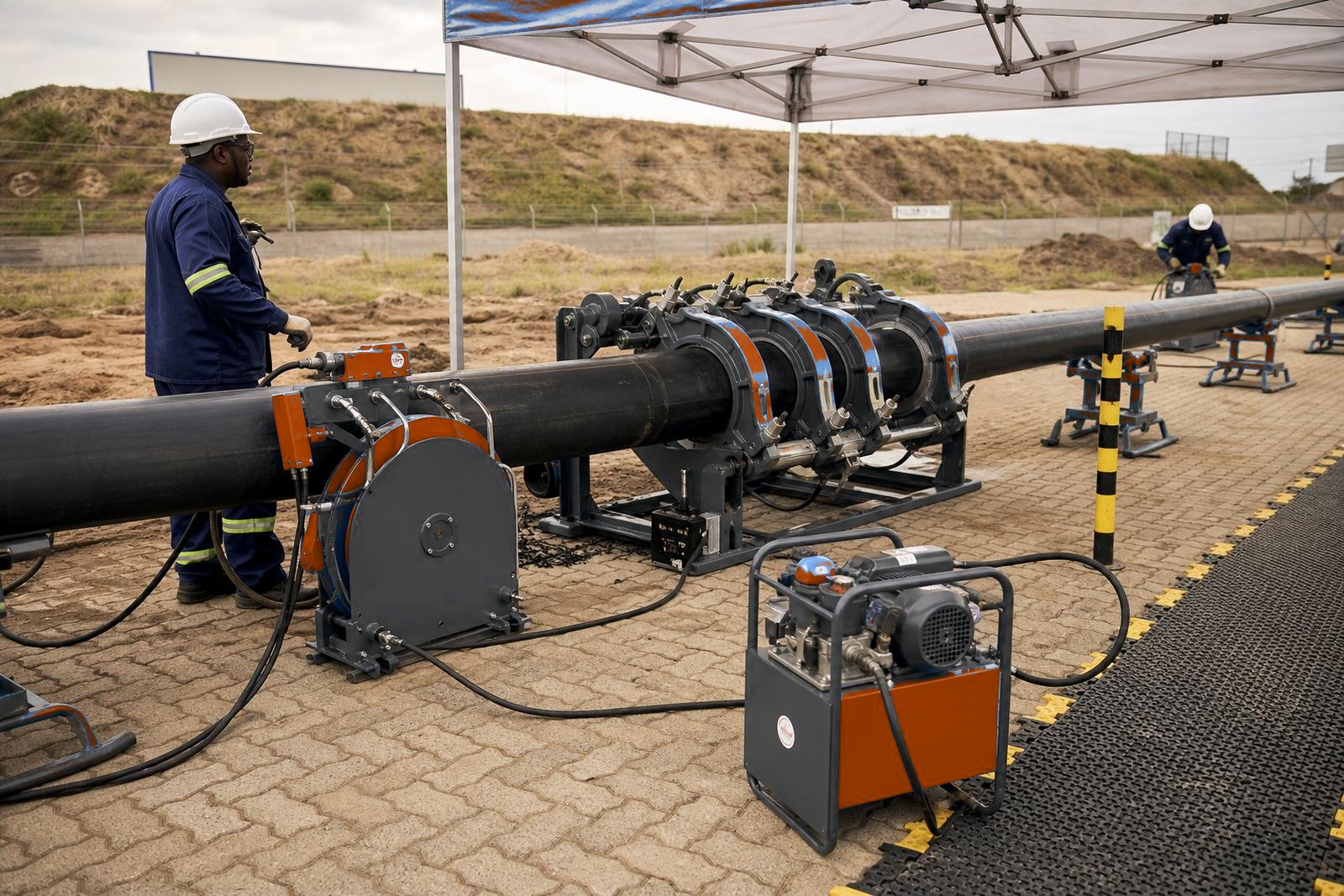
A hydraulic unit controls clamp force and fusion pressure through cylinders and a pump pack. It helps on larger diameters, thicker wall pipe and long repair shifts where the joint needs repeatable pressure, steady changeover and better logging of each weld. Pipe runs over long distances often need that extra control.
How the weld sequence changes between the two
Manual and hydraulic machines run the same weld cycle; only the pressure source differs. The pipe is clamped, faced until the ends are clean and square, then the heater plate is brought in for the heat soak. After the set bead has formed, the plate is removed, the ends are changed over without dragging or knocking, and fusion pressure is applied before the cooling time starts.
- Face until both ends show fresh, even material.
- Check heater plate temperature before the heat soak.
- Remove the plate cleanly and keep the ends protected.
- Apply fusion pressure fast enough to keep the bead even.
Manual machines depend more on operator steadiness during changeover. Hydraulic sets reduce that hand pressure step, which helps when the pipe is heavy, the site is windy, or the crew is working against a trench edge.
Pipe size, SDR and where each setup fits best
Diameter and SDR fix most manual or hydraulic weld settings. A small manual machine can suit lighter work and shorter lengths where the pipe is easy to move. Once the pipe gets larger, the wall section thicker or the welding position more awkward, hydraulic control makes the fusion cycle easier to repeat.
Hydraulic frames suit larger pipe and welds with strict quality checks. The same is true where the job needs data logging, bead notes, or a record of what pressure and cooling time were used on each joint.
- Manual units suit lighter, lower volume work.
- Hydraulic units suit larger pipe and repeat welds.
- Heavy site handling favours stable clamp control.
What to inspect before a shift starts
Out-of-line clamps, a blunt facer or an uneven plate cause trouble on manual and hydraulic frames alike. Before any welds start, check the slide bars, clean the jaws, inspect the hydraulic hoses if fitted, and make sure the heater plate faces are not scored or covered in old polymer. Hydraulic pressure testing is needed when the pump or cylinders have been sitting in the yard.
For manual sets, watch for worn handles, loose guide pins and clamp faces that no longer grip evenly. Check the frame and slides for bends or rough travel during inspection.
- Check pipe clamp alignment and jaw grip.
- Confirm facer blades are sharp and seated properly.
- Inspect heater plate faces for damage or dirt.
- Look for oil leaks, loose fittings and hose wear.
- Test the travel of the moving carriage before work starts.
Reading the bead and logging the weld
Even bead roll, consistent width and no cold joint marks are worth looking for before the line is handed over. A poor changeover can leave a flat spot. Low pressure can leave a weak joint. Too much pressure can push melt out hard and distort the pipe ends.
On hydraulic machines, weld logging is easier because pressure, timing and cycle notes can be recorded as the job moves along. A logged joint is easier to trace where the pipe may be buried, exposed to vibration or checked later by another crew. Manual units can still be logged well, but the notes rely more on the operator keeping careful records.
- Look for signs of contamination or cold fusion.
- Keep the log with the job pack for later reference.
Choosing the better fit for your crew
If your team handles smaller pipe, moves often between short jobs and prefers a lighter machine, manual can make practical sense. Hydraulic suits work with bigger diameters, stricter weld records or repeated joints across long days on site. Base the choice on pipe size, site access and the level of control the operator needs.
- Manual for lighter, more mobile work.
- Hydraulic for larger pipe and steadier pressure control.
- Training helps the crew use either setup properly.