
Start With the Machine Number and What It Must Carry
Before you put money into a used fusion machine, match the frame size to the pipe range you plan to run. A unit that suits smaller municipal lines may not carry the pipe mass or clamp grip needed for heavier work.
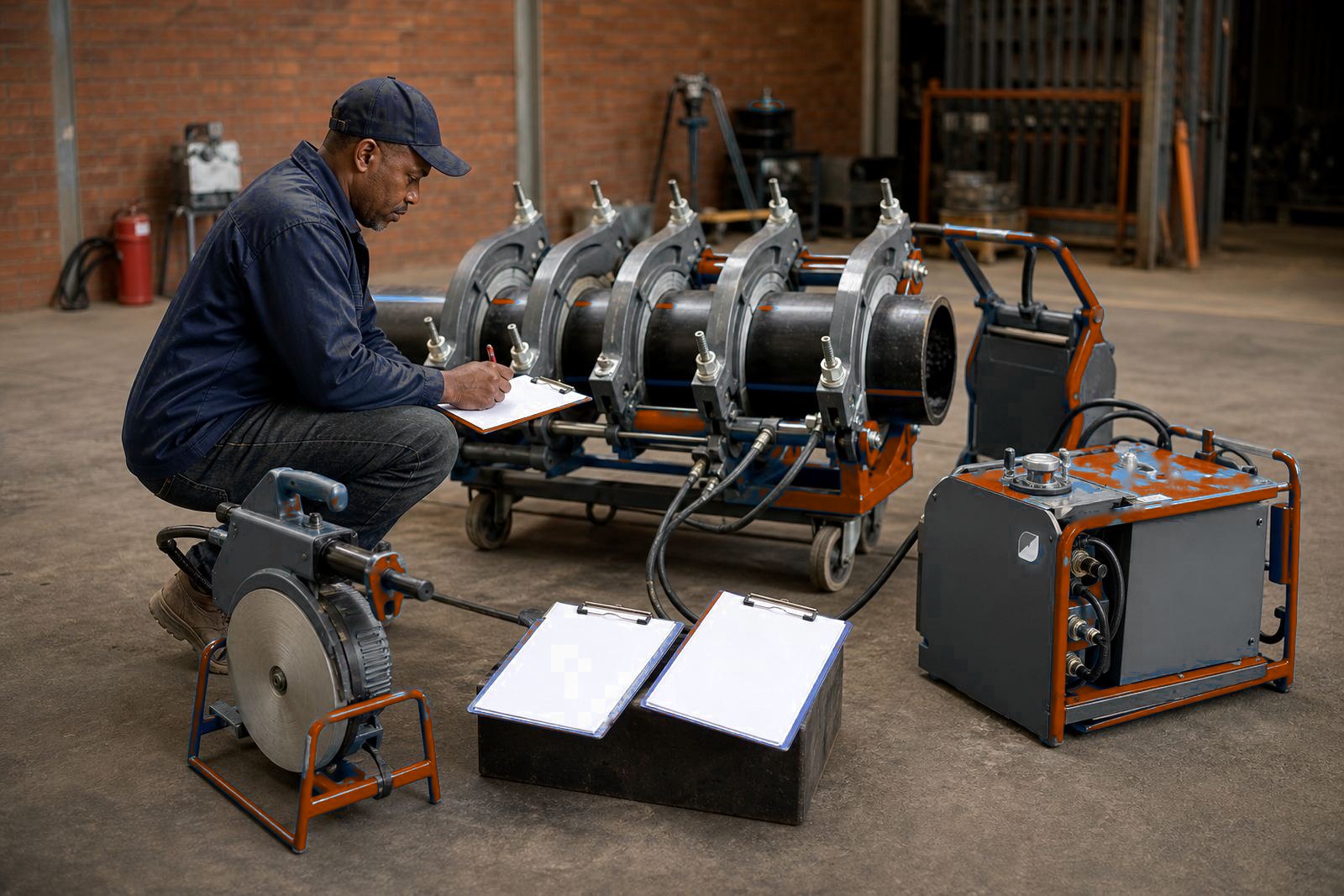
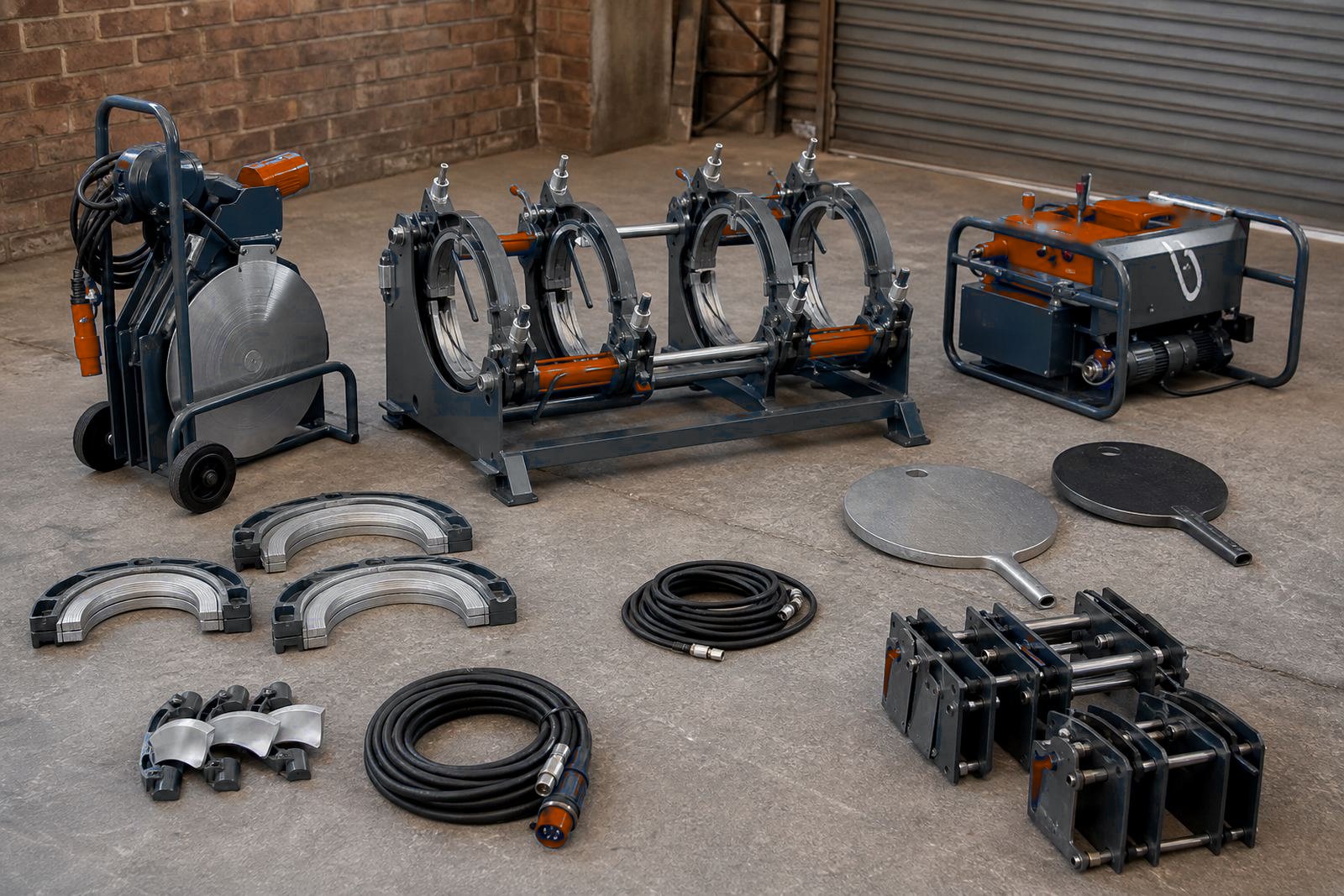
Look at the machine plate, ram travel, jaws, skids and power unit layout. Check machines moved hard between sites for bent bars, cracked welds and crooked clamp faces, because those faults affect alignment.
What to Inspect on the Frame, Clamps and Facer
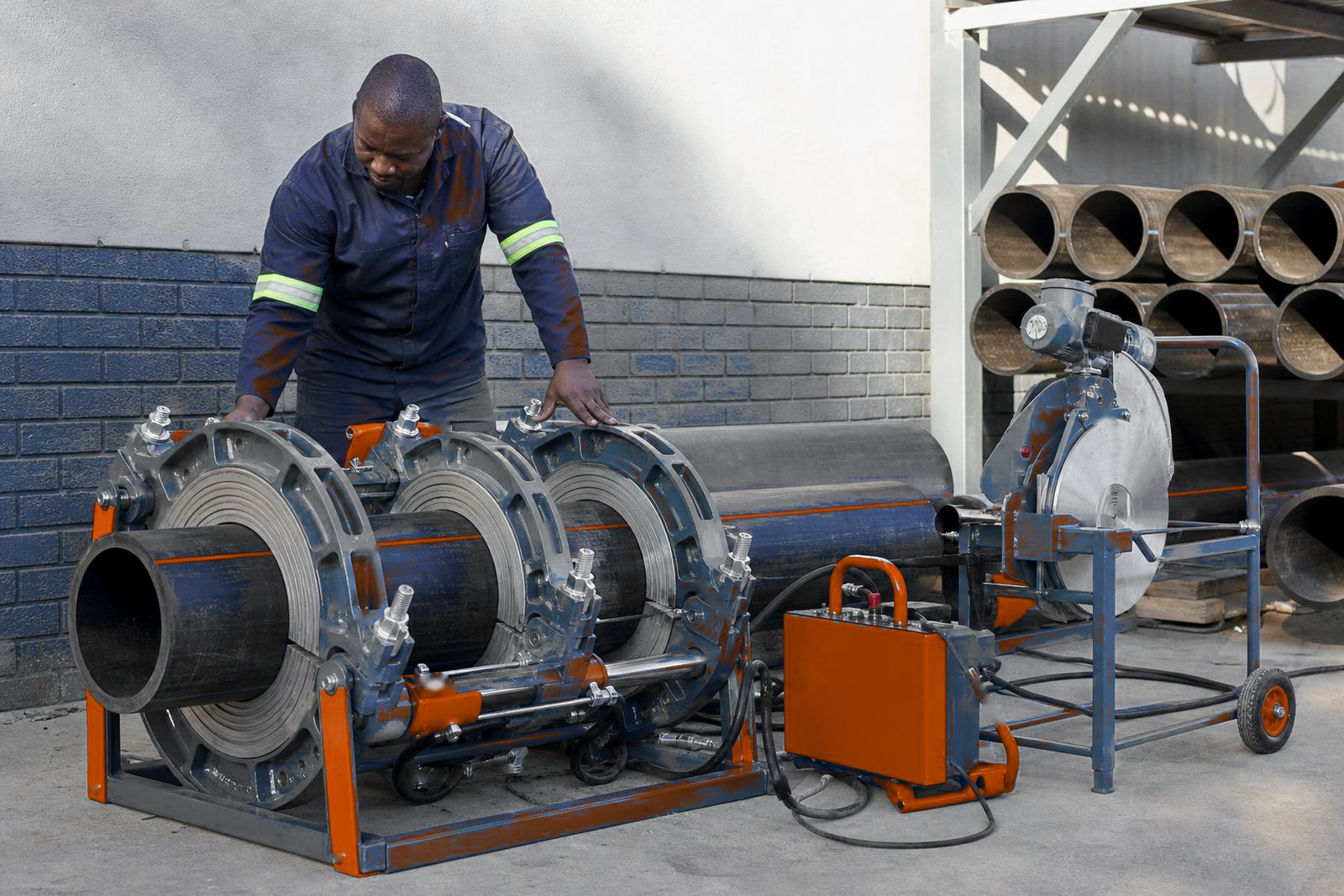
The frame must run true, with no twist that forces one pipe end higher than the other. Open and close the clamps by hand and feel for tight spots, worn guides or play in the movement. On a good machine the pipe sits square, the jaws hold evenly and the facer removes material from both ends without chatter.
- Check clamp inserts for cuts, flattening and missing grip teeth.
- Measure facing cut symmetry across both pipe ends.
- Inspect the facer motor, blades and shavings path for clogging.
- Confirm the stop face and carriage travel move smoothly.
Heater Plate Checks on Used Machines
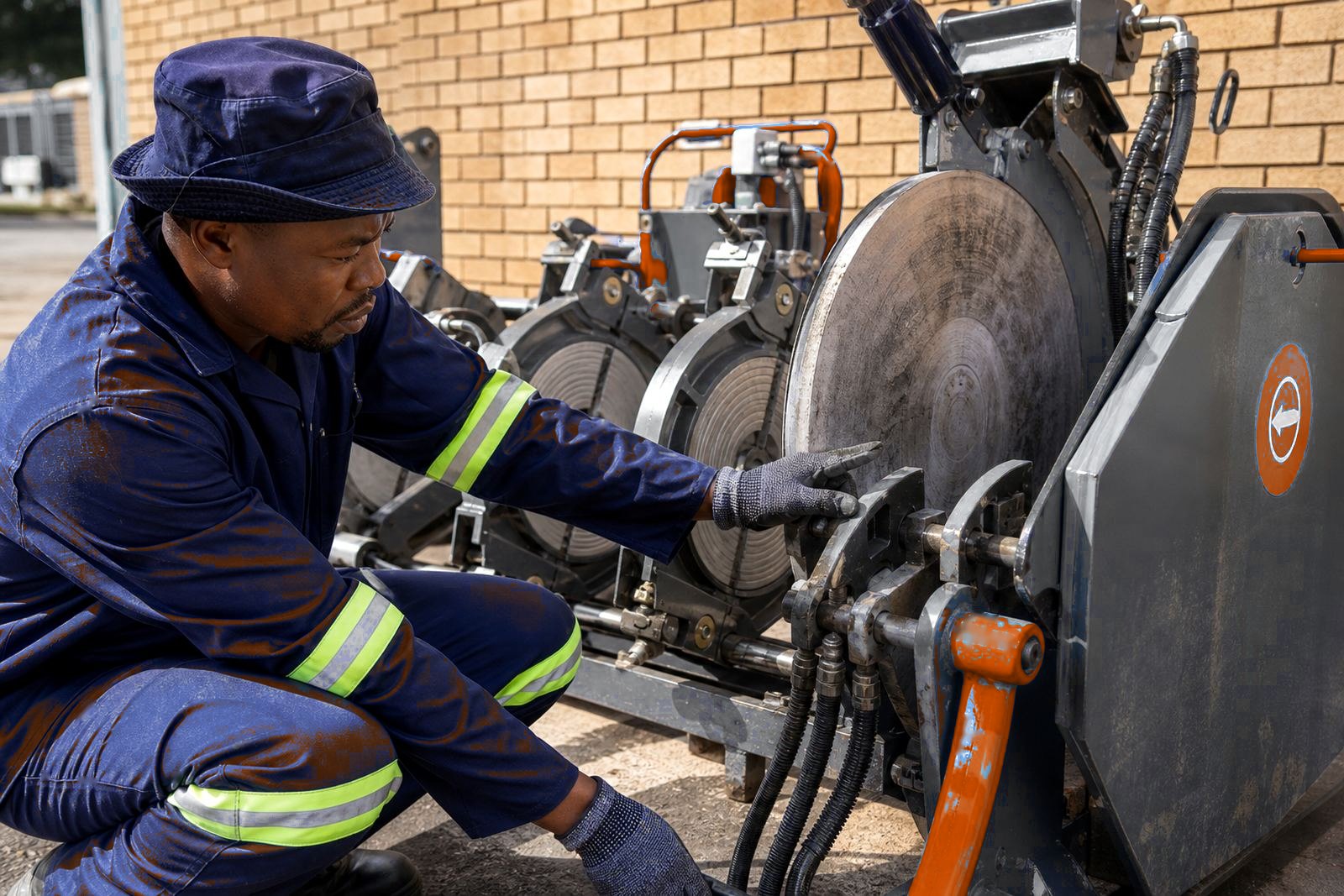
Plate condition often shows how a used machine was treated. Scratches, scorched patches and uneven heating marks can point to careless storage or poor cleaning between welds. The plate should heat evenly across the working face so the pipe sees the same melt pattern on both sides.
Check the temperature control against a known reading if possible, then look for loose cables, damaged plugs and broken handles. In humid coastal stores around Durban or Cape Town, corrosion around terminals and plate edges is common, so any rust bloom deserves a closer look.
- Inspect the plate coating for gouges and peeling.
- Look for cold corners or hot spots across the face.
- Test the thermostat dial, display or sensor reading.
- Check the resting stand so the hot plate sits stable.
Hydraulics, Fusion Pressure and Leak Signs
Used hydraulic units need careful checking because pressure loss alters every stage of the cycle. If the ram creeps, the gauge drifts or oil mist shows around hoses and fittings, the machine may not hold the fusion pressure needed during soak, changeover and cooling. That affects bead shape and the final joint before anyone sees it on site.
Watch the pump under load, then under hold. A solid system keeps the carriage steady, and the gauge should not swing wildly when the pipe is clamped or when the heater plate comes out. Oil that looks dark, foamy or thin may mean neglect or mixed fluids.
Read the Weld Log Before You Trust the Unit
Include any fitted data logger in the inspection. The log should show pipe size, SDR, heat soak time, changeover time, pressure, cooling time and operator details in a way that makes sense. Blank files, odd spikes or repeated missing entries can mean the unit was used without proper control.
Ask to see a sample weld with an even roll-up and matched sides, and be wary of joints covered in paint or grease. If the previous owner never kept logs, you have less to work with when you set the machine into service.
A Practical Buy Check Before You Load It Onto a Truck
Carry out one live dry test if the seller allows it. Fit a short test length that matches the clamp range, face both ends and bring the heater plate into position. You are looking for steady carriage movement, correct alignment, even melt and a clean transfer from heat to fusion without sticking or dragging.
- Confirm all safety guards and bolts are present.
- Check hoses, seals, switches and control buttons.
- Look over the control box, the plug and the power lead for signs of heat damage.
- Ask for the service history if available.
When a Used Machine Still Makes Sense
A second-hand fusion machine can be worth taking on if the frame is straight, the hydraulics hold pressure and the heater plate is serviceable. Check whether it can produce a repeatable weld on the pipe sizes and SDR values you handle on site.
Add the cost of facing work, clamp alignment, plate checks or a pressure test to the asking price. For contractors moving between regions, buy a used machine only with a known service history.