
Parts that keep the pipe square
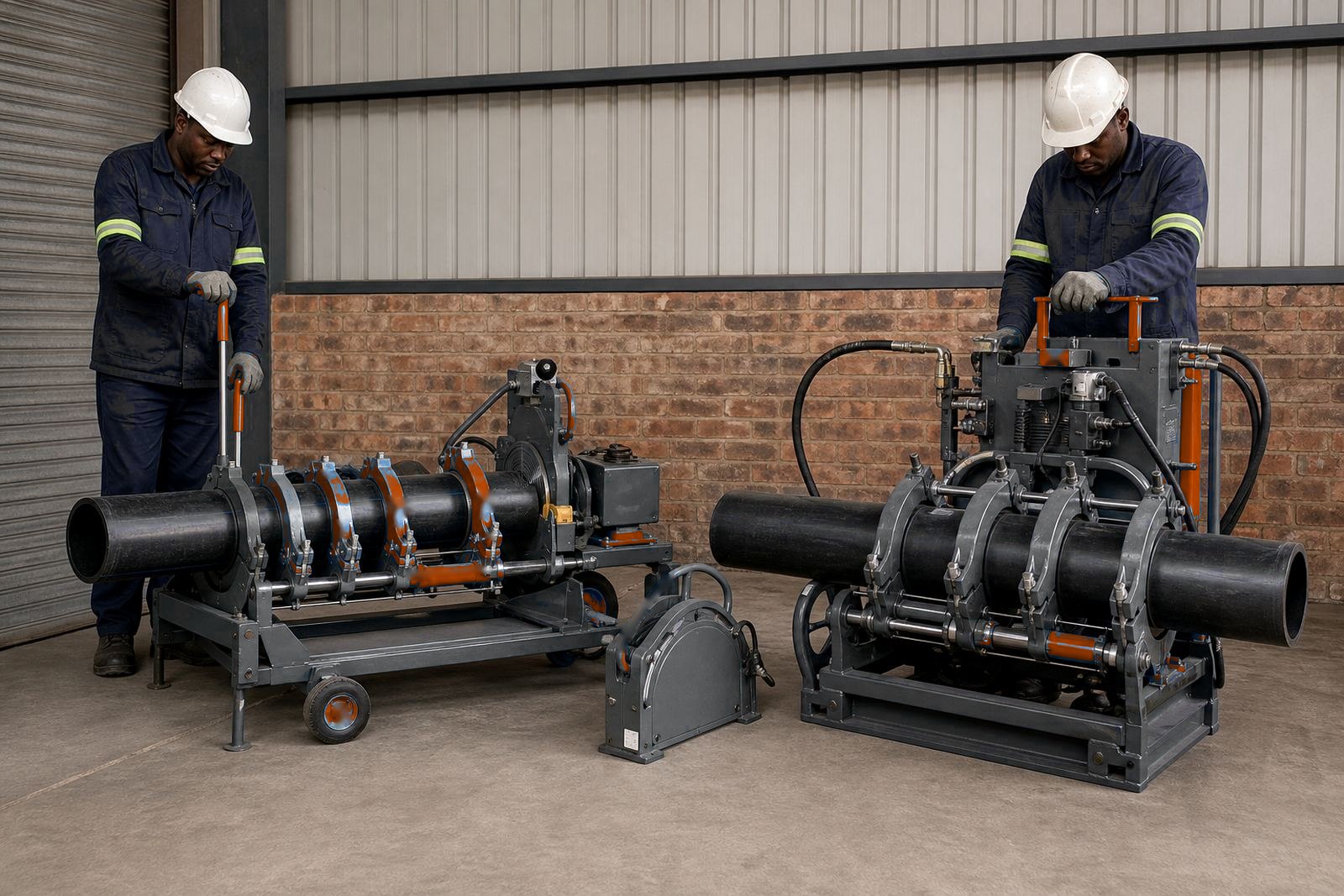
Clamps control the line before the facer touches the pipe on HDPE work. A good set holds both ends without twist, helps keep the pipe centreline true and reduces the chance of a crooked face or uneven bead. Large-diameter support under the pipe is planned as carefully as the clamping force.
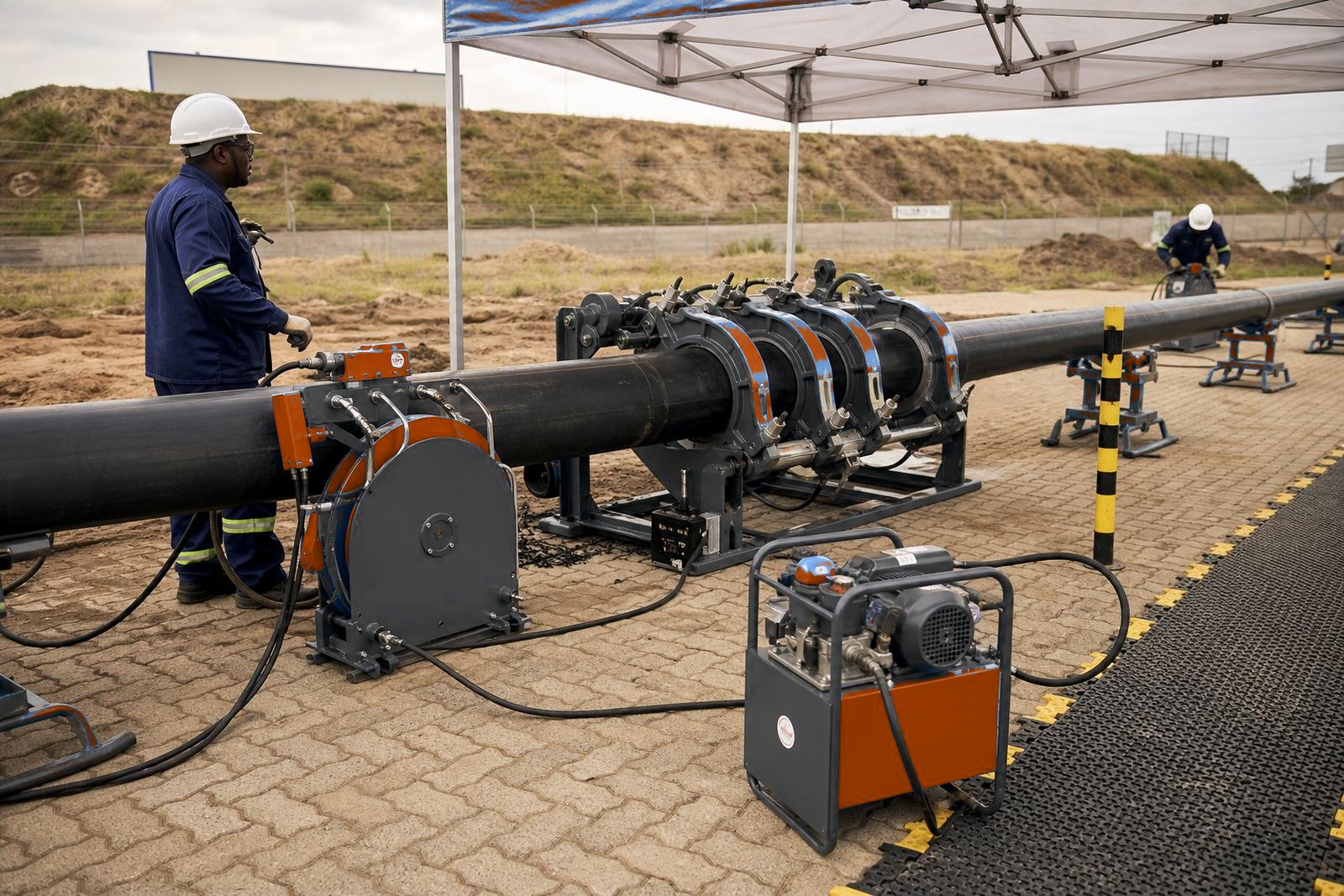
Rollers and pipe stands help when lengths are long or when the site has slight falls, which is common on mining work. They take strain off the operator and keep the pipe from dragging across gravel, steel offcuts or wet ground. On hot coastal sites, a clean support line also keeps grit away from the fusion face.
- Pipe clamps matched to the machine frame and pipe size
- Rollers for straight runs and long joint prep
- Stable pipe stands for uneven ground
- Spacers or supports for lifting and centring heavy pipe
Facing, heating and changeover need tidy handling
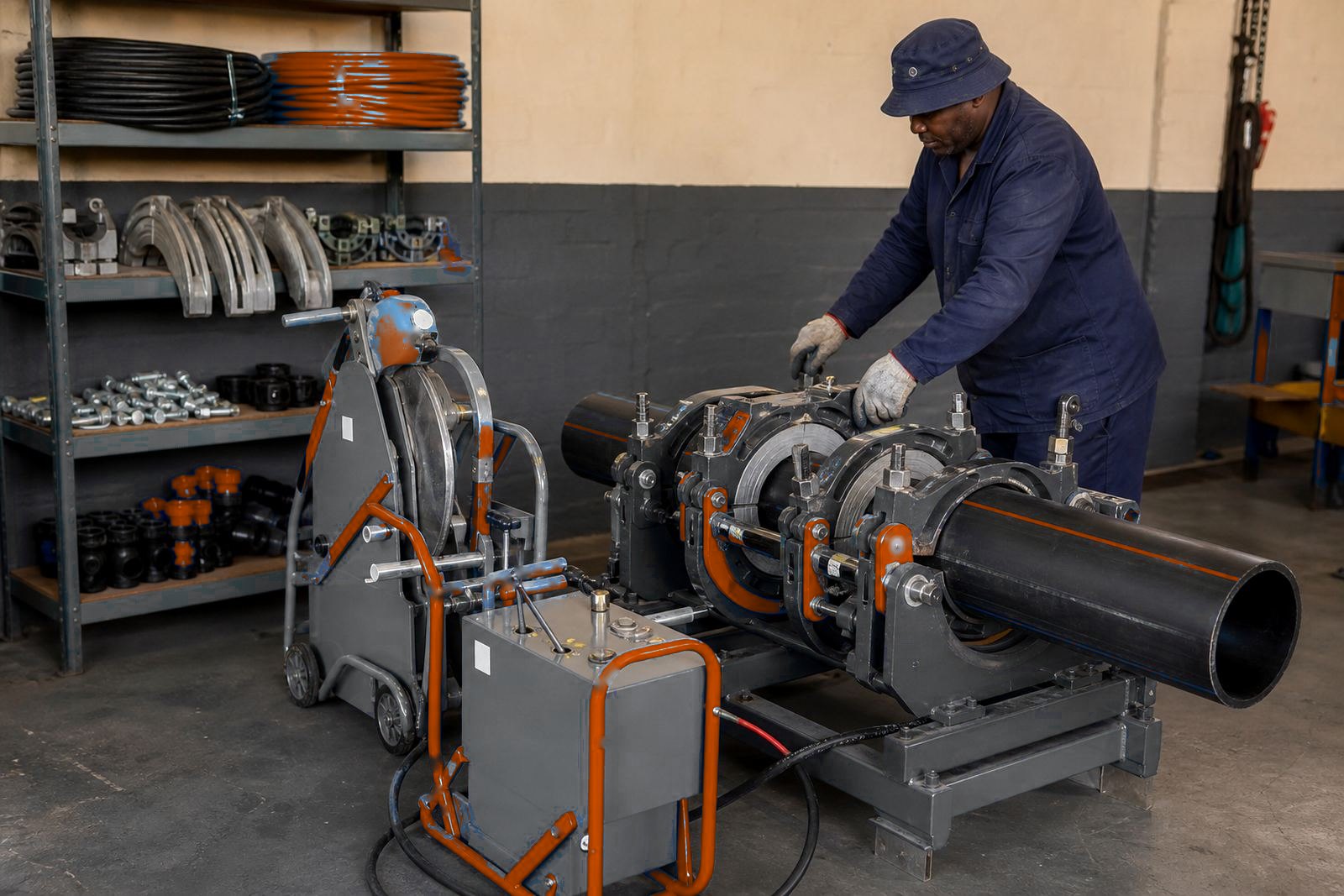
The facer, heater plate and changeover stage need the machine itself, clean scrapers, lint-free wiping cloths, heat-resistant gloves and a safe place to rest the heater plate. A scratched or dirty plate harms the joint before the bead shows anything.
After that comes the cooling period, which should not be rushed. A tidy kit on site makes those steps easier to control, especially when the work is happening in wind, dust or damp morning conditions.
- Scrapers and cleaning cloths for pipe ends and machine surfaces
- Heat-resistant gloves for plate handling
- Plate rest or heat mat for safe staging
- Marker pens and measuring tape for joint setup
Logging tools turn each weld into a record
Logging tools capture weld number, size, SDR, heat soak, fusion pressure and cool-down. The record helps on civil pressure lines where an inspector may ask how a specific joint was made. A log is also practical when the same crew is working across more than one diameter in a single shift.
Even when the machine has a built-in logger, it still helps to carry spare paper, pens, a ruler and a simple site file pouch. Wet weather, dust and handling with gloved hands all make loose pages hard to keep in order. A clear record shows the crew the previous setting.
- Weld log sheets or digital logging unit
- Permanent marker for pipe identification
- Ruler or calliper for bead checks where needed
- File pouch or clipboard for site records
Bead gauges and inspection mirrors
A bead gauge or similar measuring tool helps compare both sides of the weld, while a torch or inspection lamp makes it easier to see surface defects, dirt marks or uneven squeeze-out.
Some crews also carry a small mirror and a straight edge for tight spaces, especially where pipe is close to a trench wall. Pipe that was out of line before fusion leaves a lopsided bead. Check for this while the site is still set up.
- Bead gauge or measuring calliper
- Inspection lamp or torch
- Small mirror for hard-to-see joints
- Straight edge for checking alignment before fusion
Site extras for the day
Small extras count when the nearest store is far away and the crew is already on a schedule. Spares for hydraulic hoses, quick-clean wipes, basic hand tools, wheel chocks and a weather cover for paperwork can keep the job moving. In windy inland conditions, dust covers for open pipe ends are also worth carrying.
Pack the accessories so they travel safely between sites. Loose items need storage boxes that do not tip over in a bakkie or trailer. A fixed place for couplings, fuses, clamps pins and inspection tools avoids the half-hour search that slows the start of the shift.
- Hydraulic hose spares and clean connectors
- Wheel chocks and basic hand tools
- Pipe end covers and dust protection
- Storage crates for small parts and paperwork
Match the accessories to the pipe and the crew
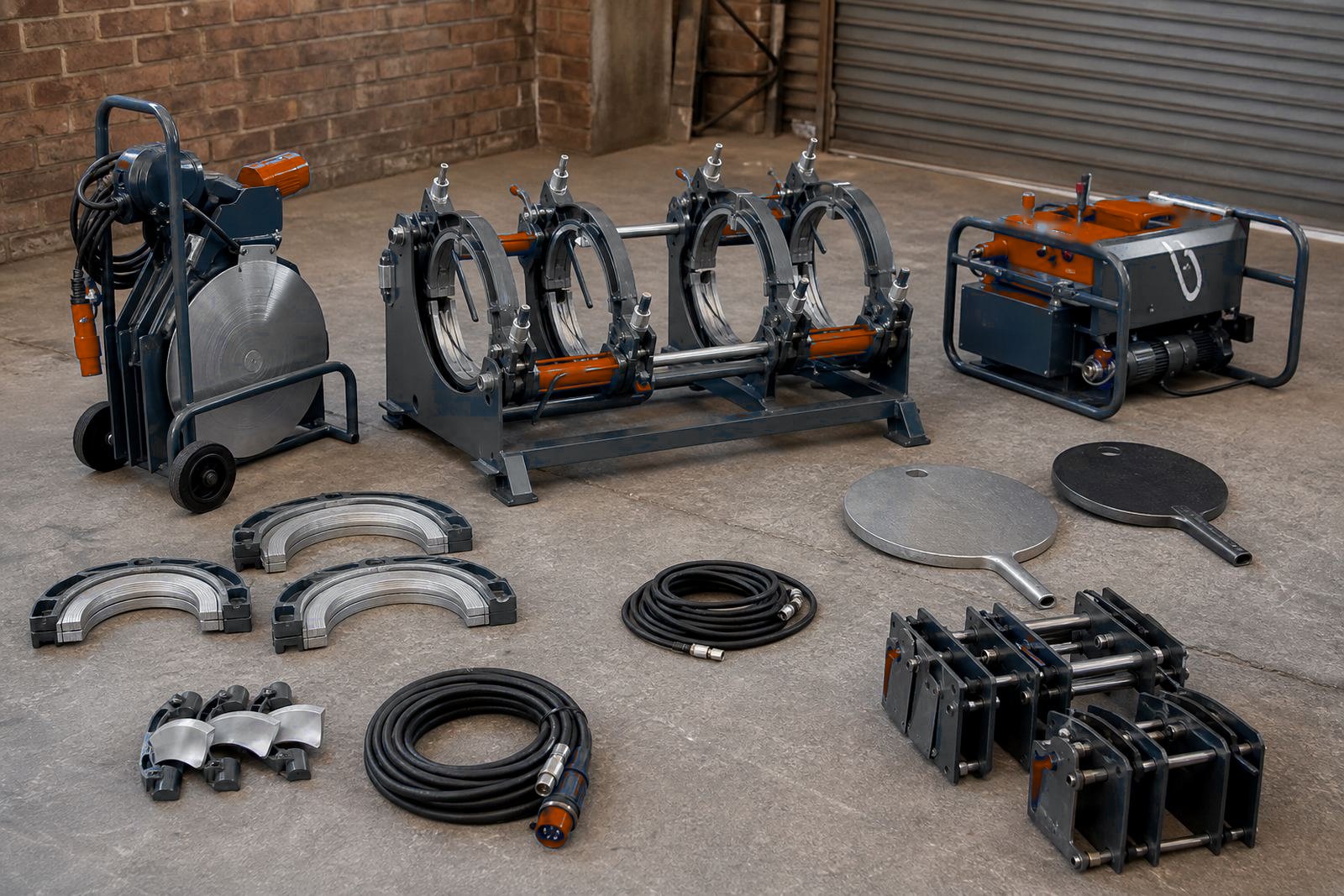
Accessory choice changes with pipe size, SDR and the kind of site underfoot. Smaller lines may only need a tidy clamp set, logger and inspection kit, while bigger work usually needs stronger support, extra rollers and better handling gear. The same applies where joints are made in a trench, on a prepared pad or on uneven ground beside live plant.
A practical check before buying is to consider the longest and heaviest lengths you handle, the usual SDR, and how the machine is moved around the job. That tells you whether you need more support, more clamping control or a better logging set-up.
- Main pipe diameter used on the job
- Check the SDR range used by the crew
- Match clamps and rollers to the heaviest lengths
- Include logging and inspection tools in the same kit