What the wind steals from a weld face
Wind and dust threaten the clean contact surfaces, even heating and controlled pressure a weld needs. A gust across the pipe end can carry grit onto the faced surface, dry out the heat zone too quickly, and lift fine dust onto the heater plate before the pipe has softened properly.
Grit on the faced surface leaves an uneven bead and small defects that can fail a pressure test.
Dust control at the facer
Before a pipe end is clamped, the work area needs a quick clean. Sweep the setup space, move loose soil away from the joint line, and keep caps or clean covers ready for open pipe ends. In dry inland work, especially around Gauteng and the North West, dust moves across a site quickly.
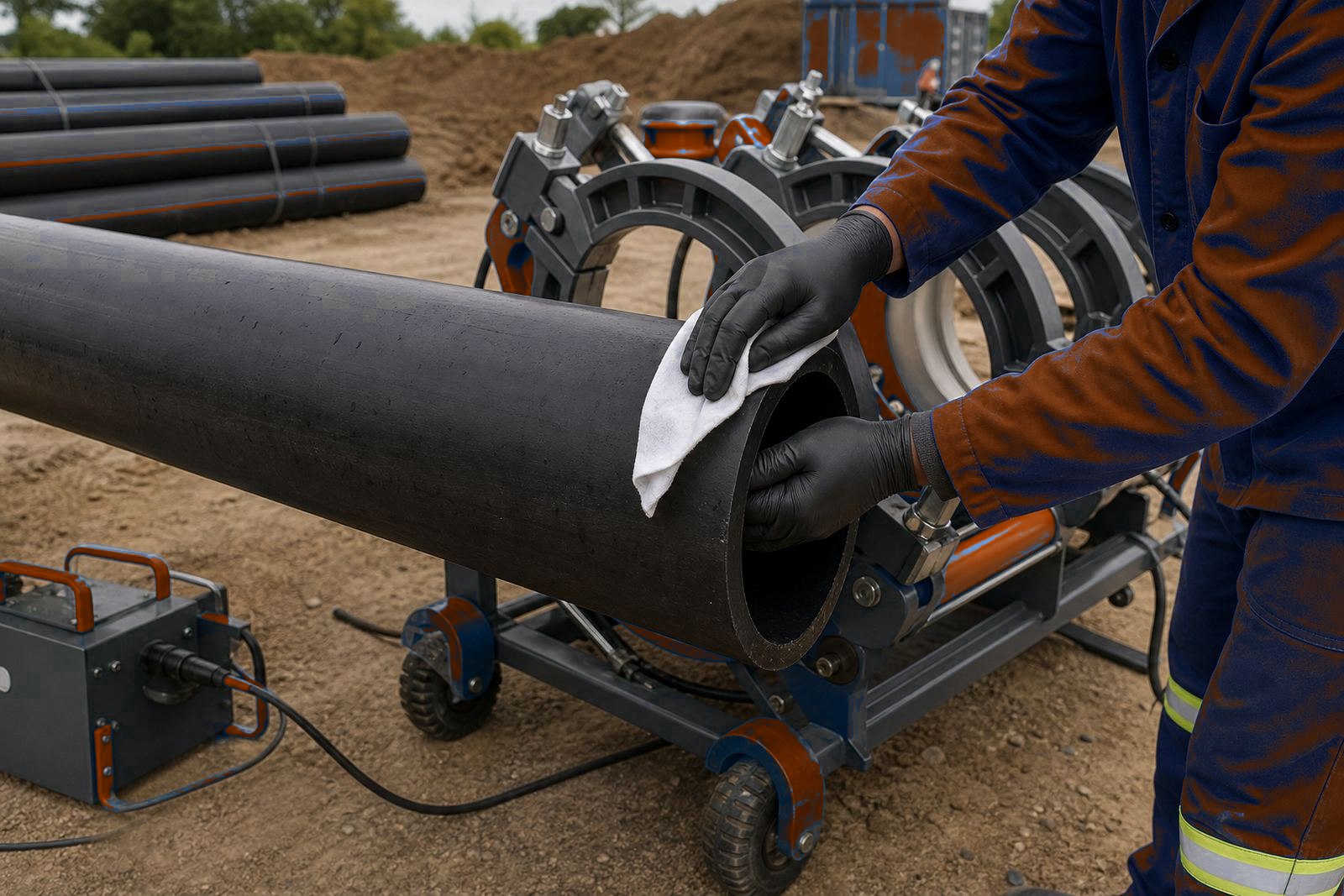
- Before facing, clean the pipe ends using a lint free cloth that is clean
- Rest the plate on a clean stand off the ground.
- Store facing shavings away from the weld area
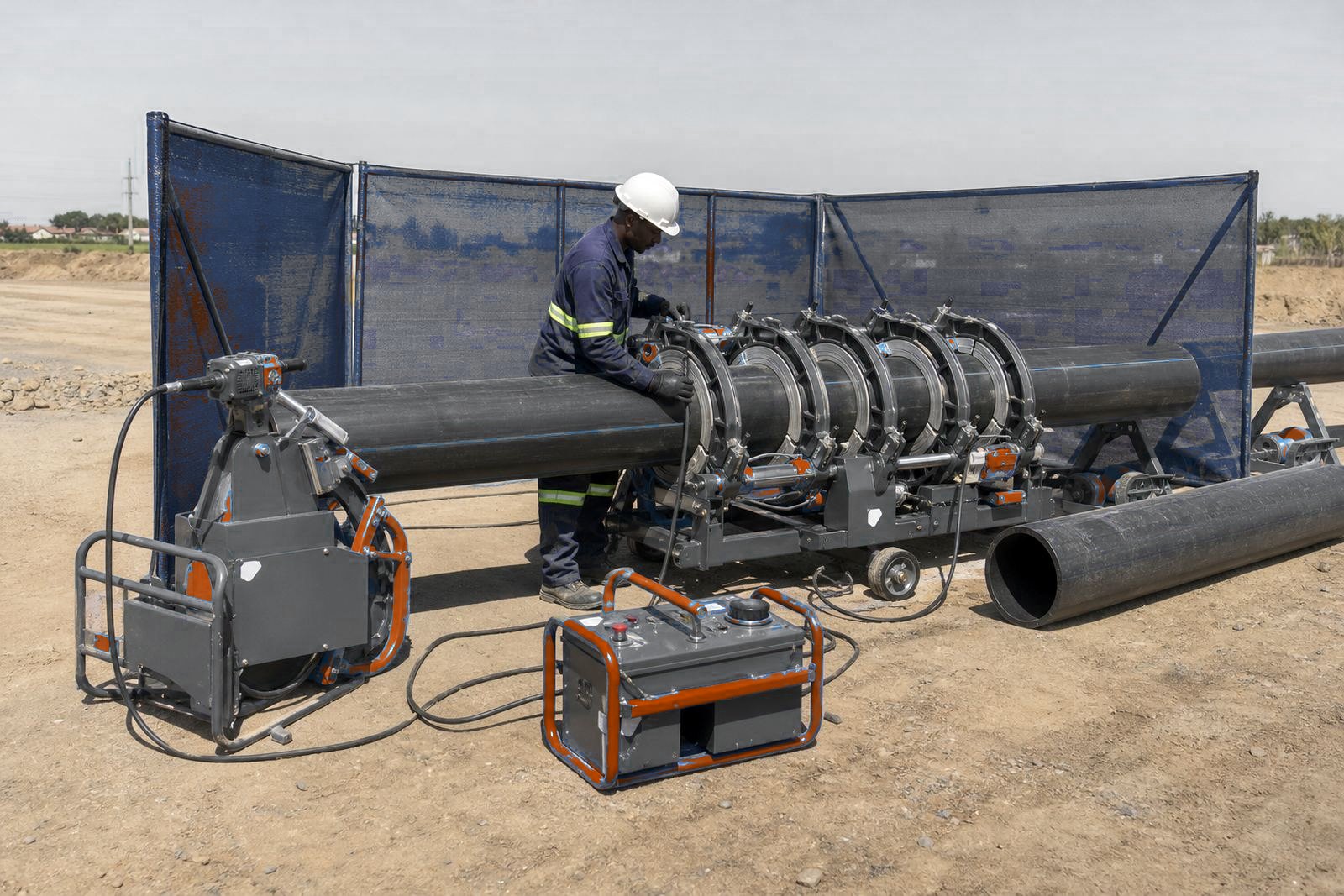
- Use temporary screens where wind keeps crossing the joint line
Holding heat in wind and dust
Wind strips that heat from the exposed outer surface and can cool one side faster than the other. Larger diameters can be a problem, because the face holds more heat and takes longer to stabilise after changeover.
On smaller pipe sizes the effect is smaller, though it still shows on a cold morning or when the pipe wall is thin for the SDR being welded. A sheltered setup helps the joint reach an even condition all round, with no hot and cold spots.
Changeover should be quick, calm and clean
During changeover, the faced pipe ends leave the heater plate and move into fusion pressure. Hesitation gives dust another chance to settle. If they rush and misalign the clamps, the bead can build unevenly and the joint line may shift out of tolerance.
A good team keeps the sequence neat. Face, heat, remove the plate, close up, apply fusion pressure, hold the pressure steady, then allow the full cooling time before handling the joint. Leave the clamped joint undisturbed through cooling.
- Keep the changeover path short and clear
- Hold fusion pressure without jerking the hydraulic system
- Respect cooling time before moving or testing the line
Reading the bead in dusty conditions
Contamination lines, trapped grit or scorched patches in the bead show dust got in. A dusty site can hide small flaws if the crew only glances at the joint and moves on.
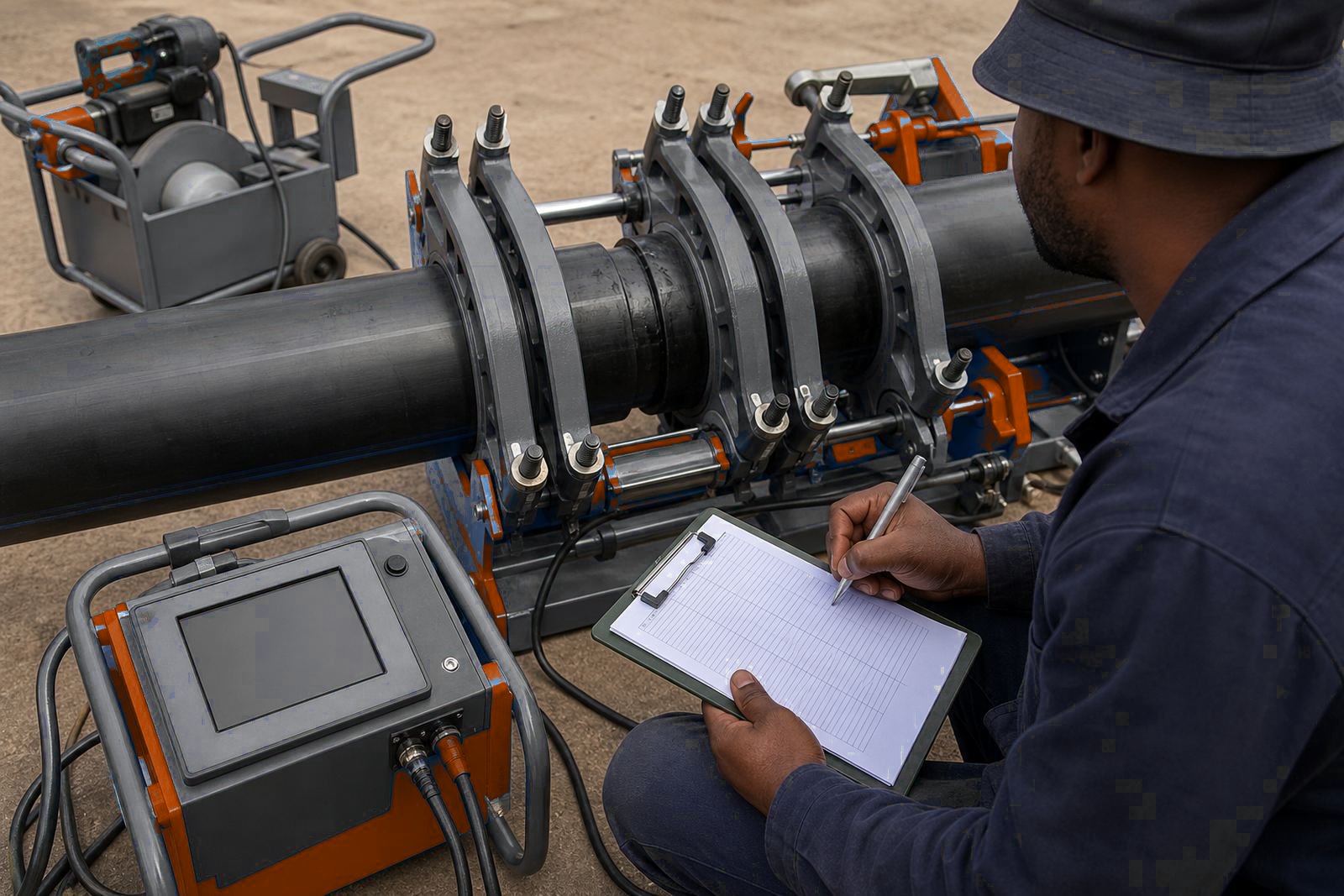
Operators who log the weld, note the pipe size, SDR, fusion pressure and heating cycle have a better record when questions come later. Weld logging helps with handover, site records and traceability, especially on water work where the line is expected to be documented properly.
Wind across an open trench
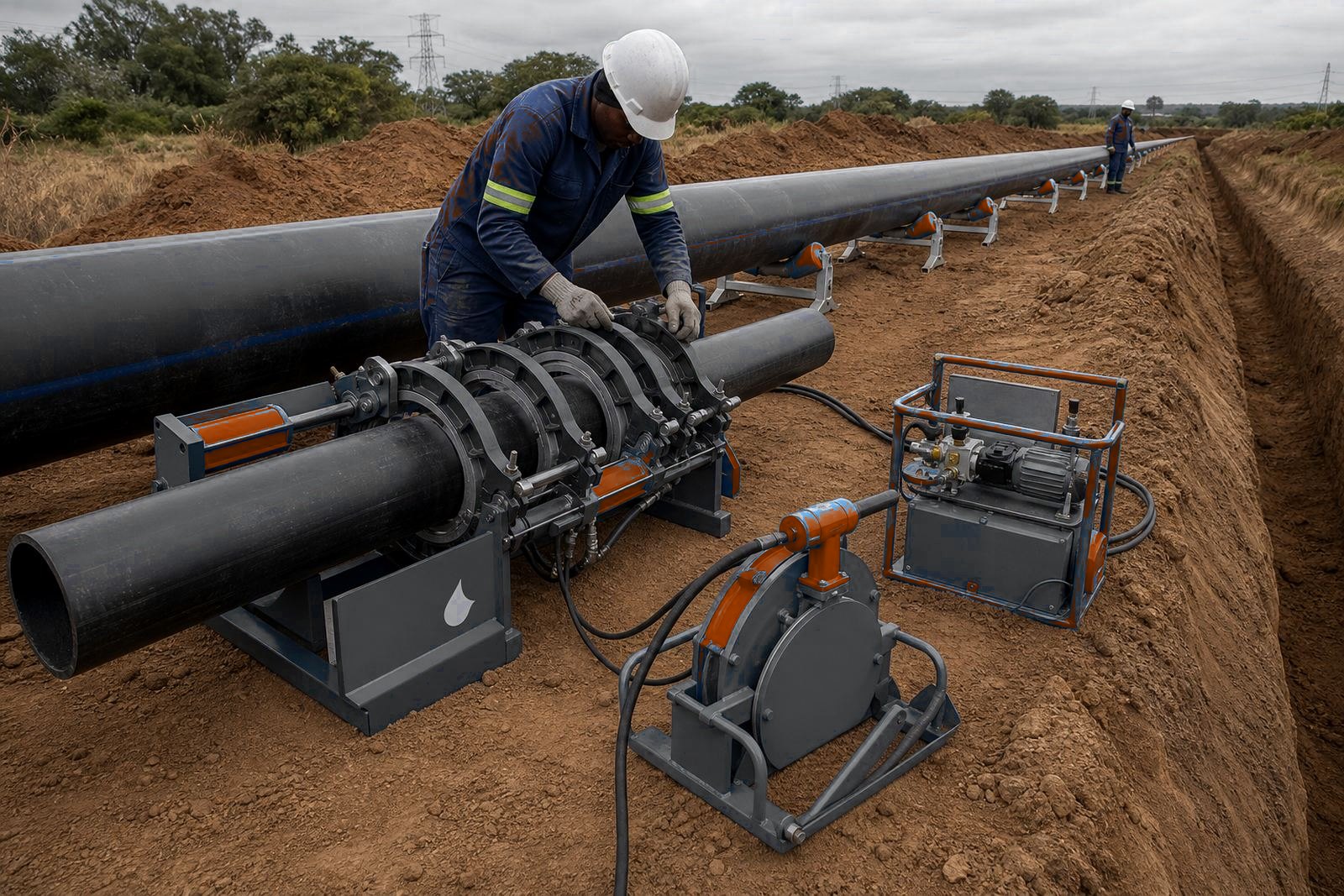
A trench can catch morning wind off open yards and the dust can ride straight into the work zone. On a long run of HDPE for civil work, the cleaner crews set up a simple wind break with whatever the site allows, keep the pipe ends covered until they are needed, and check the heater plate before every cycle.
A weld log ties the bead inspection, joint records and line testing to what the crew did on the day.
- Place the machine on even ground if you can
- Keep spare covers and clean cloths in the kit
- Remove loose soil before every weld cycle
- Inspect the first bead before the crew settles into pace
Windy-day operator drills
Wind and dust cannot be removed from every site, but the equipment and the crew can be prepared for it. Operator training covers reading pipe condition, heater plate checks and the fusion cycle. Servicing is part of the plan, because worn clamps, tired hydraulics and uneven facer blades make a difficult site even harder.
Our workshop cleans dust out of the facer and hydraulic unit after windy jobs.