Preparing long strings ahead of heating
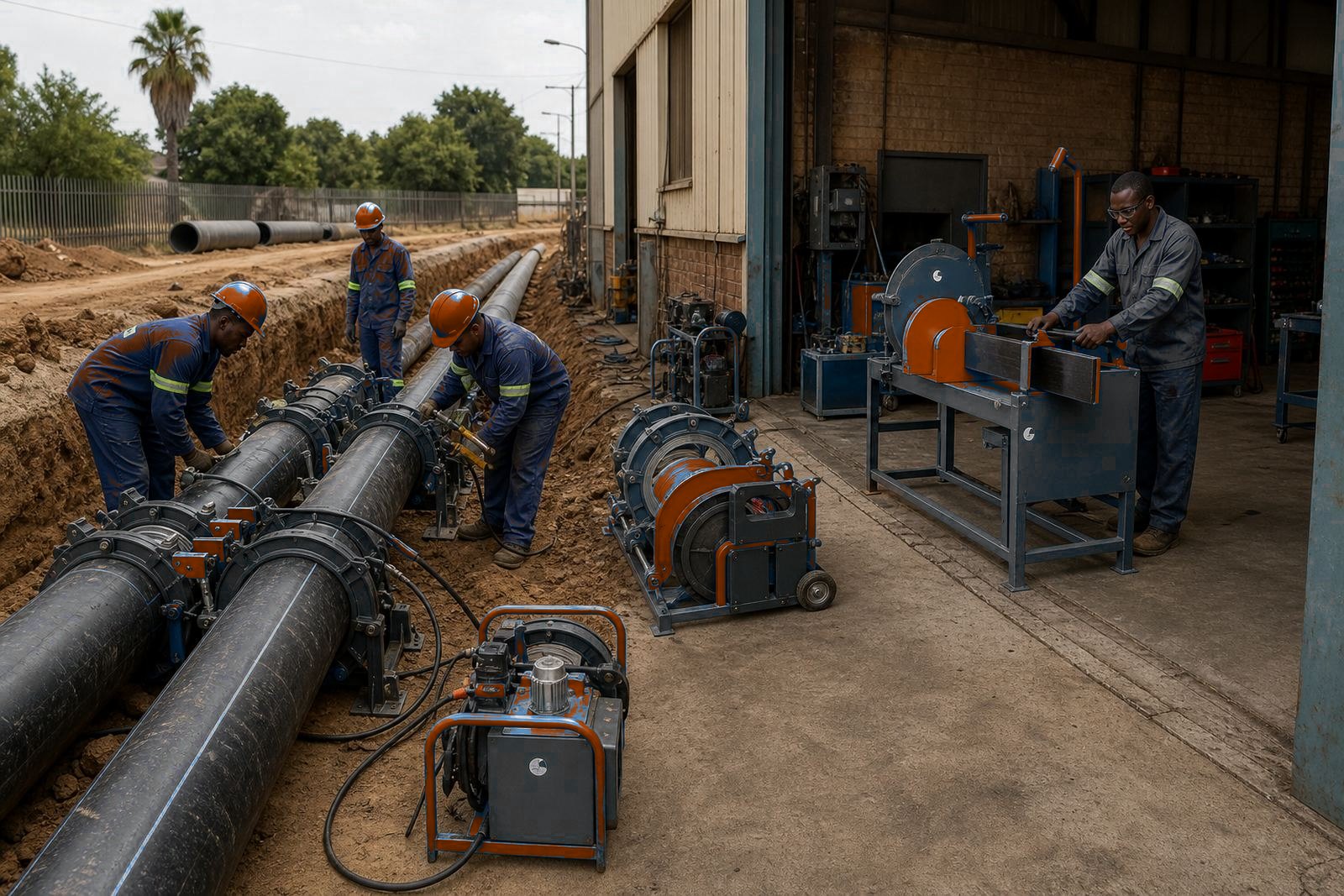
Long HDPE strings move differently from short lengths. Every metre off the stack adds drag, sag and twist at the joint face. Sliding pipe during facing puts the face out of true.
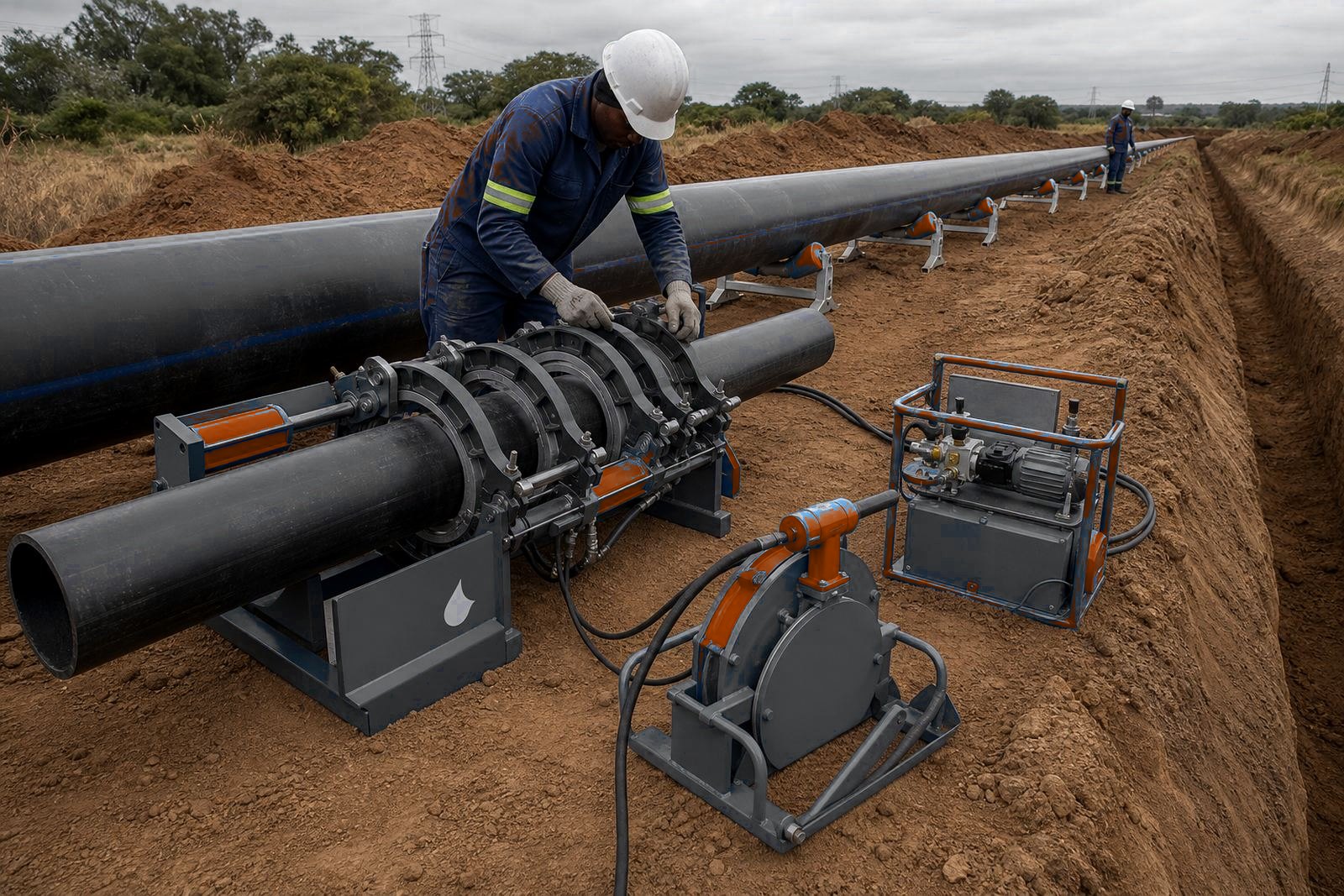
Support the pipe from the first lift. Roller stands, even ground, and enough hands on the pipe stop the ends from dropping when the facer bites. On a long run, support the pipe nearest the machine level with the machine centreline, even when the rest of the string is still on the truck or lying in sand. That small difference changes how the pipe closes under pressure.
Watch long strings for ovality. A long pipe string that has sat in the sun, or in a yard beside other stock, can take on shape. Pipe that does not match the prepared clamps and inserts needs more careful positioning.
Keeping alignment when the pipe keeps moving
Alignment needs checking throughout the job. With long pipe strings, the pipe can creep while the facer is running or during the changeover from heating to joining. Side load creeps in there and the bead starts uneven on one side.
For longer strings, set rollers or supports so the pipe slides freely into the machine. Dragging pipe over gravel or rough concrete shifts the end nearest the machine. Place supports well and keep movement paths clear.
- Use support points that let the string feed without jerking.
- Clear stones, scrap and sharp edges from the travel line.
- Check that clamps hold the pipe without flattening it.
Facing, heating and the changeover window
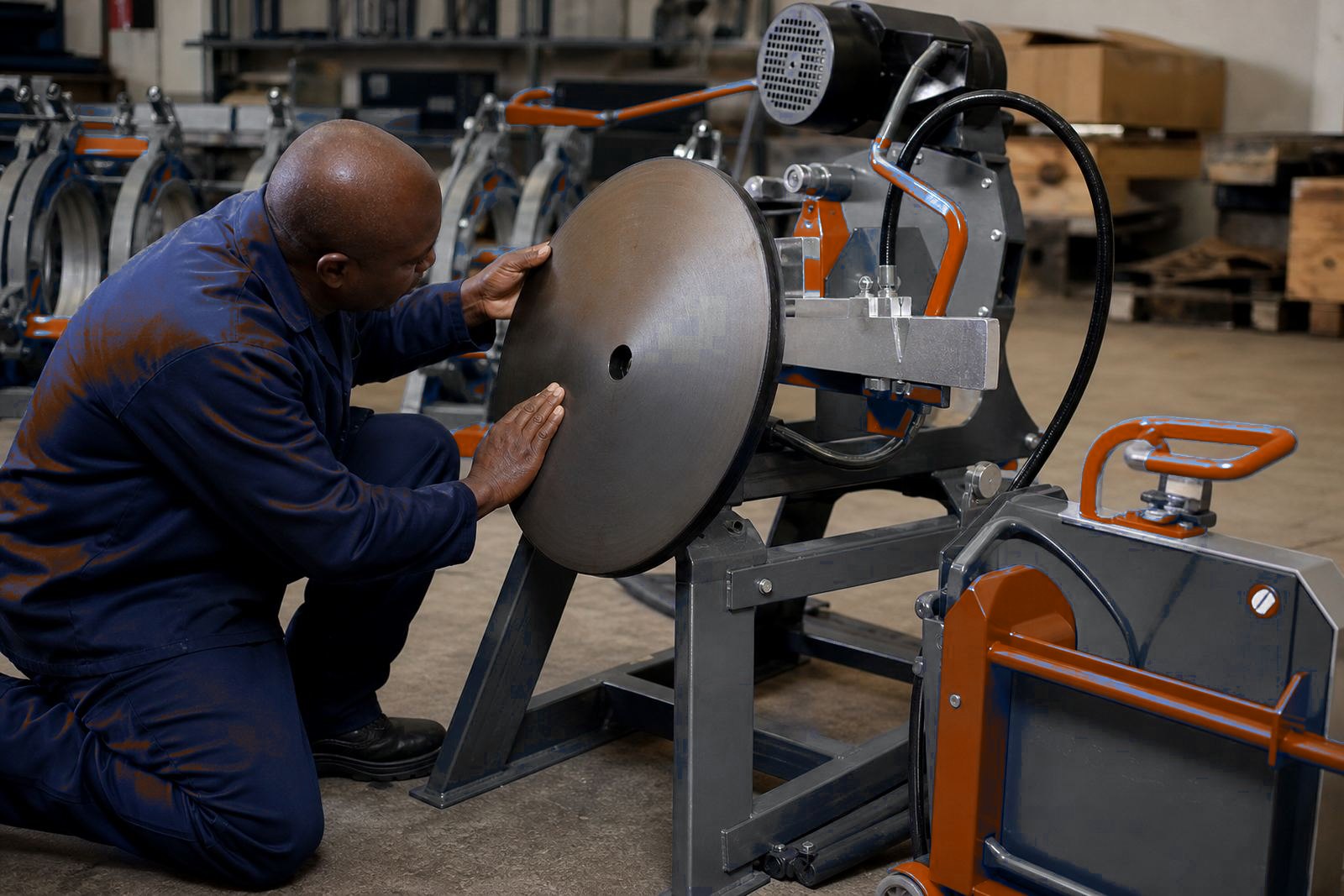
Face long strings slowly, with the far end supported. Uneven trim between sides is a reason to stop and find the cause.
During heating, the long string can still move. Long strings can still move a little under their own weight as the plate comes in. Long strings try to shift as soon as the support load changes at changeover.
The joining force must be applied in a controlled way. The fusion pressure should bring the softened faces together to the right bead size, while the operator keeps the pipe stable through the cooling time. Early movement can open the weld before the joint has locked in, so the full cooling period is kept.
Bead checks on long strings
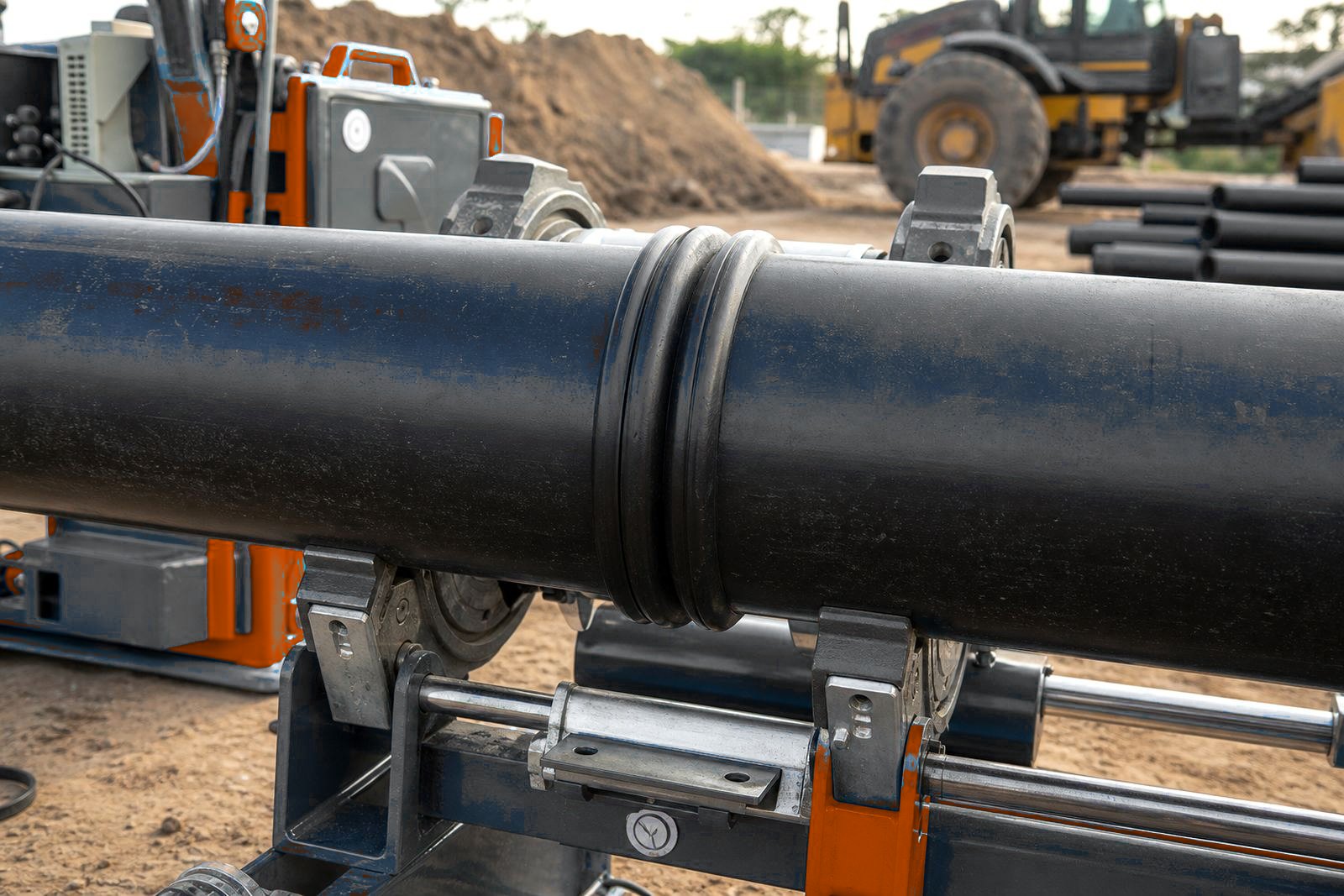
A long string can show a neat top bead over a dragged or pinched underside. Check the full circumference of the joint from both sides.
Operators who work with long strings should look for signs of poor preparation as well as poor heat. A bead that is thin on one side may point to pipe movement during clamping. A bead that appears flat can point to low fusion pressure or poor heater contact. A bead with sharp irregular edges may show contamination, moisture or a face that was not cut cleanly.
- Check bead symmetry around the whole joint.
- Look for movement marks near the clamp line.
- Record the pipe size, SDR and weld settings.
- Keep notes on cooling time and any interruptions.
Logging long strings on hot days
On long pipe work, data logging gives the crew a record of the settings used, the pressure profile, the heating time and the cooling window. If a section later needs review, the crew can see whether the issue came from setup, support or operator handling.
Records help on civil work with many joints in a row. A change in pipe size, a shift from one SDR to another, or a different crew on the next section can all alter the way the joint behaves. In the field, a log helps keep the same method from drifting as the day goes on.
Dust and vibration on mining roads affect how the machine sits on the ground. In Durban, humidity can leave moisture on pipe ends and on the heater plate if the gear has been standing in shade. Those details do change the way the crew prepares the weld.
When long strings need another set of hands
A long line across uneven land may need extra hands for alignment, pipe handling and the first few joints. Train the crew on the sequence before the line gets too long to reset easily.
Roller stands and lifting straps for long strings can be hired with the machine. Long pipe strings need both the right machine and roller support along the line.
When a string pulls on the joint, add support, clean the faces, steady the changeover and allow the full cooling time before the next move. The weld needs control.