
What the plate has to do in a butt-fusion cycle
If the plate face is uneven or contaminated, the heat pattern shifts and parts of the face do not fuse.
This applies across common pipe sizes, especially when the SDR changes and wall thickness alters the heating need. A clean plate helps the job stay predictable, and predictable is what operators want when the weld record has to match the actual joint.
Cleaning the heater plate face safely
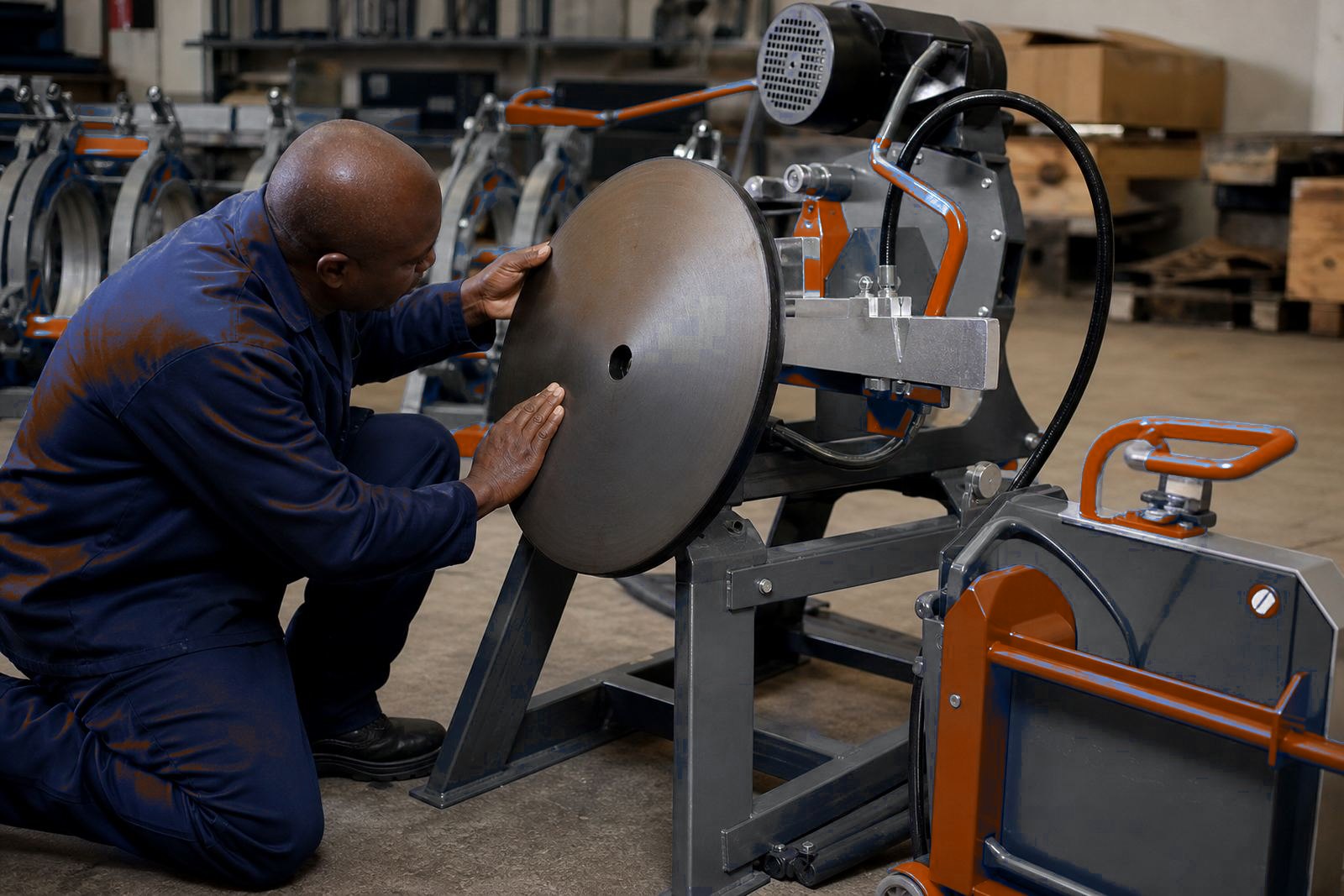
Heater plates should never be polished with anything rough. Scrapers, wire wool and hard sanding can mark the surface and create hot spots. A better routine is to let the plate cool to a safe working level, wipe off residue with a suitable lint free cloth and remove stubborn plastic with the right non-abrasive method. After use in dusty wind, check the plate edges and the handle area, because grit collects there first.
- Wipe off plastic while the residue is still manageable and before it burns in for weeks.
- Check for scratches across the heating face and note any change in colour.
- Keep the plate off bare concrete and steel when it is not in use.
- Cover the face during transport so dust does not settle on it.
Fine dust from yards and loading areas settles on tools quickly, so a plate stored open on a bench picks up grime even inside the shop.
Checking the surface condition
A heater plate needs to heat evenly. Light discolouration can be normal on an older unit, but deep scoring, pitting, flaking on the coating or a raised edge can affect contact with the pipe face. Contact only in the middle lets the outer ring cool differently and the bead drift. A plate with cold spots can also make an operator keep the heat on longer than needed, which is not a fix.
During a service check, look at the face under good light and run the edge visually from side to side. If there is doubt, compare the heat pattern across the surface with a simple test method used in the workshop. A sound plate carries heat evenly across the whole face.
Storing and handling the plate
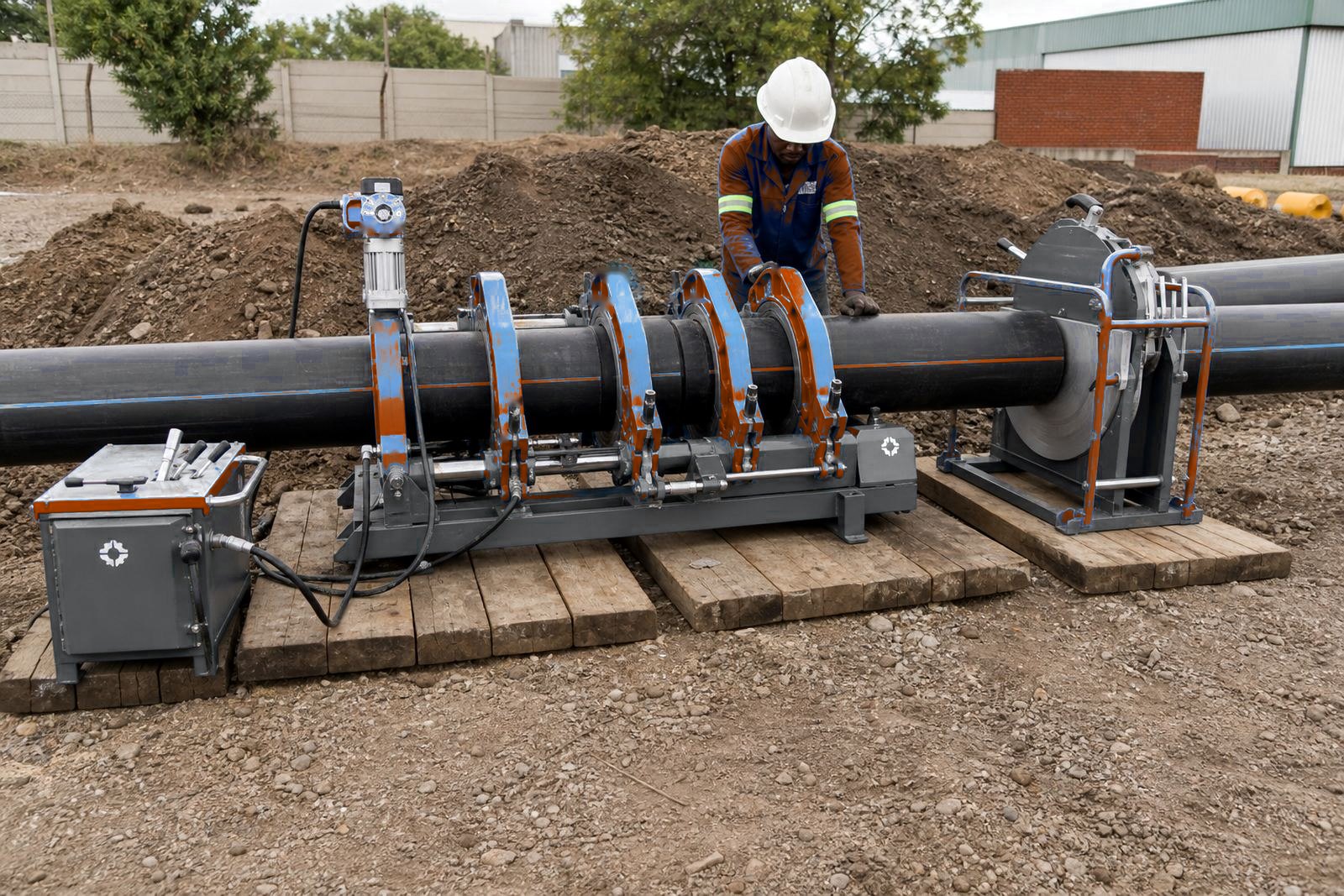
On a site in Rustenburg or Polokwane, a heater plate may move between the weld bench, the truck and the working face several times in a week. That movement is where damage starts. A plate left loose in a tray can pick up knocks, and a knock on the edge can bend the seating or chip the coating. Keep it secured, covered and separated from clamps, facer blades and other steel parts that can bruise the surface.
- Wait until the plate has cooled right through before storing it.
- Store it flat so the face does not twist under weight.
- Use padding between the plate and other metal tools.
- Keep the electrical lead, handle and strain point free from kinks.
On coastal work in Durban, humidity can also leave a film on exposed metal. That film does not help heat transfer, and it can leave the operator wondering why the first welds of the day feel different to the last ones.
When to pull the plate out of service
Some faults are small enough to note and monitor. If the thermostat control drifts, the surface heats unevenly, or the plate takes too long to return to working temperature, stop and have it checked. Unstable plate temperature spoils joints even when facing and clamp alignment are done well.
Bead inspection shows plate faults after the weld, but it is better to catch the plate problem before the joint is made. A dull, dragged bead, inconsistent squeeze out or a weld that looks different from the rest of the run can point to heat transfer as well as operator technique. Service records should note the plate condition alongside the pipe size, SDR and cooling time.
Weld logging should mention the plate too
Good weld logging covers the pipe and the date. It should also note which heater plate was used, whether it had been checked, and whether any irregularity was observed during the shift. Plate care records help when one machine covers several diameters and wall classes in a week.
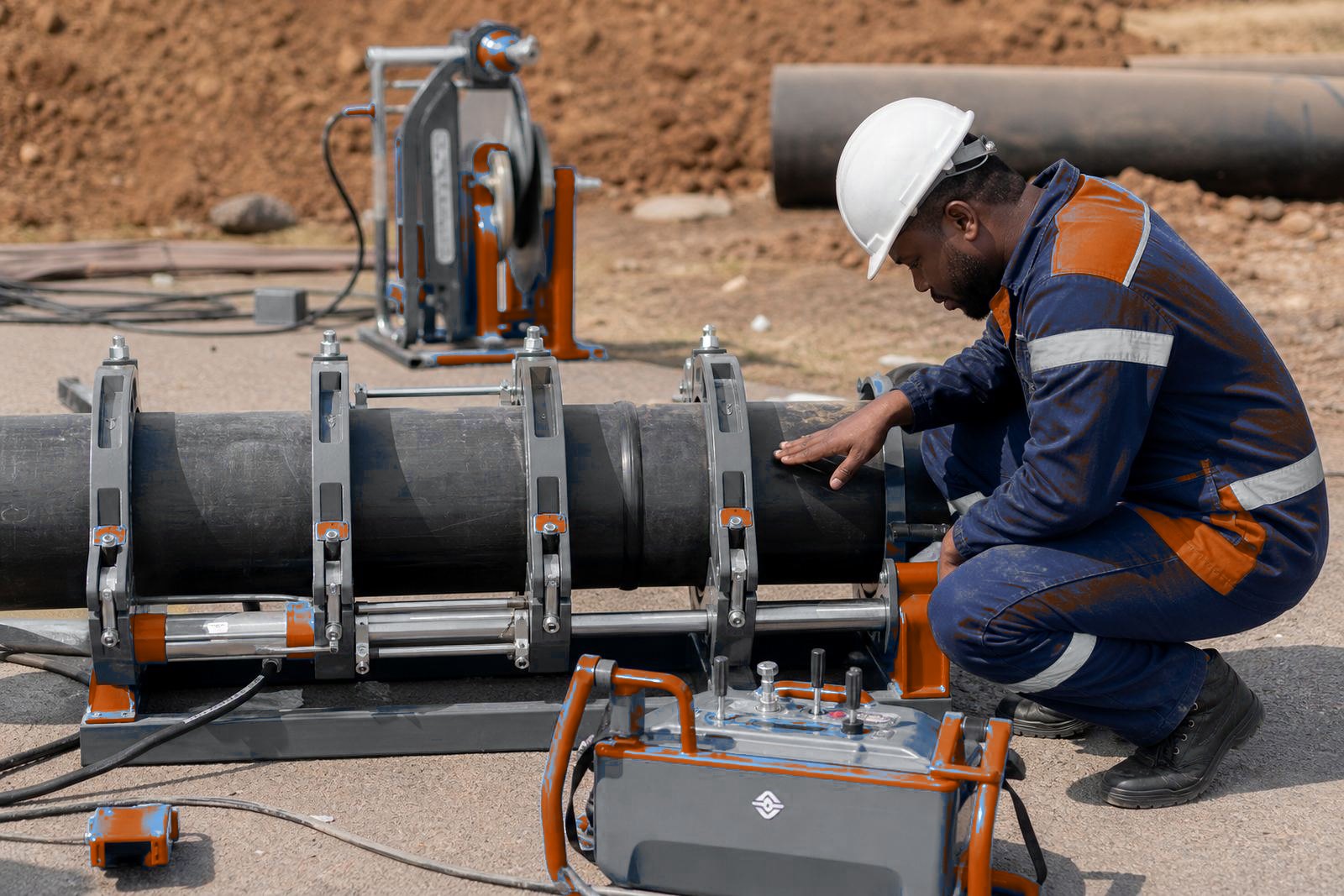
Our team sees this often on mixed site work around Johannesburg and across the provinces. A dirty or damaged plate spoils the joint even when every other step is right. Keeping a clean face, a checked surface and a clear log gives the next weld a proper starting point. Plain work now can spare arguments later.
Workshop heater plate care
Check and clean the heater plate at set points throughout the day. A quick face check before loading the machine, a proper wipe down after use and a sensible storage method make the next weld easier to control. Inspect returned hire units the same way before they go back out.
Many plates sent in for checks fail for simple, avoidable reasons. Dirt, knocks and rough cleaning damage the plate surface. Keep the face clean, keep the surface even and keep a note of what changed. That is usually enough to protect heat transfer when the pipe ends meet.