Why the ground under the machine changes the weld
On level ground, two pipe ends meet squarely, heat evenly and close under the right fusion pressure while the joint cools. Slopes or broken ground let the carriage shift, the facer chatter and the pipe climb out of line.
That small movement is often where trouble starts. A joint that looked fine at the clamps can end up with uneven melt, a crooked bead, or a face that was not truly square to the pipe axis.
- A level bed helps keep the pipe centres aligned.
- It reduces unwanted carriage drift during heat and changeover.
- It makes clamp adjustment easier on larger diameters.
- It helps the operator read the bead more clearly after cooling.
What level means for the machine
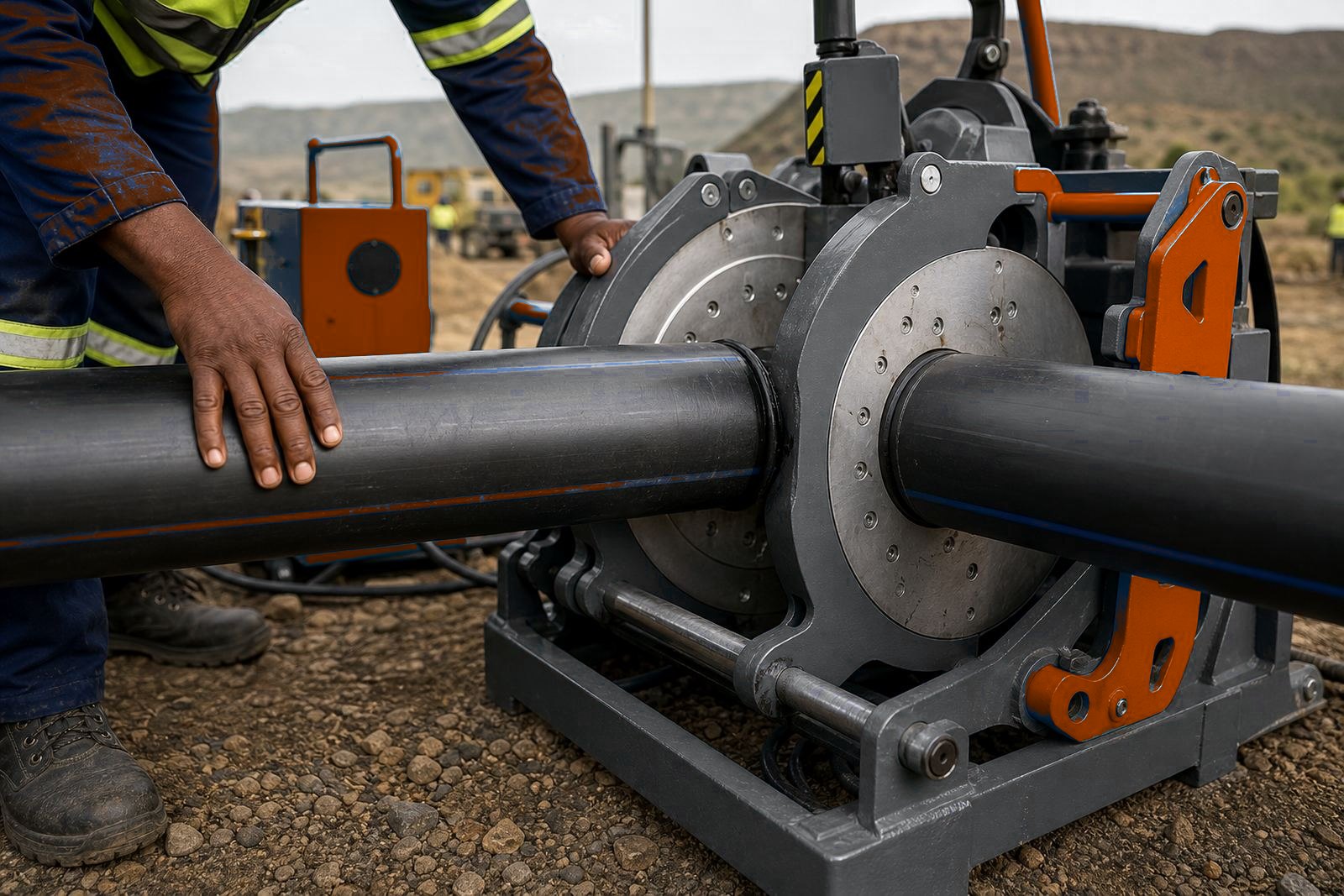
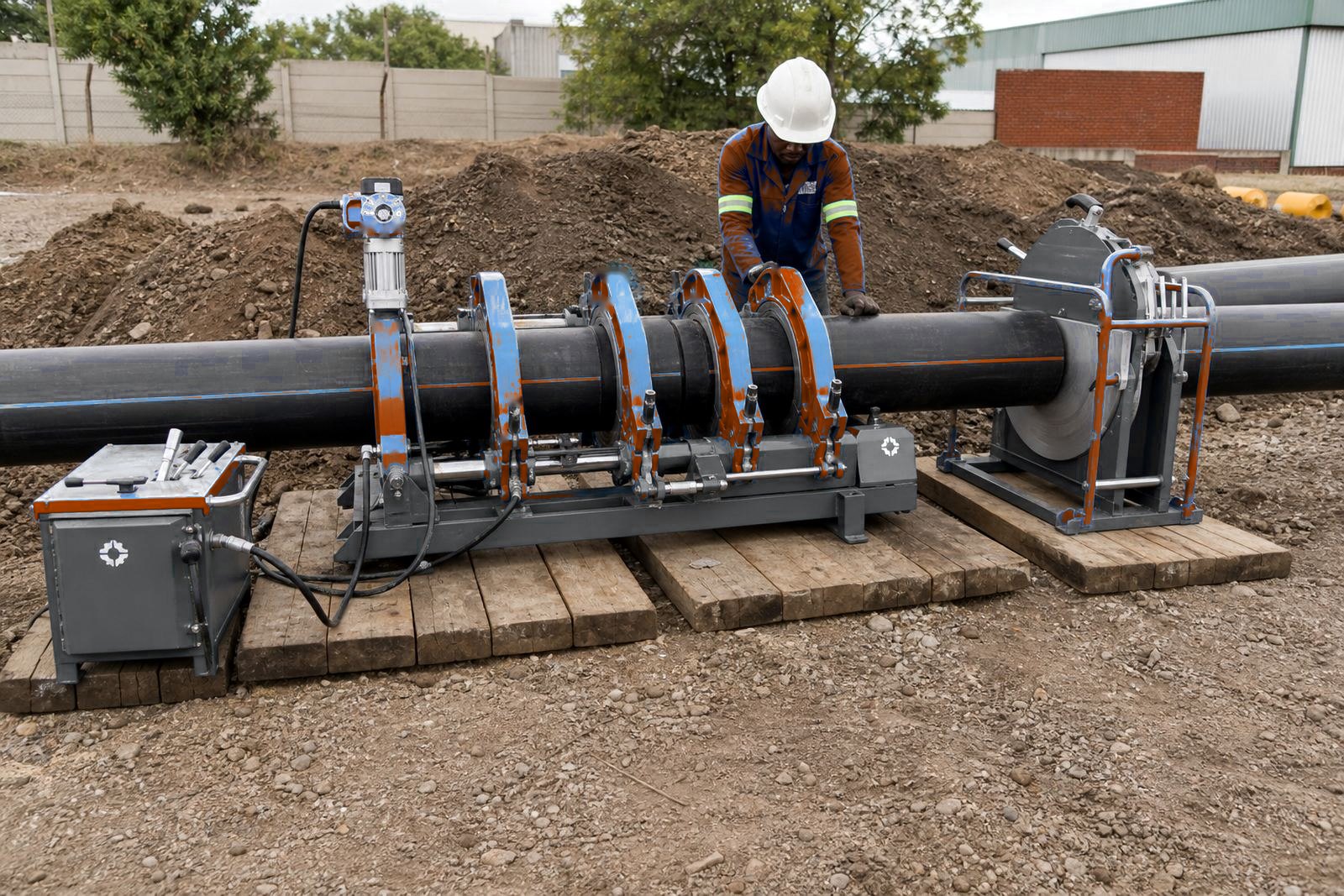
Level means a firm, even base, such as polished concrete, compacted gravel, steel plates, sleepers or pack. Most set-ups sit on compacted gravel, steel plates, sleepers or packed fill. Remove dips, soft patches and sudden side loads before the first face is taken.
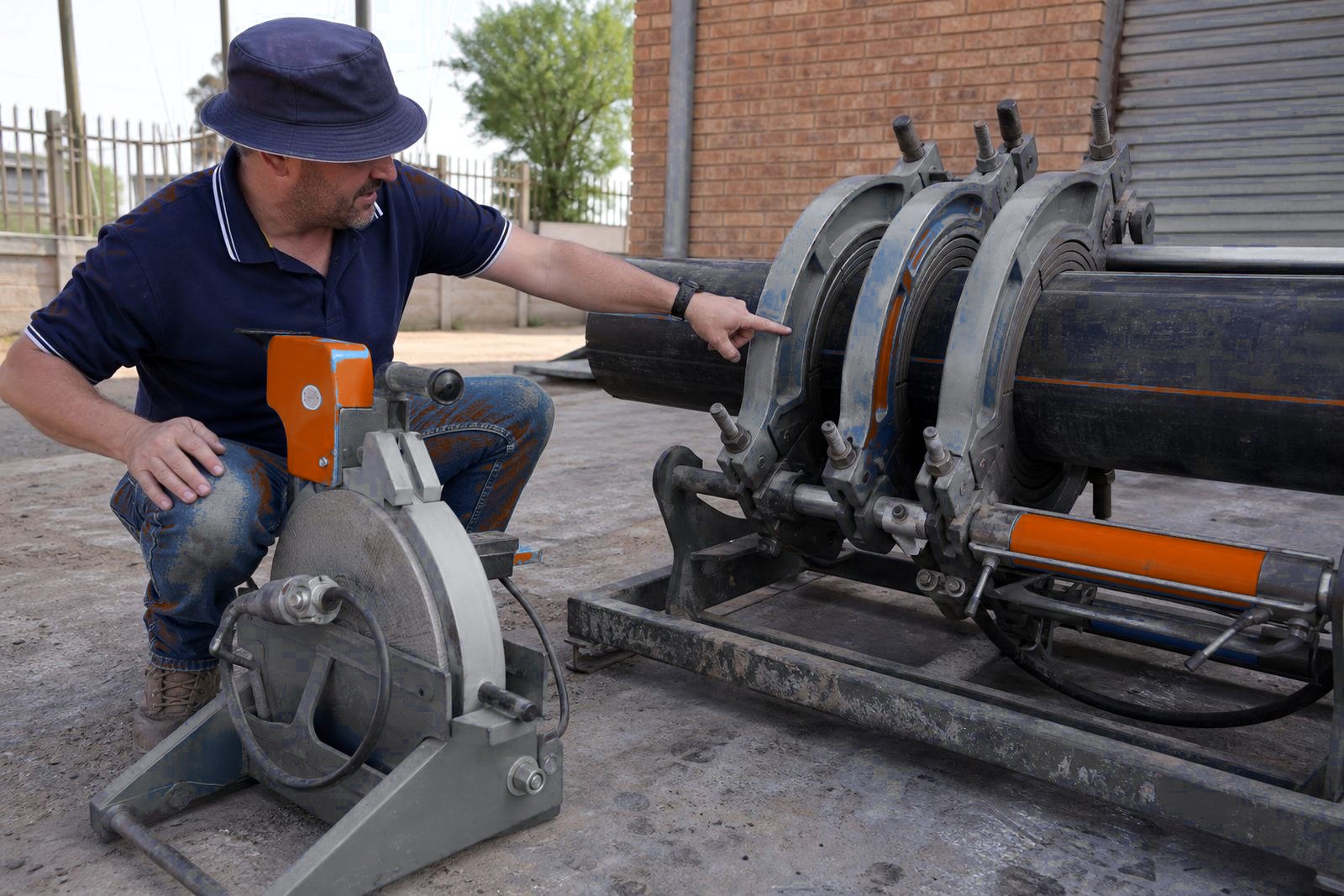
Many Gauteng pipe yards have tight spaces between stock stacks and forklifts. Machine feet need a firm, even base with room to load straight lengths.
- Check for rocking before loading pipe into the clamps.
- Pack under the frame where the floor falls away.
- Set all pipe supports at the same working height.
- Clear loose stones and offcuts from under the rails.
Level the machine before facing
On uneven ground, one side of the machine can carry more weight, and the cutting face may show a slight step across the face. The step changes how the heater plate meets the pipe.
For SDR work, where wall thickness and pipe stiffness vary with the pipe size, the setup needs extra care. Smaller diameters move more easily, while large pipe needs firmer support at the rear so the ends stay centred while the facer is running.
- Set the pipe on supports that match the centreline.
- Watch the chip pattern from both ends after facing.
- Do not let one pipe end sag while the other is cut.
Heating, changeover and cooling need stillness
A slope at changeover makes the faces touch unevenly and traps stress in the joint. On uneven ground, the bead can turn lopsided.
During cooling, the fusion pressure must stay steady while the joint gains strength. A level base helps the frame hold position so the bead can set without side loading. On wet sites near Durban or in windy open yards near Cape Town, a stable setup also keeps the team from chasing the machine while the joint is still soft.
- Move from heat to changeover without leaning on the frame.
- Hold pressure through the full cooling time.
Bead checks on uneven ground
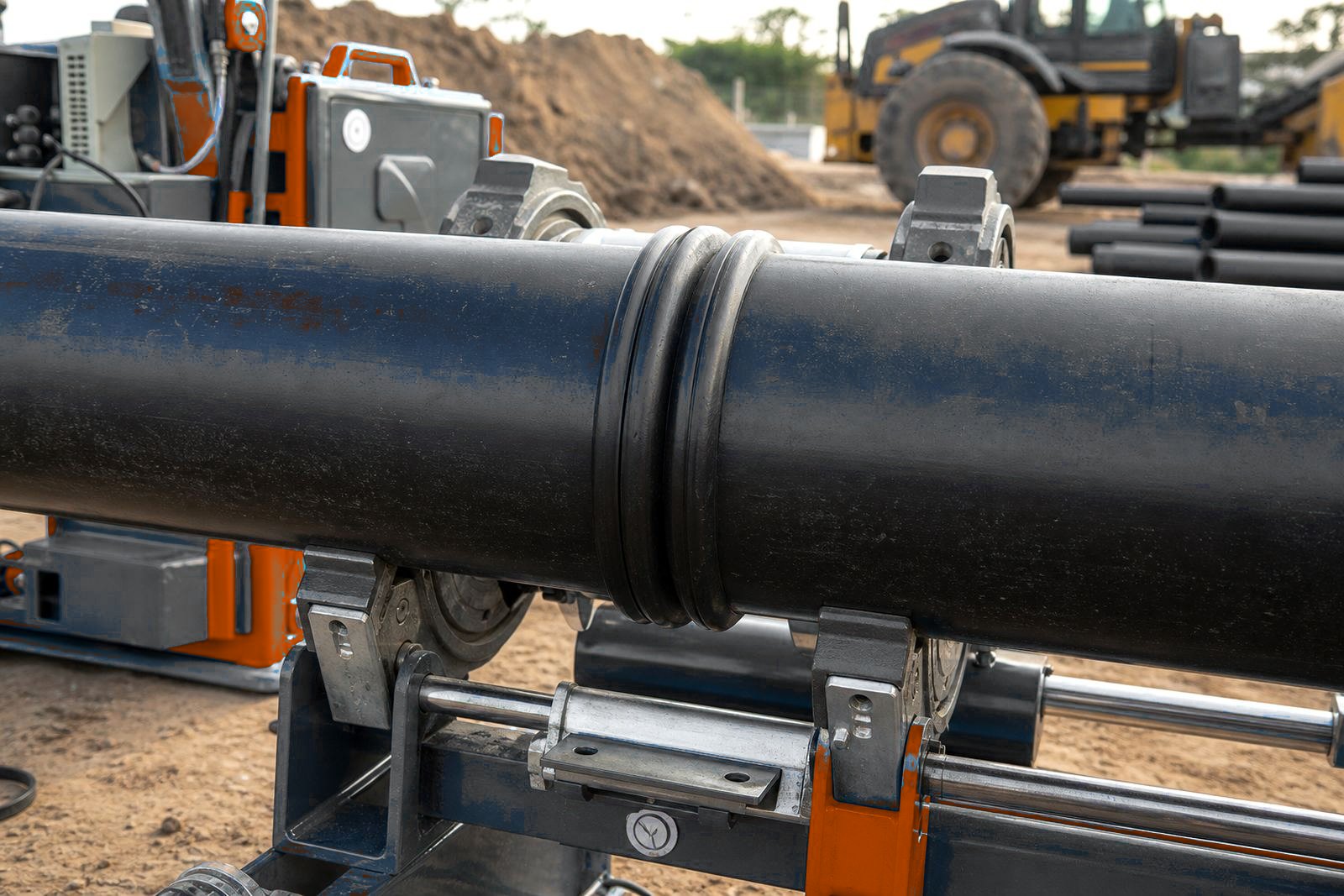
An offset bead, a thin side, or a visible twist can point back to a setup problem long before the pipe is put into service. A level base will not fix poor settings by itself, yet it gives the joint a fair chance to form properly.
When crews use data logging, the record becomes easier to trust if the machine was steady from the start. The logged pressure, heat and timing values are part of the picture, and the physical support under the weld still shapes the result.
- Compare the finished joint with the logged cycle data.
- Record any movement or settling during the weld.
Levelling on uneven yard ground
A contractor working from the East Rand once brought a long run of HDPE into a narrow yard with a slight fall toward the gate. Our customer's machine and pipe supports were right, but the first setup sat on a surface that moved under the rear frame. Facing was acceptable, yet the pipe ends did not stay as calm as they should have during changeover.
After the frame was packed level and the supports were reset to the same height, the weld line settled down. The bead became more even, the pipe stopped creeping in the clamps, and the operator could run the full cycle on a steady base.
- Levelling forms part of weld control.
- Uneven support can upset alignment on long pipe strings.
- Small setup changes help with bead quality on site.
- A steadier base makes training easier for new operators.
Training notes for crews that weld often
Operator training covers machine setup on uneven ground, starting with support height. We help crews spot the ground conditions that will affect the weld before the first cut is taken.
Pipe jobs often need the machine to sit on backfill, slab edges or temporary platforms. A level base, proper pipe support and clear control of pressure give the joint a better chance of holding its shape through the full cycle.
- Check the base before loading the first pipe length.
- Use supports that keep the pipe centreline even.
- Keep the machine frame steady during the full cycle.
- Log weld details where the job calls for traceability.