What the outside bead can tell you after cooling
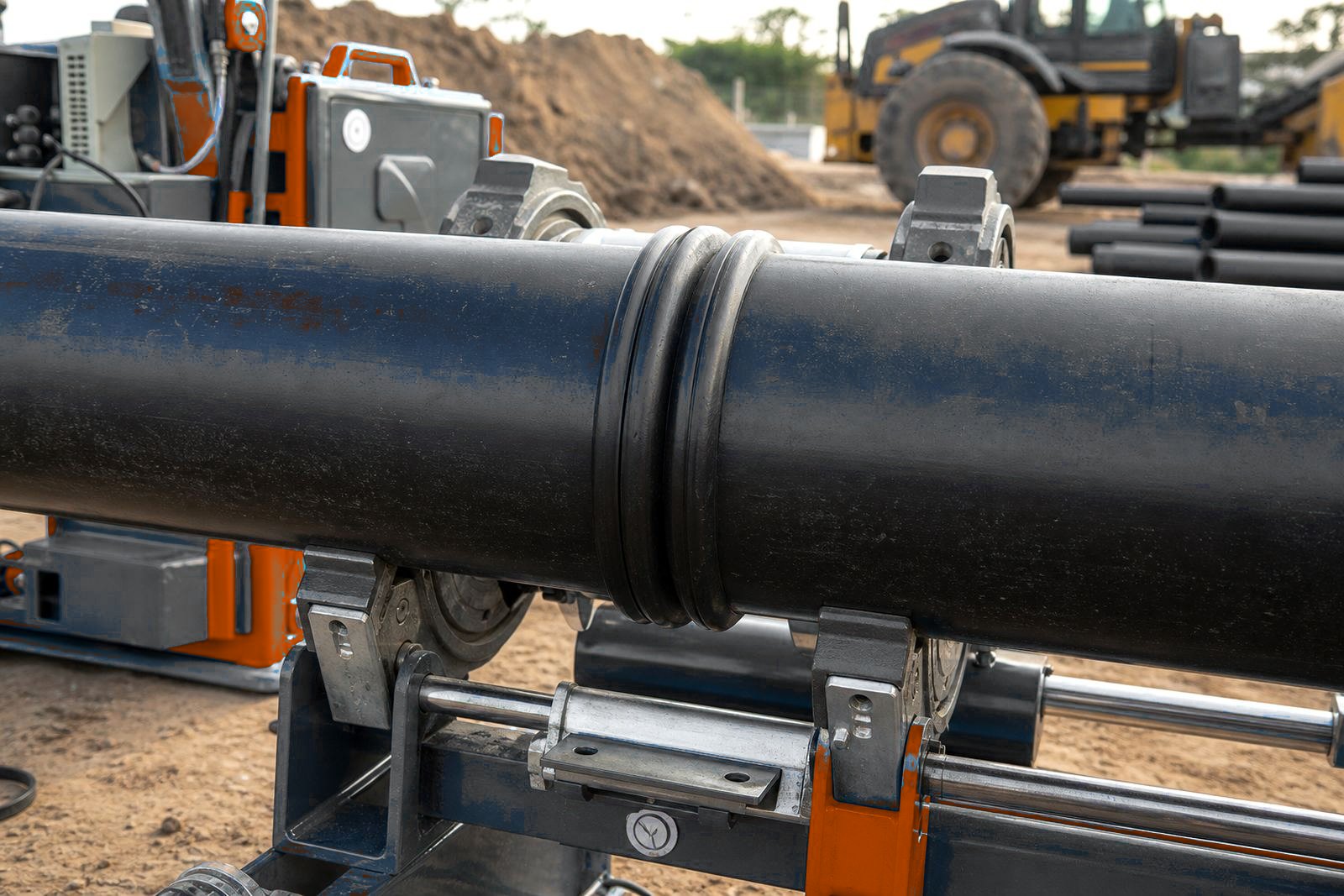
A uniform bead usually shows that both pipe ends were aligned, the facer removed material evenly and the heater plate brought both faces to the same melt condition. A bead thin on one side and heavy on the other suggests poor alignment, uneven clamping or a pressure shift. Buried pipe runs need sound joints because a bad one is costly to cut out.
For crews on long transport runs to site, the bead is a field record of what happened while the pipe was under pressure and heat.
Reading bead shape
Bead inspection works best when the eye looks for patterns in the bead. Sound beads have similar width and height on both sides, all the way round. The transition from pipe wall to bead should be smooth and rounded.
- Uniform profile through the full circumference
- Matching bead width at both sides points to consistent heating.
- A clean, regular roll often shows the heater plate stayed in place long enough for the melt face to form.
- Check any cracking, flattening or burnt patches on the bead after cooling.
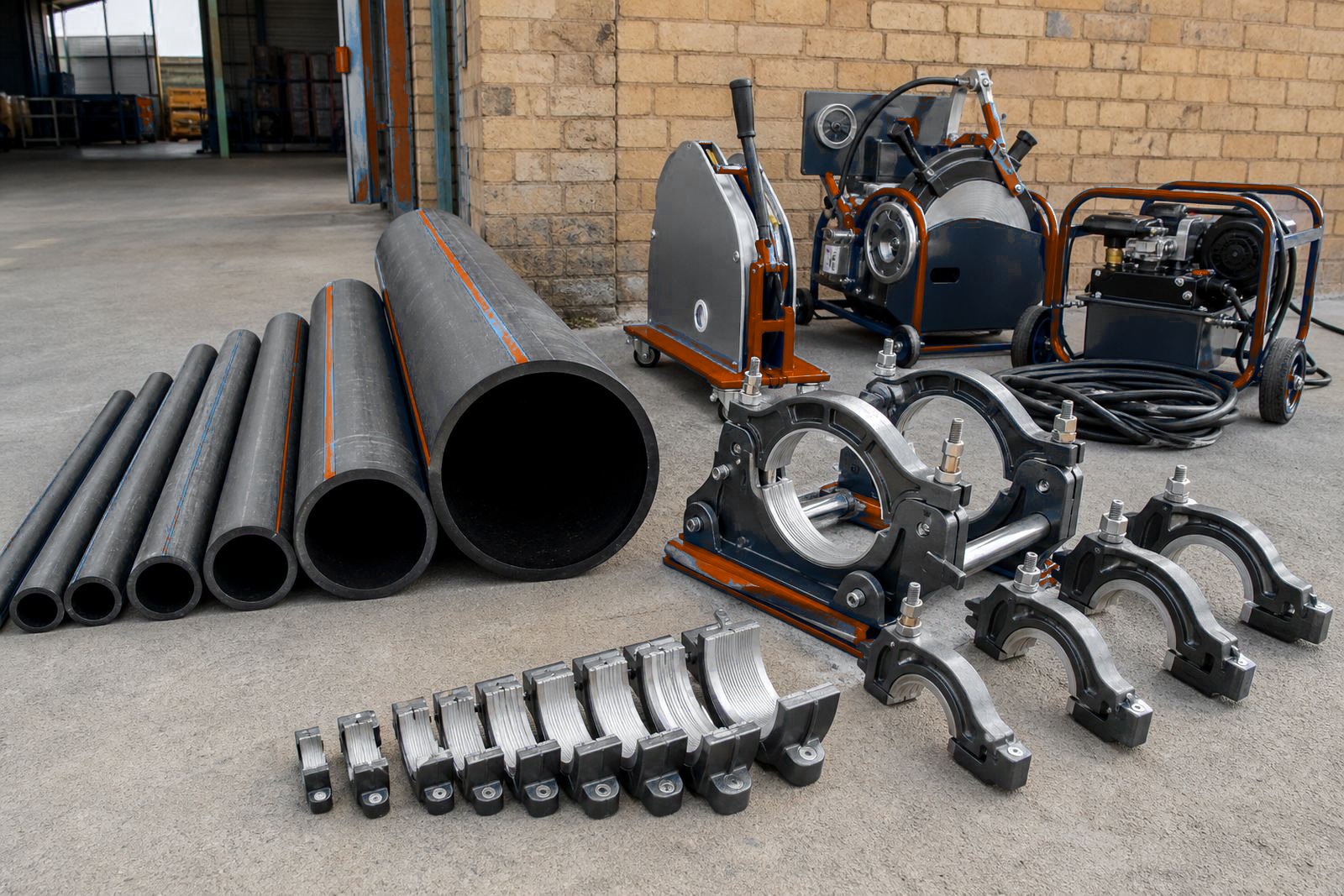
Bead shape must be read with pipe size and SDR in mind. 160 mm and 630 mm beads differ, and thick-wall pipe carries a fuller bead. The question is whether the bead looks even for that size and wall class.
Where process signs show up on the bead
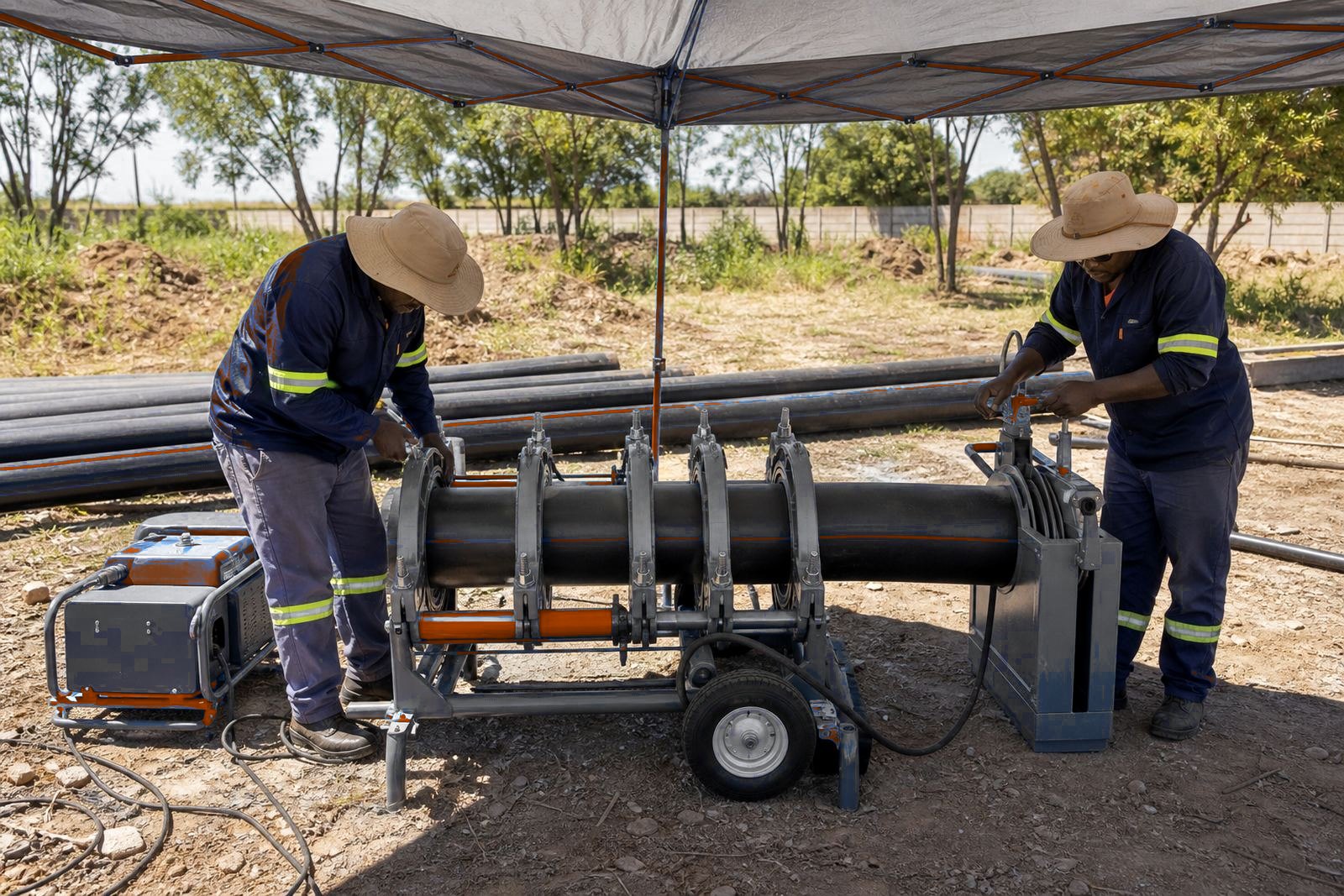
The bead also shows how the joint was heated and pressed. Cleanly faced joints should not show one end proud of the other. A shifted clamp set or drifting hydraulic pressure shows as a step, twist or uneven roll. That is often the kind of mark a field technician checks before the line is buried or put into service.
A long delay before joining lets the heated surface cool before pressure goes on. The bead may still form, but the surface can look dull, irregular or narrow in places. If heating was too short, the bead may look weak and lack the rounded edge that comes from proper melt flow. Too much heat can leave a squeezed, overblown bead with signs of excess flash.
- Long changeover can disturb the melt face.
- Short heating can leave poor fusion flow.
- Excess pressure can squeeze the bead thin.
- Poor clamping can create a visible step at the joint.
On jobs from Johannesburg support yards to remote Northern Cape sites, these signs show crews whether a joint should be accepted, retested or remade.
Let the joint cool before judging the weld
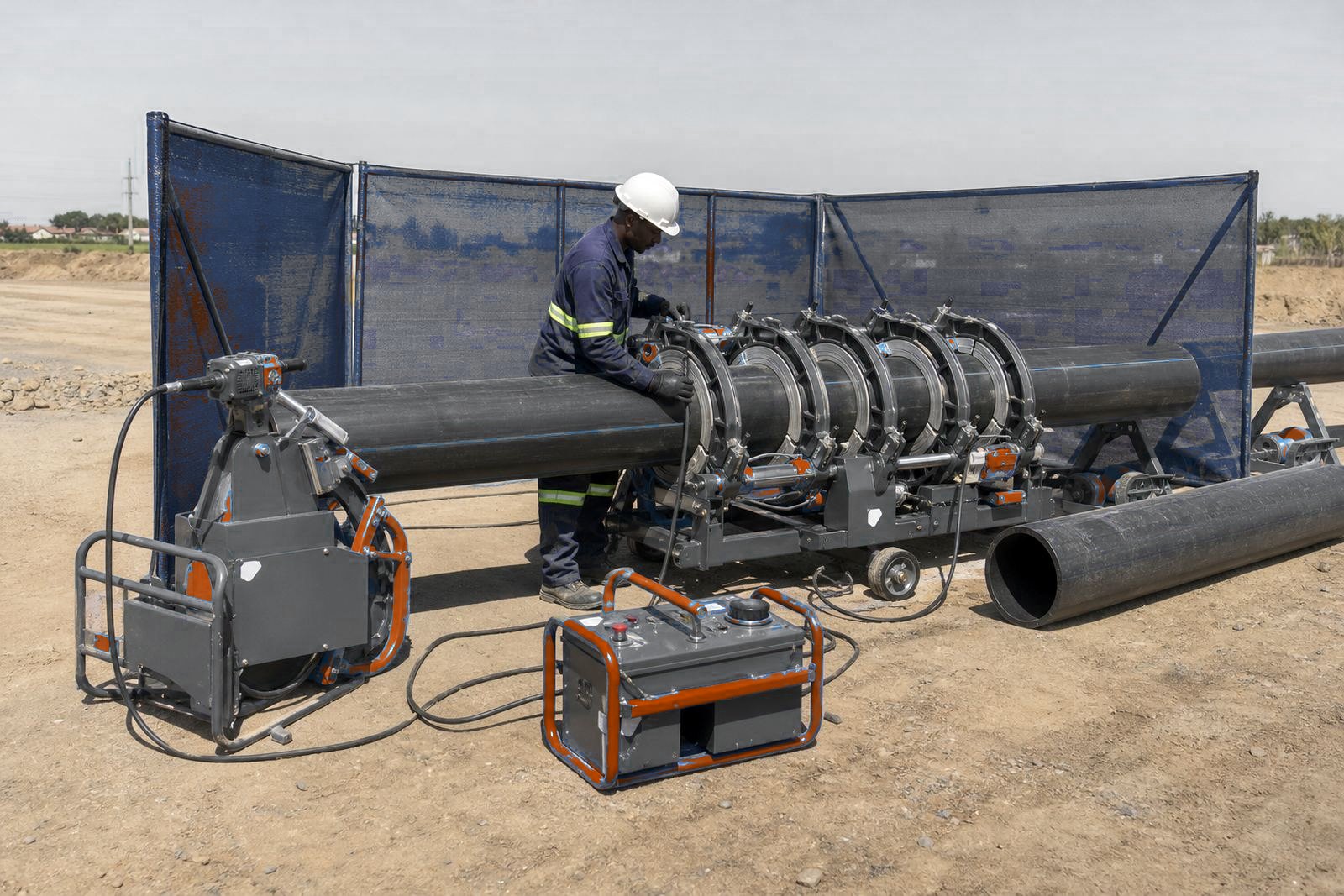
A bead should only be judged after the joint has cooled for the correct time under restraint. If clamps are released early, the pipe can move and the bead may distort, which hides the true shape of the fusion line. Every weld record includes the cooling time.
For many crews, the pressure is strongest when a line is needed for the next phase of work. A joint handled too soon can lose the bead shape that inspection relies on. The pipe wall still carries heat, and the outside may look solid before the core has settled.
In practice, inspection should wait until the joint is stable enough to show its final form. That is especially important on larger diameters where heat stays in the wall for longer and movement can mark the bead more sharply.
What a bead cannot prove on its own
Bead inspection results go into the weld log. A tidy exterior cannot make up for poor preparation, wrong fusion pressure, dirty pipe ends or a heater plate that was not checked before use. Bead inspection should sit beside the weld record, pipe size, SDR and the operator notes from the job.
There are also defects the eye cannot catch from outside alone. Internal contamination, uneven melt depth or hidden lack of fusion may not show clearly on the bead. Operators should keep logs and note the machine settings used for each joint.
- Record facing, heating and cooling details for each weld.
- Bead inspected before the line is moved or buried
When a contractor is running several crews, the log is the record of who set what and when.
Checking beads before backfill
A civil crew brought in a series of HDPE joints for check-up after a shift change. Pipe sizes matched, yet one joint showed a flatter bead on one side and a slight step at the join. The weld log showed a longer changeover than the rest of the line and the clamp pressure had been adjusted during the cycle.
The bead gave the first warning. That joint was checked against the machine setting sheet, the facer alignment and the plate. That is the practical value of bead inspection: it points people to the next question before a buried line makes the problem harder to find.
New operators on water jobs learn to link each bead fault to a step in the sequence.
Inspecting beads the same way every time
Before a joint is signed off, the bead should be read against the work that produced it. A quick visual check can catch obvious issues, but it works best when the team uses the same routine every time.
- Look for steps, flats, tears or burn marks.
- Match the joint against the weld log and pipe details.
- Compare the joint with other welds on the same run.
Bead inspection is a set step after every joint. Contractors on long HDPE runs use it because one bad joint can fail a pressure test for the line.