Checking size range before the first weld
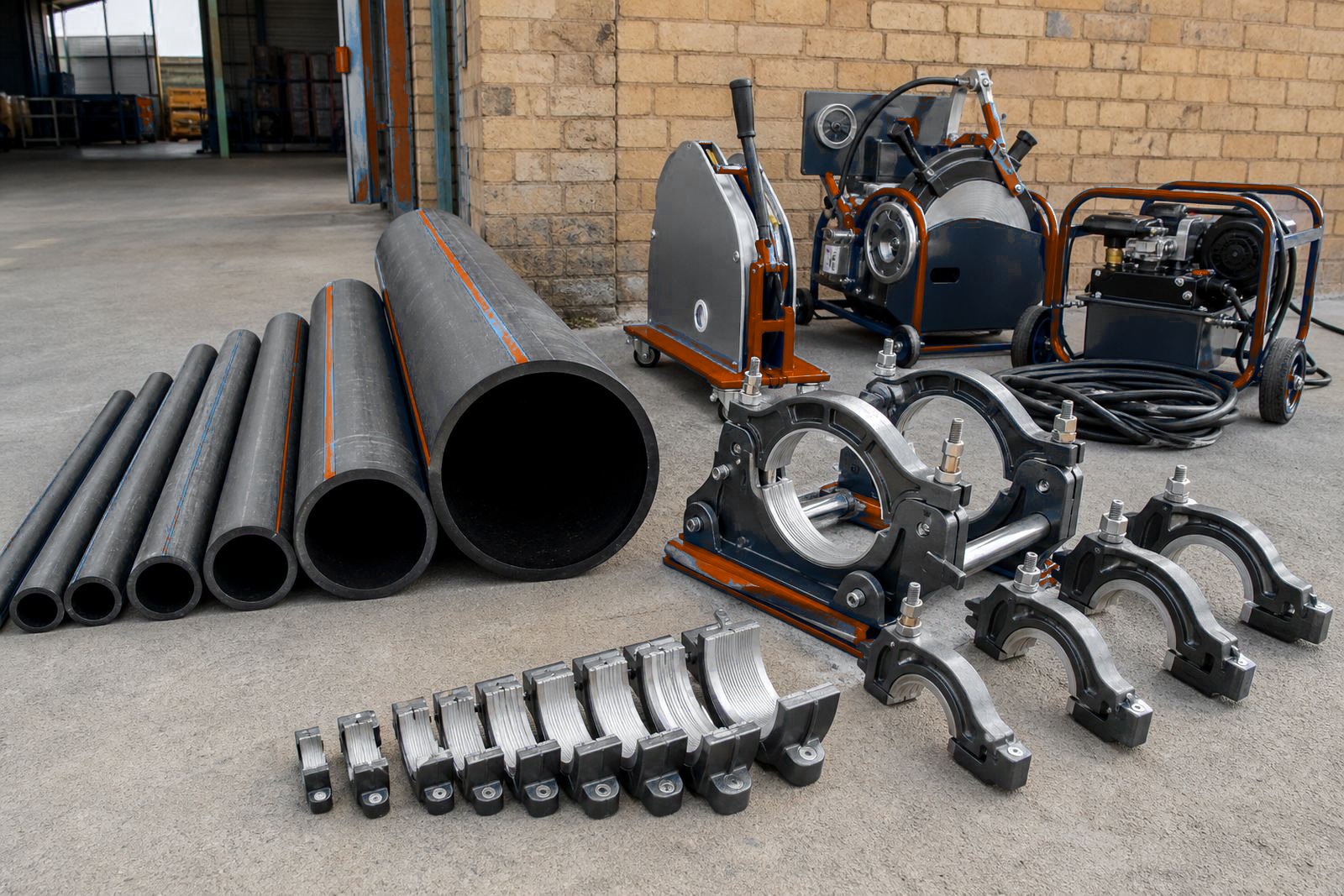
Wall thickness means the same nominal line can need different handling. Small frames are cramped on 315 mm work, and big frames give poor control on small pipe. Size range sets the inserts, facer reach, plate footprint and force for fusion pressure.
A single week can run from 110 mm service pipe to 160 mm mains. Settings, clamping faces and changeover speed shift enough to affect the outcome. If the range is wrong, the pipe can ovalise, the bead can pull unevenly, and the joint may not hold its shape through cooling.
Reading the pipe chart
Select the size from the pipe specification on the drawings. Diameter tells you the clamp opening, while SDR tells you wall thickness and the heat soak needed before changeover. Thin wall pipe heats differently from thick wall pipe, and the machine has to carry that difference without over-squeezing the joint.
- Check the outside diameter in millimetres against the line description.
- Match the clamp inserts to the pipe so it sits round and stable.
- Confirm the SDR before setting heating and fusion pressure.
- Allow for the full bead build, then hold the joint through cooling time.
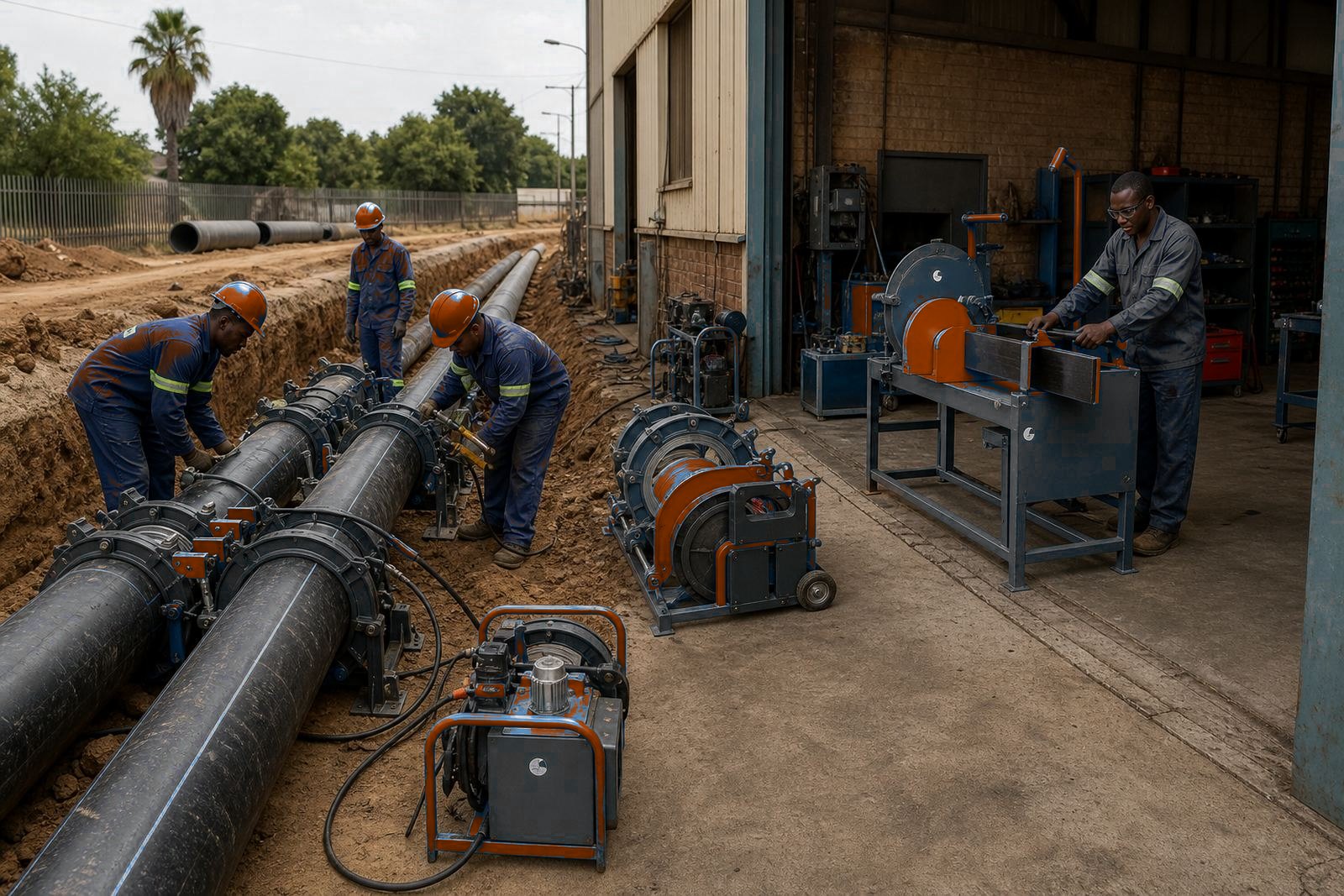
Slurry work needs it too, where longer runs often bring heavier pipe and bigger sizes in the same trench. A small clamp set can work on early stages, then fall short once the larger sections arrive.
Pressure control on small diameters
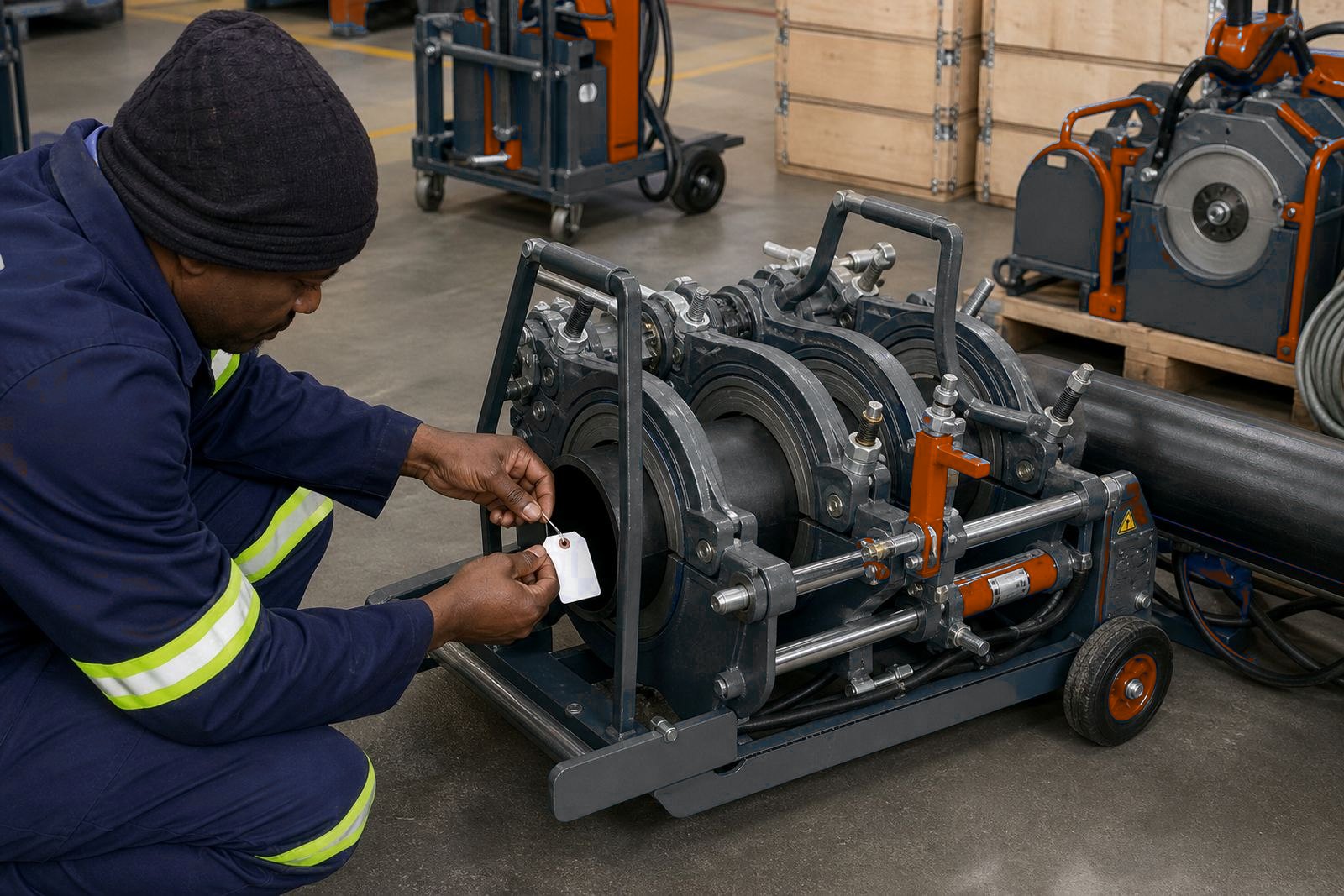
For small HDPE pipe, the machine must close squarely and keep the ends facing cleanly. A compact frame with accurate alignment is easy to centre. On 40 mm, 63 mm or 90 mm pipe, too much pressure distorts the ends.
On these sizes, the facer must leave a level face, the heater plate must reach the right working temperature, and the changeover from heat to fusion must finish within the open time. Rough clamp movement shifts the joint.
- Use inserts that grip without marking the pipe surface.
- Watch for ovality before clamping.
- Inspect the external bead for even shape after cooling.
Mid-range pipe needs a machine that stays square
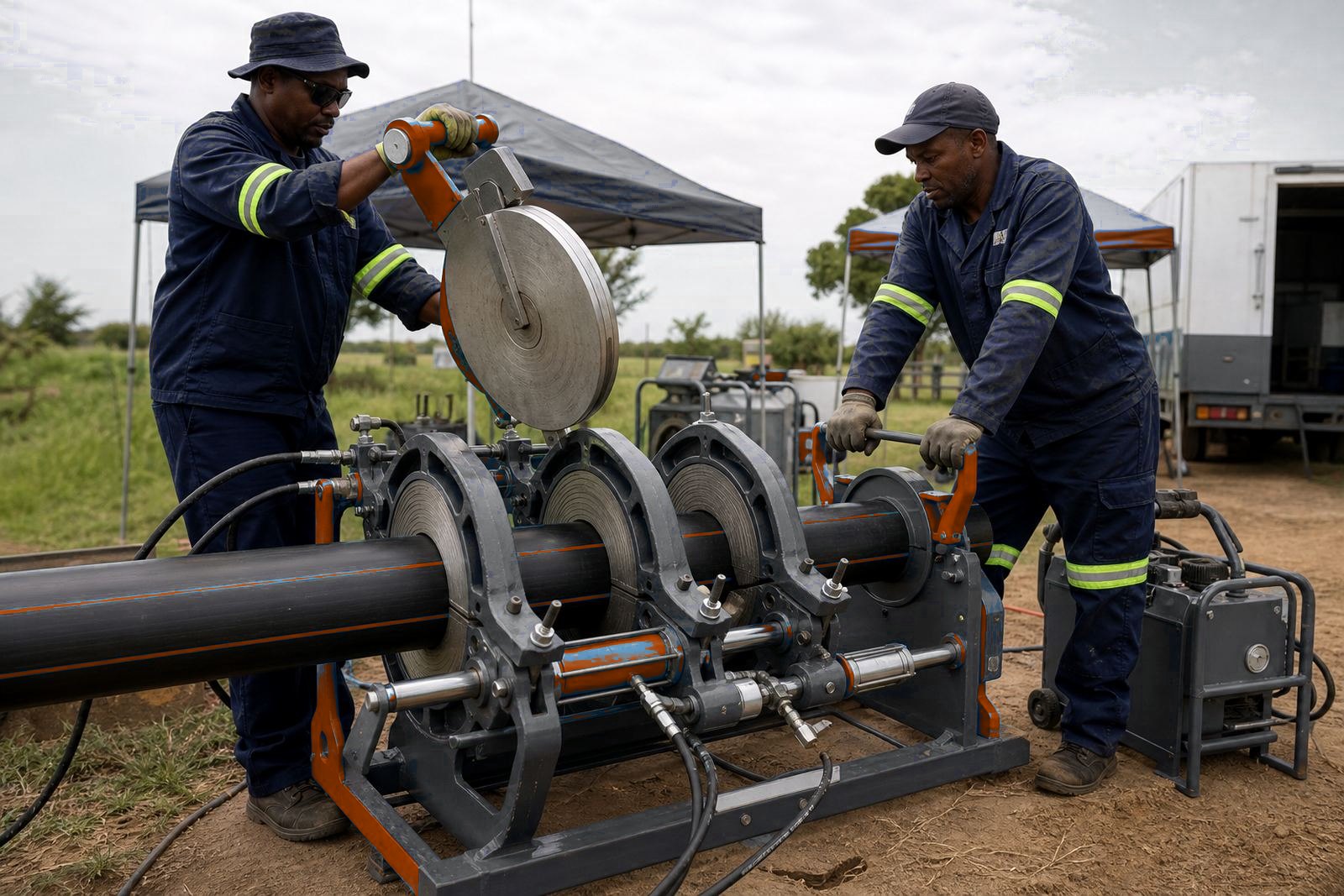
Once you move into 110 mm, 160 mm and 200 mm work, the machine needs enough frame strength to hold alignment under pressure. These sizes are common on irrigation lines. The pipe walls are thick enough to store heat, so the operator has to respect the full soak time before joining the ends.
A crew preparing for a site in Rustenburg may set up a mid-range machine for repeated 160 mm joints. The job is about repeatability. Each joint should show the same bead profile and squeeze, and get the full cooling time before the line is moved.
Turn on data logging when the project calls for records of heat time, pressure and joint sequence. It does not fix bad setup, and it gives the team a record to check when one weld looks different from the next.
Large diameters need a bigger frame
Large HDPE pipe, especially 250 mm and above, places more strain on every part of the setup. The clamps need to hold the pipe without creep, the facing tool needs enough reach, and the hydraulic system must give steady pressure without jerking. With larger wall sections, the bead build becomes more obvious and any misalignment stands out quickly.
At this scale, the machine choice is tied to the site layout as much as the pipe size. A mining project near Polokwane may need long, open runs with room for loading pipe strings, while a coastal job in Durban has to keep dirt and moisture out of the joint area. In both cases, check clamp stability and heater plate condition first.
- Confirm the maximum pipe diameter the frame can hold comfortably.
- Check whether the clamps support the largest SDR on site.
- Allow enough space for loading, facing and pipe movement.
When one machine range can and cannot do the job
Some contractors want one machine to handle the full spread of pipe sizes. That can work if the frame, clamps and heater plate are matched to the largest diameter with proper inserts for the smaller work. It is practical on mixed civil jobs, but only if the operator stays strict about setup for each size change.
There is a limit, though. A machine stretched too far beyond its intended range becomes awkward on both ends of the scale. Small pipe can sit loose, while large pipe can push the frame beyond comfortable handling. Base the range on the actual job list, and hire a second unit where the spread is too wide for one machine.
A wide spread is common for contractors who move between short local call-outs and long out-of-town sites. The right range keeps alignment, pressure and cooling under control on the pipe sizes that are really on site.
Sizing the setup for a site brief
A size brief should give the pipe diameter, SDR, wall thickness, joint count and how the line will be handled on site. Knowing whether the work is overhead, trench level or on stands helps, because clamp access changes with the layout. Decide in advance who logs heat soak, pressure and cooling.
Heat, dust and trench access on the site also affect the choice. Heat, dust, coastal humidity and long pipe strings all affect how the machine is set up and how the joint is protected while cooling. Match the machine to the actual pipe range, then keep facing, heating, changeover and bead inspection consistent from first joint to last.