Where the job changes underfoot
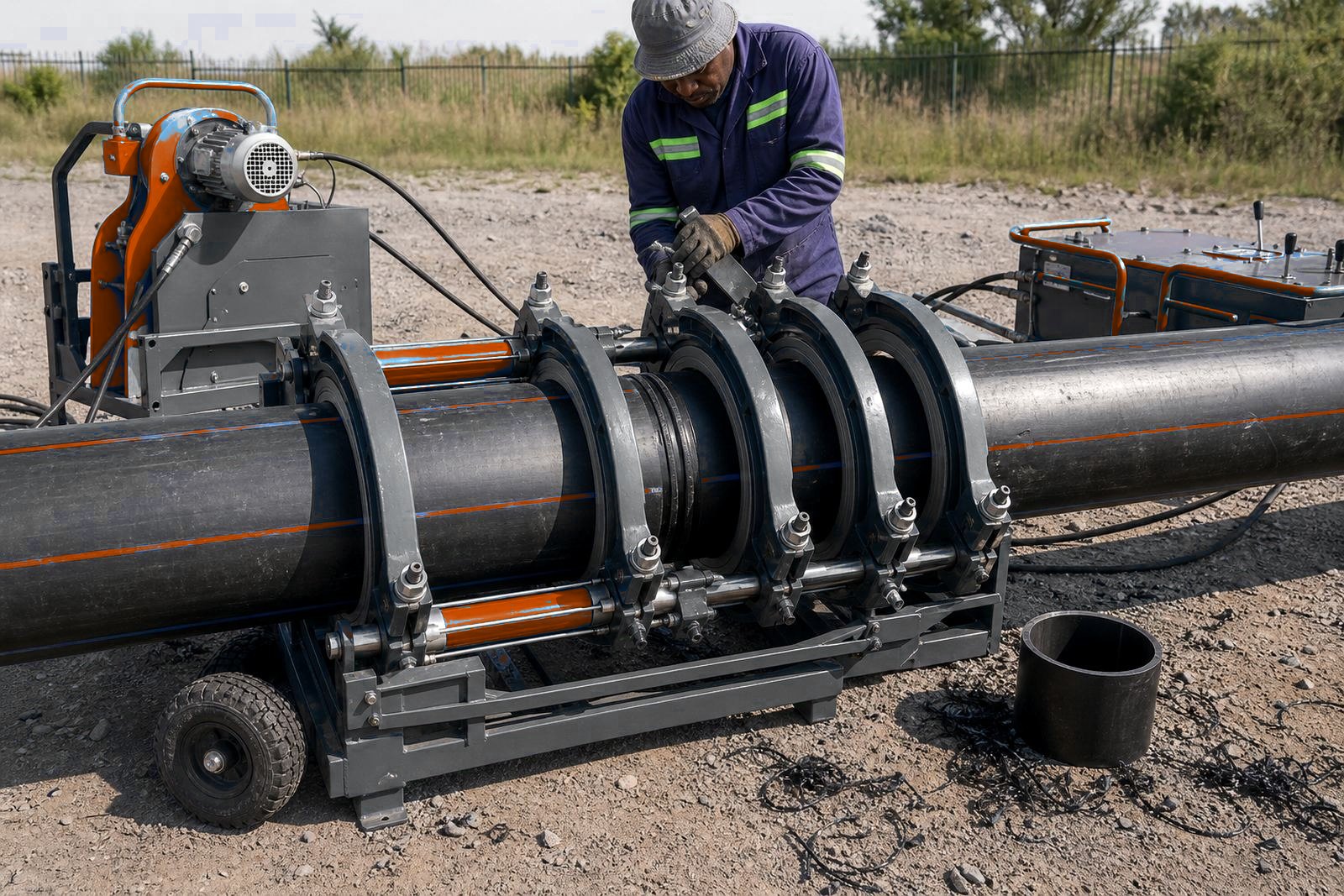
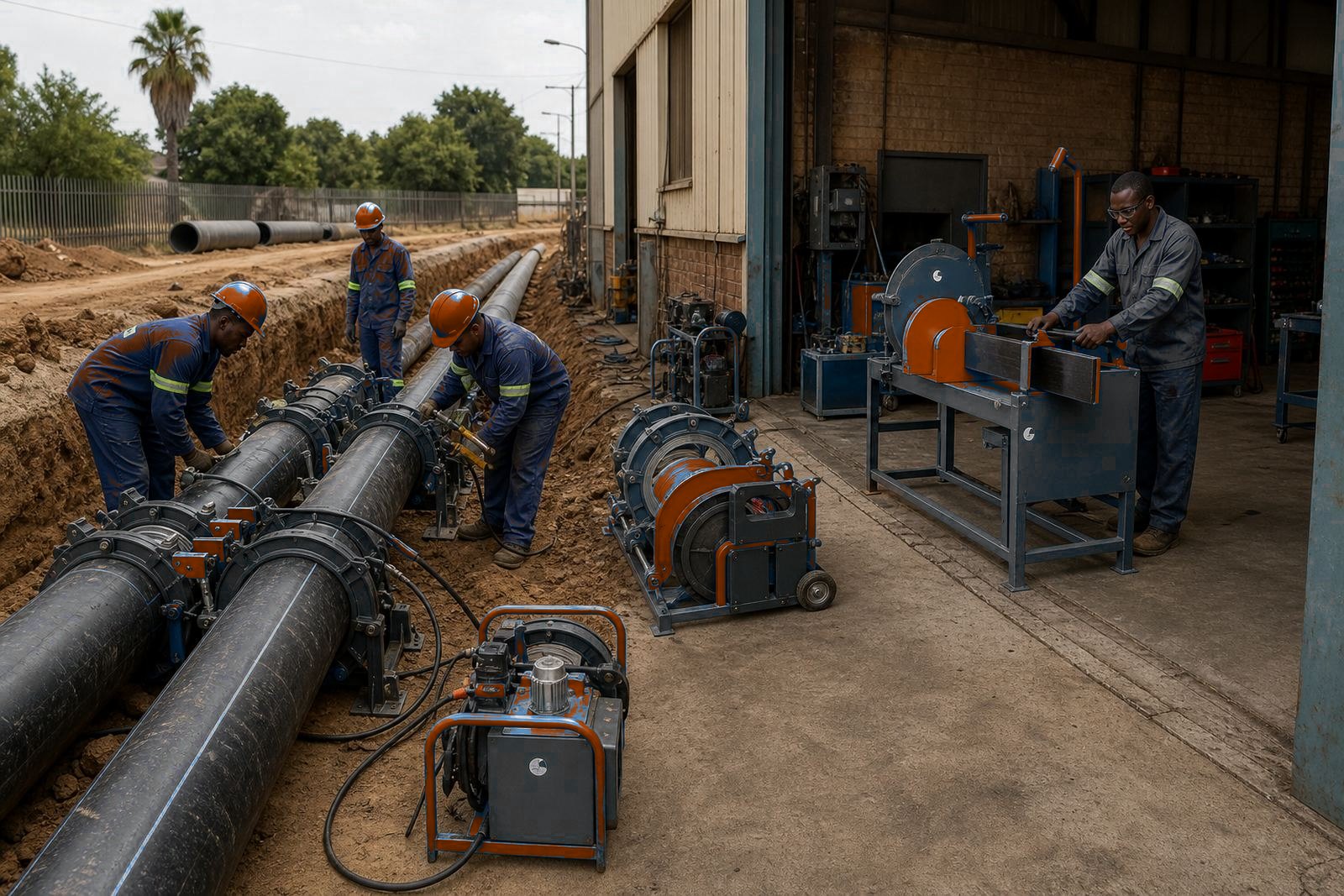
In a workshop, the pipe sits on level support, the machine stays protected, and the crew can spend more time aligning the joint face. Field runs bring uneven ground, dusty ends, and wind or rain that interferes with heating. That adds handling time to each joint.
The steps are the same in the field: clamp, face, clean, heat, change over, apply fusion pressure and hold the joint during cooling. On long, heavy or moving pipe, field crews need extra support stands and time to keep each step clean.
Workshop work gives the machine an easier life
A workshop setting usually suits prefabrication and repeat runs. The machine frame is easier to level, hydraulic pressure is easier to watch, and the operator can inspect the bead with less rush. Large diameters need extra stability to keep the face square across the full wall.
A workshop suits a team working through several SDR classes in one day. A thinner wall reacts differently from a thick wall, so the facing pass, heater soak and pressure application have to match the pipe size and wall profile. A steady bay, clear storage and proper handling of heater plates and clamps keep the work orderly.
- Better alignment for straight pipe runs
- More room for pipe support and bead checks
- Less exposure to dust, rain and wind
- Easier control of repeat welding cycles
Field conditions ask for tighter planning
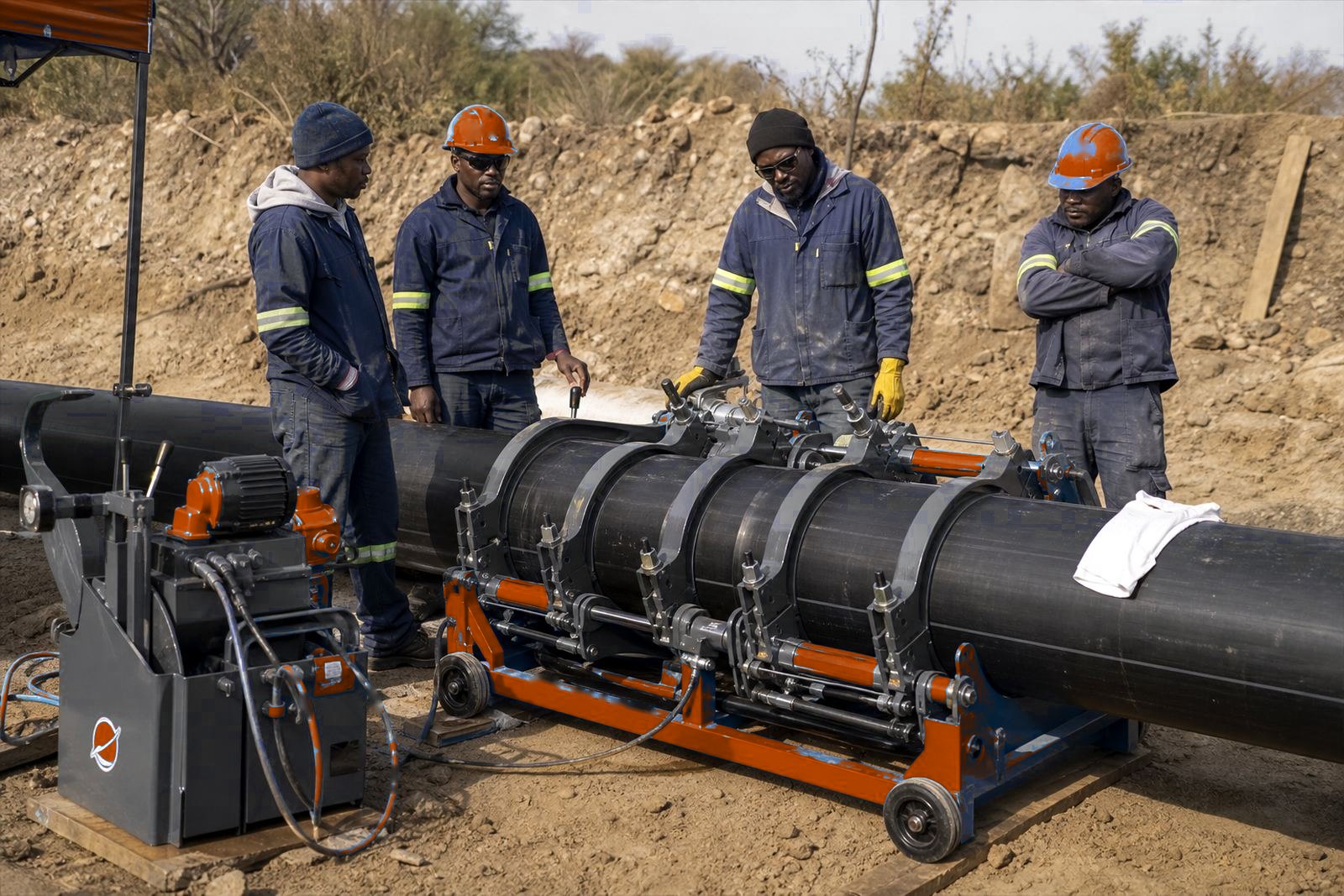
Site machines may sit beside an open trench, a stockpile or a line still waiting for grading. Field crews protect the pipe ends before the first cut and keep the plate clean all cycle. A small contamination patch can spoil the whole joint, so clean every face in the field.
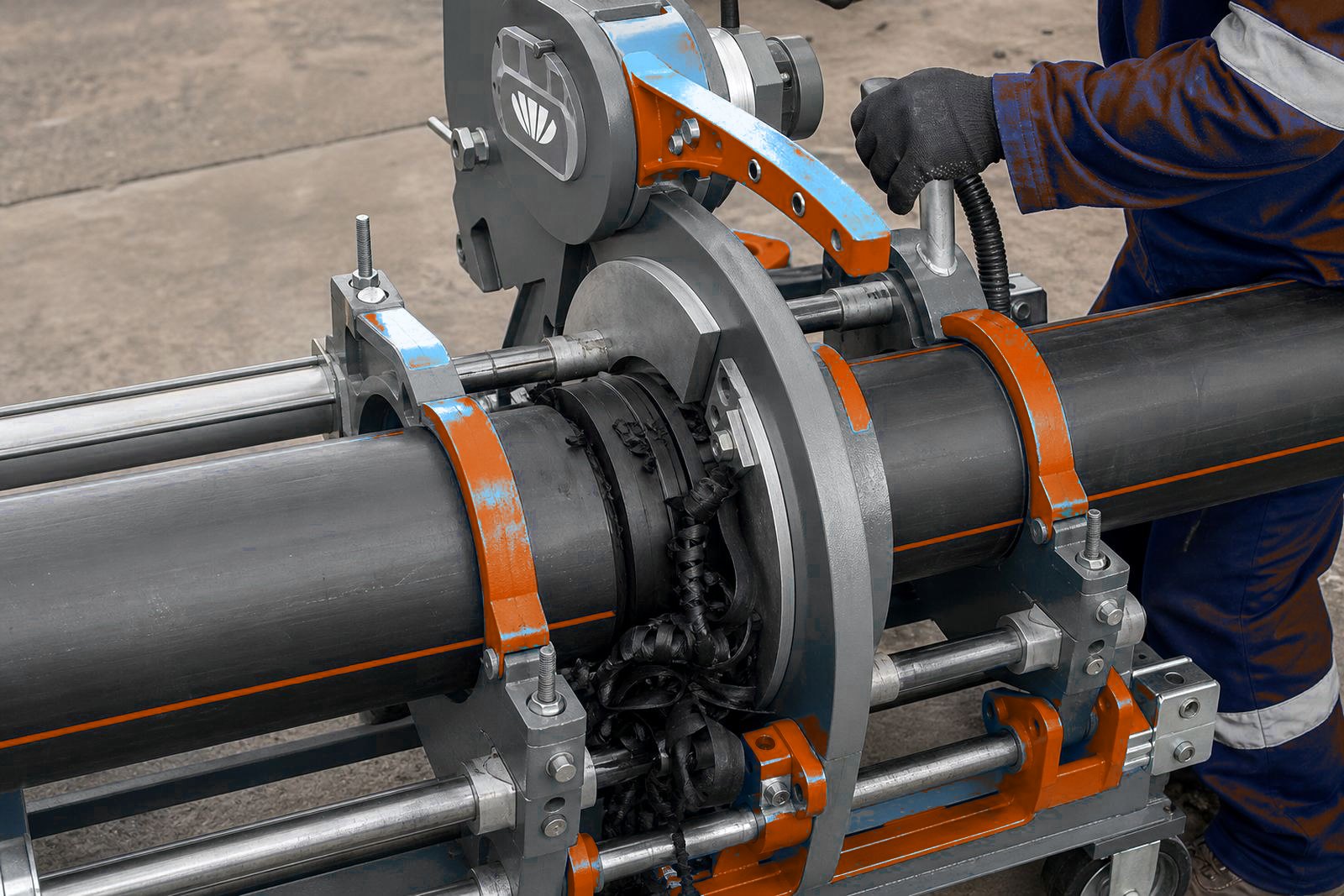
In practice, the operator checks that the clamps grip evenly, the facer removes a full, fresh shaving and the heater plate reaches the right condition before contact. After changeover, the pipe ends must meet quickly and evenly under the fusion pressure called for by the pipe size.
- Level the machine before heating begins
- Shade the joint area where heat loss is high
- Record weld details while the job is fresh
Bead checks after cooling
The bead is one of the first signs that the heating and pressure stages were controlled. Field joints with a lopsided bead mean stopping to recheck alignment, heater contact and changeover timing.
Field and workshop welding both use data logging. It gives a trail for pipe size, SDR, pressure and cycle details, and it makes later checks easier when a line is being handed over or repaired. In workshop work the record is usually easier to keep tidy. Field crews record the same details, with the log kept at the machine.
The right machine setup for each setting
Field and workshop jobs can both use the same type of butt-fusion machine, but the setup extras change. A workshop may rely on fixed benches, longer support tables and dedicated storage for clamps and plates. A field crew may need a more compact layout, quicker loading and better protection for hydraulic hoses, gauge faces and machined surfaces.
Training shows operators both environments. A crew that understands how facing, heating and changeover behave on a calm floor will handle a windy site with more care. The same weld procedure applies to short workshop spools and to long lengths for a municipal water line in Rustenburg.
Field days and workshop days compared
A team may spend Monday on a workshop run of prepared pipe spools, then move to a long water line. The workshop job may focus on neat repetition and clean storage. The field job may demand faster protection of the pipe ends and more attention to ground conditions.
We run training for both settings. A fitter who knows the sequence can keep the fusion pressure steady, protect the heater plate, and read the bead with a sharper eye.
When hire support keeps the schedule moving
Some crews own their machines and some hire for a specific project window. Either way, the machine still needs a heater plate check. Hydraulic pressure tests and weld logging help keep the equipment reliable, especially where several operators use the same set across different sites.
The practical aim is to keep the machine ready for the job in front of it, whether that is workshop fabrication or field welding on an active project.