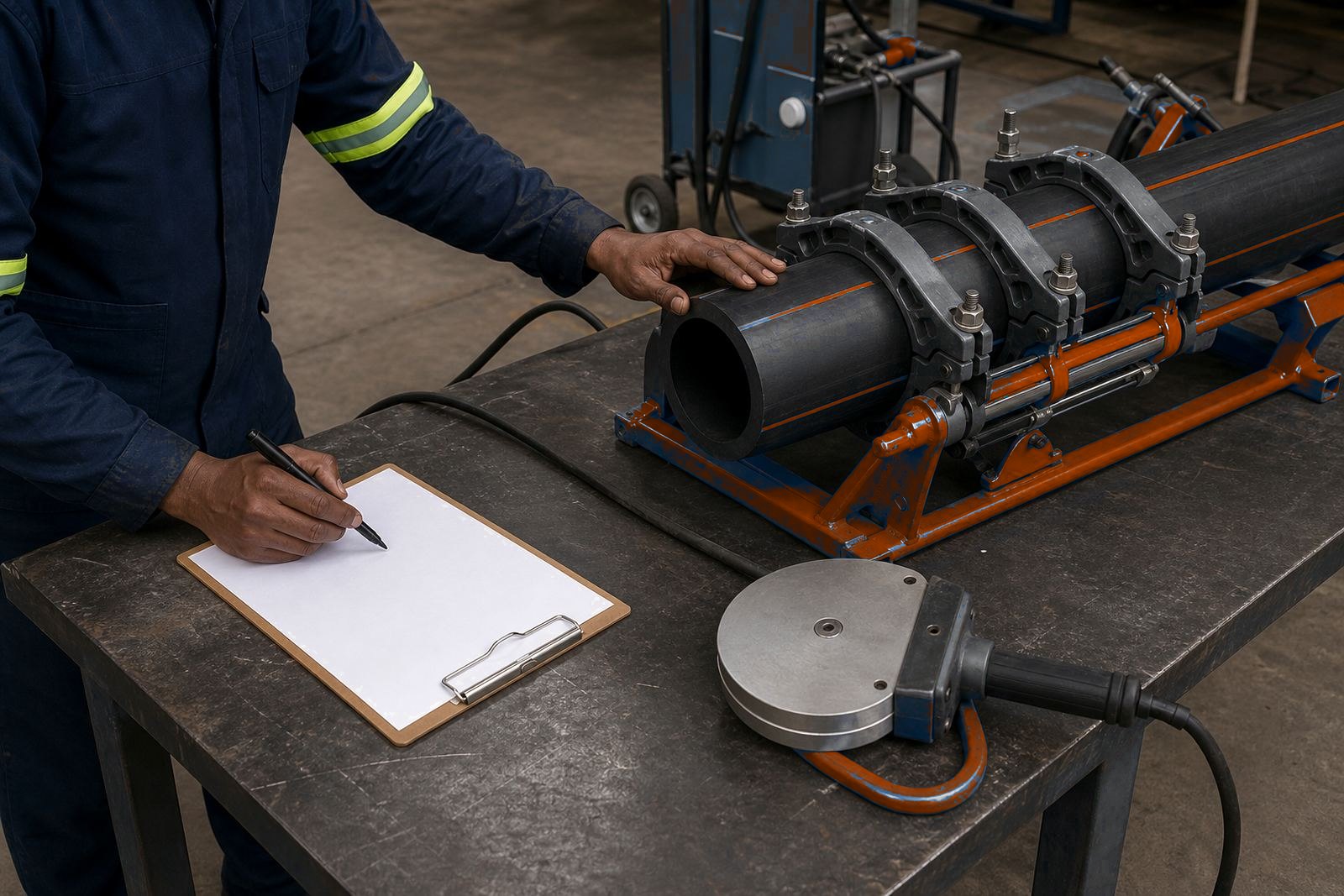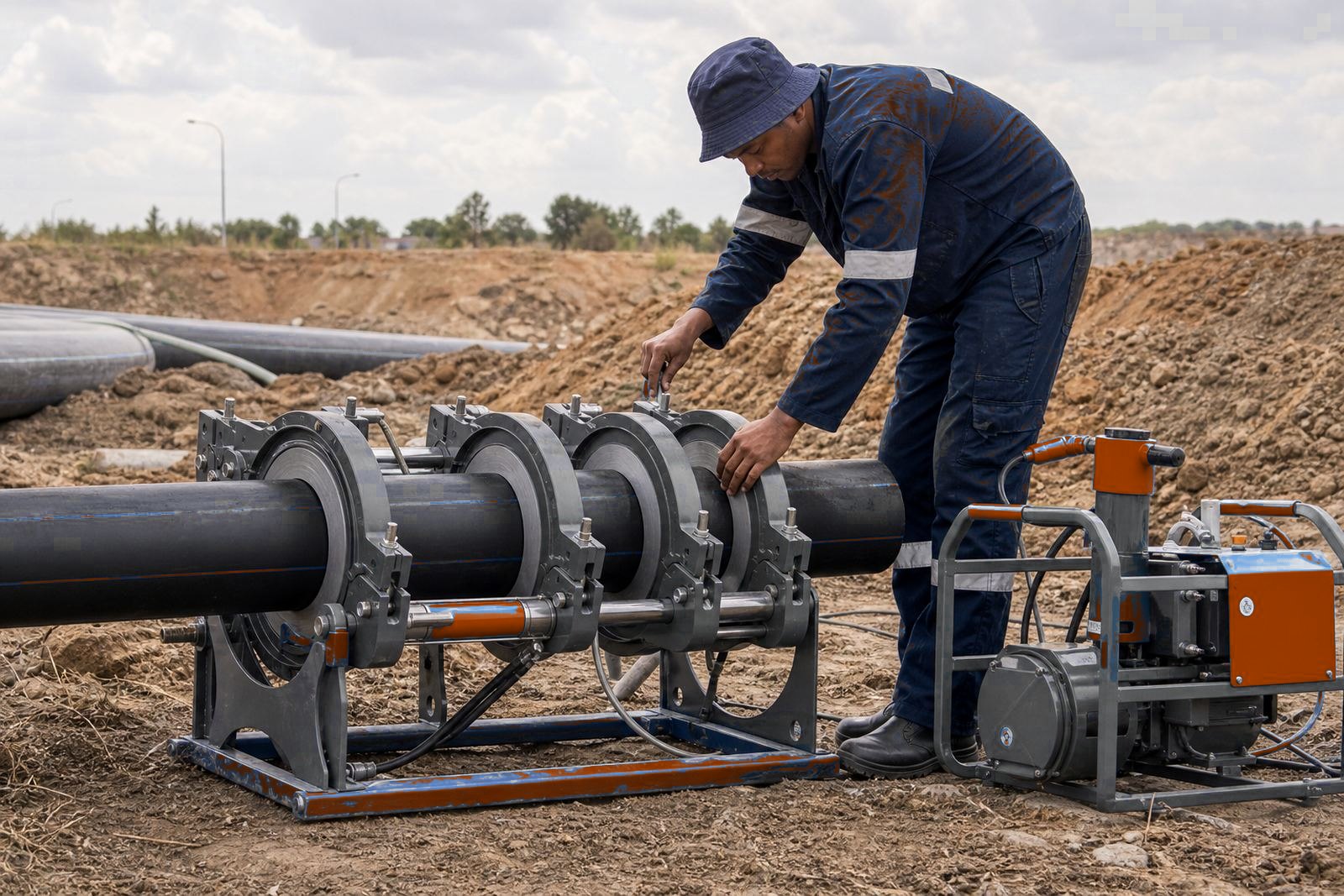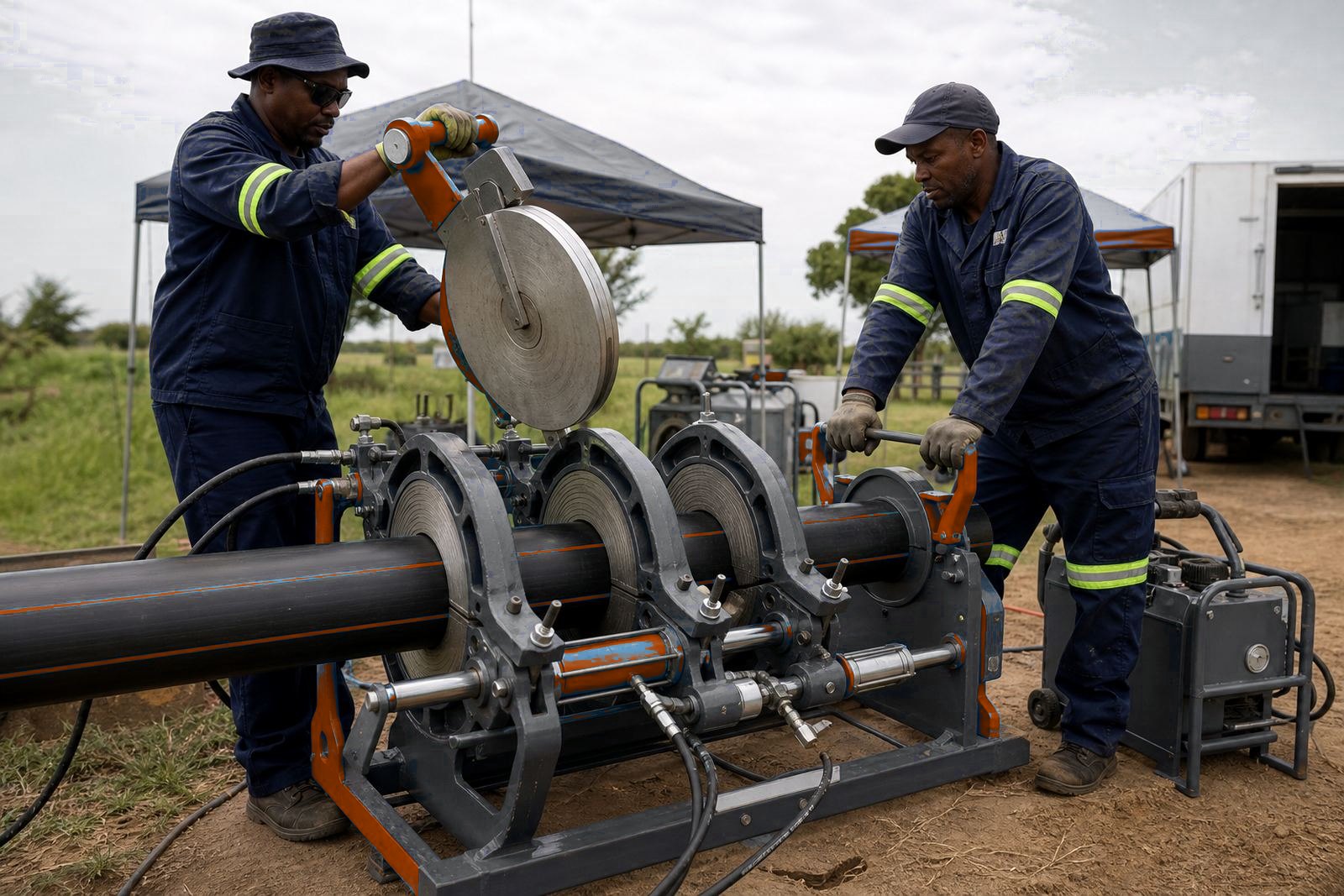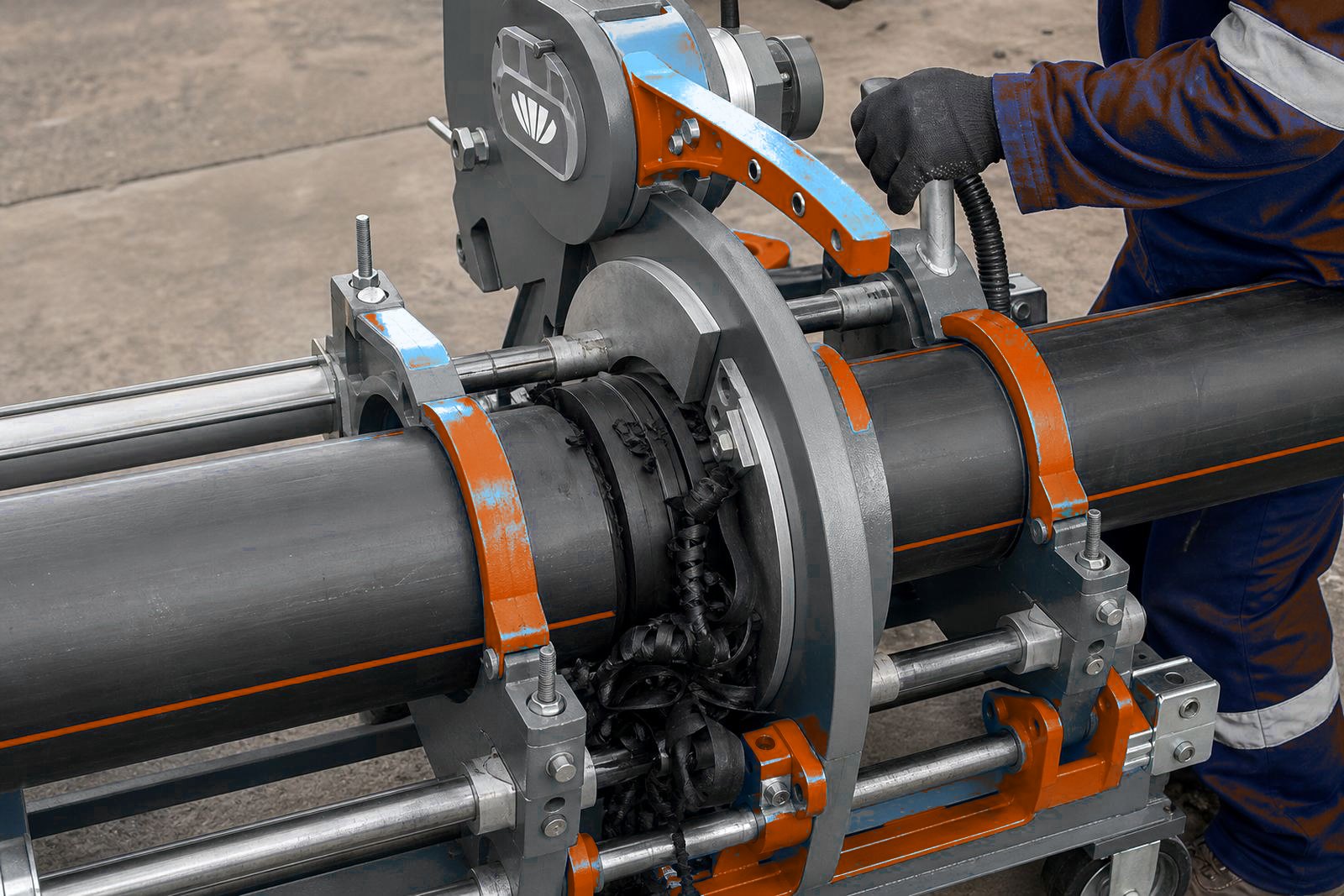
The cut that sets the weld up properly
During butt-fusion work, facing trims a thin layer from each pipe end until both faces are flat, square and true to the machine axis. Our aim is to make sure both ends meet evenly when the heater plate is removed and the fusion cycle moves into contact pressure.
HDPE pipe can arrive with slight ovality, saw marks or damage from handling. Facing takes that out of the equation. After the facer pass, both ends should show the same profile and close evenly.
High points left after facing push large pipe off line at changeover. A small error at the face gives an uneven bead or a cold section in the joint.
What the operator looks for while facing
Good facing is judged by the surface that comes off the tool and by the way the pipe sits in the clamps. The machine should hold the pipe firmly without shifting, and the facer must cut evenly across the full diameter. Uneven trimming between sides means the clamp alignment is checked.
- A continuous, even shaving from both sides of the pipe end
- No chatter marks, tearing or heat damage on the face
- Pipe ends that meet squarely after the facer is withdrawn
- No visible ovality left that could upset the heater contact
Our team often sees trouble on repair work where a pipe has been dragged across gravel or loaded with a bent end after transport. In those cases, the facing step restores the geometry the joint needs before heating starts.
How facing links to heat, changeover and pressure
Facing is one part of the cycle and sets the rest of it up.
Heating and changeover both rely on the earlier face cut. If the ends are not square, the heater contact will not be even and the molten bead may grow lopsided. The cooling time then locks in whatever happened during that contact phase, which is why operators watch the facer closely before moving on.
For pressure and timing, the operator works from the pipe diameter, the machine setting and the wall class. Facing gives those values a clean, square joint face to work on.
Blade wear and uneven facer travel
The facer only cuts square ends when the clamps and pipe are aligned first. Dirty guides, worn blades, loose clamps or a hydraulic issue can all show up as a poor face. Badly clamped pipe lets the tool cut one side deeper and leave the joint off centre.
- Check blade sharpness before a run on larger pipe sizes
- Keep swarf clear so it does not sit in the jaws
- Confirm the facer travels smoothly without binding
- Inspect clamp faces for wear or distortion
- Look at hydraulic pressure if the pipe moves during cutting
Facers that have spent weeks moving between Johannesburg, Rustenburg and coastal sites show this wear most. Dust, handling knocks and rough loading all affect the cut. A worn facer can stop a long run while it is sorted out.
Reading the bead after the pipe cools
Thin or uneven squeeze-out sends the operator back to check whether the faces were square.
For site records, weld logging helps tie the joint back to the facing step, the heater plate temperature and the pressure applied during fusion. Pipe runs that are inspected later benefit from that record, because the crew needs a clear note of what was done.
Data logging still needs a visual check. On large diameters, check joints with a cut test or ultrasonic check, because a root defect sits inside the wall.
Facing on a long pipe run
A crew collecting a machine for a line outside Polokwane may be joining several lengths of HDPE on a municipal water job. The pipe arrives with slight end damage from transport, and the crew has to work through a range of sizes on the same shift. In that setting, facing is what keeps the job steady. The operator trims each end, checks the square, and then moves into the heater cycle without forcing the pipe into place.
The same facing checks apply on mining work where wind, dust and uneven ground make handling harder. A clean, square face keeps the clamp line steady and gives the crew a short, even changeover.
When we run refresher training, facing is one of the first steps we check because it shows how the rest of the weld will behave.
Training notes for a repeatable process
Facing is easy to describe and easy to get wrong. Operators learn when to stop cutting, how to check the ends and how to start heating with alignment held. A good training session covers the full sequence, including the tool itself.
- Seat oval pipe in the clamps without forcing it round.
- Face until both ends present a full, even cut surface
- Remove swarf before the heater plate is inserted
- Watch the changeover closely so the pipe ends do not cool too far
Crews across South Africa get facing support from our workshop.