Why short spools behave differently on site
A short spool has little free length to absorb misalignment. Short spools have less material to absorb movement, so a small twist pulls the line out. On a tie-in near Rustenburg, the next flange, bend or valve often has to sit exactly where the drawing says it should.
With short pieces, the weight of the pipe can also drag on the joint during heating and changeover. Uneven blocks or overhang let the faces shift before pressure. A weld that looked fine in the machine can then show a thin bead on one side and a heavy roll on the other.
- Short spools need support close to the machine jaws.
- Both pipe ends must stay square during facing and heating.
- Any side load should be removed before the fusion stage begins.
Clamping, support and the first set-up checks
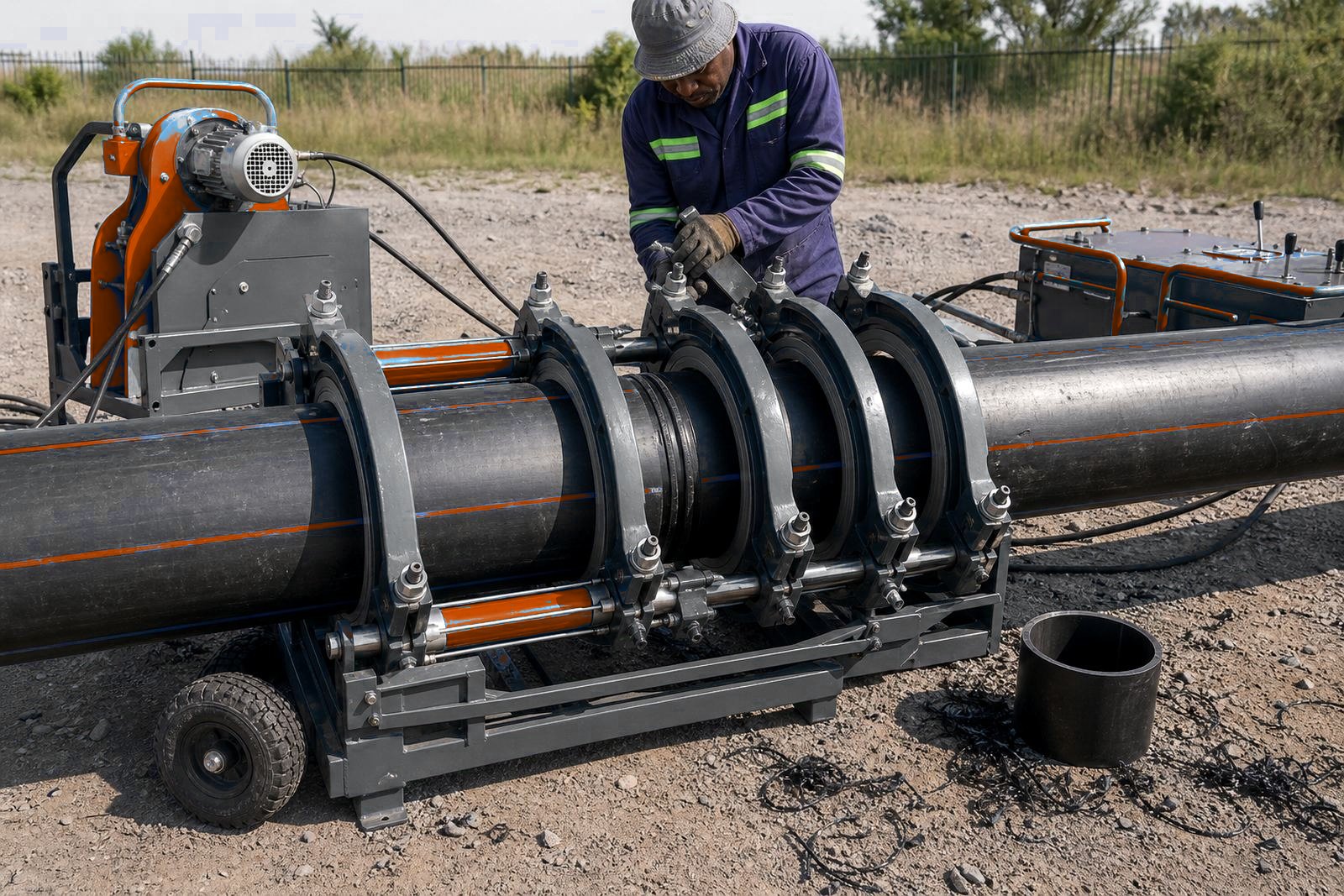
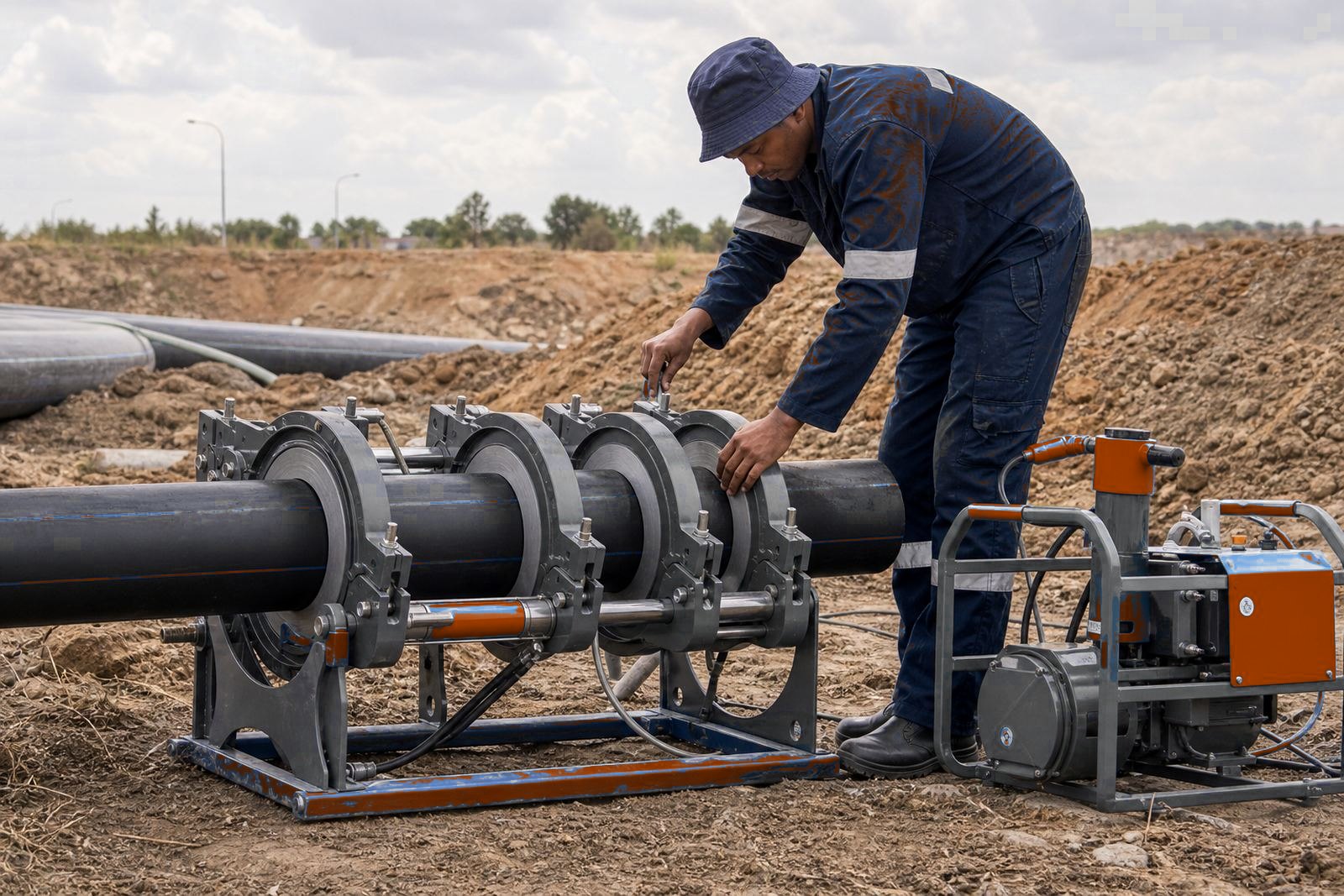
On a short spool, the machine set-up carries most of the alignment. If the pipe is oval or the wall is thick, a loose grip can let the ends spring open as soon as the facer clears, which makes the next cut uneven.
On a wet coastal job in Durban, condensation on the pipe and damp timber supports can add another problem. The pipe must be kept steady and dry, because a spool that rocks while the heater plate is in place can lose contact at one edge. That leaves a cold patch, which later shows as an uneven bead.
- Use supports that carry the pipe at the same height as the machine.
- Keep the spool from bouncing when the facer is withdrawn.
Facing, heating and the short changeover window
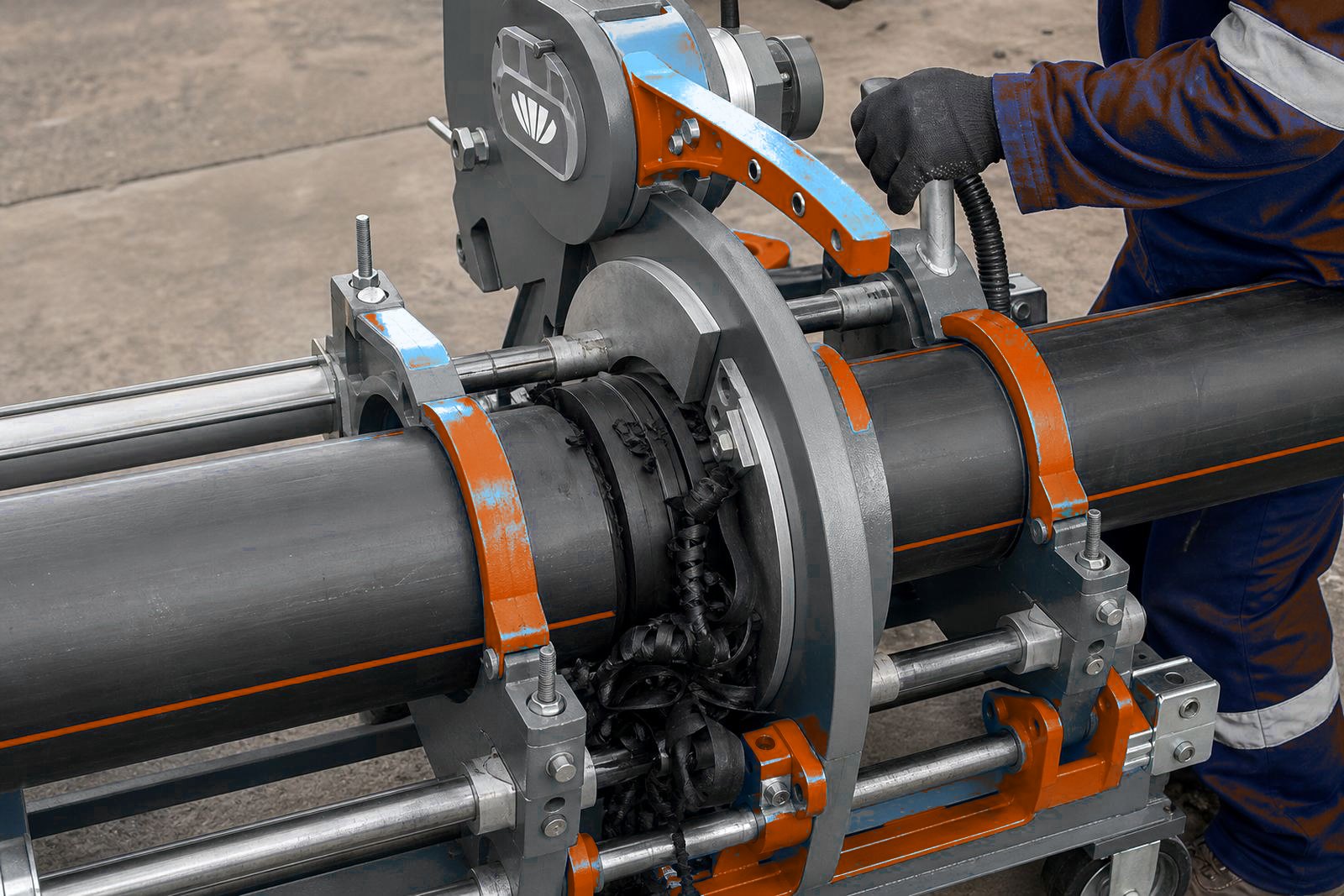
Facing on a short spool has to be clean and consistent. Full, even shavings let both faces close flush with no high spots or torn fibres. A rough face, or one left with chatter marks, can trap dirt and create an uneven melt.
Heating is where the short joint gets risky. The changeover window is brief, and with a short spool there is little room to recover if the pipe slips while moving from heater to fusion. Careful movement helps the operator stay in control and avoid hurrying.
A dirty or damaged plate face leaves one end hotter and the squeeze-out uneven.
Fusion pressure, bead shape and cooling time
Once the ends meet, fusion pressure must be applied in a controlled way. Low pressure stops the material flowing properly across the joint face. Excess pressure over-squeezes the bead and distorts the pipe wall near the clamp line. Short spools show this quickly because there is not much pipe length to hide a bad load path.
Bead inspection gives a useful first check. A clean bead is a strong sign that the joint stayed stable through the heat cycle.
Short lengths are tempting to handle early because they look solid, yet the joint still needs time under load before it is disturbed. Early clamp release lets a spool rotate or sag, and the bead may crack at the edge.
SDR, wall thickness and pipe size set the weld settings
Measure each spool length before cutting. SDR and pipe size set the wall thickness, heating time and the force needed to form the bead. A thin-walled line on a water reticulation job needs a different touch from a heavier line.
Operators should read the pipe marks before the machine is set. Service spools at 110 mm need lighter supports than heavy-wall large lines. If the pipe is large and the spool is short, the ends may try to drop out of line as soon as the facer clears.
- Confirm SDR before choosing the heating and pressure sequence.
- Keep note of the joint number, size and weld setting used.
Short spools in a tight plant room
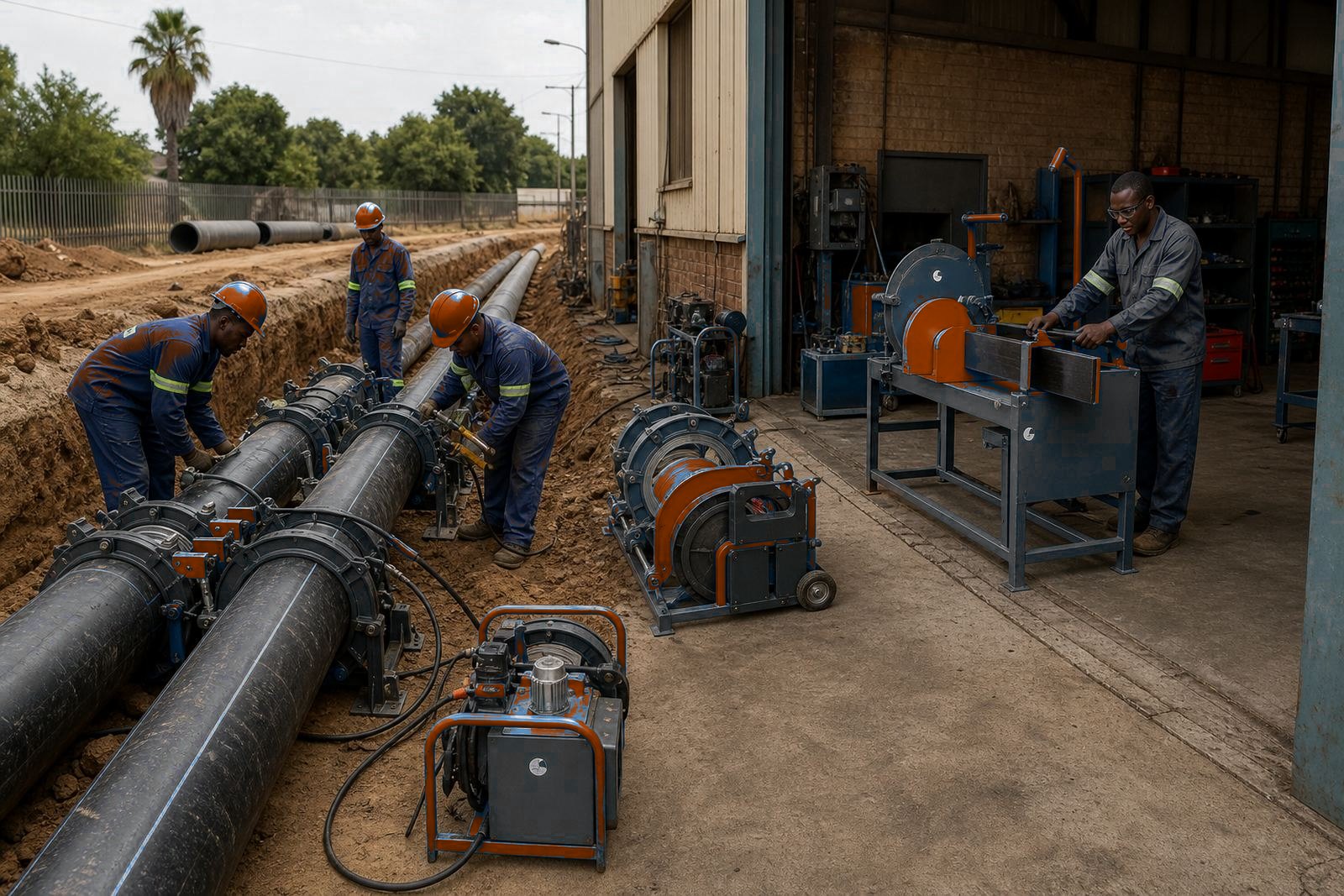
A short spool inside a plant room can leave little elbow room for the crew. The pipe may need to be welded close to a wall, with valves and brackets already in place, so there is no space for a wandering joint. In that kind of job, a small mistake in support can lead to a weld that is out of line before the line is even installed.
For work like this, our team secures the pipe, faces it cleanly, heats both ends evenly, moves through changeover with care and holds the pressure steady until the joint has had its cooling time. Training for short spool work focuses on bead reading.
Short spool work can get weld log support if the job needs it.
What a tidy short-joint routine looks like
Short spool welding works best when the crew treats the joint as a controlled piece of fit up. The pipe needs support, the heater plate needs checking, the facer must cut true and the pressure needs to stay steady until cooling is complete. When those steps hold together, the joint stays centred and the bead forms evenly.
Teams handling repeated short joints aim for the same bead on every one. One operator can get a good result by luck, but a steady routine gives the same line a better chance on every spool. Small offsets on site can throw off the next bend, flange or valve position.
- Keep the spool fully supported before heating starts.
- Watch bead symmetry after fusion and before release.
- Note the weld details while the work is still fresh.