Taking the heater out cleanly
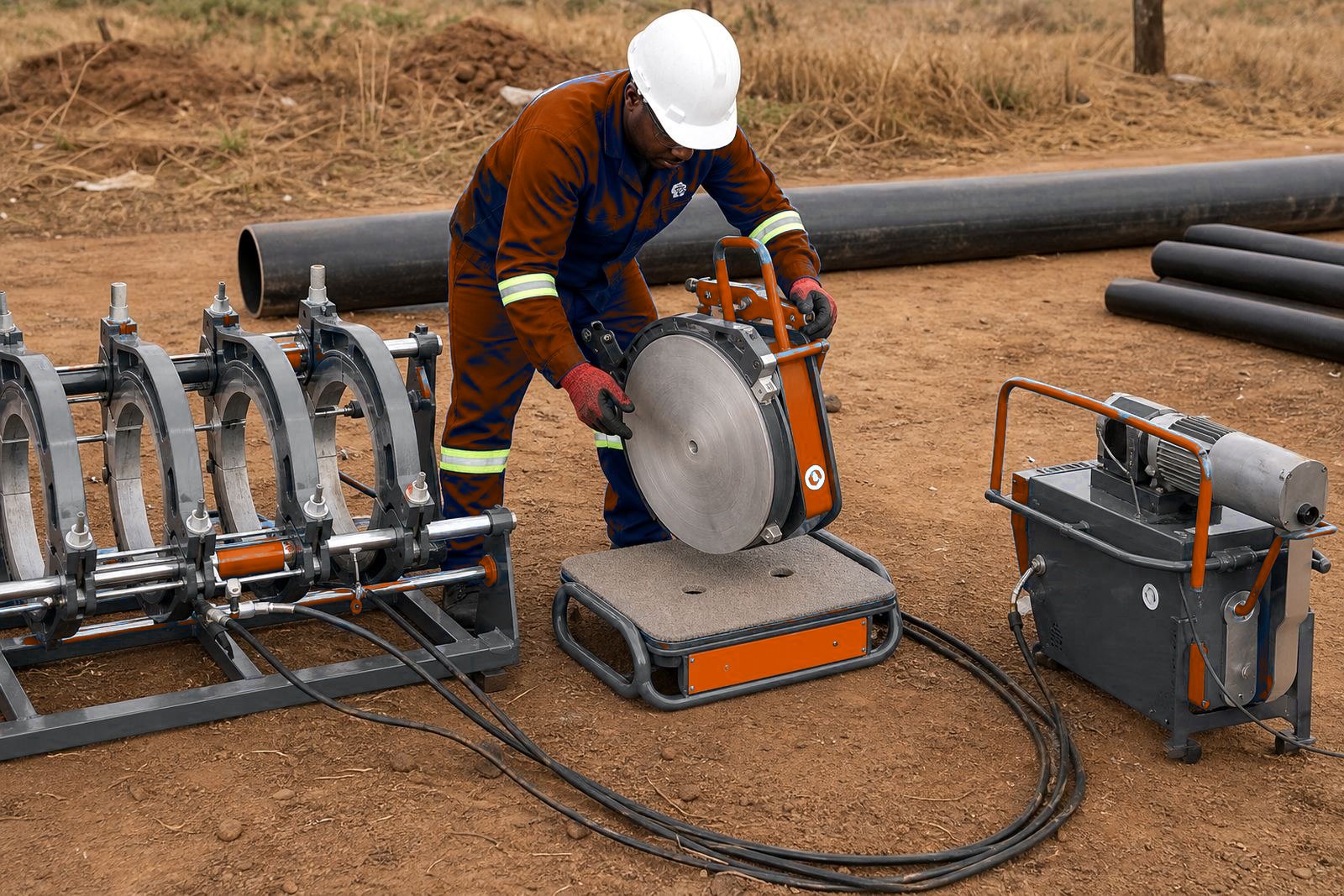
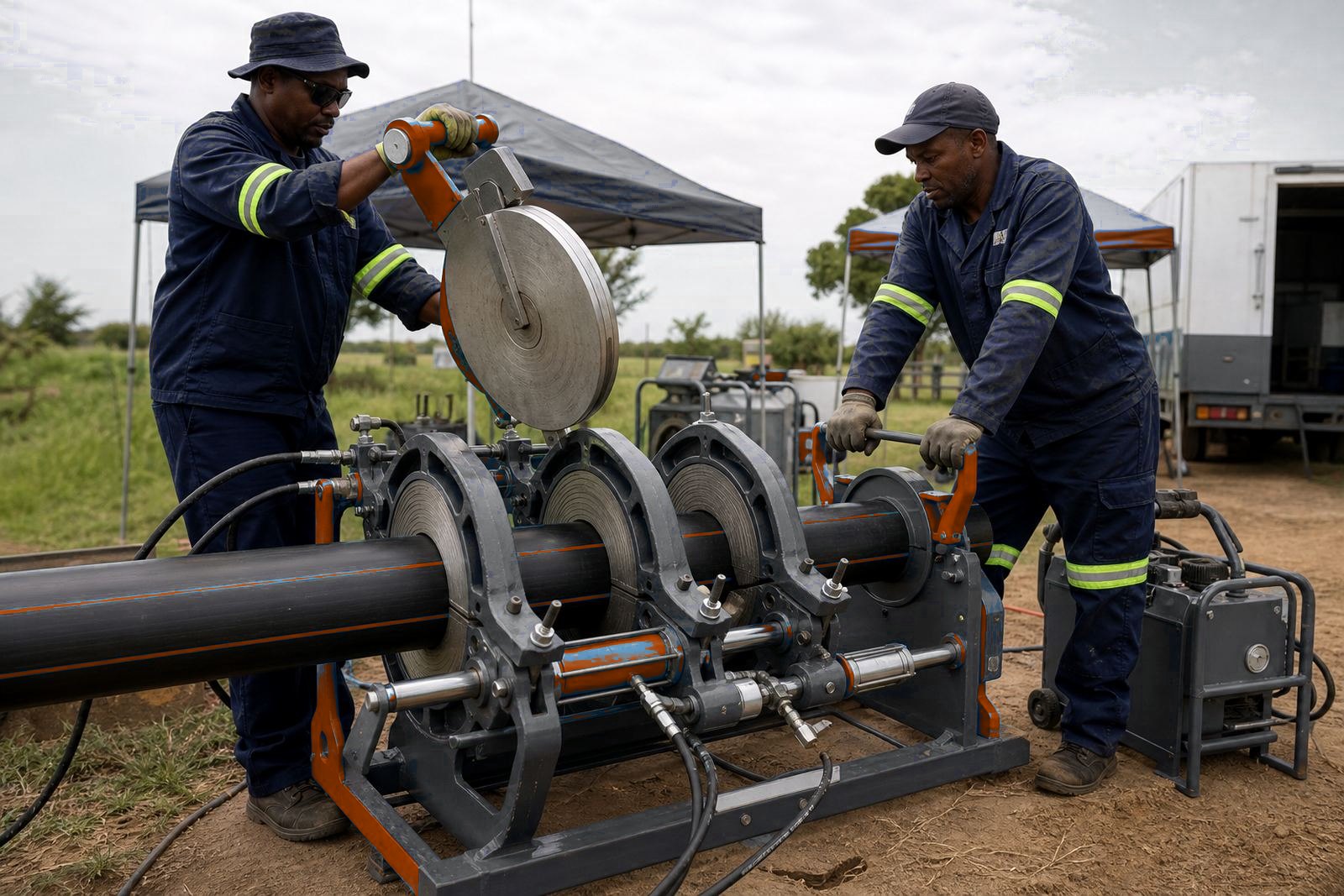
Once the facing marks are checked and the heated faces are ready, the heater is removed and the open time starts running. The handover leaves the joint unwarmed and unfused.
A good changeover keeps the pipe faces hot enough to meet under pressure without dragging or chilling at the edges. If the gap lingers, the melt skin starts to cool unevenly. If the removal is rough, the faces pick up dirt or get nicked, and the bead shows it later.
- Pull the plate out in a straight line without scraping the faces.
- Bring the ends together at once, then apply the set fusion pressure
What happens in those few seconds after removal
After heater removal, the operator has a narrow working window before the pipe ends start losing usable heat. Changeover timing varies with pipe size, wall thickness, air temperature and SDR. Durban heat on 160 mm and a cool Rustenburg morning on larger pipe each change how a trained operator times the close.
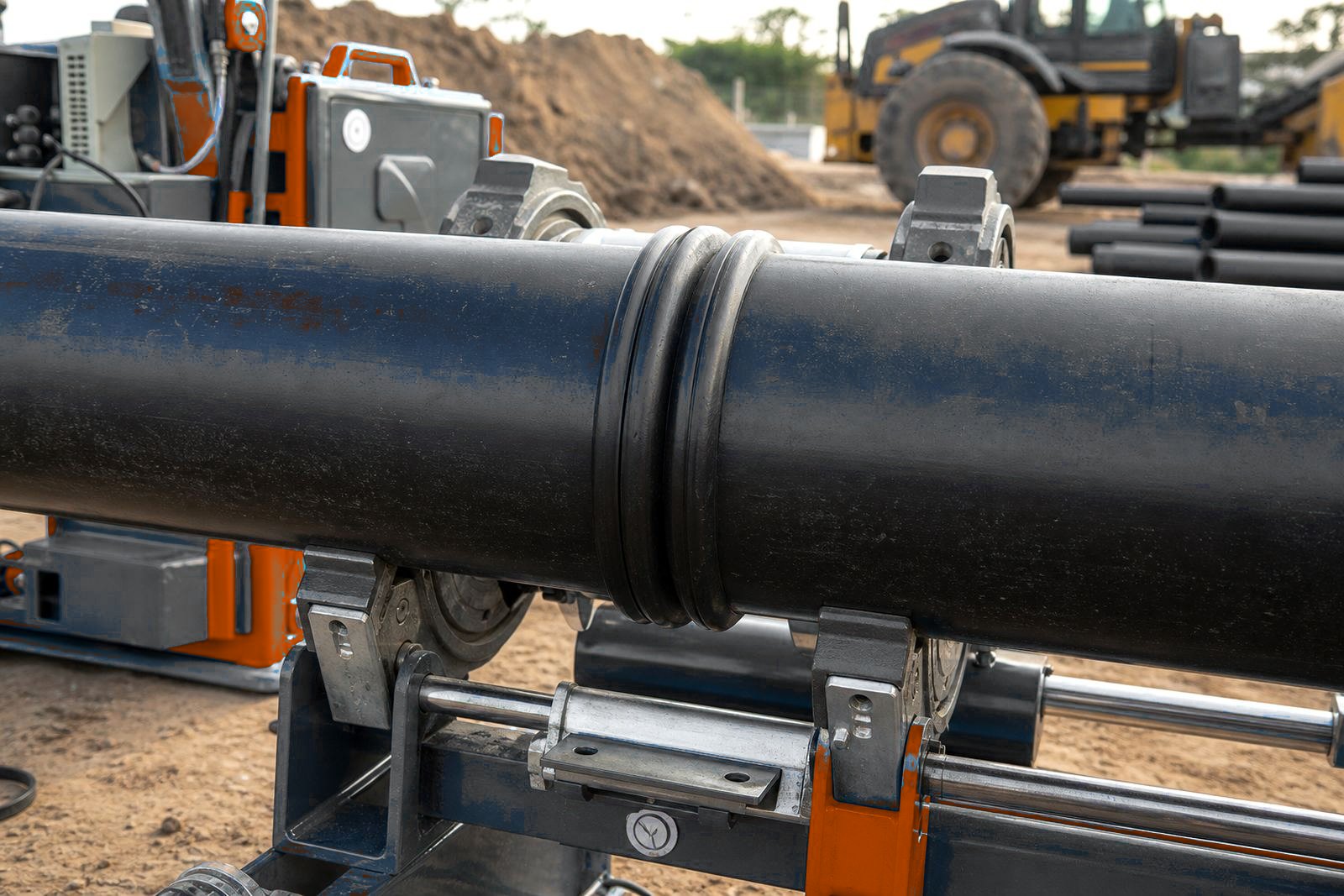
Controlled motion, steady alignment and a joint face that meets flat across the full circumference are essential. When the joint closes under proper fusion pressure, the melted material rolls into a consistent bead. That bead is one of the first signs that the changeover was handled properly.
- Watch for clean, even bead formation around the full ring
- Hold alignment through the closure, especially on long pipe strings
- Do not keep adjusting the pipe after pressure is applied
SDR, pipe size and the clock on the joint
Changeover time varies with pipe size and wall thickness. The pipe outside diameter, wall thickness and SDR all shape how much heat sits in the faces and how quickly it can be lost. Thicker wall pipe usually gives a wider working window, and lighter wall pipe gives a shorter one.
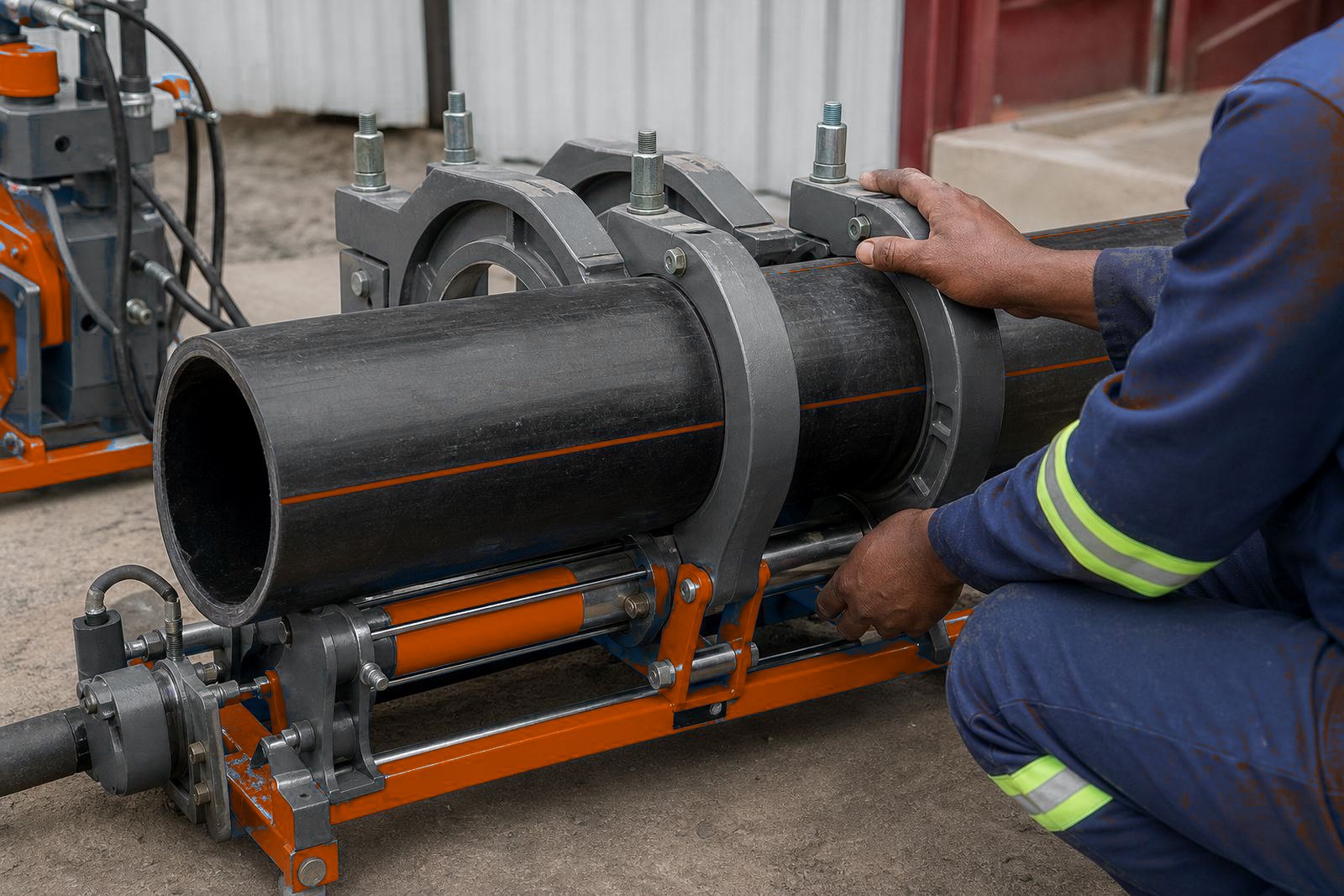
At 110 mm, 160 mm or larger diameters, the machine setup must suit the pipe profile. If those basics drift, the changeover gets harder before the joint even closes.
- Match the machine jaws and inserts to the pipe size
- Keep heater plate surfaces clean and free of damaged spots
Checking the bead after cooling
Early release can flatten the bead or let the joint shift under load.
After cooling, the bead should look even, continuous and balanced. A thin or broken section can point to poor alignment, dirty faces or a rushed changeover. A heavy, rolled bead can hide overpressure or incorrect temperature. In day-to-day work, checking the bead belongs in the process from the start.
- Inspect both sides of the bead for even squeeze-out
- Measure the bead width against the welding table
Logged records of changeover time
Weld logging keeps the joint history of a large installation in one place. Operators can note pipe size, SDR, heater settings, facing results, fusion pressure, changeover timing and cooling time. That record helps site teams compare joints across the line, and it gives the supervisor a cleaner picture of the work.
Data logging supports skill. It supports skill. If the numbers drift from one joint to the next, the pattern is easier to spot. Keep the logbook with the machine where several crews share it over a long run.
- Note machine ID, pipe size and SDR before the weld starts
- Record heater temperature and pressure values used on the joint
- Keep the log with the site file for later checking
Changeover on a water line
A contractor collecting a machine for a nearby site usually runs the same pipe size all day. The pipe string may be set on stands near a trench edge, with the ends ready for facing, heating and fusion. If the heater stays in too long or comes out awkwardly, the crew loses heat right when the joint needs to close.
Operators should practise changeover on the machine before site work. A good crew watches the sequence, keeps the alignment tight and moves from heating to changeover without a pause.
Recording the changeover on each joint
If one part is off, the changeover window becomes harder to hold and the joint suffers.
Book refresher training for crews whose changeover time keeps running over. A clean facer, a steady heater plate and a clamp set that holds true make handover more consistent. That helps crews whose pipe sizes and site conditions change from one job to the next.
- Use serviced equipment before a long install or shutdown window
- Record the changeover time on the joint sheet