When round pipe becomes oval on site
HDPE pipe does not always arrive or sit perfectly round. Stacking, transport, sun exposure and rough handling can flatten one side, especially on larger diameters or thinner SDR classes. In yards and along long haul routes to mining jobs, that shape change is common, so allow time to re-round the ends in the clamps.
Out-of-round pipe affects how the jaws grip, how the facer cuts and how the heater plate meets the ends. Pipe that cannot seat properly shifts the joint line. The fusion may still hold, but the set-up work has to be cleaner.
What ovality does to butt-fusion alignment
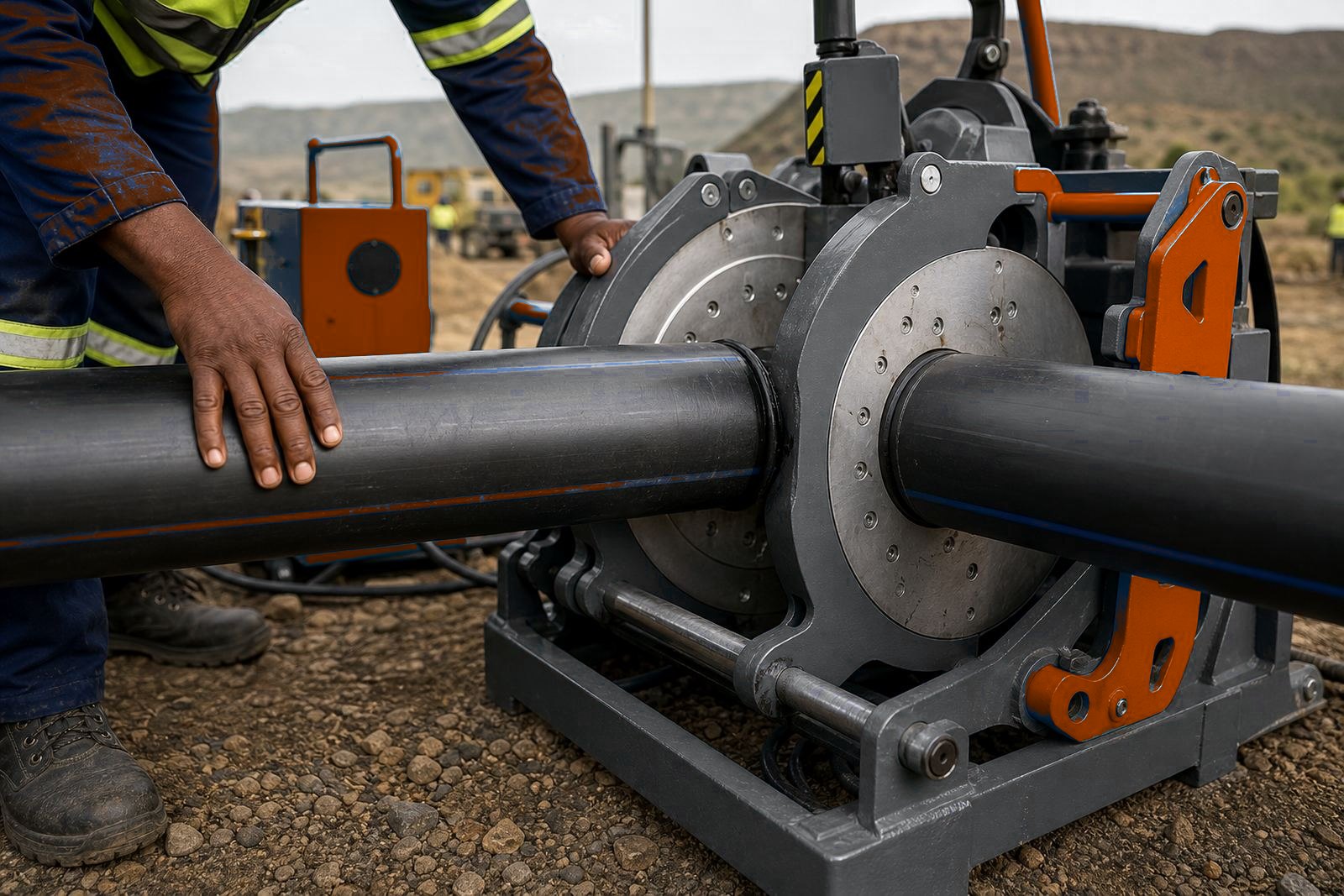
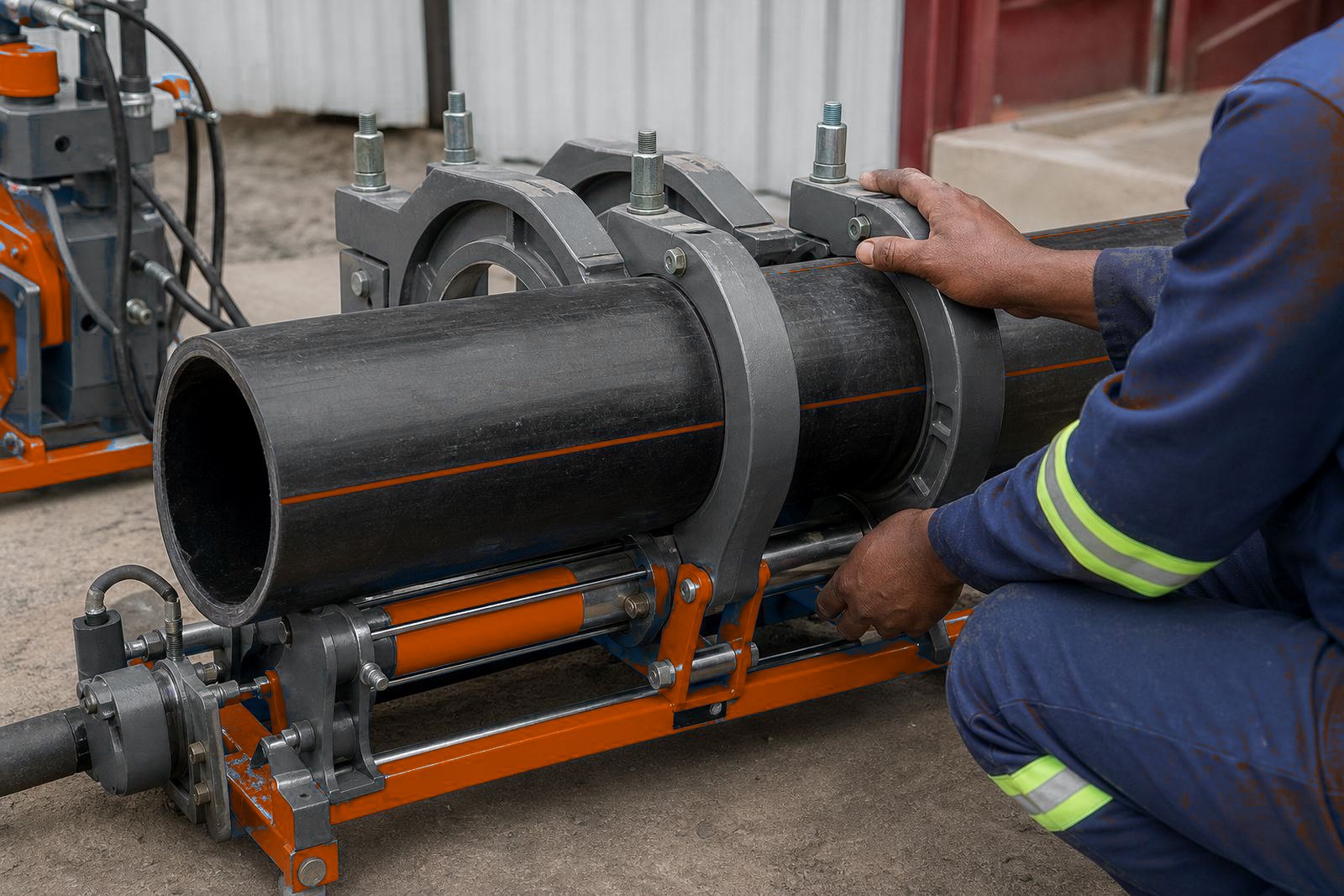
Out-of-round ends must be re-rounded so both sit square, clean and on the same axis. When one end is oval, the clamp may grab on high spots and leave the low side loose. That makes the facer bite unevenly, and the finished face can end up with a lip on one side.
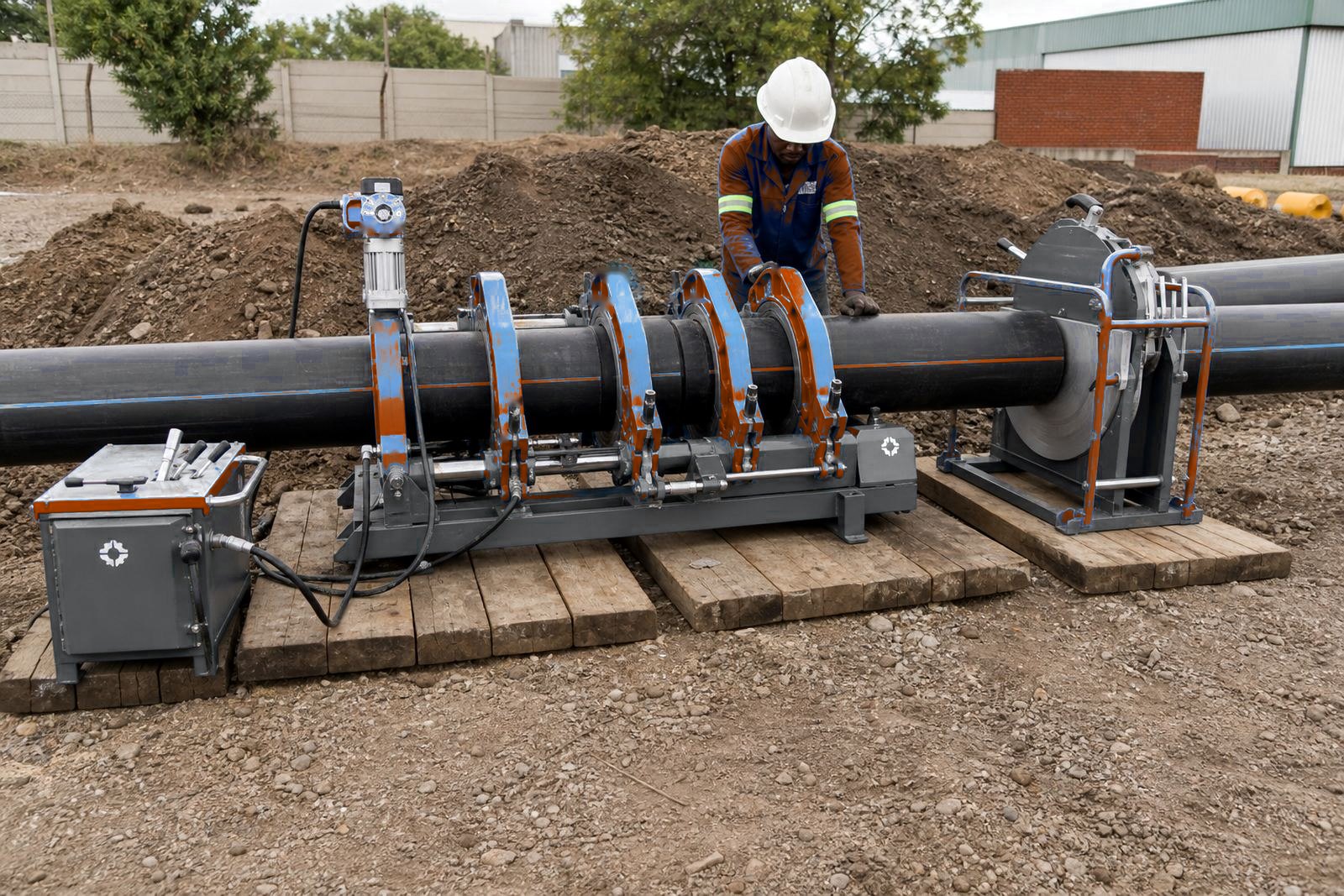
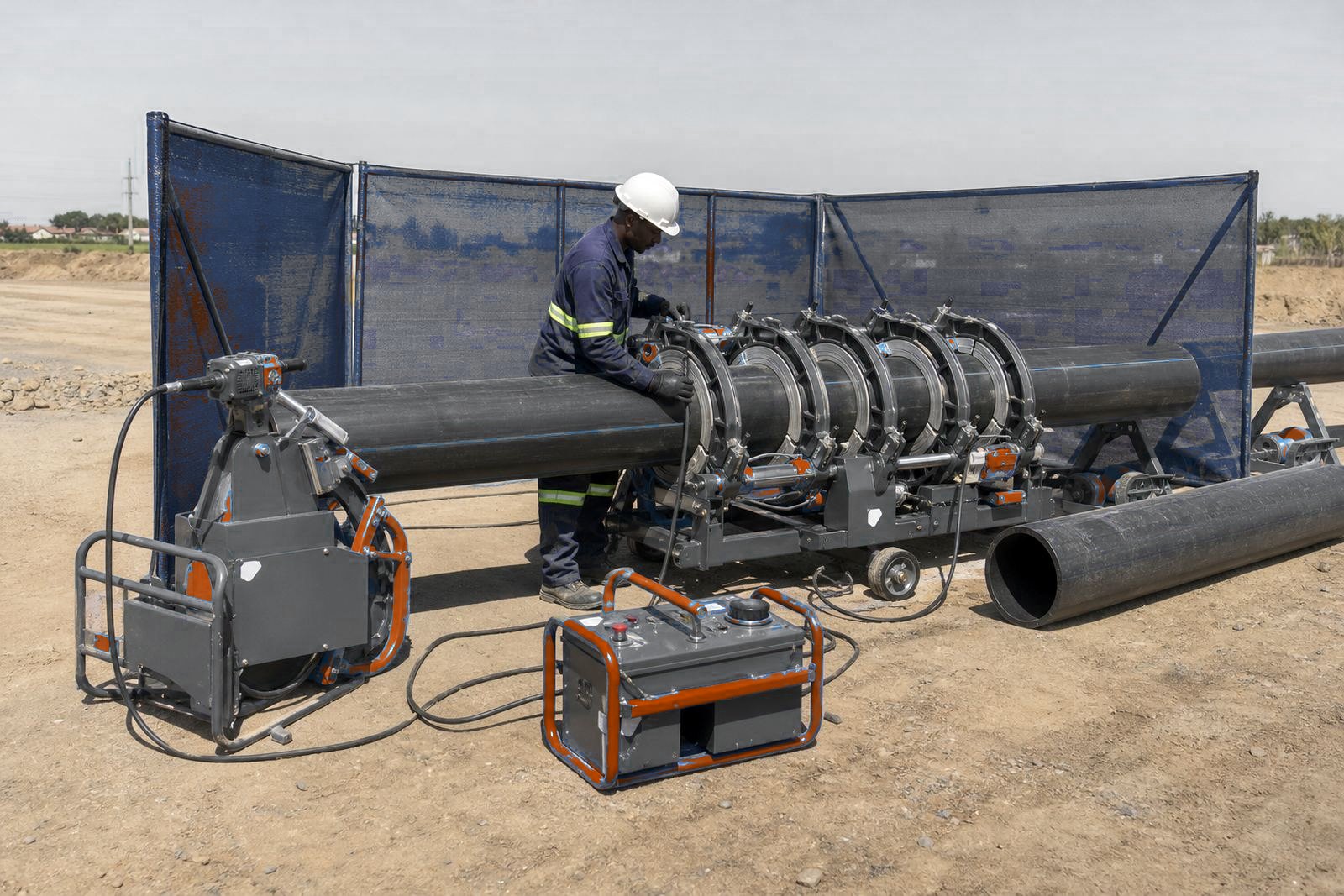
The machine should hold the pipe so the ends meet evenly across the full circumference. Use support blocks or move the clamps if the wall flexes under pressure. This applies on 63 mm and 110 mm work, but it becomes more obvious on 180 mm, 250 mm and above where the pipe mass holds its shape stubbornly.
- Check whether the ovality is local or across the full length
- Inspect clamp grip before the facing pass starts
- Measure more than one point across the pipe end
Facing, heating and changeover with an uneven barrel
The facer should trim a full, continuous shaving from both ends. Oval pipe cuts first on one side and trails on the other. That is a warning that the joint needs better support or a second set-up before heating.
During heating, the heater plate has to contact both faces evenly. Uneven contact gives uneven melt roll and the bead can grow heavier on one side after changeover. The operator still works with the same basic sequence, facing, heat soak, changeover, fusion pressure and cooling time, but the timing and touch need steadier control.
On thicker wall pipe, the heat soak period needs closer timing. The outer edge can look ready while the inner wall lags behind. A trained operator reads the melt and uses the clock properly.
Reading the bead on out-of-round pipe
On out-of-round pipe, the bead may still be acceptable, but the operator should look for changes in width, height and symmetry all the way round.
Uneven bead shape can point to poor alignment, low clamp pressure, a dirty face or a heater plate that was not sitting flat. Clients often want the joint record with the visual finish.
- Look for a continuous bead all the way round
- Compare the two sides of the weld line
- Match the bead shape to the logged cycle where possible
SDR, diameter and why some pipe is harder to hold
SDR changes wall stiffness and how badly pipe ovalises. Lower SDR pipe has a thicker wall and usually holds shape better, while higher SDR pipe can flatten more easily under its own weight or when strapped down too tightly. Welding long lengths for trench work calls for the same fit.
Large diameters need a careful set-up. Lengths of 400 mm or 450 mm left in the sun in a yard or on a dusty Rustenburg site may need extra rounding. The same principle applies in Durban’s humidity where pipe storage can be wet and slippery, so the handling crew must keep the joint ends clean and dry.
Out-of-round pipe calls for a slower set-up, a check of the clamps, and a weld cycle that is clear of hidden faults from the first minute.
A hands on example from work on a South African site
A contractor bringing pipe for a dewatering line outside Polokwane may see one end flatten after transport on a flatbed. Inspect ovality, reset the clamp grip and re-face if the first cut shows uneven contact. If the ends are forced together too hard, the weld pressure can spike on one side and the bead will show it.
On that kind of job, re-round as far as the machine allows, face until the cut is even, heat both ends evenly, change over without delay and hold the cooling time. The joint then has the same chance of passing the pressure test as the rest of the line.
Our training covers ovality checks. Operators learn to spot when ovality is small enough to work with and when the pipe needs another set-up before the heater plate goes in.
What our workshop and field team focus on
The same checks come up often, and the weld log needs to match the actual cycle.
For out-of-round pipe, we pay attention to the parts that stop a bad joint early. That means operator training, refresher work for crews already on site, and inspection of the machine before a long shift starts. Awkward pipe shapes need the right tool set ready before starting.