What the heating stage is doing to the pipe ends
Heating should form an even molten layer that can fuse under pressure once the heater is removed, without overheating the pipe.
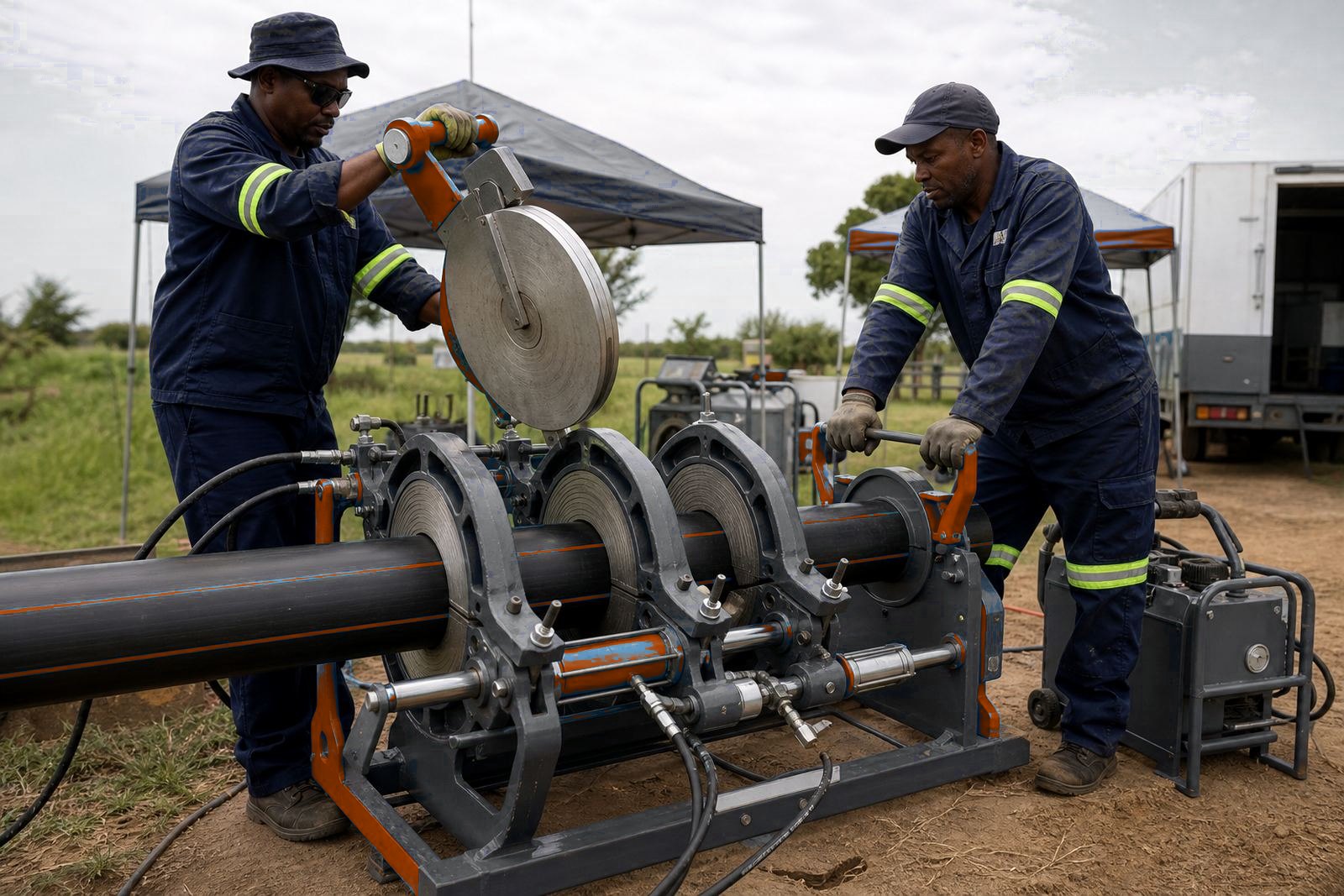
For HDPE, the heater sits between the planed faces after alignment and clamp-up. The operator watches for a steady bead-up around the full circumference, because that bead tells you the surface has softened evenly. One side beading faster than the other means the ends are not heating alike.
Heat soak time grows with wall thickness, so a 315 mm heavy-wall pipe needs far longer on the plate than a thin 110 mm pipe. During heating, hold the plate temperature and do not move the pipe.
Bead-up and soak, the part people watch too late
Bead-up is the first visible sign that the heater has done its work. A neat, regular bead around the pipe edge tells the operator the heat has reached the face properly without burning it.
Soak time follows bead-up. The pipe stays against the heater for long enough to let the heat soak through the wall thickness. If the soak is cut short, the melt layer is shallow and the weld can fail under service stress. If it is too long, the pipe can deform and lose shape.
- Keep the heater face clean and at the right working temperature.
- Watch for an even melt without shiny scorch marks.
Keeping changeover within the set time
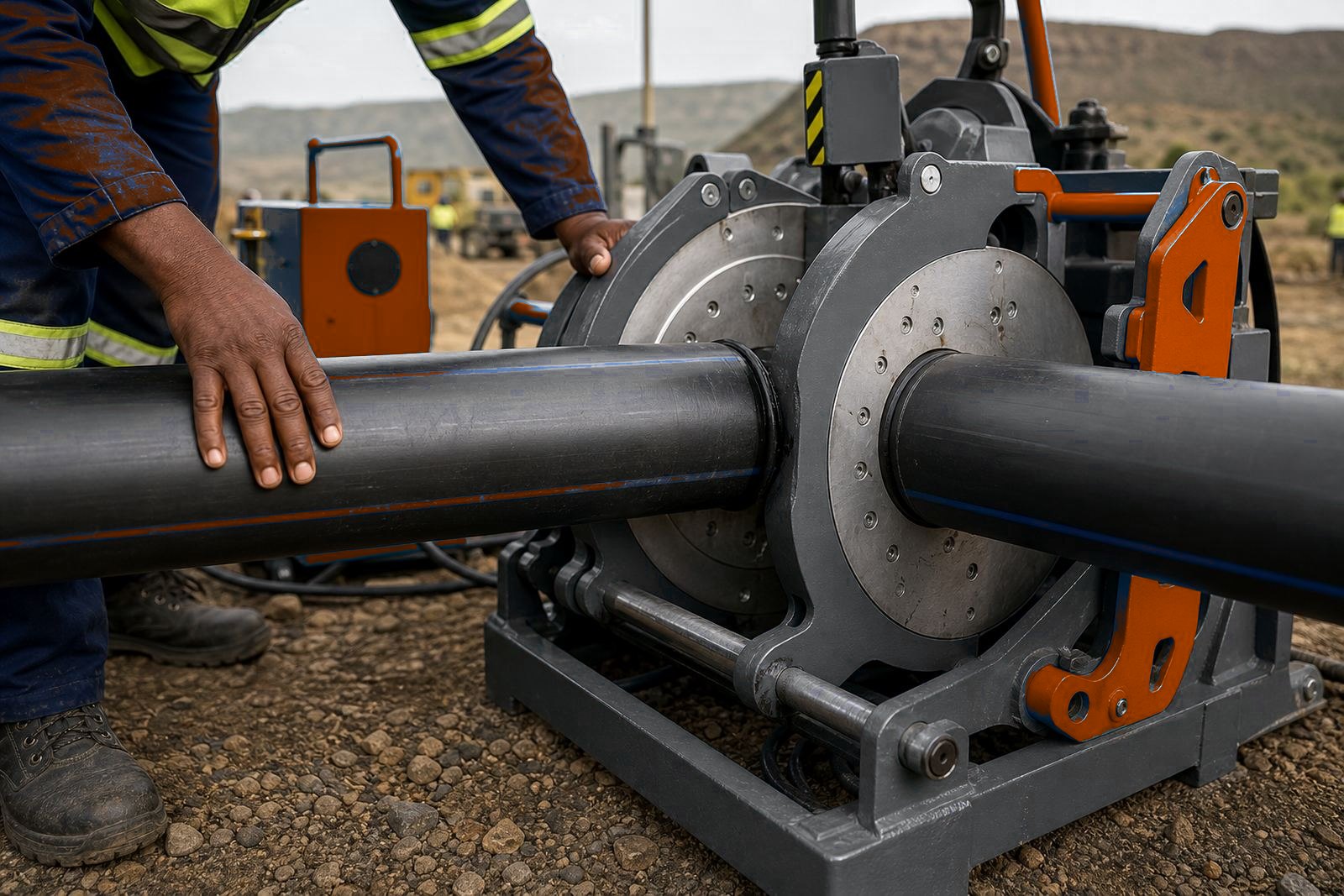
Once soak is complete, the heater plate comes out and the pipe ends are brought together for fusion pressure. This changeover stage needs a steady hand, because the open time is short and the molten faces begin cooling as soon as they leave the heater.
Any twist or sideways movement can disturb the molten layer and leave a poor fusion line. On a hot Durban afternoon, or in the dry inland air around Polokwane, check the pipe surface before each weld.
Good training shows people how to remove the heater, close the machine and bring pressure up without jolting the joint. It is a practical skill.
Fusion pressure and cooling time
After changeover, fusion pressure is applied so the softened HDPE is pressed together into a uniform joint. The pressure should be enough to form the correct external bead without forcing too much material out of the weld zone. Fusion pressure comes from the weld table for that pipe size and SDR.
The bead that forms after fusion gives useful visual information. It should be even, continuous and balanced on both sides of the joint. Once pressure is applied, the cooling period must be respected. The joint needs time to set under restraint so the fusion line can form properly.
- Do not strike or roll the joint while it is still warm.
- Use cooling times that match the pipe size and SDR.
- Inspect bead shape before the line goes into service.
What trained operators look for on site
A trained operator watches the timer and reads the pipe, the heater plate, the clamp movement and the bead shape as one sequence. Mixed crews often need refresher training, especially where a job has different pipe sizes and a tight programme.
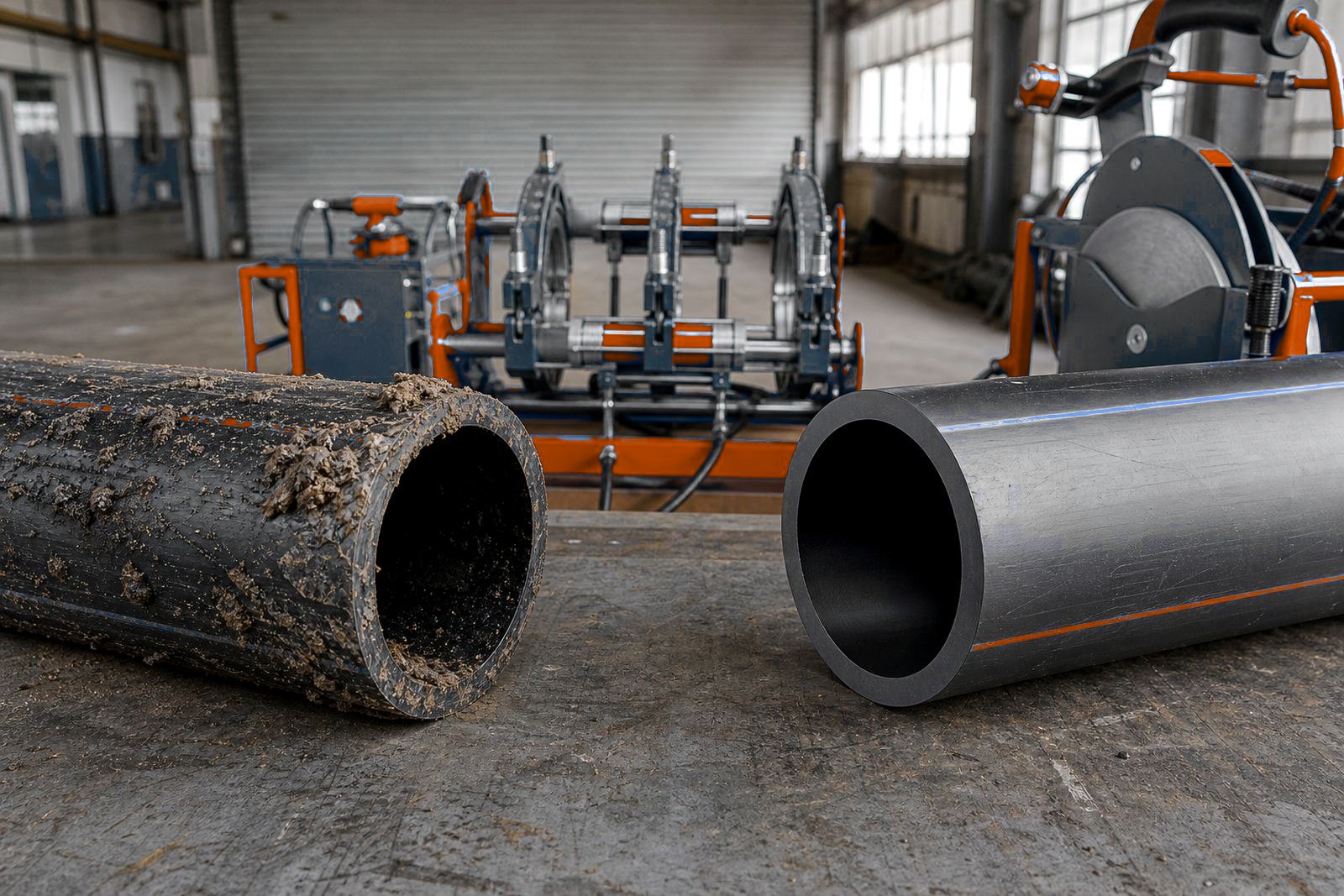
The heating stage on mine lines has to cope with long runs, changing weather and heavy handling. The operator should still keep the faces clean, check the facer cut and confirm that clamp alignment is true before heating starts. Ends that are out of square carry the fault into the heating stage.
Logged heat times, pressure and cooling entries let a supervisor review each heating stage later.
When a heater plate comes back from site
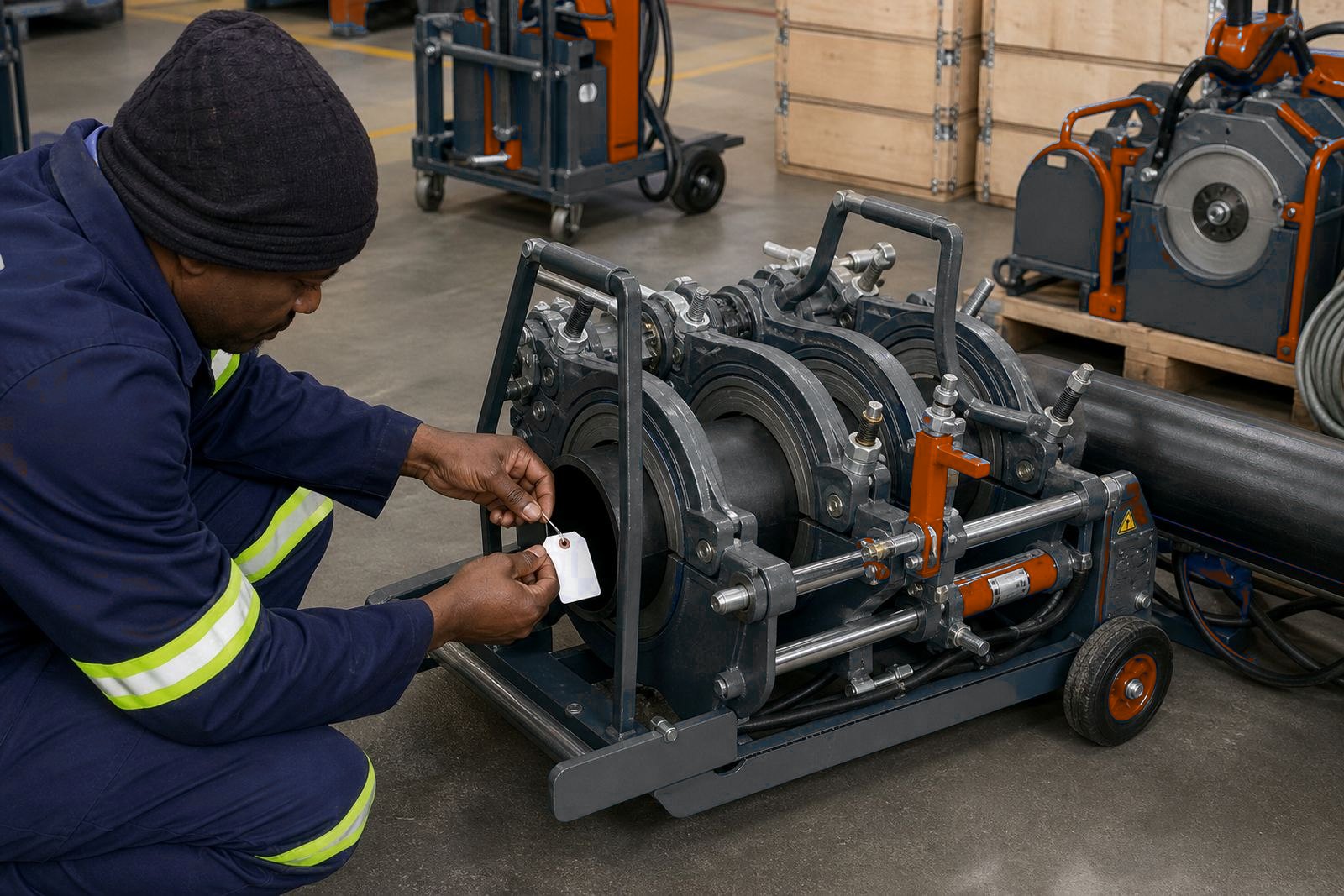
A crew might bring in a heater plate that has been used on several shifts and a facer that needs checking before the next hire job leaves the yard. A dirty heater face, loose clamps or unstable hydraulic pressure spoil the bead.
If the heater stage is rushed, the bead looks uneven and the joint often shows it later.
Servicing includes a heater plate check, which affects the heating stage directly. The heating stage sits at the centre of the job.