What gets checked before a machine goes out
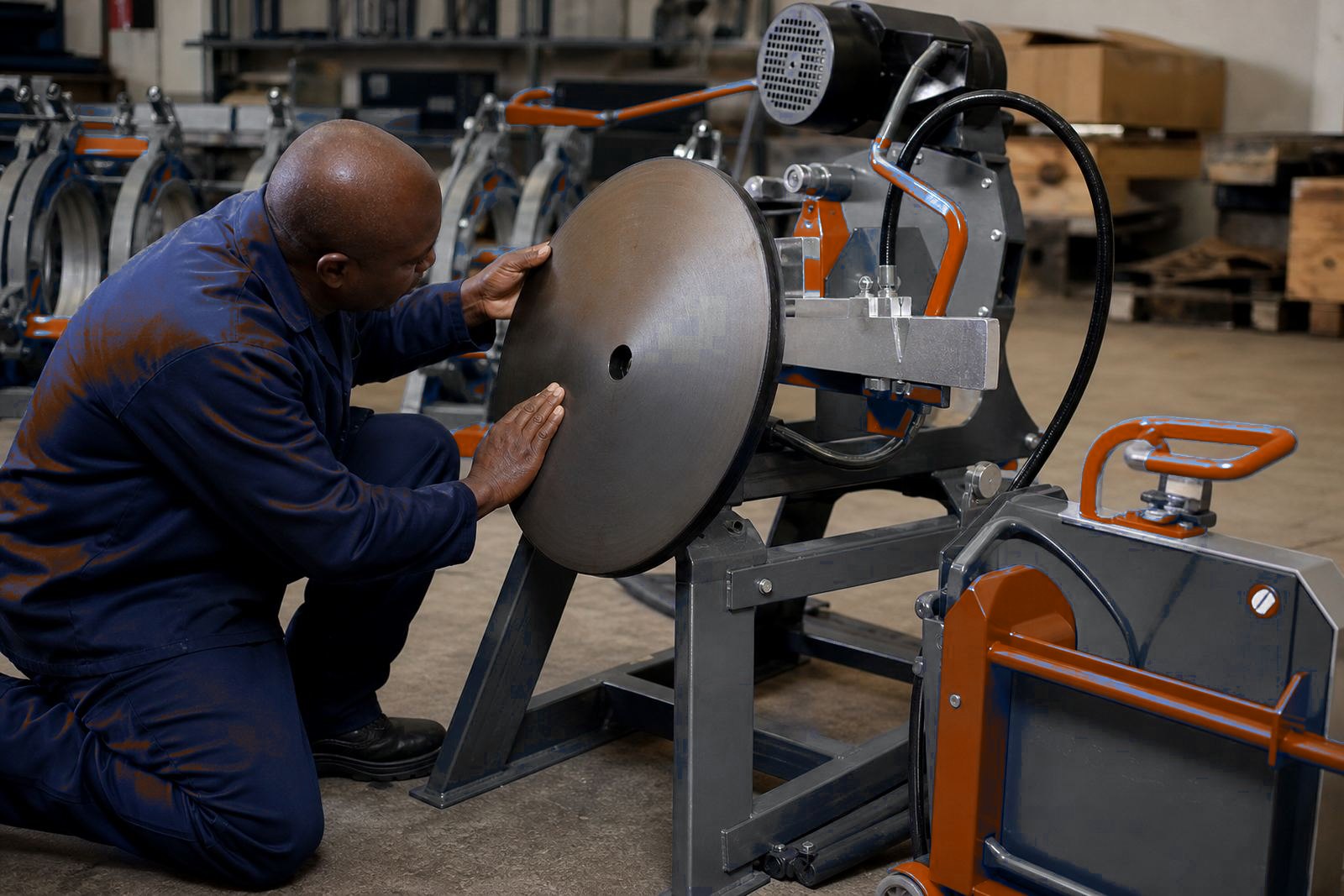
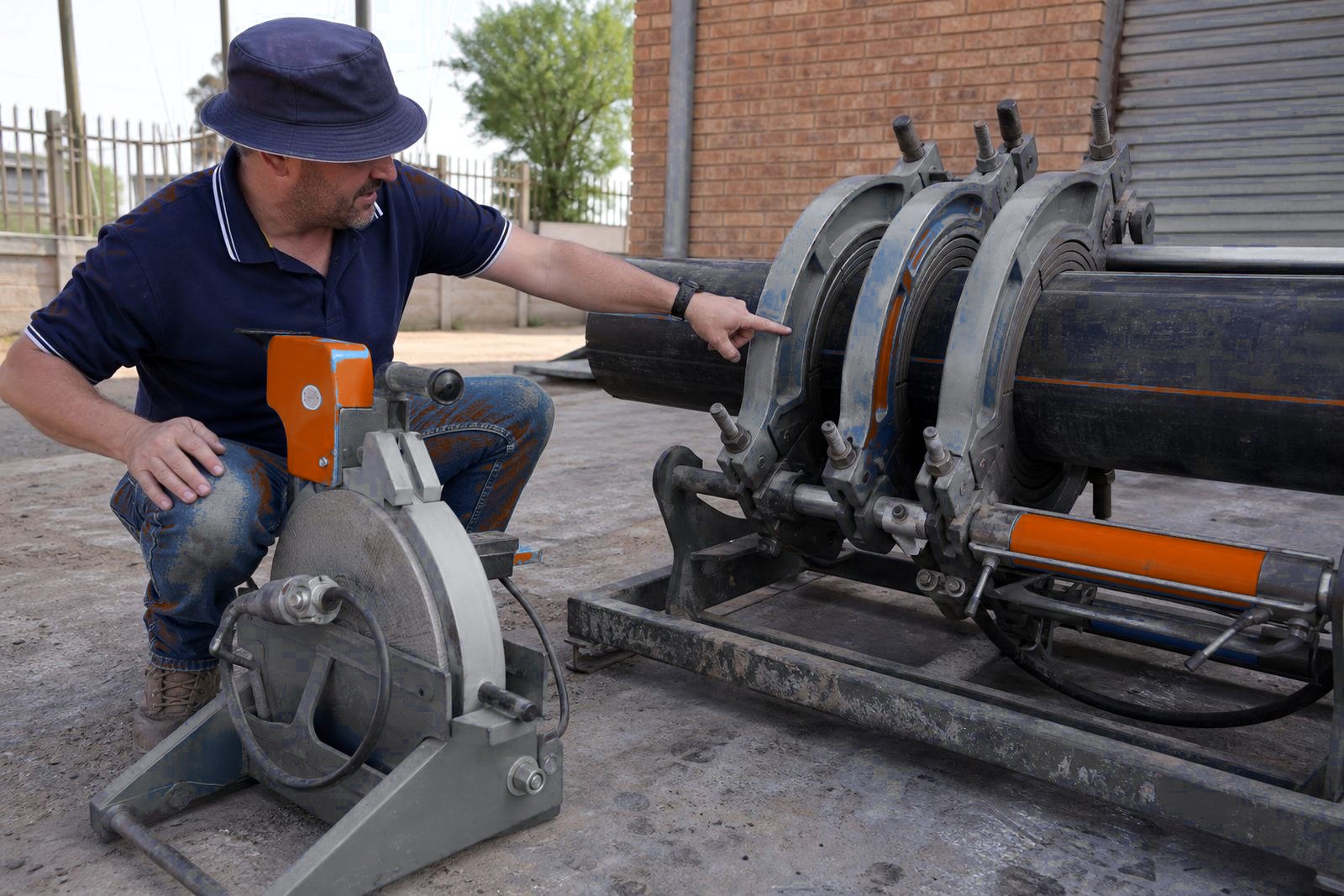
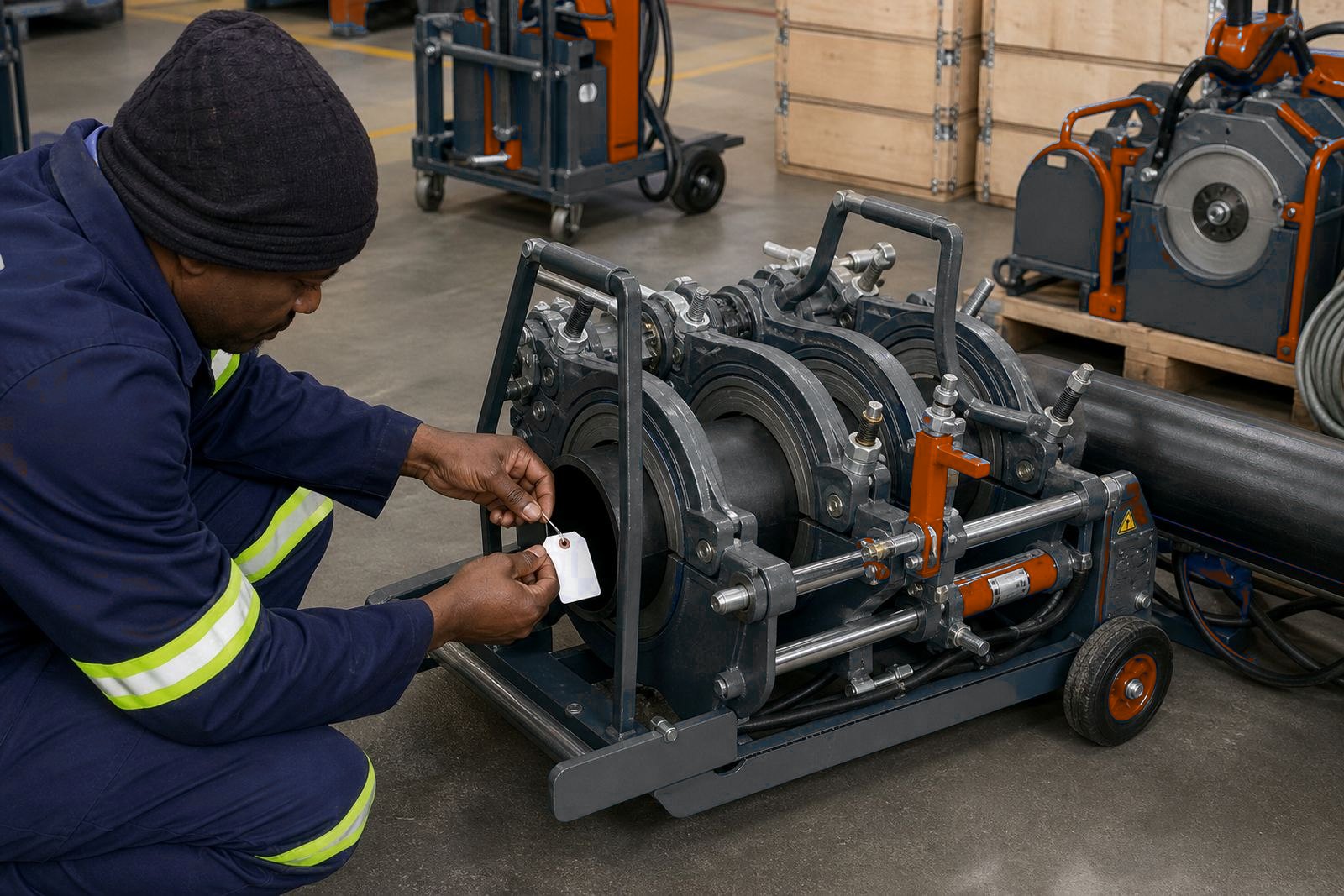
Pre-hire service covers the heater plate, facer and clamps first. The facer must cut cleanly, the heater plate must hold even temperature across the working face, and the clamps must hold pipe square without slip or twist. A small fault on the set can cause poor alignment, thin beads or uneven cooling.
Hoses, hydraulic pressure, controls and frame condition are checked before hire. A machine used on 180 mm pipe one week and 315 mm the next gets its moving parts checked before reloading.
- Facer blades, drive and chip clearance
- Clamp grip, alignment and travel
- Hydraulic pressure, hoses and fittings
- Data logging function where fitted
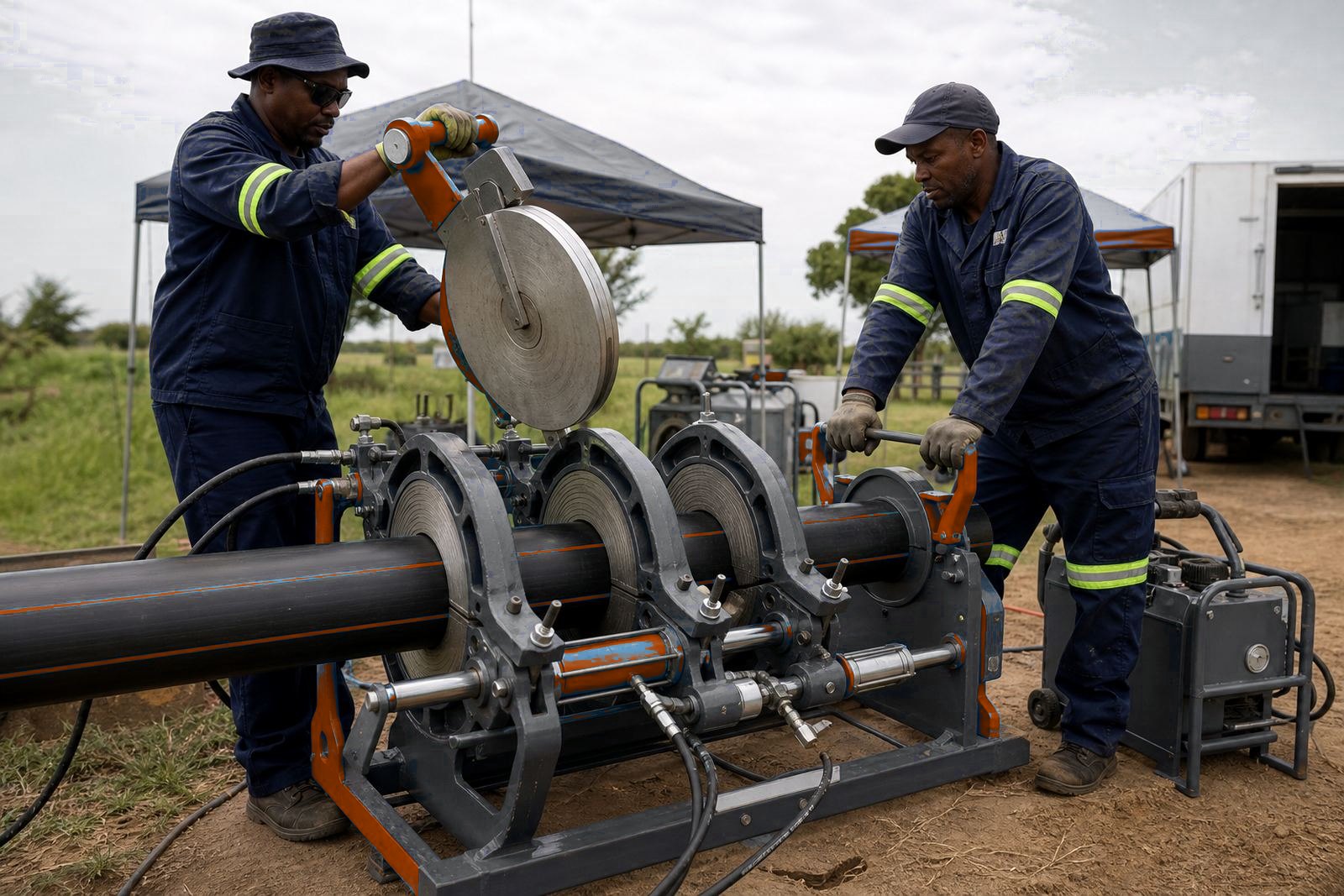
The steps on a live butt-fusion joint
Unserviced machines upset the sequence through uneven heat, sticky travel or pressure drift.
Contracts often mix SDR classes from 63 mm through to large diameter mains. Hire machines must match the pipe range with heater, clamps and controls working as expected.
Service before hire covers even facing, steady heating, clean changeover, controlled fusion pressure and cooling long enough for the joint to set.
What a proper pre-hire service usually includes
Every machine gets a different service plan depending on its age, job history and the last site it saw. A unit that has worked in dusty mine yards around Rustenburg needs a different once-over from one that has been standing in a coastal store near Durban, where humidity can affect electrics and light corrosion can creep in.
We also inspect the small items that often get overlooked, such as bolts, stops, scrapers and the condition of carrying cases.
A full check before each hire
Some crews already know the sequence, but still need the machine checked and the controls explained before they leave. Others need a short refresher on how to set pipe in the clamps, read bead formation and keep to the right cooling time for the pipe size on hand. Both groups can book operator training at the same time as hire prep.
Our team can support site setup for crews working on municipal water mains. A properly set machine lets the operator concentrate on the weld.
Why servicing comes before hire
A contractor collecting a hire unit for work in Johannesburg may only discover trouble when the first pipe ends do not sit square. Out-of-line clamps or uneven facer cuts shift the weld line before heat soak. Wasted pipe ends slow the crew on a tight programme.
Now compare that with a machine that has had a full service before collection. The unit loads neatly, the heater plate is checked and the clamps run true.
A serviced machine travels better, starts cleaner and gives the team less to think about when the pipe is already on skids and the trench crew is waiting.
Before the truck leaves, the handover should be plain
At handover, show the operator what is on the hire machine and what has been checked. The log book, accessories, clamps and heater settings should match the pipe size and SDR the crew plans to run. If there is any doubt, that is the moment to sort it out before the first joint has been made.
A sensible handover also includes the spare items that tend to go missing on busy sites. When the machine arrives with the right scraper, inserts and a clean heater face, the team can start welding with no hunt through a bakkie load of mixed parts.
- Check the SDR and wall thickness on site
- Keep the data log and service notes with the unit
- Inspect the machine before loading for return