Where the job goes off track before the first heat cycle
Often the pipe was not cleaned properly, the wrong SDR went into the run, or ends were left slightly oval after handling in the yard. HDPE asks for square faces, clean surfaces and a steady sequence from clamping to fusion, then changeover and cooling.
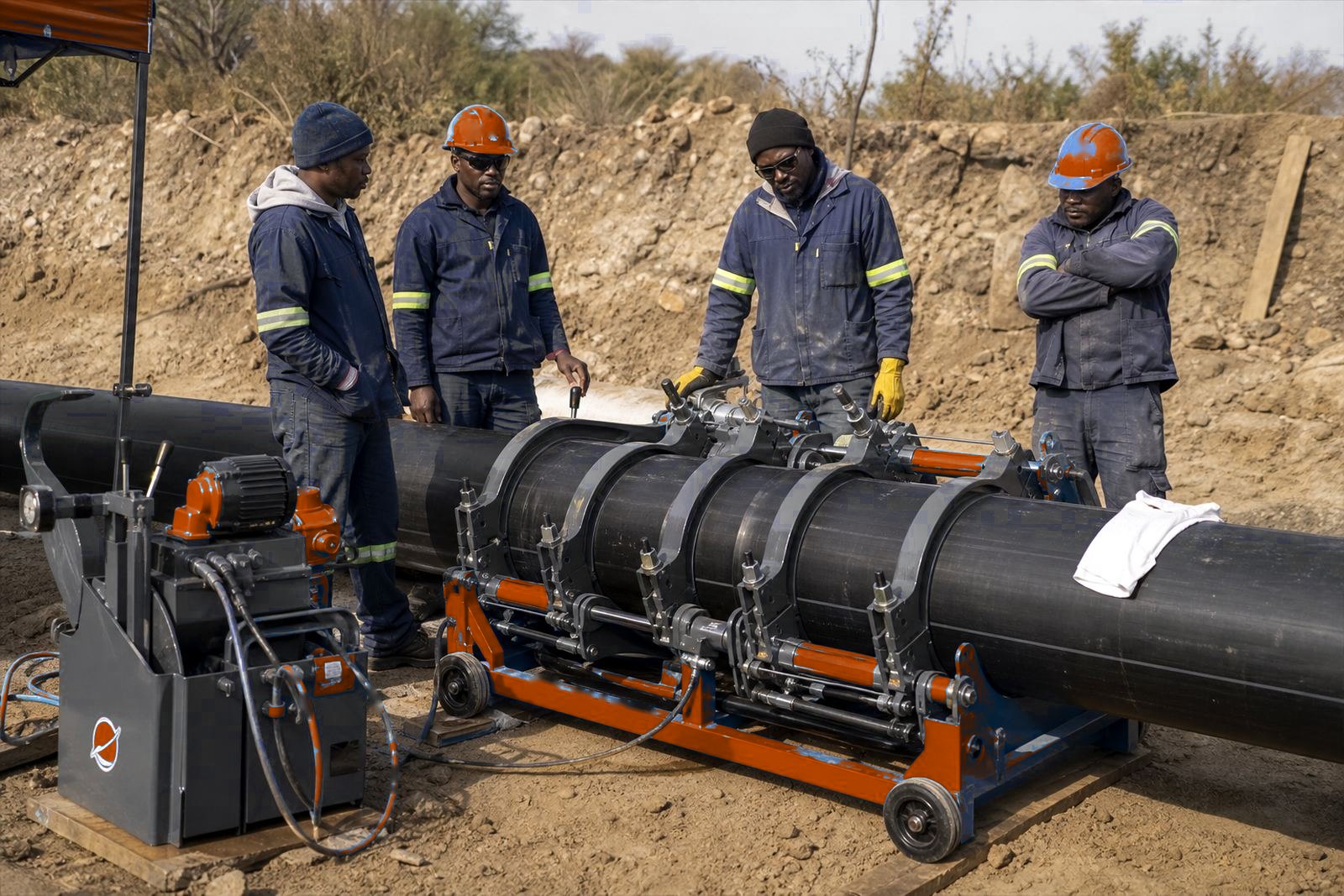
When crews are pressed for time, they sometimes skip a dry fit and move straight into heating. That is when gaps show up at the bead, or one side closes faster than the other. When pipe is lifted onto the machine in a hurry, it often sits out of line in the clamps, and every joint after it needs checking.
- Check that both ends are cut square and free of gouges.
- Keep dirt, sand and wet cloth fibres away from the joint area.
- Inspect clamp grip before the facer starts removing material.
Facing errors that leave the joint uneven
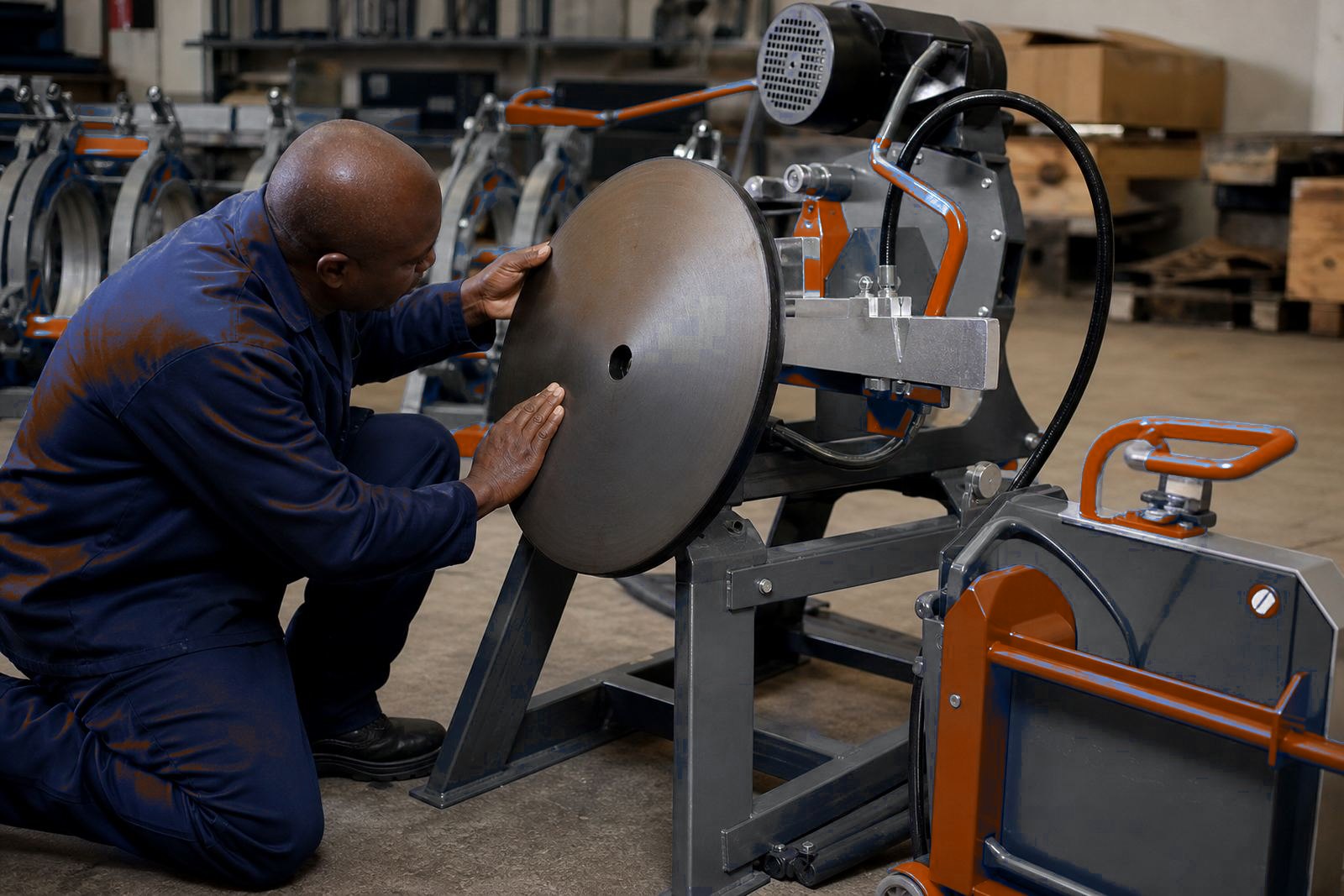
Facing should leave a continuous, even shaving across both pipe ends. Worn blades, a loose carriage or a fast feed leave a face with a high and a low side. That tiny mismatch affects contact pressure when the hot plate is removed.
Another common issue is chasing the face for too long. Once enough material has been removed to give clean, parallel ends, more cutting only increases the risk of poor alignment. Dust and grit shorten blade life on Mpumalanga sites.
- Watch for spiral marks or ridges left by the facer.
- Confirm both ends meet evenly before heating begins.
- Move the facer at a smooth, even rate.
- Replace blades that chatter or leave a rough finish.
Heater plate faults that weaken the bond
A dirty, damaged or wrongly heated plate softens the pipe face unevenly. Some crews heat until the surface looks glossy and then wait too long before bringing the ends together. Others pull away too soon and lose the melt layer altogether.
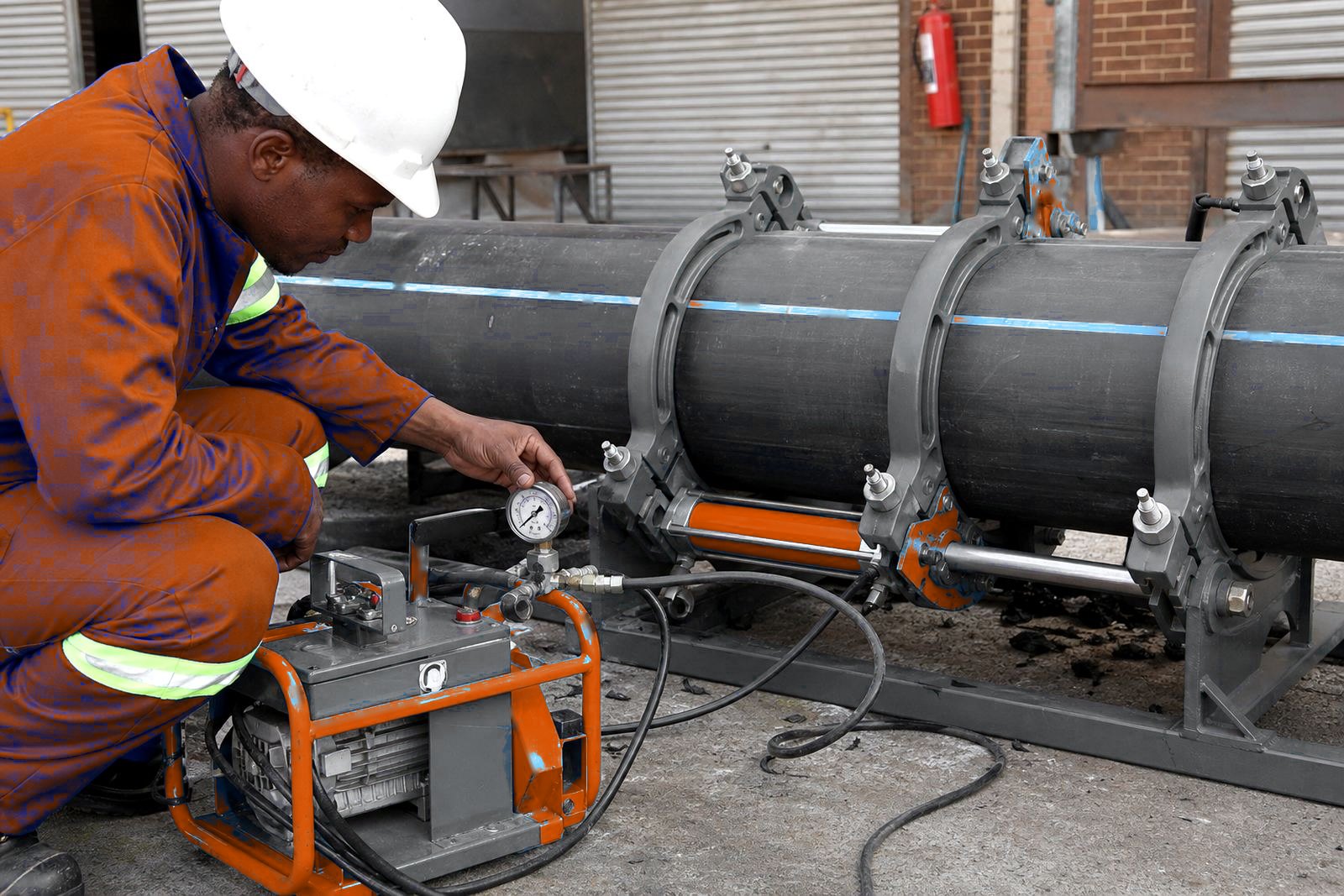
Low pressure leaves the bead small and weak. Excess pressure squeezes the molten material away and leaves a forced, uneven joint. Changeover must be quick and deliberate, because HDPE starts cooling the moment the hot plate moves out.
- Check temperature with the correct gauge.
- Move from heat to fusion without unnecessary delay.
Pressure errors found after the pipe is in service
Many weld faults are hidden until the line is put under load. A joint welded at the wrong fusion pressure can pass visual checks and still fail later because the bead profile is wrong or the internal structure was disturbed. On long runs feeding slurry lines, a joint that fails under load means cutting out and rewelding a section.
Clamps released early let the joint shift while it is setting. Even a small movement distorts the bead.
- Follow the correct pressure chart for the machine and pipe size.
- Do not lift the joint or twist the pipe during cooling.
- Allow the full set time for larger diameters.
- Record the settings used on each weld as you do the weld.
Catching a weak joint at the bead
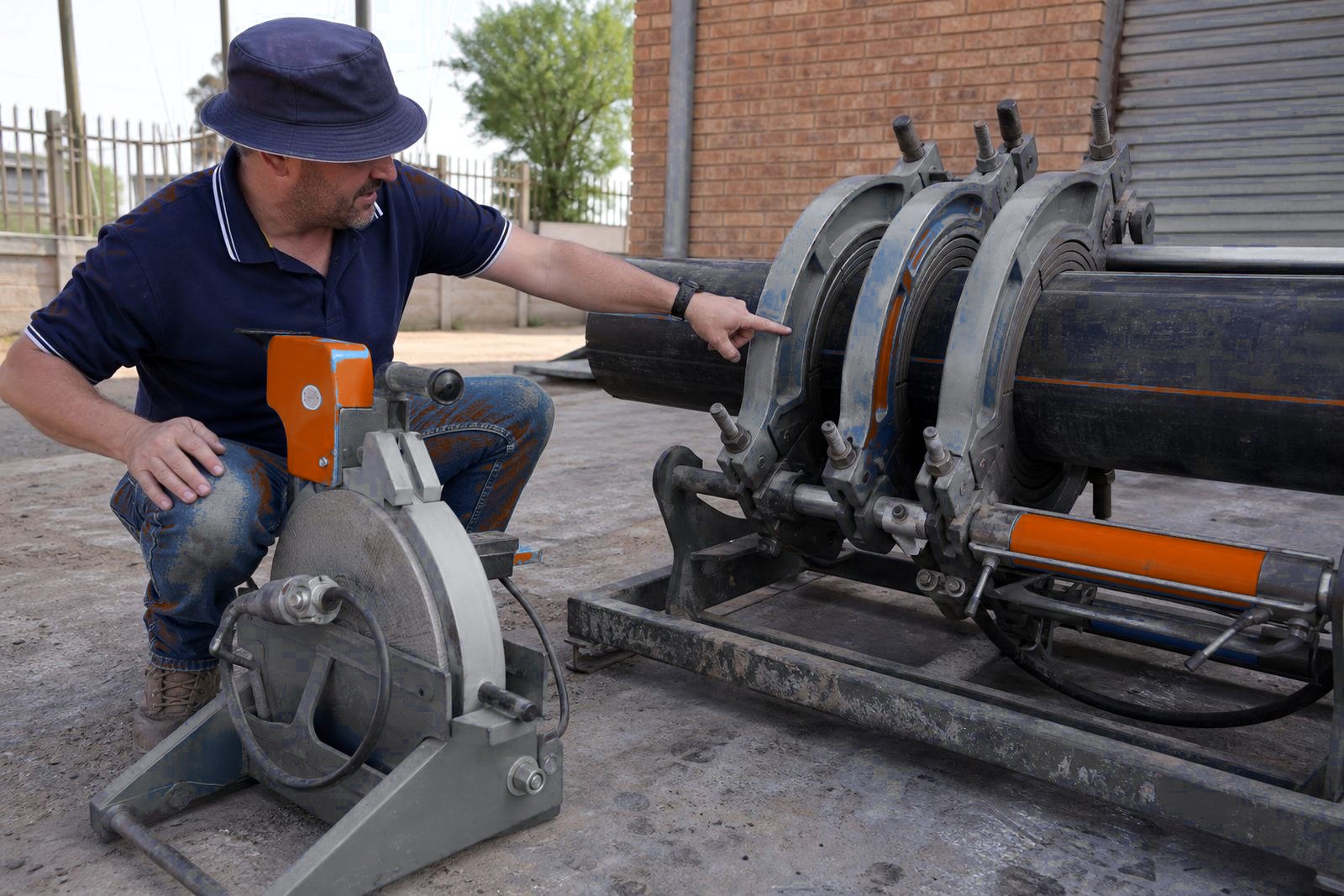
A proper bead should be even around the full circumference, with no sharp breaks, contamination marks or obvious mismatch between the two sides. A bead thin on one side and heavy on the other shows a shift in alignment, pressure or changeover.
A data log keeps a record of what was actually done on site. Every crew needs the right diameter, SDR and pipe temperature for its line. Logged data also makes it easier to review a weld that looked fine at the time but needs a closer look later on.
- Inspect bead width, symmetry and surface finish.
- Check for gaps where the ends did not fully meet.
- Keep a weld log with pipe size, SDR and settings.
- Review repeat faults together as one pattern.
A dry-fit check before heating
On one job, a crew had the right machine but kept getting uneven beads because the pipe ends were not staying level in the clamps. The fix was straightforward. The team reset the alignment, checked the facer, cleaned the heater plate and slowed the sequence enough to keep the changeover controlled. After those changes the beads came out even along the rest of the line.
That is the pattern on many South African sites. Fix setup faults before the first weld.
We can also help with site startup on the first joints. Polokwane, Rustenburg, coastal and inland plant jobs show the same recurring errors: dirty ends, wrong pressure, short cooling and skipped bead checks.