Reading the gauge with the bead
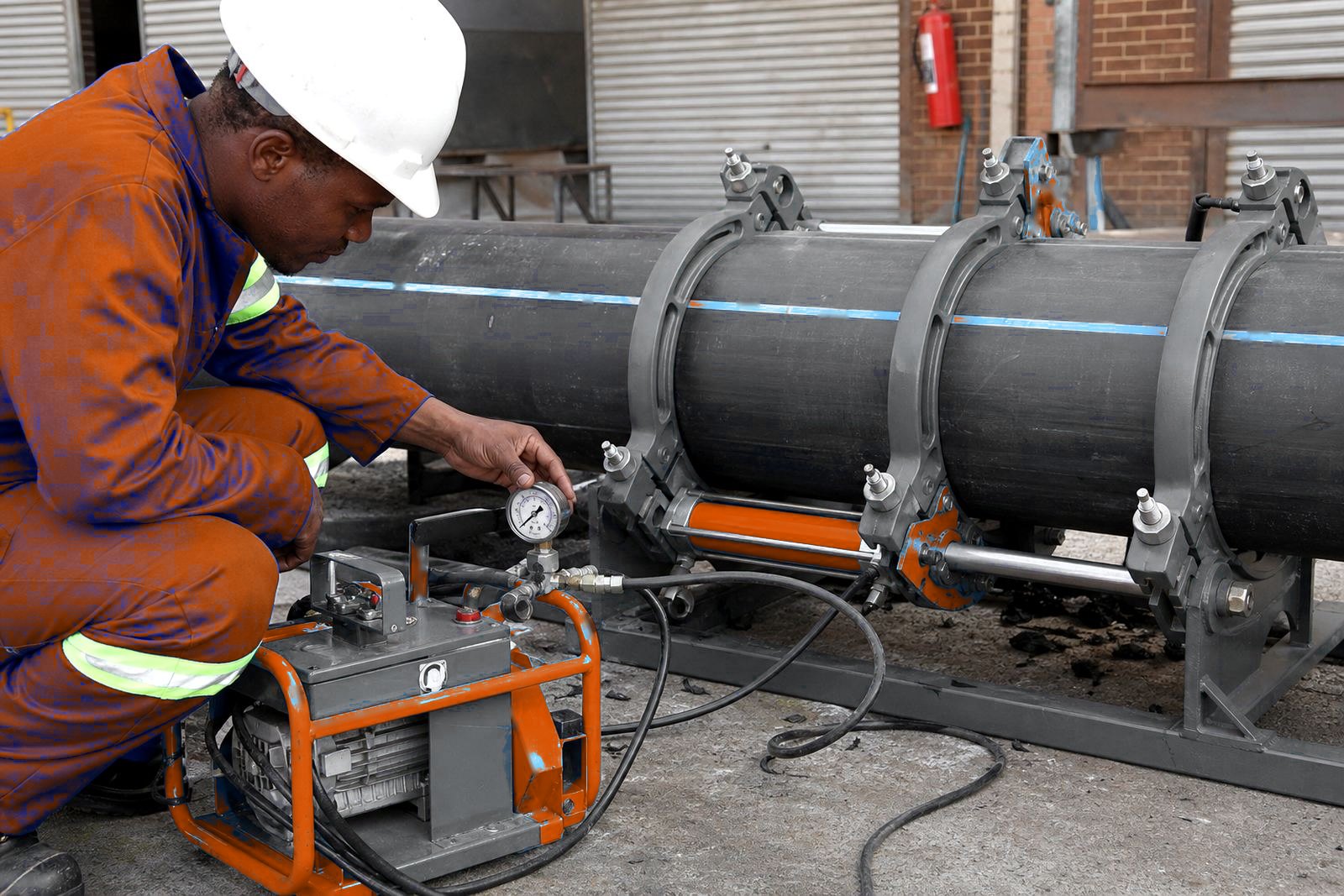
On a butt-fusion machine, the hydraulic gauge reading includes more than the fusion force. Some of that force is being used just to move the pipe, the carriage and the facing load, especially on longer strings, larger diameters and stiffer SDR classes. That extra load is drag pressure, and if it is ignored the joint may be fused at the wrong actual force.
Drag force and fusion force are separated by the operator. The machine may show one reading, but the pipe faces only care about the force left over after drag is taken out. Drag pressure rises when pipe is laid on rollers, supported badly or pulled by slope and bends.
Where drag pressure comes from on site
Drag pressure appears anywhere the pipe resists free movement. Drag pressure rises when long HDPE lengths are welded on uneven ground or when one side of the line pulls against a bend or trench edge. Heavier wall pipe also adds more resistance.
- Pipe weight on the carriage and support rollers
- Friction from misaligned clamps or dirty pipe shoes
- Pull from a slight bend, slope or trench line
- Resistance in large diameter or thicker wall pipe
- Hydraulic movement before full contact is made
How to read the force during facing and changeover
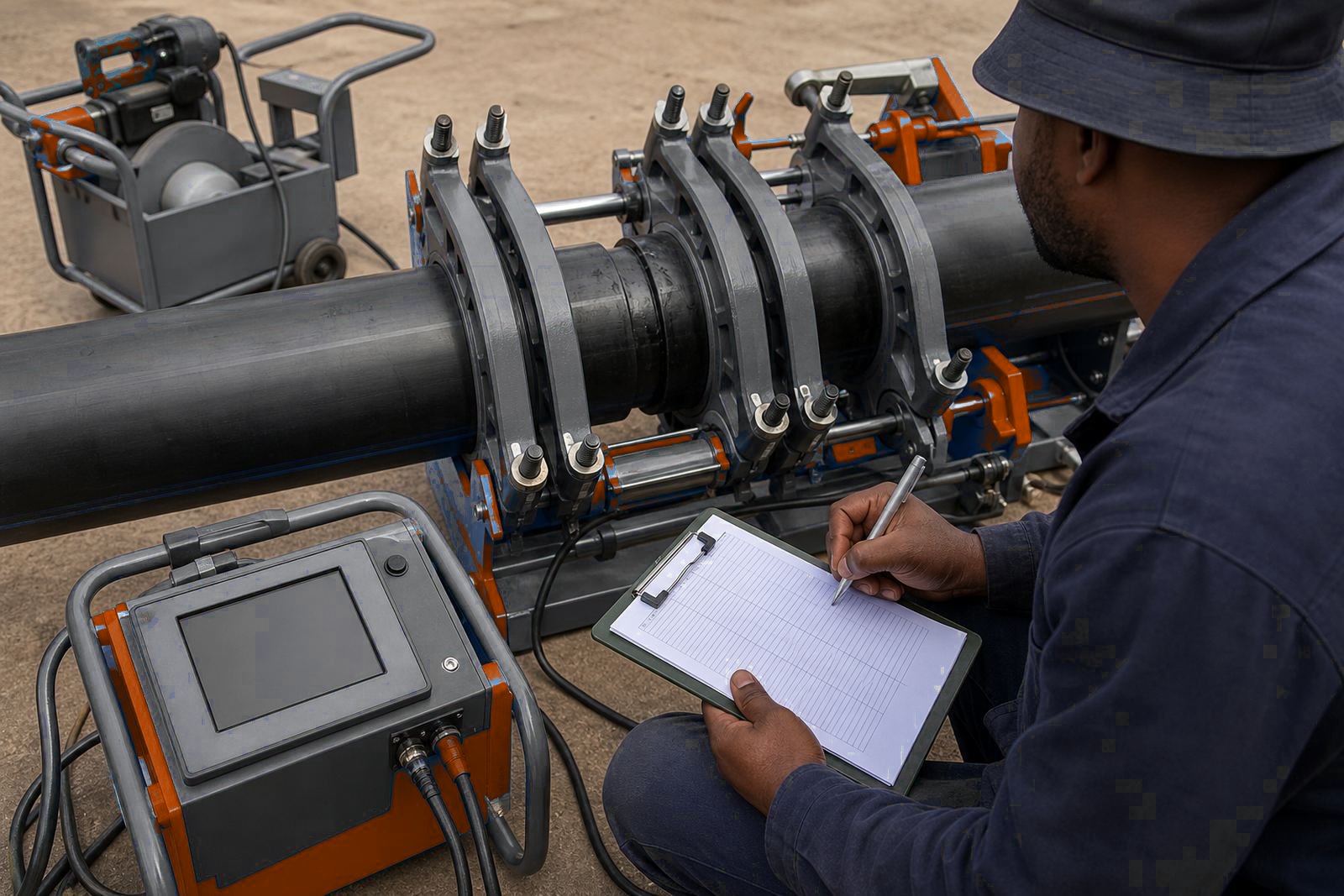
Before facing, hold the pipe straight and clamp it firmly, with the carriage still free to travel. The facer is then brought in and the pipe ends are trimmed until a full, clean face is achieved. During this stage, drag can rise as the carriage moves, so the gauge reading should be watched while the operator notes the point where motion starts and the point where the pipe is fully engaged.
Once facing is complete, the heater plate is brought in for heating and then removed during changeover. The handover window is short, so keep hands and tools off the faces. If drag is not known, the operator may overpress the joint to compensate without realising it. A false idea of fusion pressure can affect the bead and the final weld line.
A field method for reliable numbers
A practical drag check needs consistency. Carriage resistance with the pipe loaded is measured and recorded as drag before the cycle begins. After that, the set fusion pressure is adjusted so the true pressure at the joint is what the procedure requires.
- Clamp the pipe square and check alignment first
- Move the carriage and note the force needed to start motion
- Record the drag value before heating begins
- Add or subtract that value from the target fusion pressure as required
- Keep the same support height and roller setup through the job
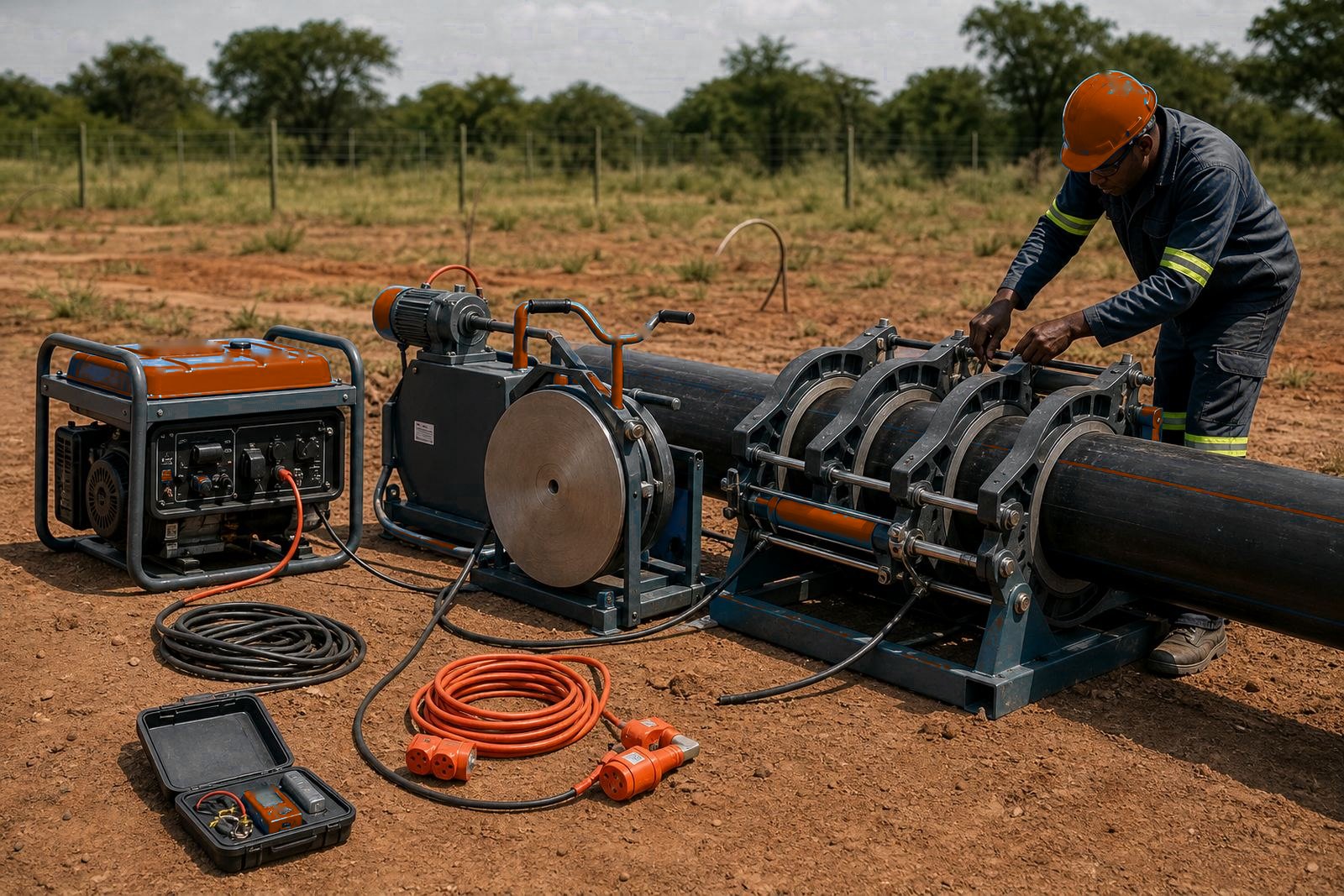
On a municipal water line near Durban, humidity, long pipe runs and uneven site layout change how the pipe slides. A stable setup gives reliable gauge readings.
What drag pressure does to bead shape and cooling time
When drag is missed, the bead comes out small or uneven. Set drag pressure first, then add the fusion pressure from the weld table.
Bigger pipe and thicker SDR classes need a longer heat soak and a longer cool-down. A data log records the pressure curve, heat stage and cooling hold for each joint.
Training and machine condition for drag pressure
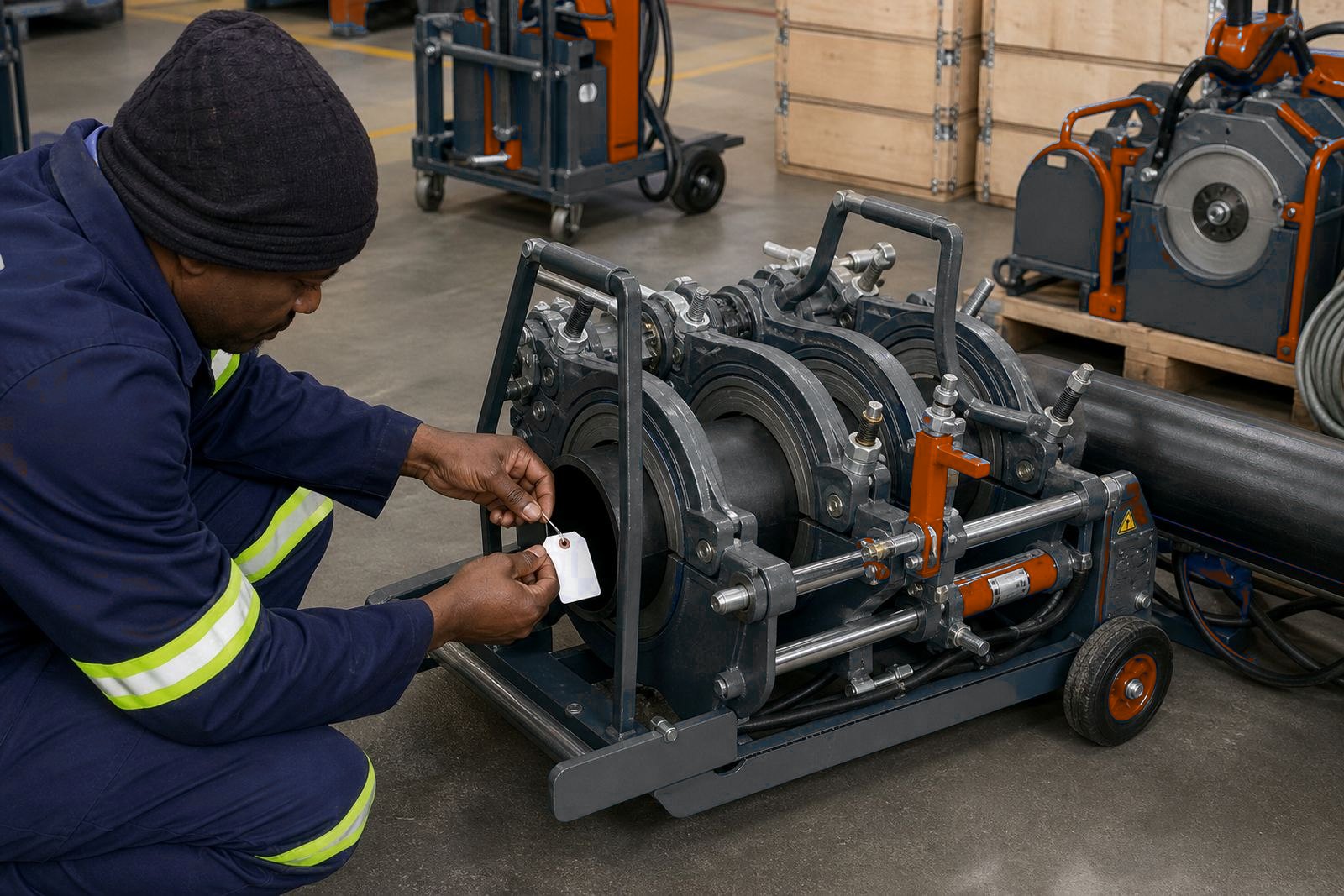
Drag pressure is easier to manage when the crew knows how the machine behaves under load. Operator training helps people recognise when a reading is caused by the pipe and when it is caused by the equipment. A worn facer, loose clamp or sticky hydraulic movement can add extra drag that should not be blamed on the pipe alone.
- Check clamp alignment before each shift
- Overhaul the facer if the cut starts to wander
- Test hydraulic pressure when readings seem unstable
- Keep weld records legible for handover
Contractors moving between Polokwane and Cape Town keep one drag method as ground and layout change. It also makes hire units easier to hand over because the next crew can see exactly how the machine was set.
Drag pressure on a yard pipe stack
Prep for a mine line may cover 160 mm to 315 mm HDPE before loading. One side of the stack may sit slightly higher, which changes the drag as soon as the carriage starts moving. Gauge pressure alone misreads the fusion load and starts the sequence from the wrong number.
Drag pressure needs to be part of the first conversation. It helps the team match actual force to the pipe size, the SDR and the site setup, then carry those numbers through facing, heating, changeover, fusion pressure and cooling time with fewer surprises.