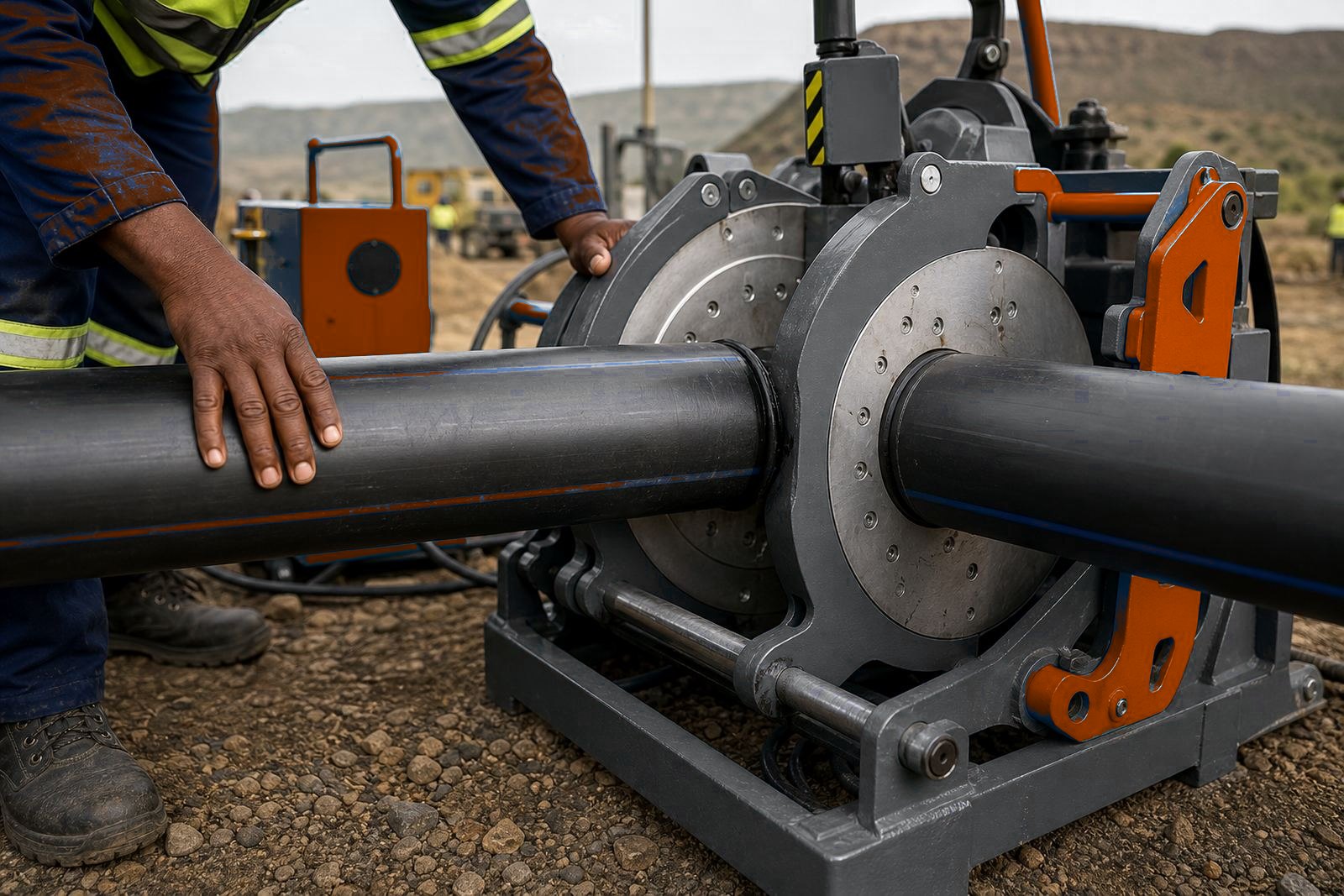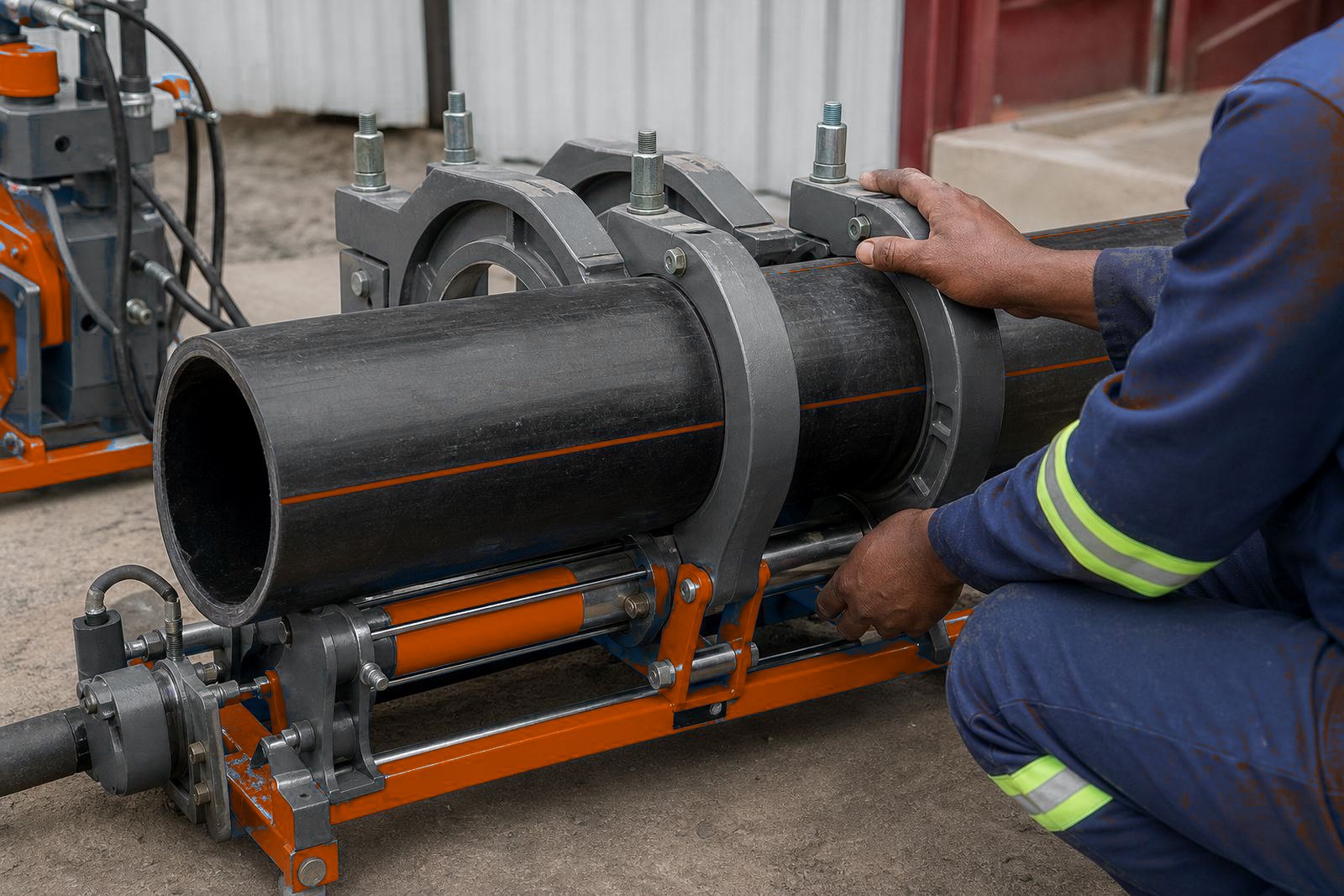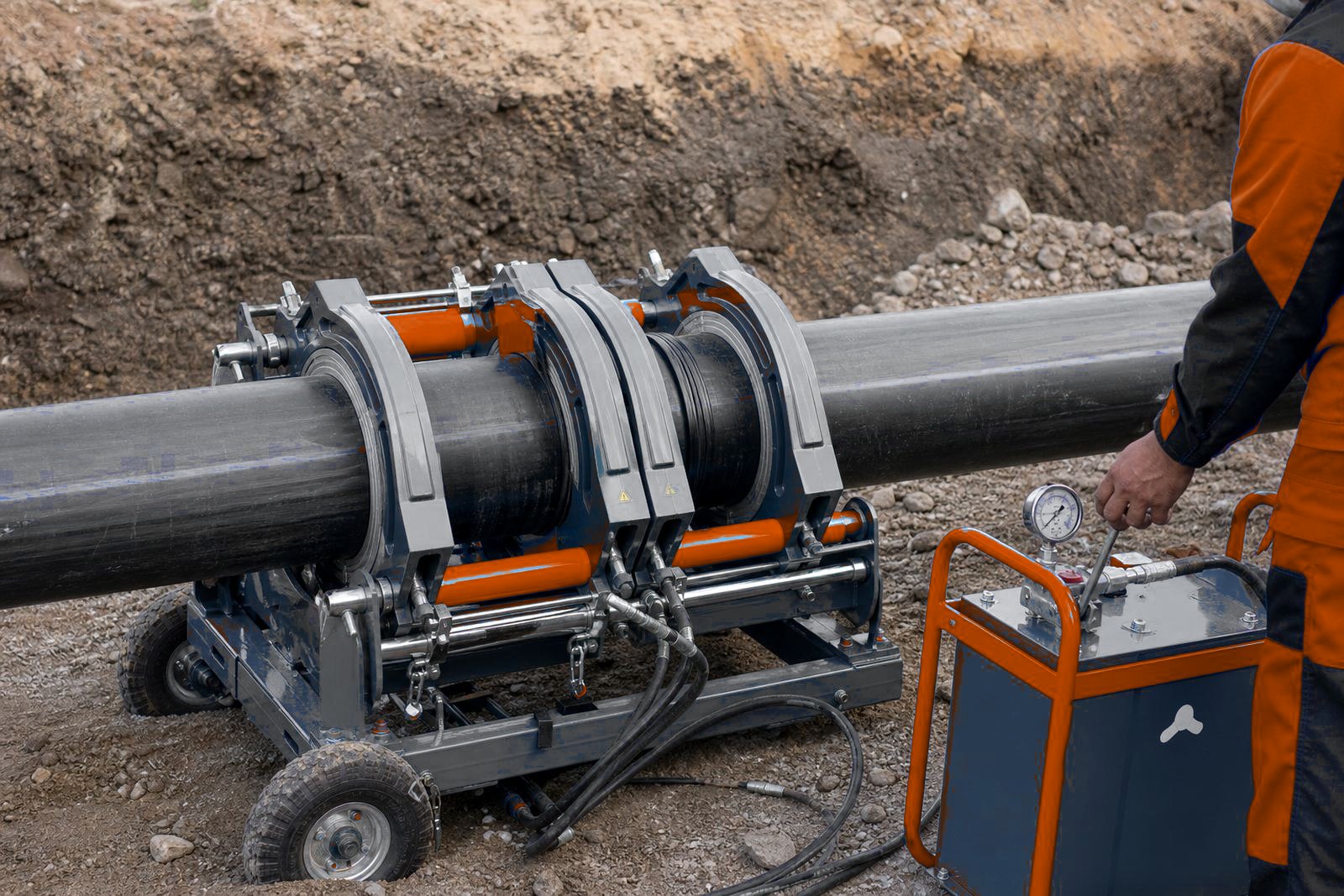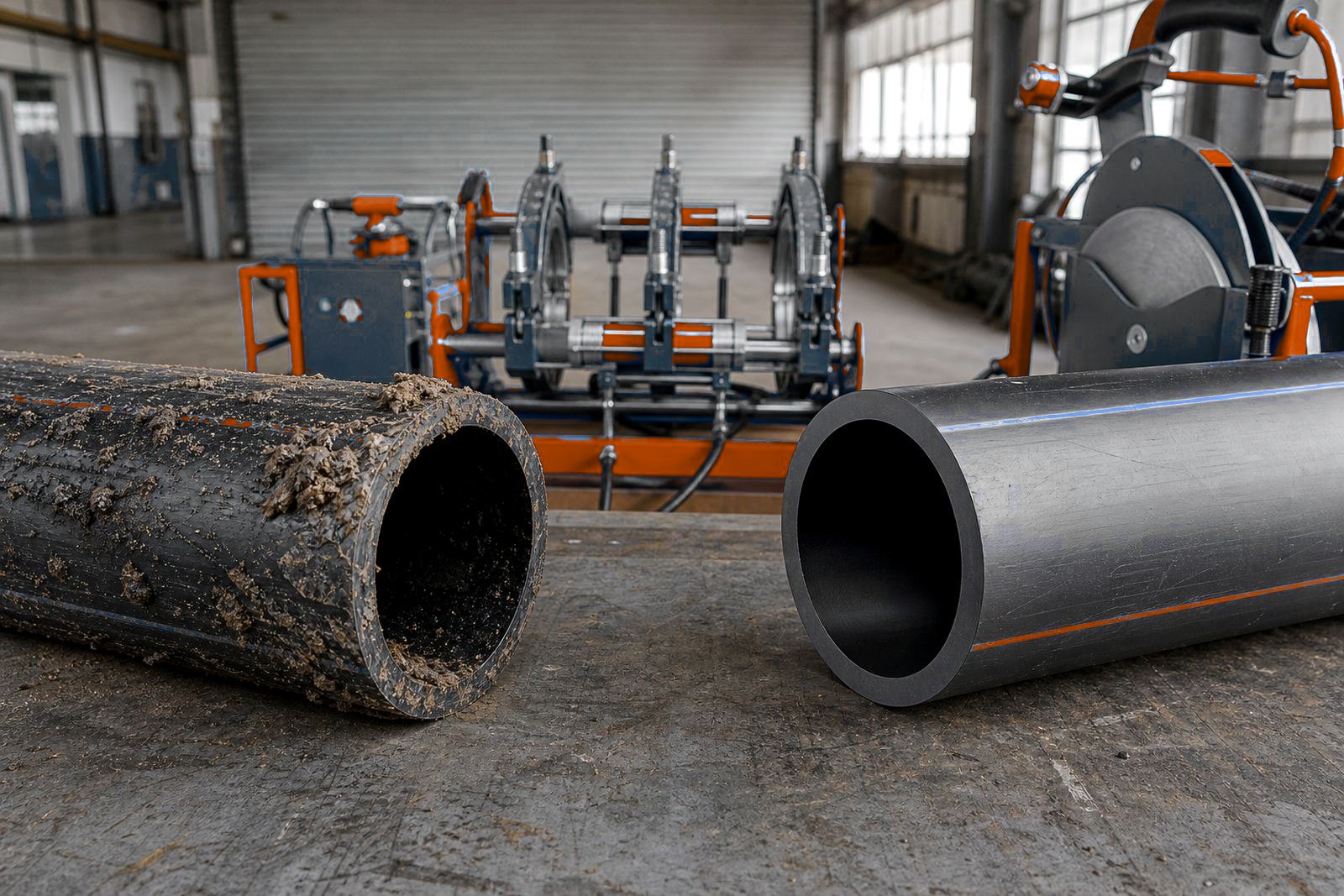
Check what sits on the pipe before the heater plate closes
The joint face needs careful preparation. A thin film of mud, hand grease, cutting dust or road spray can stop molten material from bonding properly. Contamination trapped in the interface leaves weak spots that can leak in service.
Pipe moves through yards, trucks and open storage before it reaches the machine. By the time it reaches the machine, the ends may carry fine grit you can barely see. Handle the pipe clean, face it fresh and store it dry.
The contamination points crews miss on site
Poor joints often start earlier, when pipe is dragged on the ground, left open to wind-blown dust, or wiped with a rag that has oil in it. Moisture from rain, night dew or wet gloves can cling to the bevel and the inside edge. If the operator does not check both sides, dirt can sit inside the pipe and fall back onto the face after trimming.
- Earth and sand on the outer wall after unloading
- Grease from lifting gear, marker pens or hands
- Water droplets inside the pipe after rain or washing
- Plastic shavings left behind after facing
- Dust blown in while the machine is open
Butt fusion needs clean, even contact across the face. If the surface is dirty, the melt does not flow into clean polymer all the way across the joint.
Facing as the first contamination check
Facing should also remove the oxidised surface layer. It should also strip away the skin that has picked up grime during handling. A sharp facer gives a continuous shaving from each end, and the operator should inspect the cut surface before moving on. If the shaving comes off in broken strips, the blade may be dull or the pipe may not be seated squarely.
The exposed face should look even, dry and free of dark streaks. If there is moisture or smeared dirt after facing, the joint needs attention before heating starts. In practice, this means stopping the job for a proper wipe, a clean clamp area, or a fresh cut where the pipe end has been damaged.
- Check for oil sheen near the clamp marks
- Look for fine dust inside the pipe bore
- Confirm the facer has removed the full contaminated layer
- Cover the plate when it is idle.
Heating, changeover and the risk of trapped film
During heating, the pipe ends should soften evenly from edge to edge. A greasy patch or wet spot left on the face can sit between the softened layers and block the melt. Control the changeover as closely as the heating. If the operator hesitates too long after removing the heater plate, the surface cools and skins over, which can lock contamination at the interface.
Fusion pressure and timing are set for the pipe size. SDR11 at 160 mm and a 315 mm heavy-wall line need different heat and pressure settings. Larger diameters hold heat longer, but they also demand steadier handling, cleaner faces and a calm changeover.
Bead inspection after cooling
The bead shows whether heat and pressure were even, but dirt at the interface stays hidden. Operators should look for symmetry, smooth roll-out, and any sign that one side pushed out differently from the other. Lopsided or darkened beads can point to contamination.
Johannesburg civil lines and Durban borefield runs often come with pressure to keep moving. That is when bead inspection helps slow the job down enough to spot trouble. A proper record of heater temperature, fusion pressure, cooling time and pipe size also helps explain why a joint behaved the way it did later.
- Colour change should look even across the face
- Joint face should not show burnt grease marks
- Keep cooling time to the machine setting
A dusty yard morning and what it shows
Picture a pipe yard after a windy night. Pipe lengths arrive with dust on the outer wall and a little damp on the ends from early mist. Grime near the bore showed up only after the first length was clamped and faced. If that surface had gone straight to heat, the weld could have trapped the dirt inside the joint. Clean, reface and dry-check the ends before every weld on water reticulation.
A small patch of contamination on the face can cause a weak joint. The cleanest joints are usually the ones where someone took an extra minute to inspect the face, the clamp line and the heater plate before the cycle began.
Cleaning and scraping pipe ends before facing is part of our operator training.