What fusion pressure is doing at the joint
Pressure is held steady while the molten faces knit together, so the pipe wall fuses into one continuous section.
With HDPE, the operator is working with wall thickness, SDR and pipe diameter at the same time. SDR 11 at 110 mm behaves very differently from a 315 mm SDR 17 main. The machine settings must suit the pipe and the size on the label.
Preparation ahead of pressure
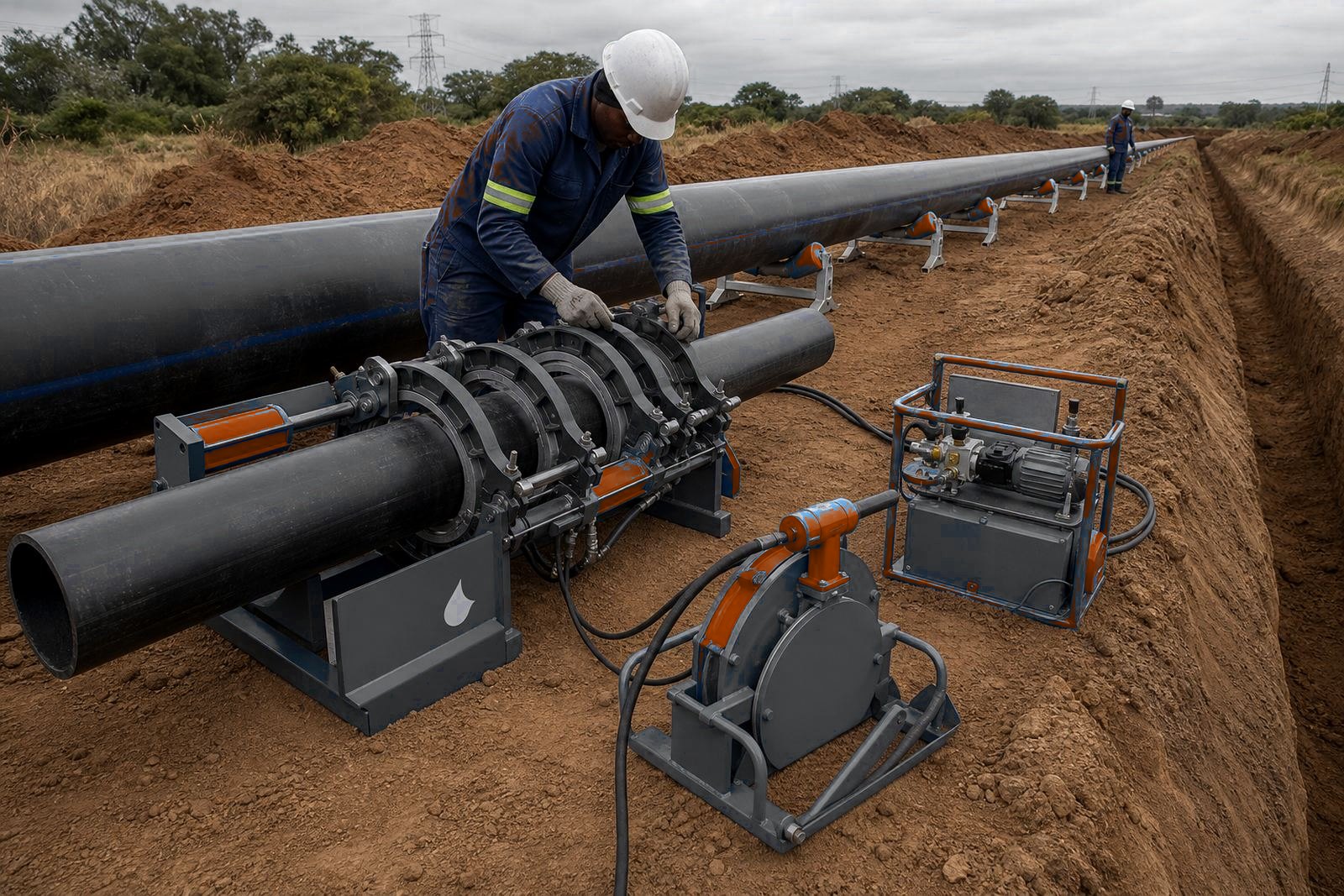
Face the ends clean and even before setting fusion pressure. If the clamp alignment is out, pressure will push the ends sideways and the bead will look uneven from the first second.
- Clamp the pipe so the bores line up before heating.
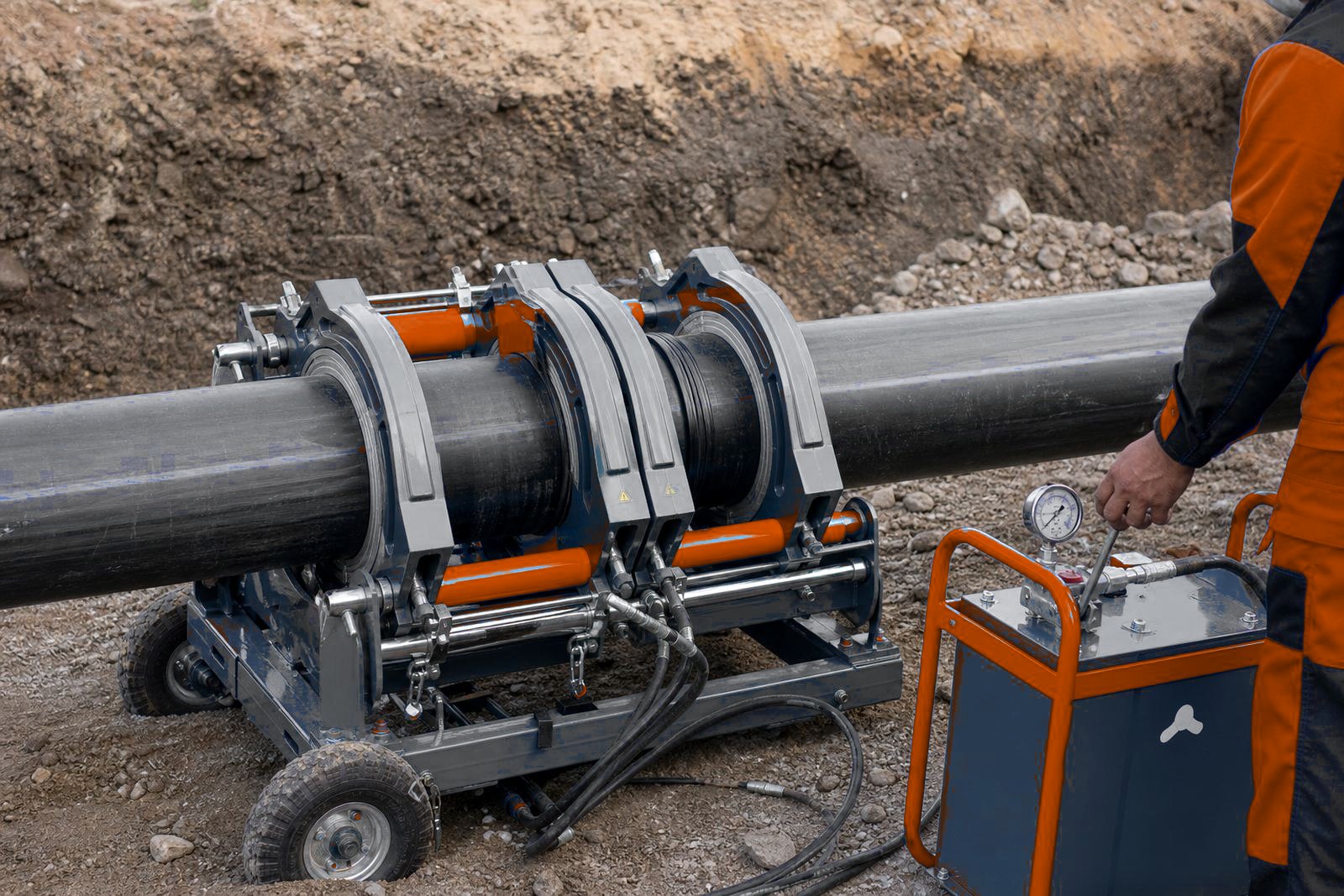
- Bring the ends together at the set changeover point on the gauge.
Operators sometimes rush the changeover because the heater plate has been removed and the pipe starts cooling straight away. Keep the gap short and controlled, or the joint loses heat at the critical point. A rushed changeover can spoil an otherwise neat setup.
Gauge readings on site
Fusion pressure starts where the pipe ends form the correct initial bead, then stays at the required pressure through cooling.
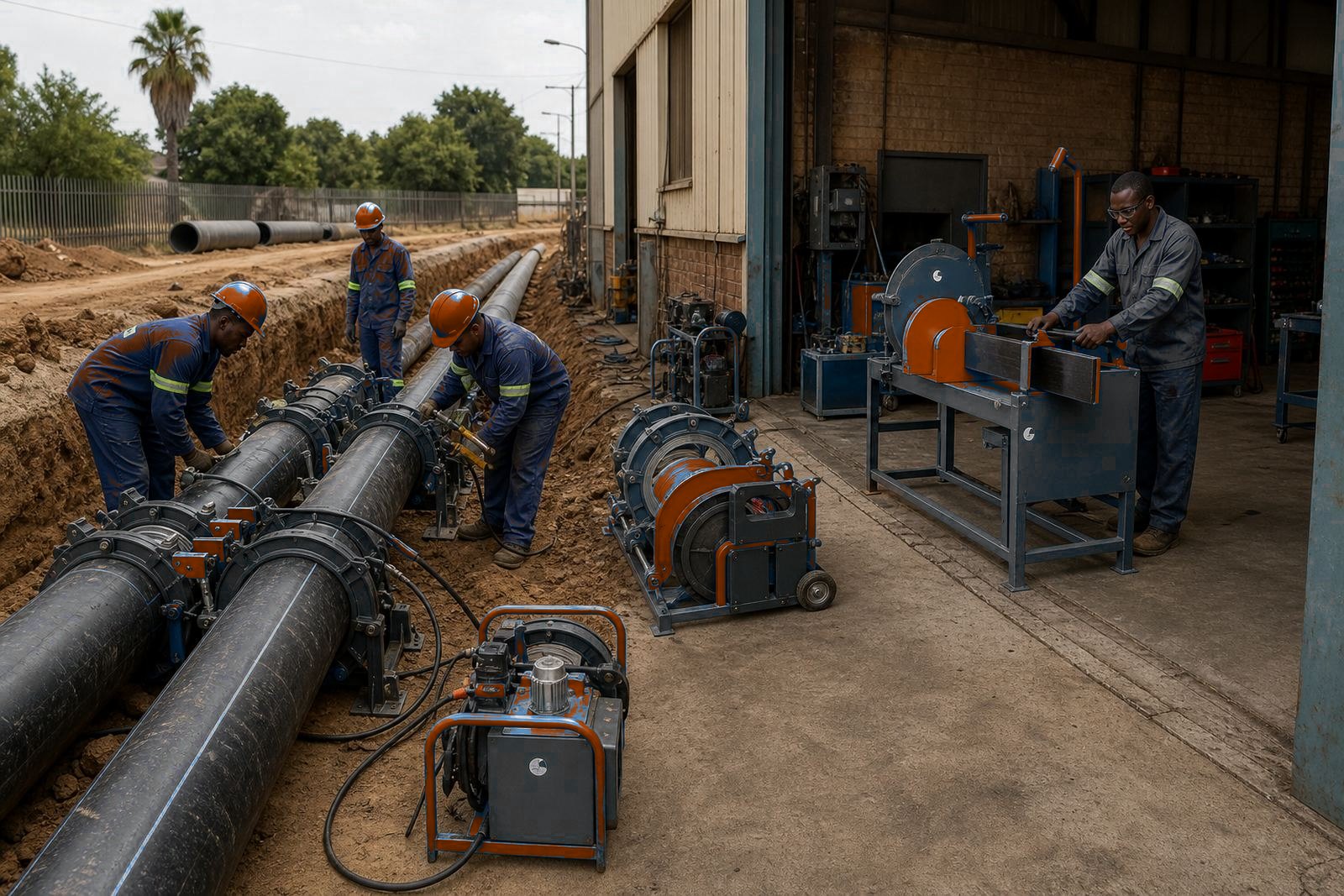
On civil work, the job often runs with longer pipe lengths and tighter site space. One length may sit on skids, another on uneven ground, so the clamp frame needs to stay stable. Pipe shifting as pressure comes on opens the bead on one side and closes it on the other.
- Apply pressure smoothly in one steady rise.
- Watch for a uniform bead all the way round.
- Hold alignment while the joint cools.
- Do not strike or twist the pipe during cooling.
Bead shape
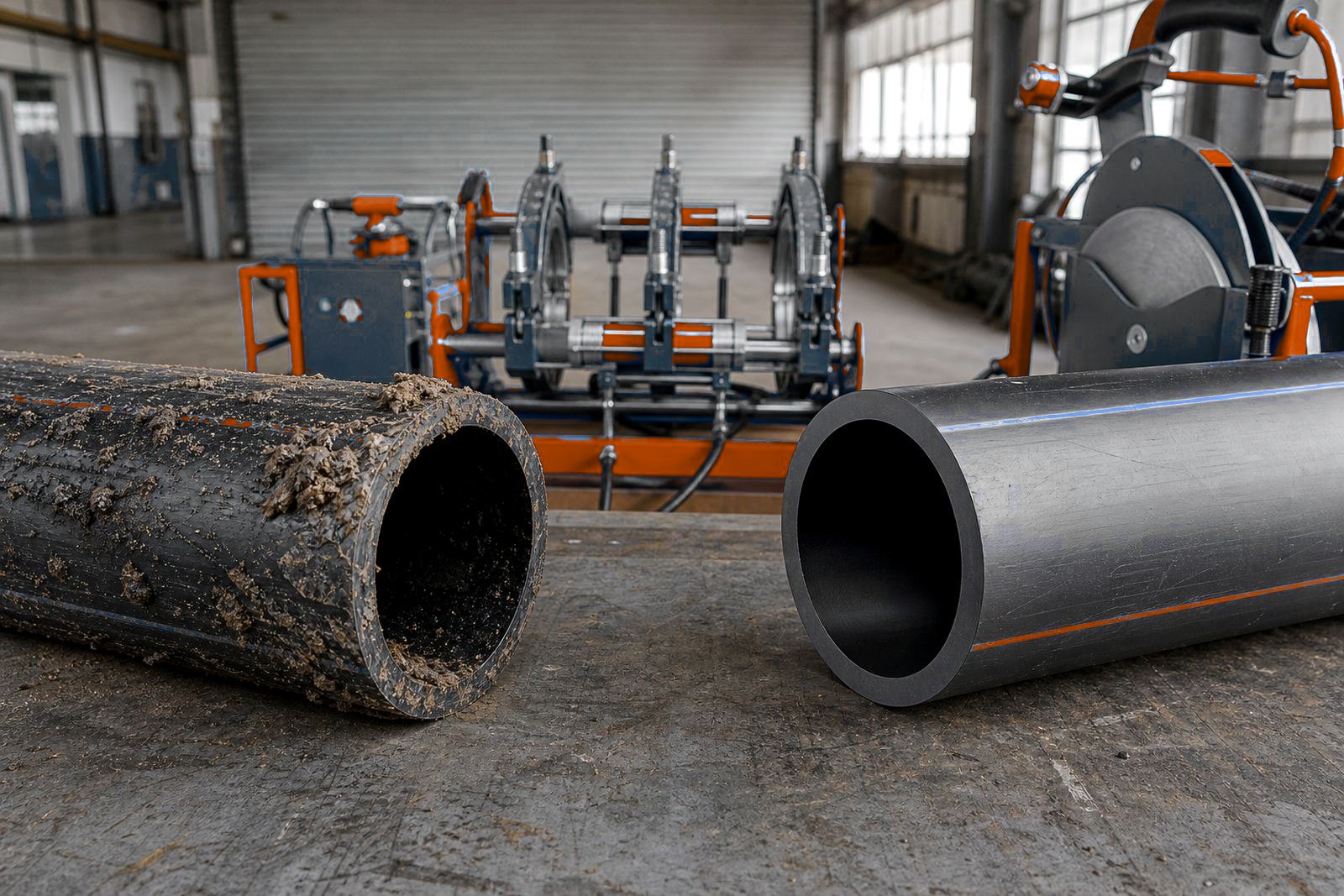
Dry, rough squeeze-out, a high spot or a thin side all signal a pressure problem. The inside bead, where visible, should also appear consistent. A much larger side points to the clamp line or pressure setting.
For water lines, inspect every bead, because the pipe may be buried under fill or run where repair access is hard.
Cooling time is part of the pressure cycle
Pipe size, SDR and the machine procedure in use set cooling time. On large pipe, keep the clamps shut through the cooling period. The joint can still be soft inside even when the bead looks firm outside.
That cooling period is where many hurried jobs fail. The weld may look acceptable, then move under stress after release, especially on mine services with vibration. Keep the machine still, keep the pipe supported and allow the joint to set fully before handling.
Data logging, records and handover notes
One log holds pressure, heating time, changeover time and cooling time for each joint. Pressure records show what happened on the day when several welds share a line. Even a simple handwritten log helps if the machine does not have built-in electronic logging.
- Pipe size and SDR
- Heater plate temperature
- Facing result and alignment check
- Fusion pressure and hold time
- Cooling time before release
When a line changes hands between teams, the weld log shows what settings were used and where a joint may need a closer check.
Fusion pressure on mixed pipe sizes
A water contractor collecting a machine may have pipe sizes ranging from smaller reticulation lines to larger municipal mains. If the first bead looks wrong, stop and recheck alignment before the next weld.
Uneven first beads come up often during operator training. A machine with poor clamp alignment or a worn heater plate gives unsteady pressure readings. Sort the equipment first, then set the weld.