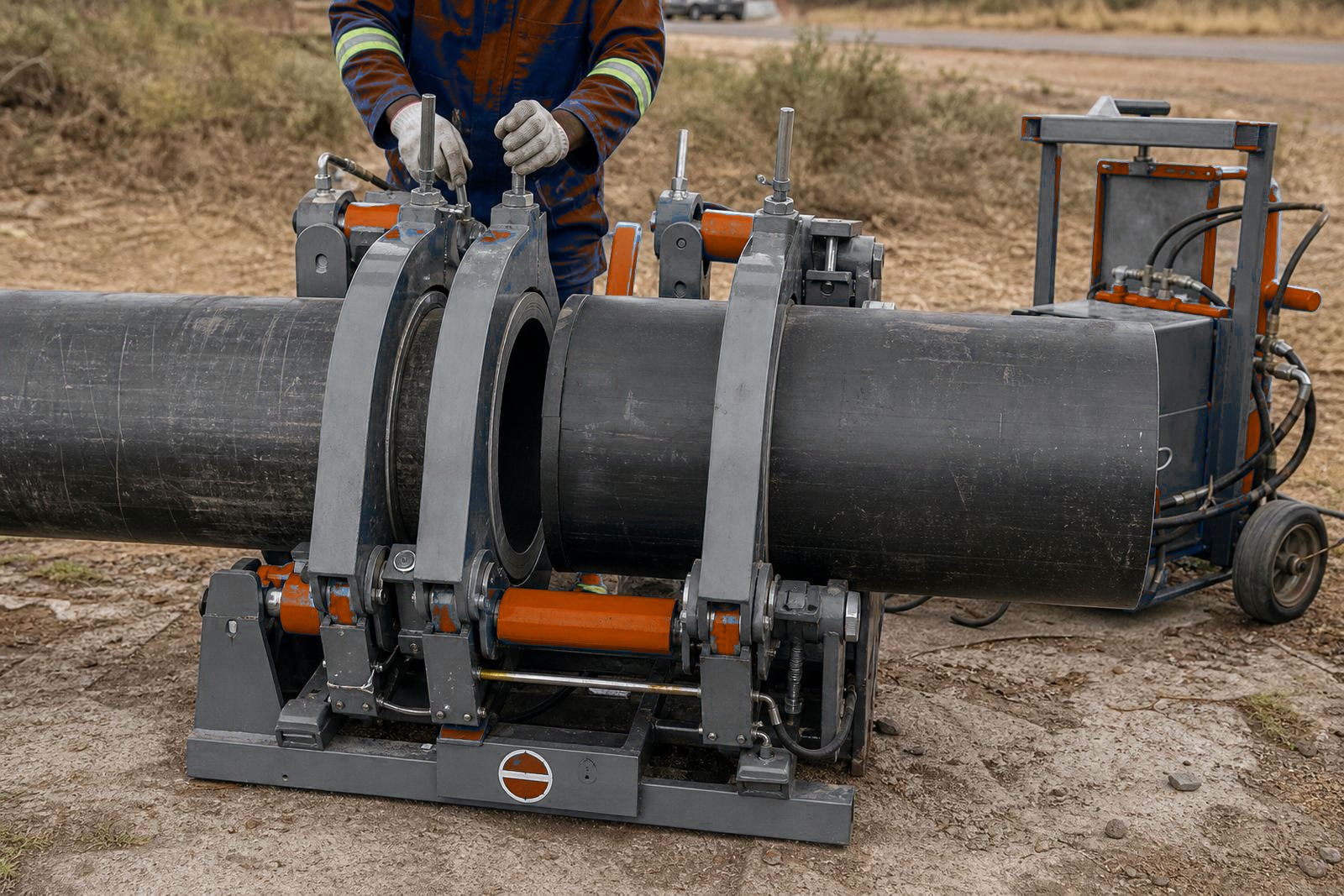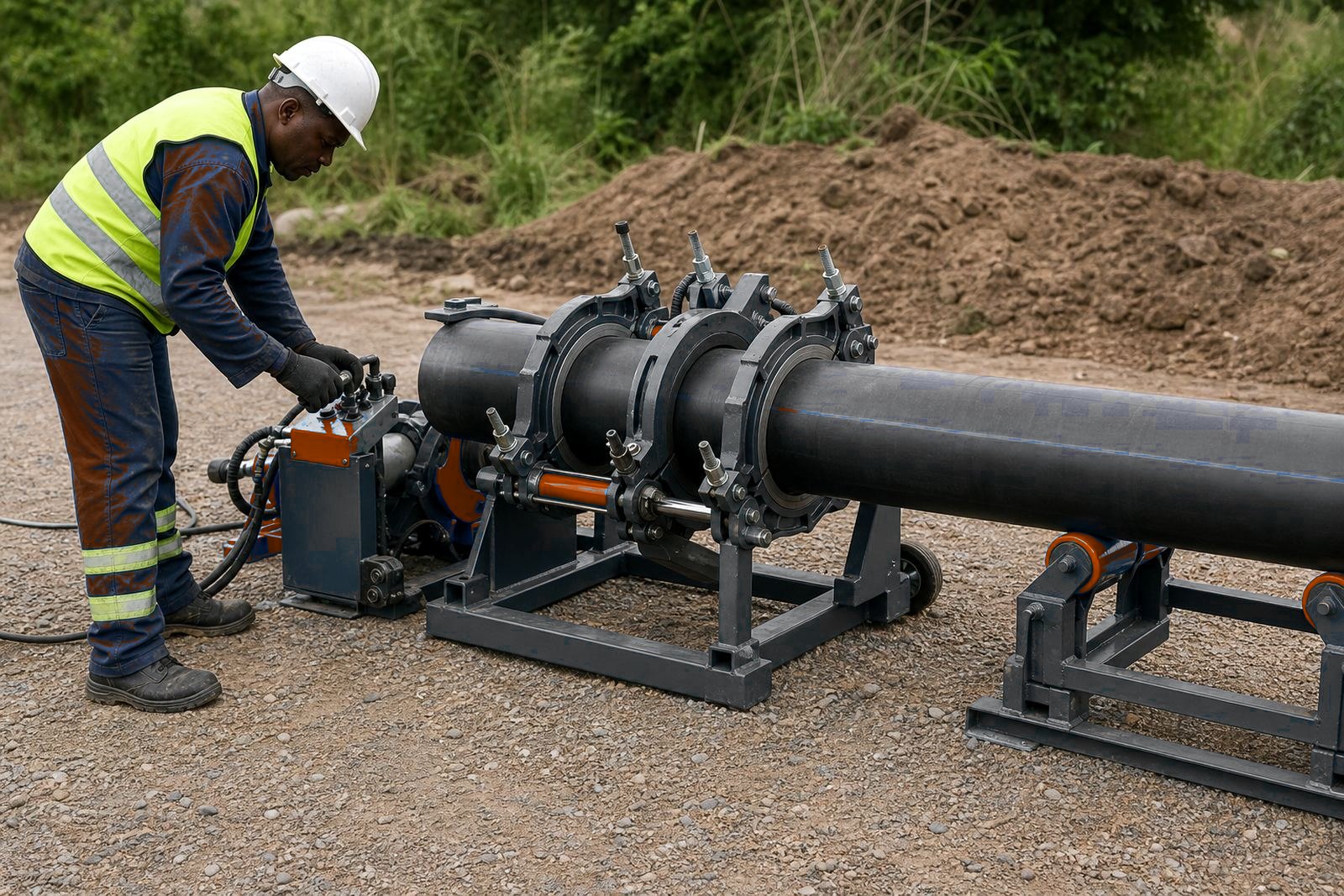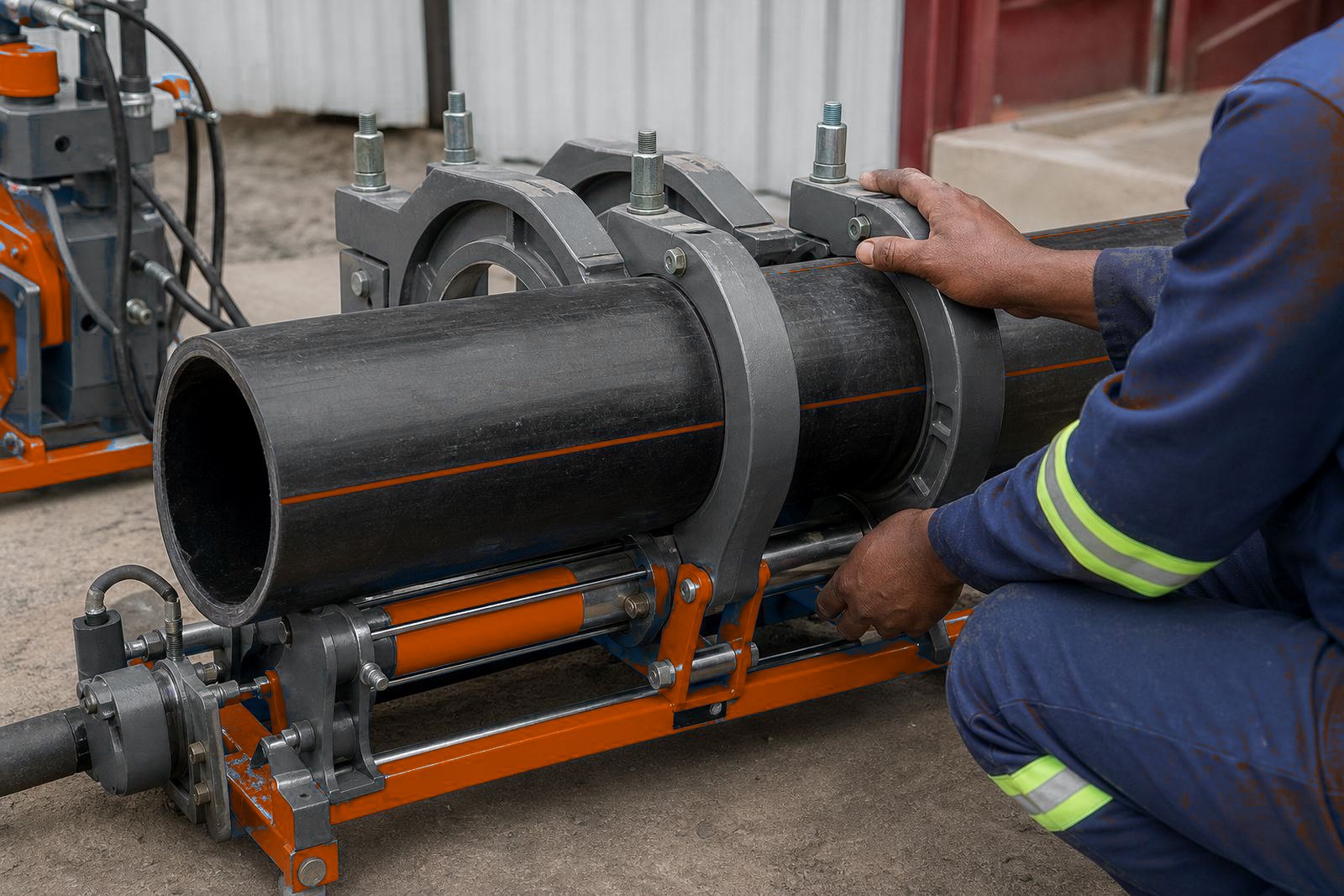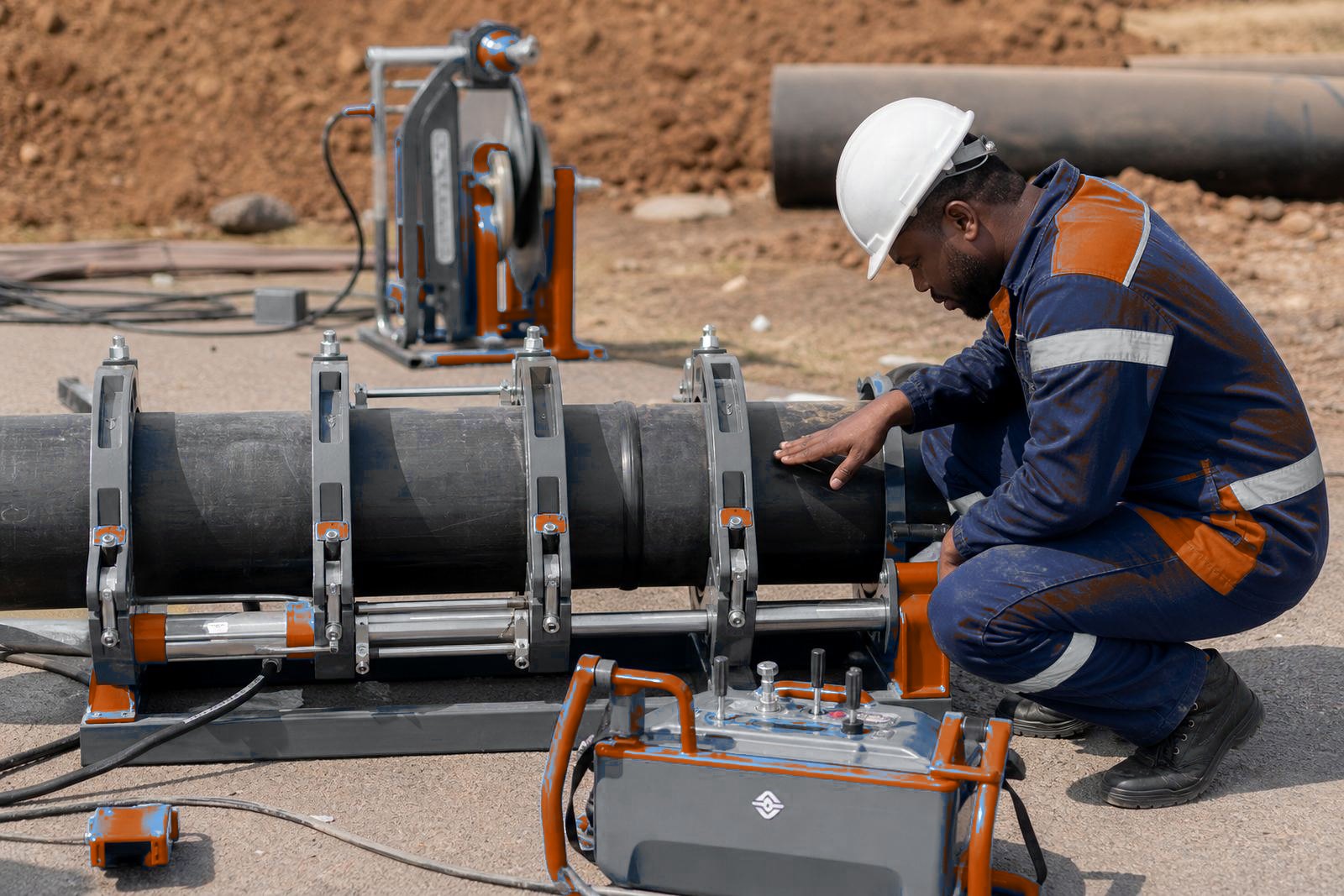
What a bead width check tells you about the joint
Bead width look is the quick visual check many crews use after a butt-fusion cycle. A balanced bead usually means both ends were faced square, the heater plate sat right and the fusion pressure held through the cycle.
On HDPE pipe, the bead sits as a raised ring where the molten faces pushed together. Uneven width can mean uneven loading, misaligned clamps or a poor face on one end. A wide bead on one side and a thin bead on the other can still be sound. Stop and read the joint properly before burial or pressure testing.
Johannesburg site teams run the same bead-width check on 110 mm, 160 mm and 225 mm lines, before the trench is backfilled.
How circumference balance shows up on the pipe
A good bead forms with a fairly even shoulder around the full pipe. Height and width vary a little with pipe size, SDR and machine settings, and the shape stays consistent around the joint. Large-bore beads show their pattern more clearly because there is more length to read. On smaller pipes, the eye picks up a lazy side or a flattened patch faster than a tape measure does.
Look for these field signs:
- Bead width looks similar on both sides of the weld line.
- The bead does not pull strongly to one quadrant.
- No side shows a crushed, smeared or sharp edge.
- The profile stays regular after cooling, without obvious collapse.
Clean the dust off the surface around the bead before judging it. In coastal Durban conditions, moisture and grit can hide small flaws too, especially when a pipe sits outside overnight.
Facing, heat and changeover leave their own marks
The bead width is only the final clue. The earlier steps leave fingerprints that can be read in the finish. A proper facing pass should leave clean, even faces with no torn edges. A ridge left by the facer often grows into an uneven bead. Heating must cover the full face evenly, and changeover needs to be swift enough to avoid cooling spots that upset fusion pressure.
Heater temperature that is off gives a thin, glassy bead or a bulky, soft one. If changeover takes too long, the molten layer starts to skin over before the pipes meet, and the bead may show a flat side where fusion did not flow properly. Trained operators keep an eye on the whole sequence and the final ring of plastic.
Typical causes of an uneven bead include:
- Pipe ends not clamped concentrically.
- Facing tool not cutting square across the diameter.
- Heater plate contamination or uneven contact.
- Fusion pressure dropped or applied too late.
- Cooling time shortened because the line was disturbed.
What to compare when pipe size and SDR change
Bead width should always be read against the pipe size and SDR on the job. A joint on thick-wall pressure pipe will look different to a joint on lighter wall pipe of the same diameter. That is normal. Compare like with like, using the same machine setup and the same fusion method. Bead shape on 90 mm SDR 11 differs from bead shape on 315 mm.
On higher SDR pipe, the wall is thinner and the bead can appear more pronounced because the material flow shows up differently. On lower SDR pipe, the mass of molten HDPE can spread more cleanly around the circumference. An experienced crew at a Polokwane water site will spot that change and record it with the joint details for later reference.
Useful notes to keep beside the bead check:
- Pipe outside diameter.
- SDR or wall class.
- Fusion pressure used.
- Heater plate temperature.
- Cooling time before release.
Bead width and bead shape in the field
Foremen often check the bead first after clamp release. The joint should show a uniform ring, with no obvious lean and no heavy bulge on one side. The outer edge of the bead should look continuous and even.
Field crews on mining work check bead width together with the weld log and a visual alignment check. They still check alignment, record the weld, and inspect for contamination. If the bead looks narrow on the top and wide at the bottom, the pipe may have sagged during heating or moved during changeover. If the bead width changes sharply around a short section of the pipe, the clamp set may have been under strain.
For a practical site check, the technician can move around the pipe and view the bead from several angles. A good joint should look tidy from one side. It should read evenly all round, with a consistent profile that matches the job size and the machine setting used.
Comparing the bead with the data log
Bead width look is stronger when it is matched with a proper weld log. On work where data logging is used, the operator can link the visual result with the actual pressure, heat soak, changeover and cooling time. Long water mains need the right bead width where joints may be buried, loaded or inspected later. A bead that looks fine with no record can still leave questions. A bead with the right notes is easier to defend.
Good logging supports the eye. It supports it. If a line in Cape Town has a bead that looks slightly narrow on one quadrant, the record may show a shorter than normal changeover, a pressure dip or a heater issue. The team then knows whether the joint can stay or must be cut out and redone.
Our training team also shows crews how to read the bead profile against the machine data for the same joint.
Bead width on 160mm sections
Before loading 160 mm HDPE sections for a municipal run, the crew checked each bead. Most joints showed an even ring, but one weld had a wider bead on the lower side and a thinner upper side. The log showed the pipe had been released too early and shifted slightly while cooling. The joint was cut out before it reached the trench, which saved a late repair and a lot of awkward explaining on site.
When the eye, the log and the machine settings all point the same way, the weld earns more confidence.
Clean faces, correct heat, steady pressure, proper cooling and a bead that reads evenly around the pipe.