Heat soak times for thick-wall pipe
When the wall gets heavier, the heat has further to travel before the whole fusion face reaches the right condition. A thin section may look ready sooner, but thick-wall HDPE usually needs a longer soak on the heater plate so the heat can work through the full wall depth. If the outside face looks soft while the core is still cool, the joint can close up badly and leave a weak line inside.
Give thick-wall pipe its full heating time. On long runs for water reticulation, the operator must keep the pipe ends square, clean and dry, with the facer leaving a smooth, even face. Any gouges, ovality or dirt become more obvious once the wall thickness increases and the joint pressure rises.
Facing, changeover and bead form on heavier SDR classes
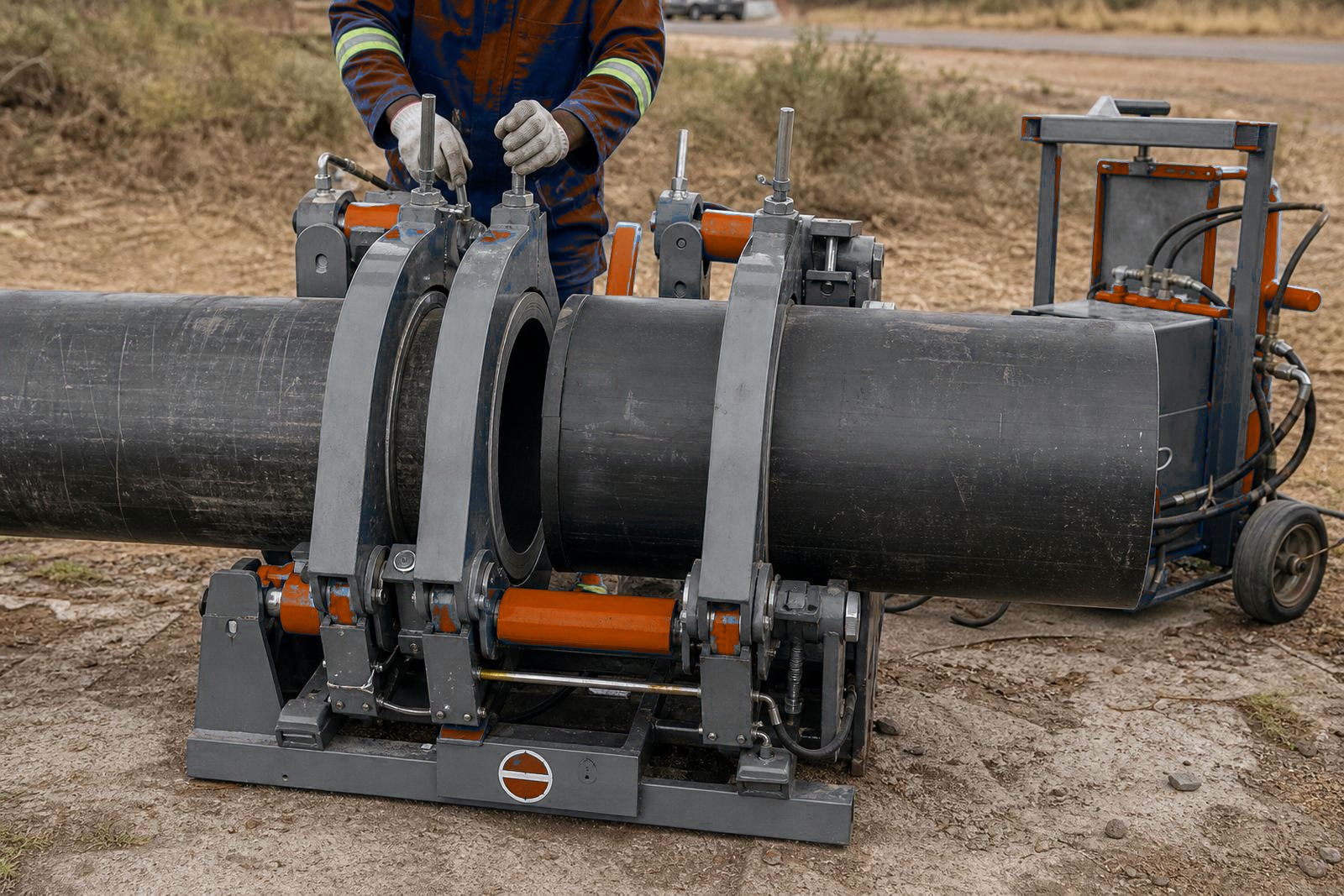
Thicker-wall pipe often sits in lower SDR classes, so the pipe section is stronger and the wall takes longer to warm through. Thick walls need longer heating and cooling times. Facing must remove a complete, even shaving across the full face, then the heater plate goes in without dragging the pipe ends out of line. Complete the changeover within the open time, which stays short even on large pipe.
- Move from heating to fusion without twisting the carriage
- Keep the soak time to the table for each SDR class
On heavy pipe, keep the changeover tight and controlled. If one side cools before the other, the bead can lean and the weld line may not press through evenly.
Pressure settings on deep-wall pipe
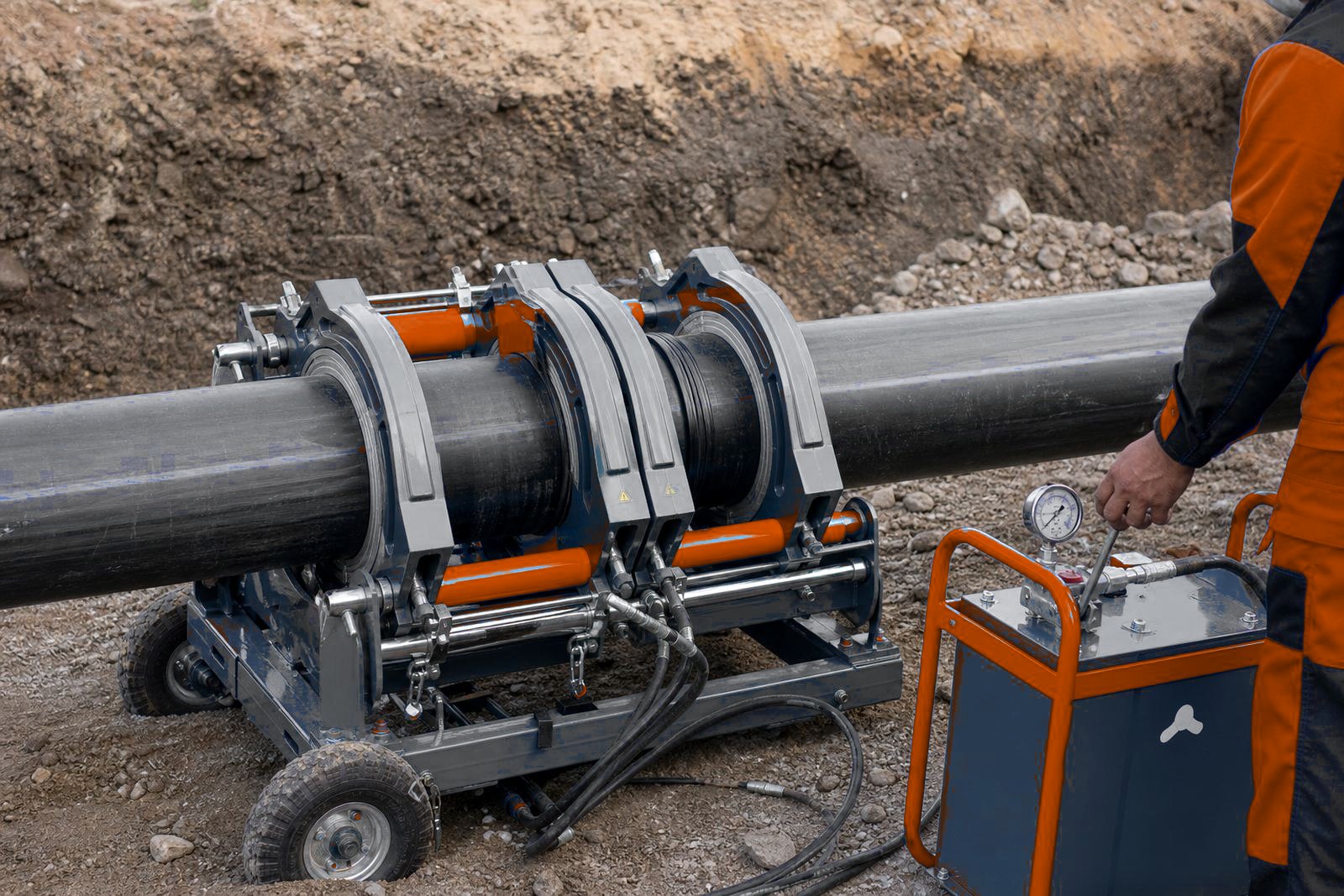
With thicker pipe, read the fusion pressure for each joint from the pipe size, wall thickness and machine setup. The operator must know the pull force of the machine, the drag on the carriage and the pressure needed to form the initial bead without crushing the heated faces. If the pressure is too low, the melt may not knit through properly. If it is too high, molten material can be squeezed out and leave a starved joint.
Across Gauteng and Mpumalanga, we often see crews working with mixed pipe sizes on the same site. That makes it worth checking the clamp alignment, hydraulic pressure and gauge behaviour before the first joint of the day.
Cooling time on thick-wall joints
Thick-wall HDPE needs a longer cooling period before the clamps are released and the pipe is shifted. The joint may look solid on the outside while the inner fusion layer is still settling. Bumping thick-wall pipe early stresses the weld line before it locks in.
- Hold the full cooling time for the pipe size and SDR in front of you
- Avoid moving the carriage or lifting the line early
On long large-diameter runs handled with lifting gear, keep the sections still until each joint has cooled. Support the pipe level and straight while it cools.
What data logging and bead inspection tell the supervisor
For thicker pipe, the weld record is kept with the same care as the weld itself. Data logging gives a clear trace of heat soak, pressure, changeover and cooling. It helps a supervisor spot a drift in pressure or a heater plate that is running outside its normal range. On water projects, those records also help the team keep the sequence consistent across multiple joints and different operators.
Bead inspection still comes first on site. Cold corners, gaps or burned patches in a thick-wall bead need investigation. The outside bead shows whether the joint took pressure and heat in a balanced way.
Long heating cycles on thick wall
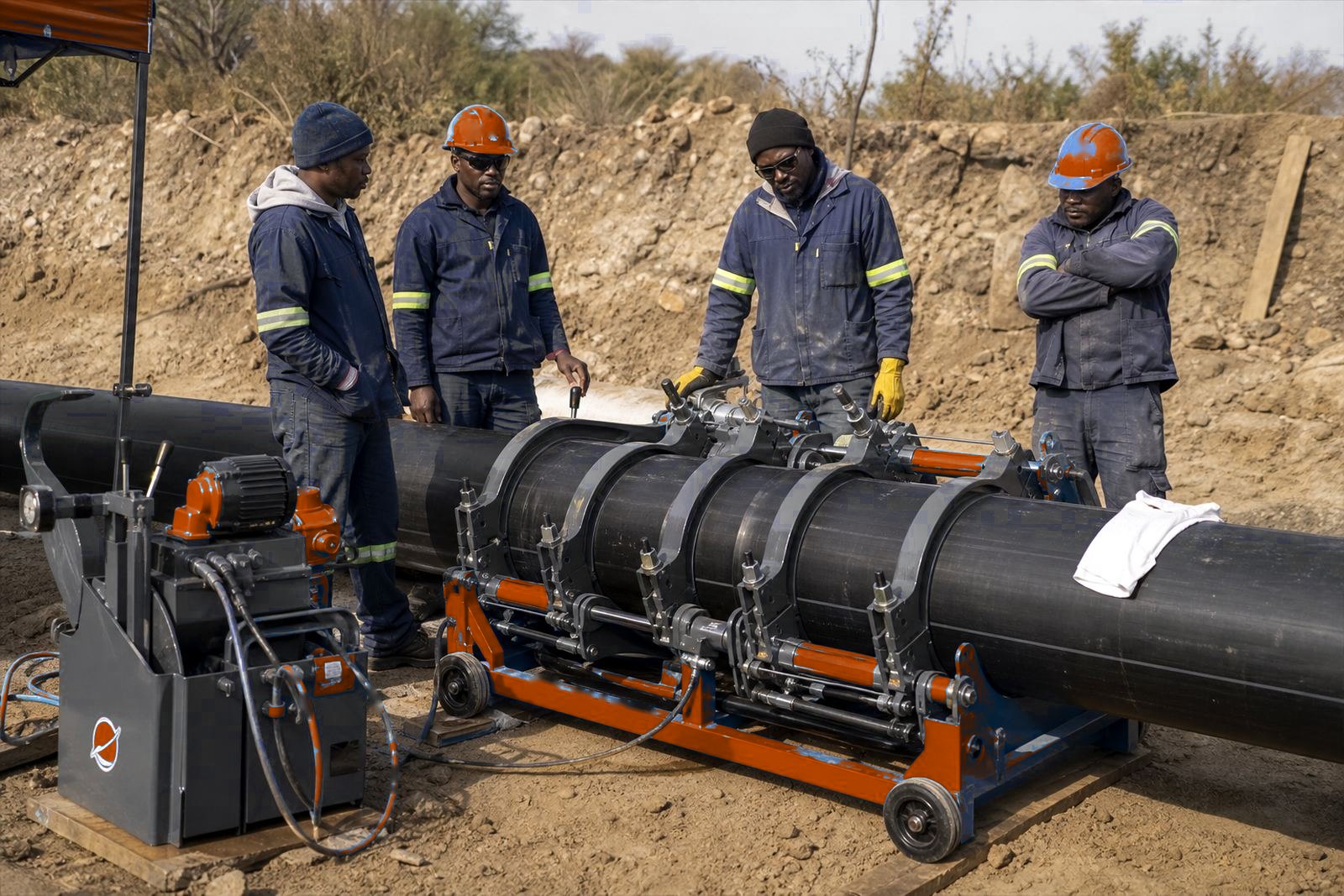
A crew may be joining thick-wall HDPE for a water line that runs through a busy industrial yard. The pipe arrives in long sticks, the trench is tight, and the surface under the machine has to be level before the first clamp closes. In that setting, the operator cannot afford a rushed face cut or a heater plate that has not settled into temperature. The whole process needs a steadier hand because the wall thickness adds time at each stage.
Machine prep, operator training and a clean workshop check all support reliable results. A well set machine, a sharp facer and a properly aligned clamp set reduce the chances of a skew weld on the first joint and the last one.
Matching the machine to the pipe size and site conditions
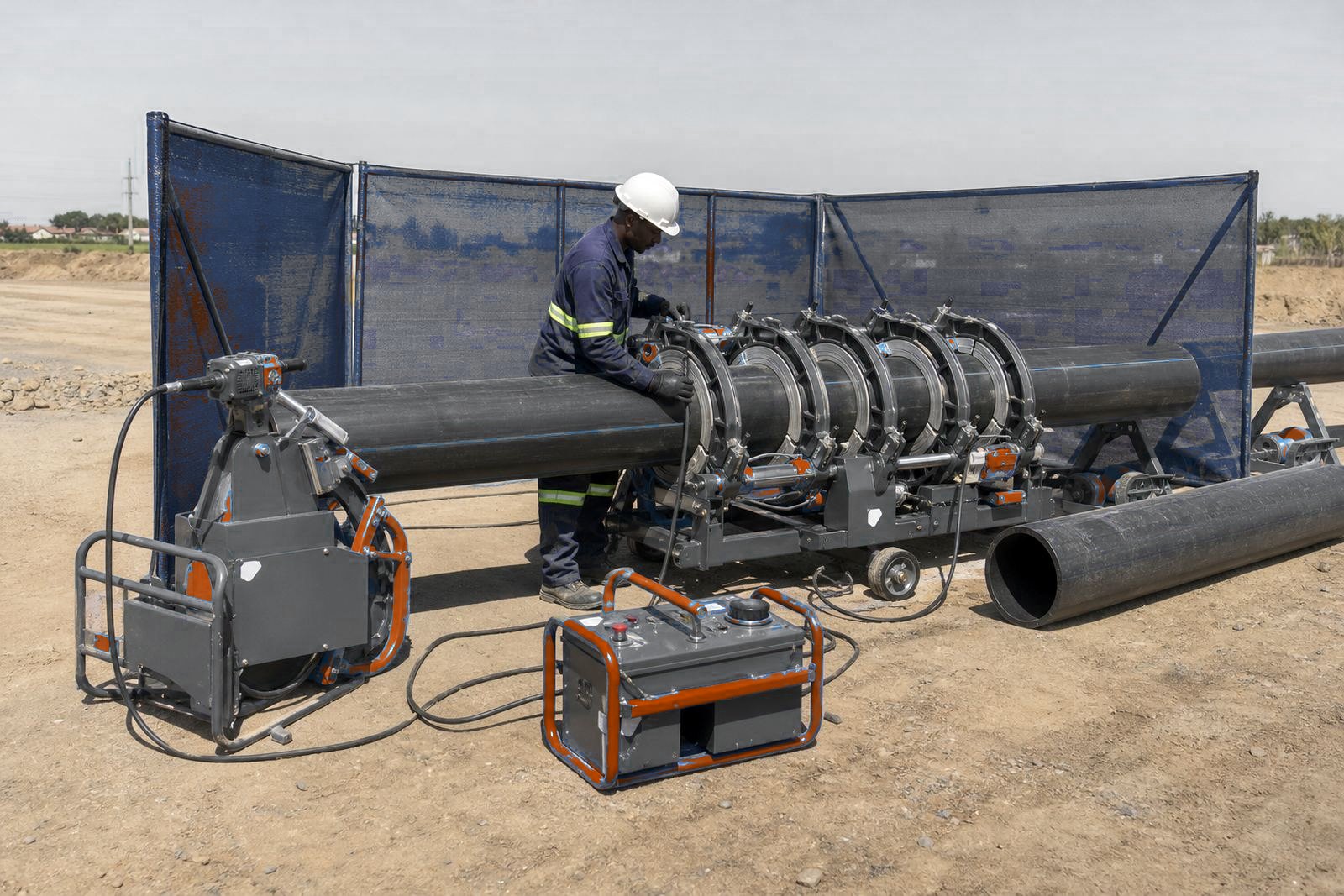
Thick-wall HDPE work is easier when the machine fits the pipe size properly and the carriage has enough strength for the joint load. The clamp set must grip without slipping, the facing tool must cut true and the heater plate needs an even surface with no hot spots. A machine adequate on thin pipe can struggle once thick-wall heating cycles lengthen.
A pump line can need a slightly different setup, so the machine check should happen before the pipe is loaded in.