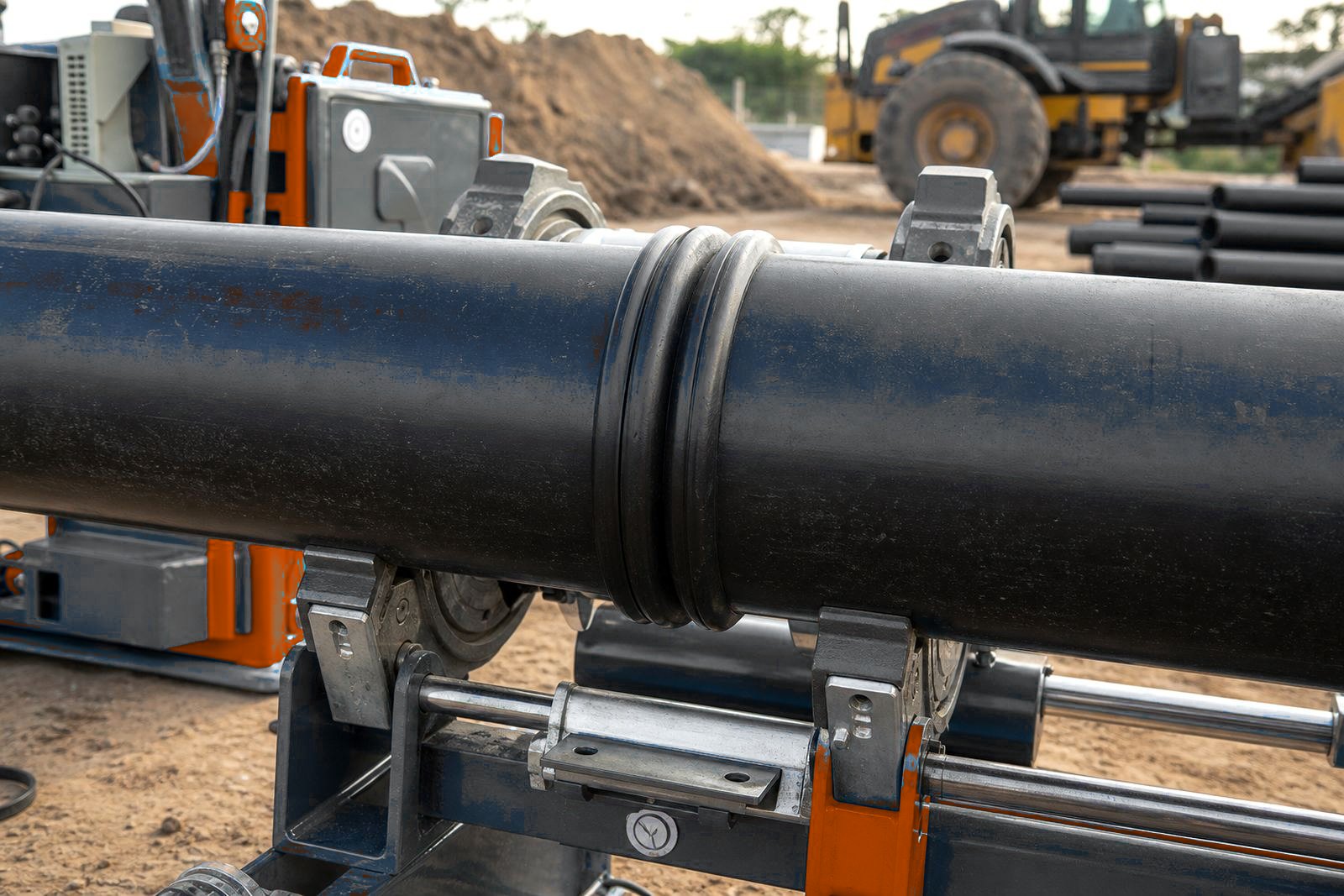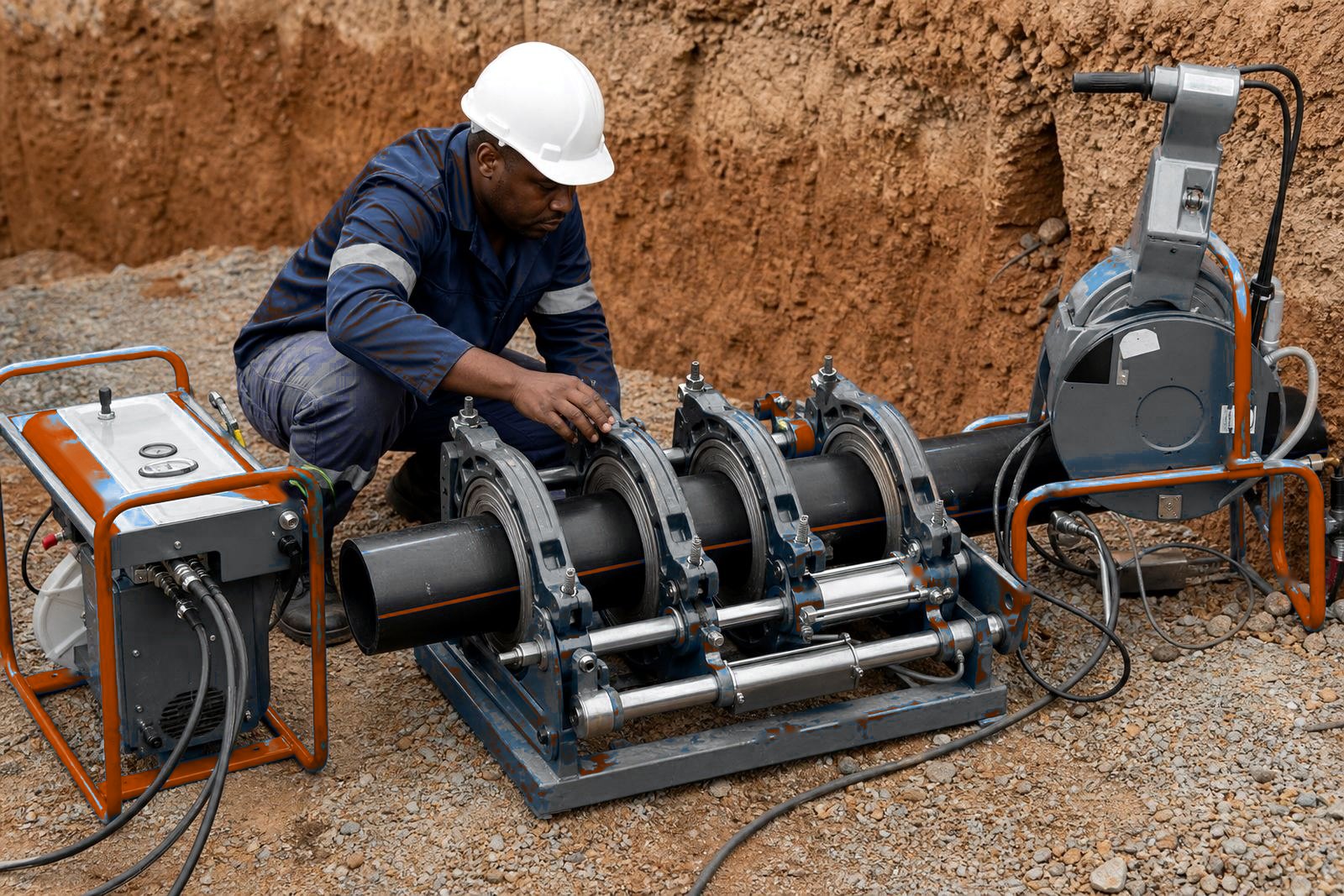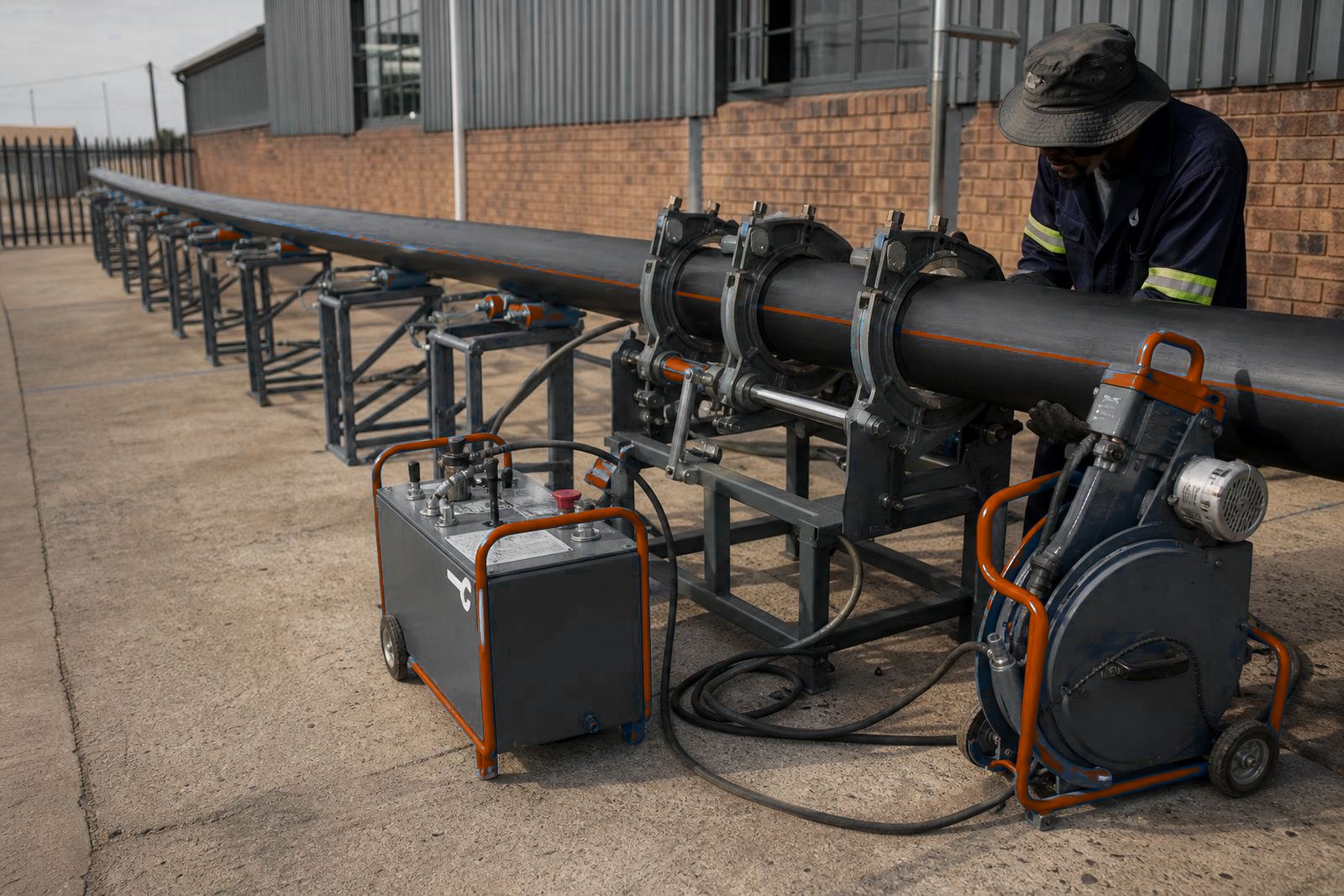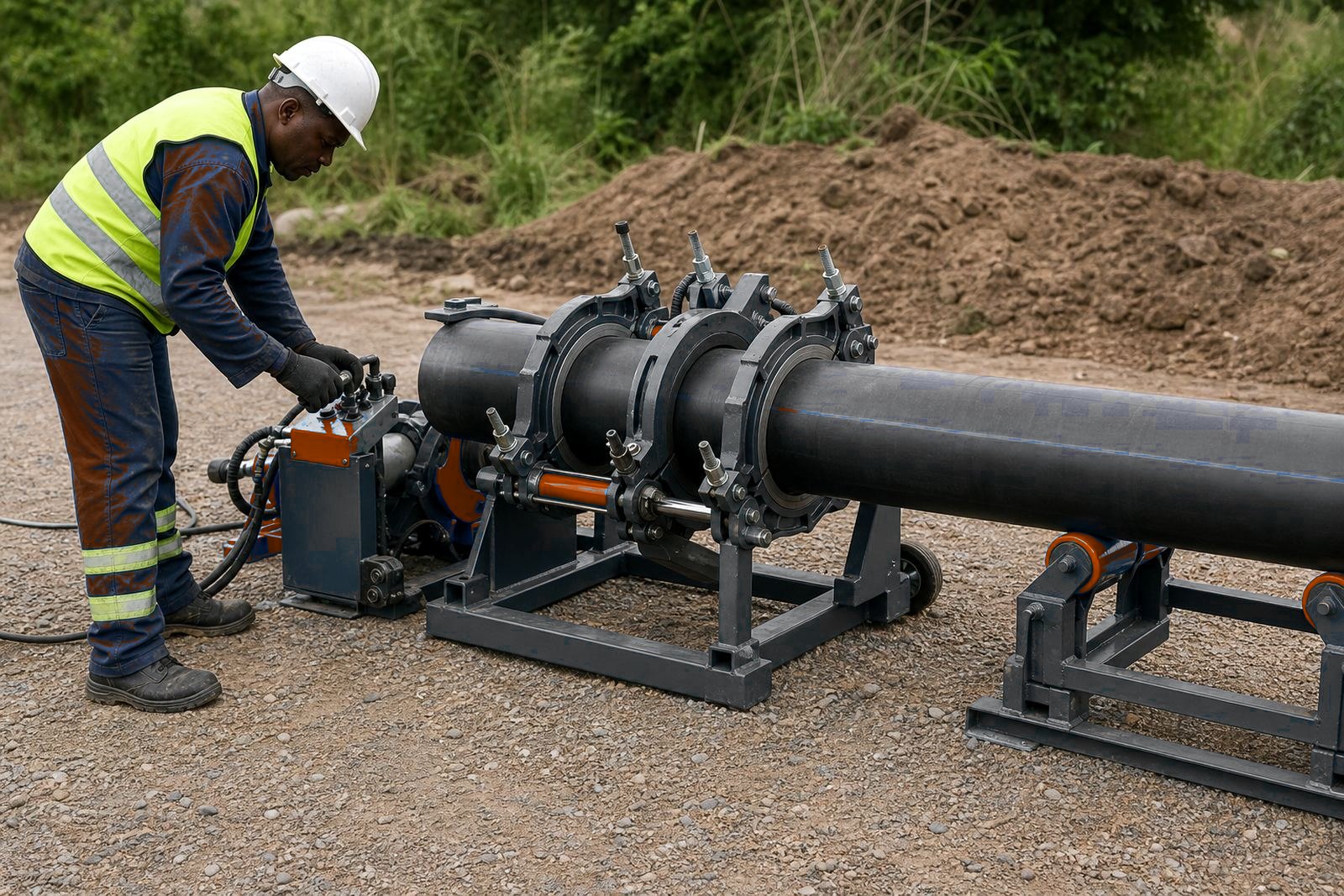
When the wall is thin, the clock feels shorter
On thinner-wall HDPE, the heated face can soften quickly and the pipe can lose shape before the joint is ready. Set up cleanly and use the chart pressure. The machine needs level pipe ends, square cuts, fresh facing and clamping that holds without crushing the wall. True faces let the plate work without heavy marks or glazing.
Crews working on water reticulation in Gauteng often notice this on smaller diameters first. A 110 mm or 160 mm line with a leaner SDR shows bad handling quickly, and the window between heating and fusion is short. The joint must stay aligned through changeover or the molten faces can slip.
Facing, then checking the cut before any heat goes on
A clean full ring from the facer is the right start. If the blade chatters, or the carriage is clamped out of square, the joint will show it later in the bead. Thin-wall pipe does not hide poor preparation. Operators should inspect the shavings, check that both ends close evenly and make sure the pipe is clean and dry before the plate goes in.
- Clamps must grip thin-wall pipe without ovalising it.
- Remove dust, grit and moisture before heating.
Weld a trial piece first and inspect the bead before production joints. Thin pipe walls have a narrower tolerance, even with the machine in order. A light wall needs less heat, less drag and less delay during changeover.
Heat input can build fast on light-wall pipe
Thin wall HDPE reaches the fusion state quickly on the heater plate. Extra heat raises the risk of overheating thin wall pipe. An overheated plate or long contact collapses the outer surface. That is especially noticeable on longer runs where one operator is watching pressure and another is handling the pipe.
Time and measure every stage. Establish the heating pressure, watch the melt pattern, then move through changeover without wasting time. Bring fusion pressure up smoothly. Hold the cooling time even when the outside looks set.
Reading bead shape after fusion
A thin-wall bead should look even, with a consistent shape on both sides. Uneven bead size can point to poor alignment, weak clamping, dirty faces or a heater plate that was not right for the pipe wall.
- Watch for visible flat spots near the clamps.
- Look for signs of burning, scorch marks or trapped dirt.
For water crews, a tidy bead shows the joint behaved properly while the heat was in play.
Cooling time gives the joint time to settle
Thin wall pipe can look ready before the joint has fully settled. Many crews get caught there. Moving thin-wall pipe early lets the faces shift while the inside is soft. The result may not show until pressure testing, or worse when the line is back in service. On a warm afternoon in Rustenburg the outside of the pipe may feel firm while the core is still setting.
Keep the joint supported until the cooling period is complete and the carriage can be opened without loading the bead. Prop pipe spanning a trench so it cannot sag while it cools. Run each joint at the chart times.
What our crew sees on local jobs
A recent water line run involved smaller HDPE sections with light wall thickness and short joint spacing. Facing and timing on thin-wall pipe needed extra care because it softened quickly under the plate. After the first welds, the team tightened their rhythm, held the changeover clean and kept the cooling period untouched. The welds settled better and the bead inspection was easier to read.
Thin-wall work needs careful handling. It just means the margin for error is smaller. Thin-wall settings are covered in operator training, with the pressure table for each SDR.
- Match the heater temperature to the pipe and machine set-up.
- Use clamps that hold true without distorting the wall.
- Keep a clean changeover path ready before heating starts.
- Confirm the fusion pressure and cooling period for each joint size.
Questions that help before the first joint
Before a thin-wall run starts, confirm the pipe diameter, SDR, site conditions and whether the crew will log each weld. Handling can change from one section to the next in a long trench. We support contractors across South Africa with hire machines for thin-wall work.
We use the details to match the line size, site access and the kind of hire support the job calls for.