Where the pipe starts moving off line
Once a length starts drooping between supports, the facer runs under extra load and the pipe can twist or lift as the operator removes the swarf. That drag shows up again during heating and changeover, especially on larger diameters where the mass of the pipe is not easy to hold by hand.
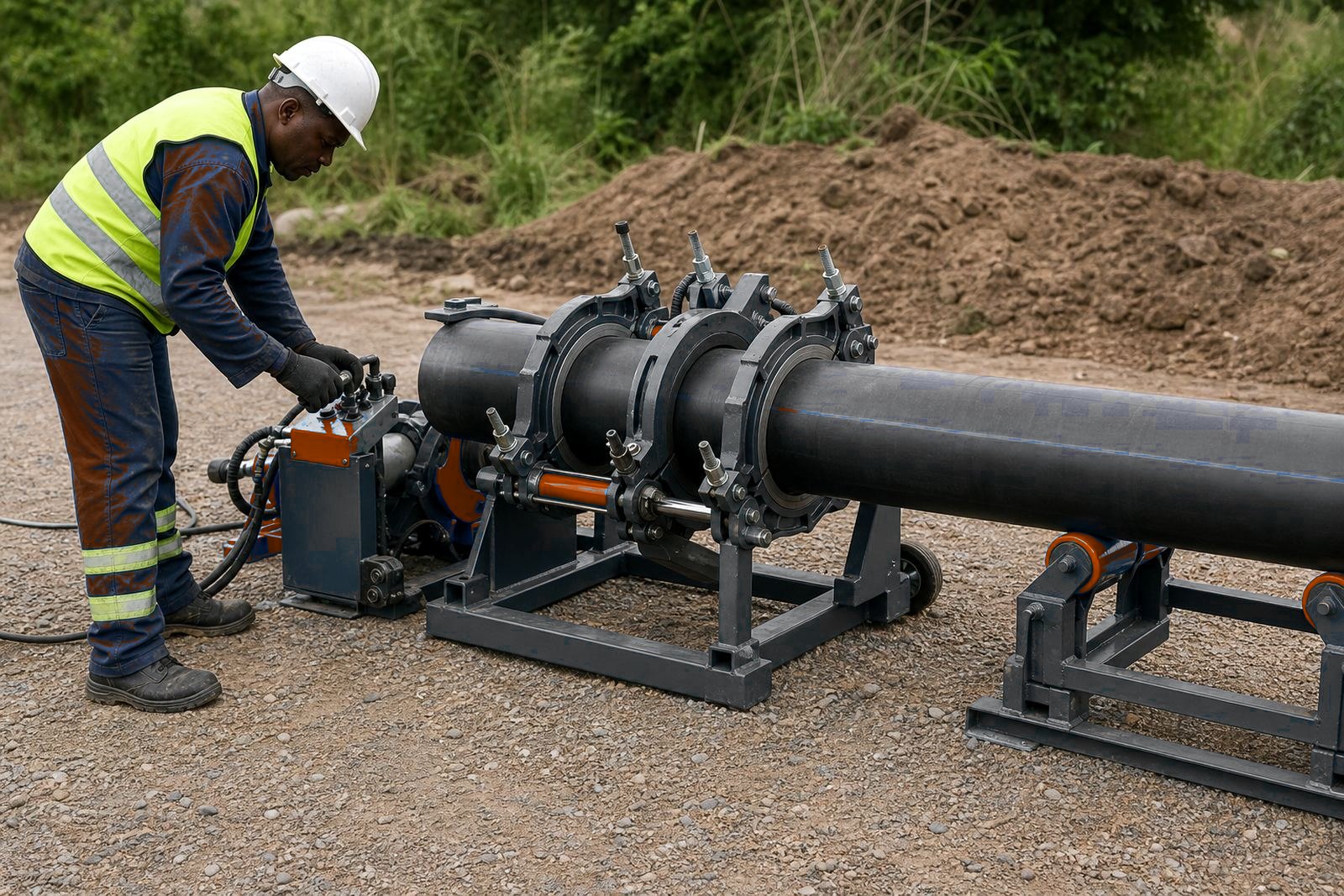
Support spacing keeps the pipe off the ground while keeping the bore axis close to the machine axis, with the ends free to move in a controlled way. Low pipe leaves the clamps carrying its weight with the jaws under strain. If it is too high, the pipe tends to bounce or settle after every adjustment, which makes repeatable alignment harder.
- Longer pipe needs more support points near the machine end.
- Softer wall sections can sag faster in warm weather.
- Uneven ground changes the support height from one side to the other.
- Short offcuts still need a stable run-in to the clamps.
Spacing that matches the pipe size and wall thickness
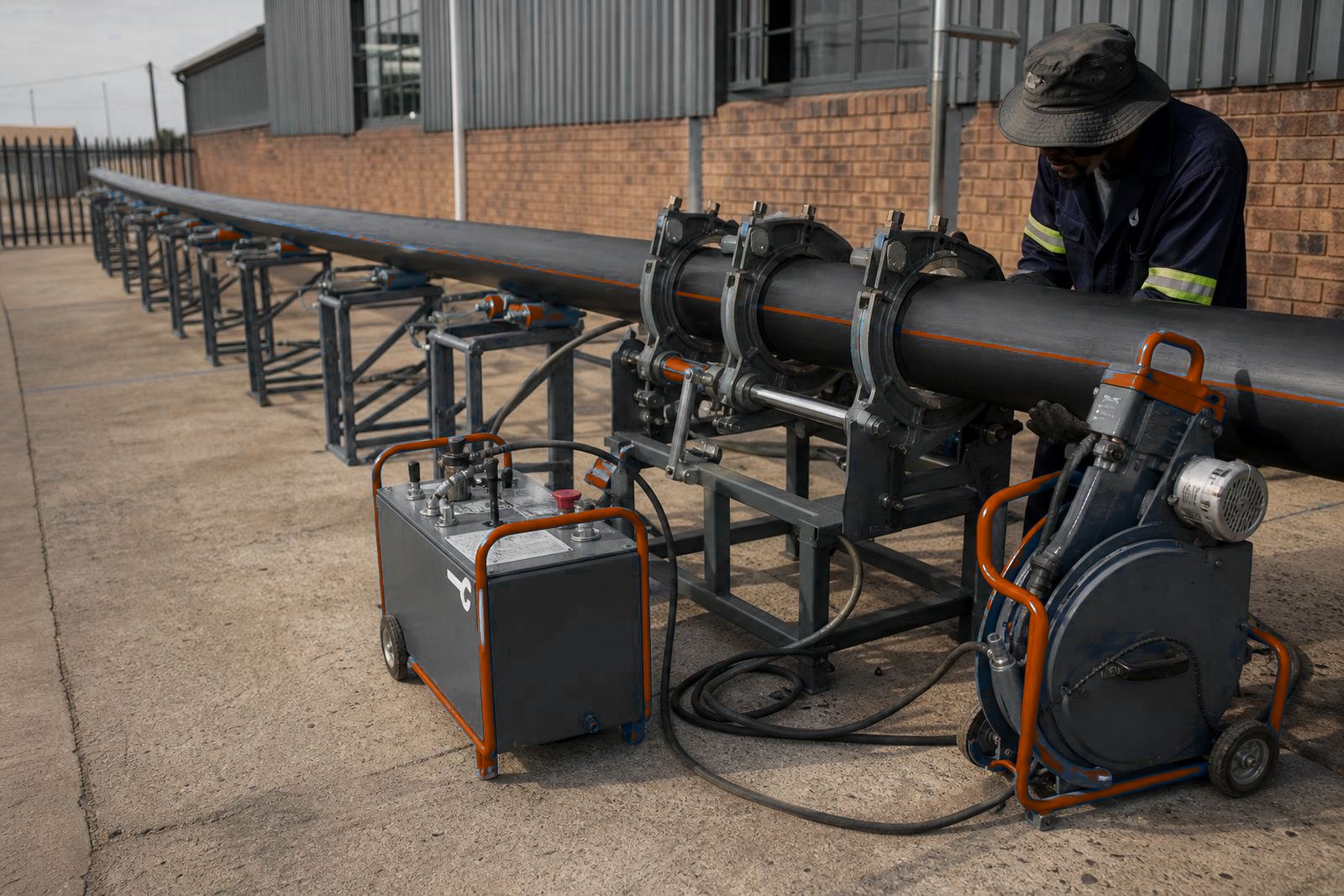
No single distance suits every job Support spacing changes with pipe diameter, SDR, wall thickness and whether the pipe is straight from the yard or has already sat in the sun. Support spacing changes with diameter, and a 400 mm string needs more stands than a 160 mm one. A long string pulled through a trench edge needs tighter support than a short run on level yard ground.
Space stands so the pipe stays straight and level between them. The pipe should slide, settle and centre without a series of jumps. In practice, that means checking the whole run from the free end back to the fusion machine, including the section nearest the clamps.
- Use more frequent supports on larger diameters and softer wall pipe.
- Keep the first support close enough to control the pipe entering the machine.
- Level the stands so the pipe does not climb or fall between points.
- Match the support height to the machine centreline before clamping.
On one 315 mm SDR 11 run, the last few metres drifted sideways as the pipe fed in. The fix was less clamp force. They added an extra support stand, levelled the run and reset the pipe so the facer could take a clean shave with no side load.
How poor support shows up during facing and heating
Facing exposes support problems very quickly. Hanging pipe lets the facer cut one side deeper, leaving ends that are not square. Bead shape and gap control start to drift there. Pipe already under strain may spring or lift as the faces warm.
Good support lets the operator watch the fusion steps with no constant correction of pipe movement. The pipe should hold position while the facer runs, then stay steady while the heater plate comes in and the changeover happens. A settling stand or rolling offcut must not drag the cooling joint out of line.
- Uneven support can leave the facing cut tapered.
- Pipe sag can alter the gap between the ends after heating.
- Movement during changeover can disturb the molten bead formation.
- Cooling on a shifting run risks a joint that is not concentric.
The machine end needs the cleanest support
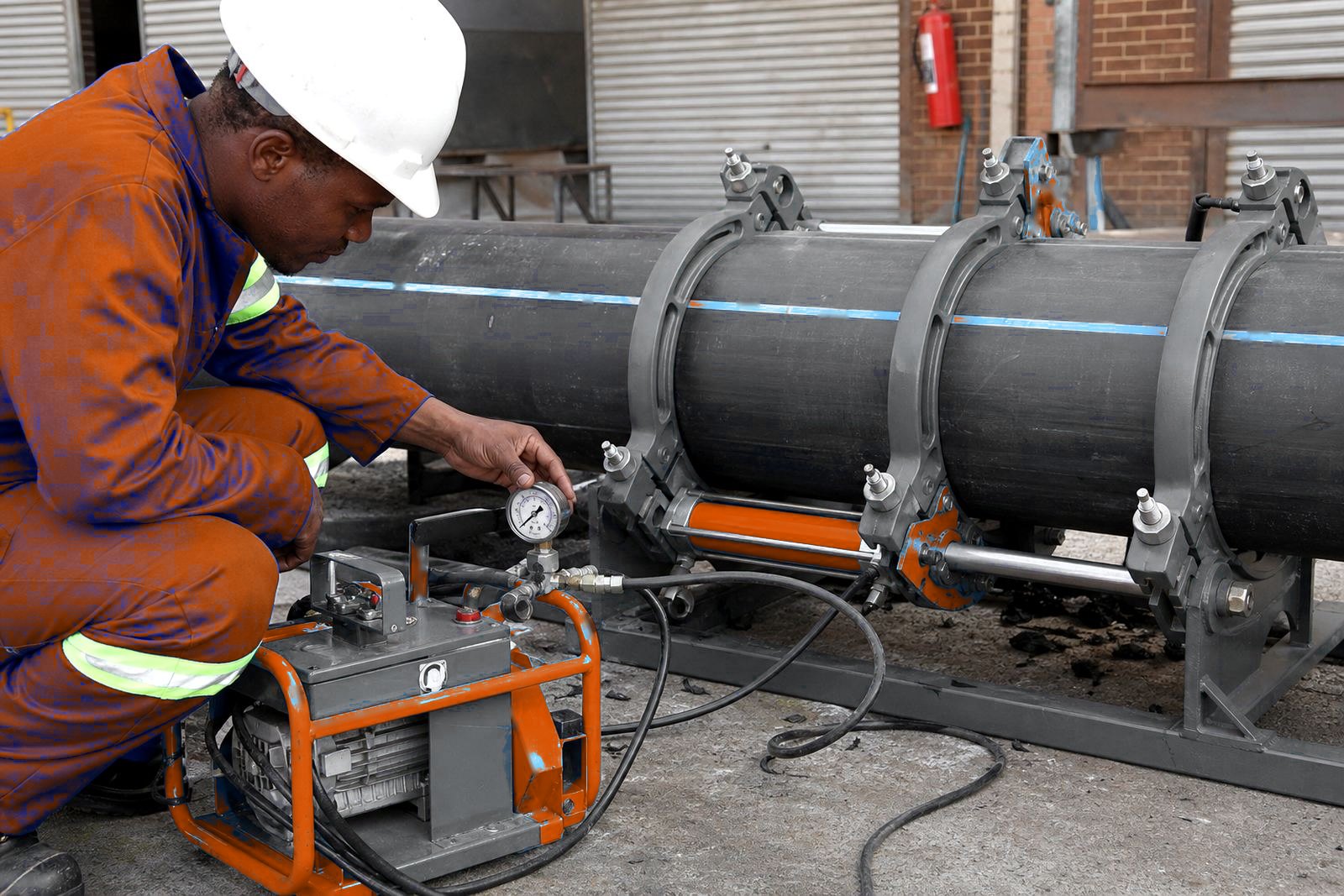
The area nearest the welding machine carries the most risk. Pipe alignment, steady support and controlled movement are needed through clamping, facing, heating and fusion. Pipe hanging just outside the jaws tries to rotate as pressure goes on.
Final support points give the machine end a straight feed path. Jaws should open and close without nudging the pipe back each minute. A neat, even external bead is easier to read when the pipe has not shifted during the set and cooling period.
- Keep the last support close enough to prevent droop near the jaws.
- Allow smooth movement in and out of the machine without binding.
- Set the pipe so the clamps do not carry extra bend load.
- Check bead symmetry after cooling before the line is moved.
Support spacing often shifts with South African site conditions
Set pipe support spacing for the ground, slope, temperature and pipe size. Hot yard conditions soften exposed pipe, coastal humidity can leave stands and rollers slippery, and trench edges on civil jobs can force one side of the run higher than the other. A support layout that works neatly on flat yard ground may need more points and a slower feed on a site with broken ground or wind exposure.
Longer pipe strings and tighter access are common on mine work. Plan pipe supports along the route from laydown area to machine and at the final weld position. Berms and plant traffic may need temporary supports to stop a bend forming.
If the pipe sags or rolls between stands, move the supports closer together or raise them. Pipe that feels trapped has supports too close or badly set. The middle ground is where the pipe sits straight, slides without force and holds alignment while the weld is made and cooled.
A field check before the first weld
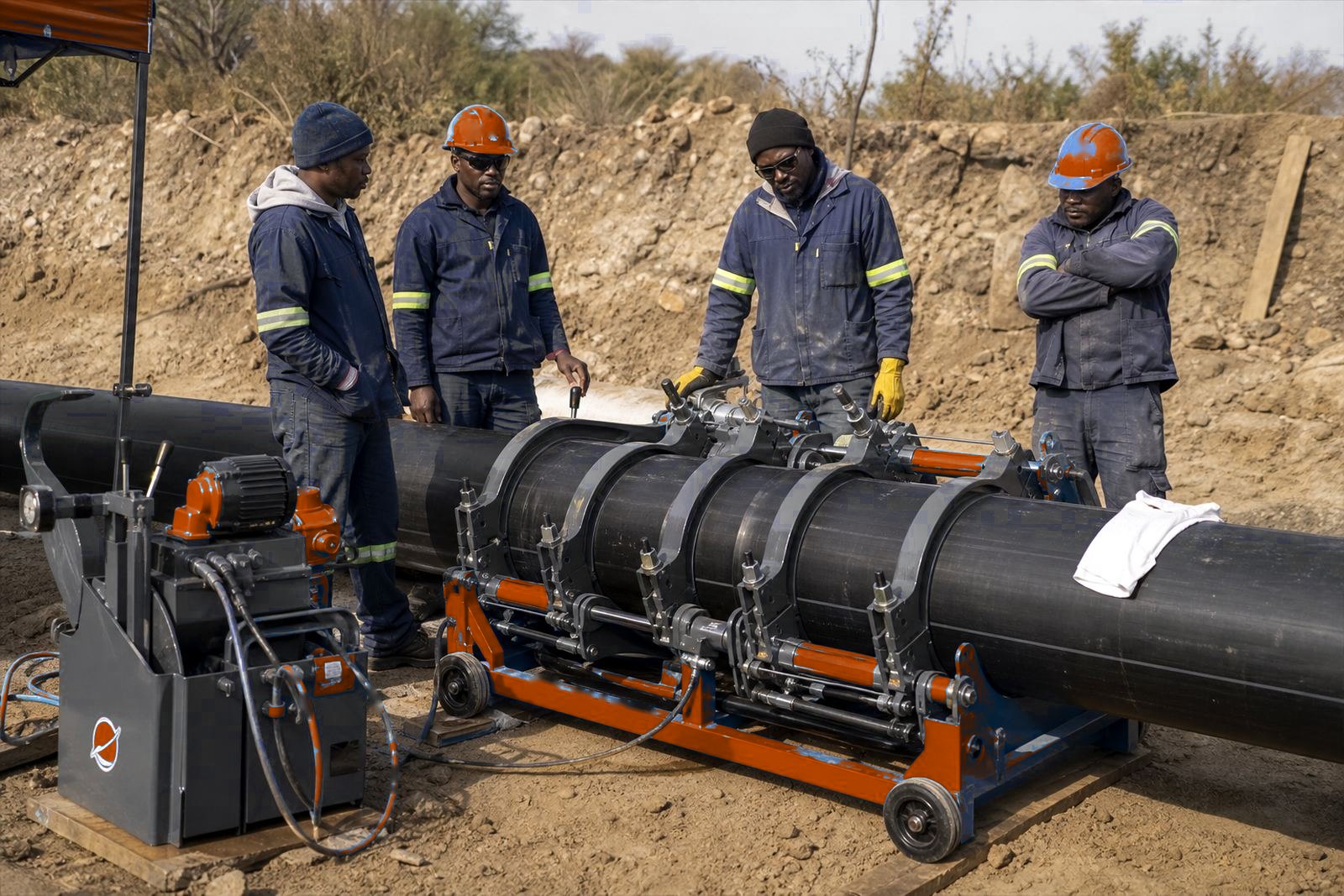
Walk the supports before heating. Walk the line from the free end back to the machine, then look for sag, twist, side load and any stand that sits lower than the others. Once that movement is gone, the fusion steps are easier to control and the weld log is more worth keeping.
A steady pipe run gives the machine a fair chance to face, heat and fuse the pipe cleanly. Set the support spacing before facing starts.