Wipe the faces last, just before heating
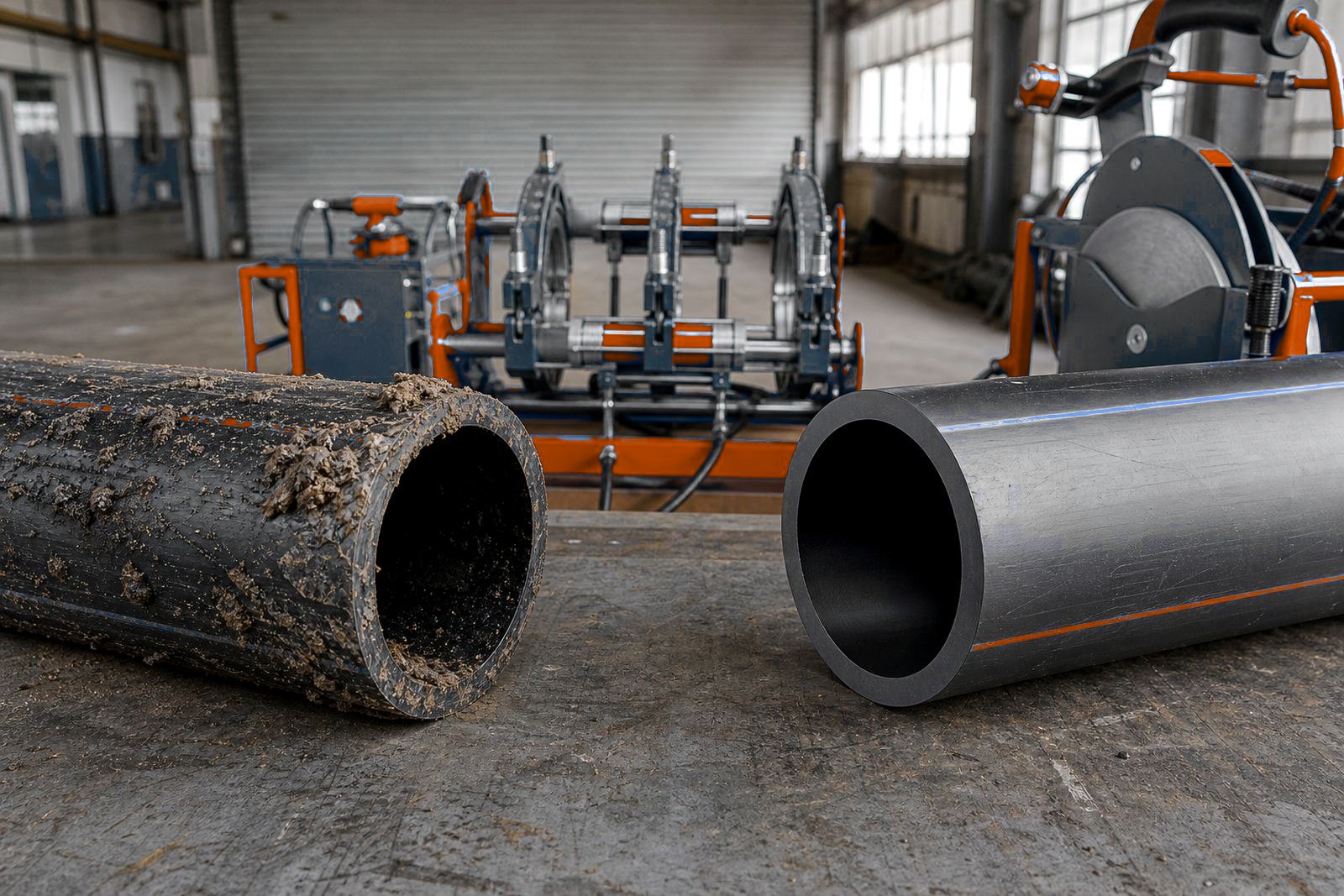
If the ends carry sand, clay, cutting swarf or oil, the facer can smear contamination across the joint face and that dirt sits right where the melt should bond. Out near a Randfontein water line, a pipe end that looks almost clean can still hold fine grit in the bevel or on the outer skin.
Clean pipe ends are essential for fusion. It needs clean surfaces meeting at the right temperature, under the right fusion pressure, with a steady cooling time. If the starting face is dirty, the bead may look uneven, the pressure reading can be misleading and the finished joint can show weak spots when inspected.
Facing only works when the pipe is truly clean
The facer trims both ends to a square, matching face. Dirty pipe lets the cutter drag debris into the face and leave ridges or chatter. Those marks can stop the two pipe faces meeting evenly when the heater plate is withdrawn and the changeover starts.
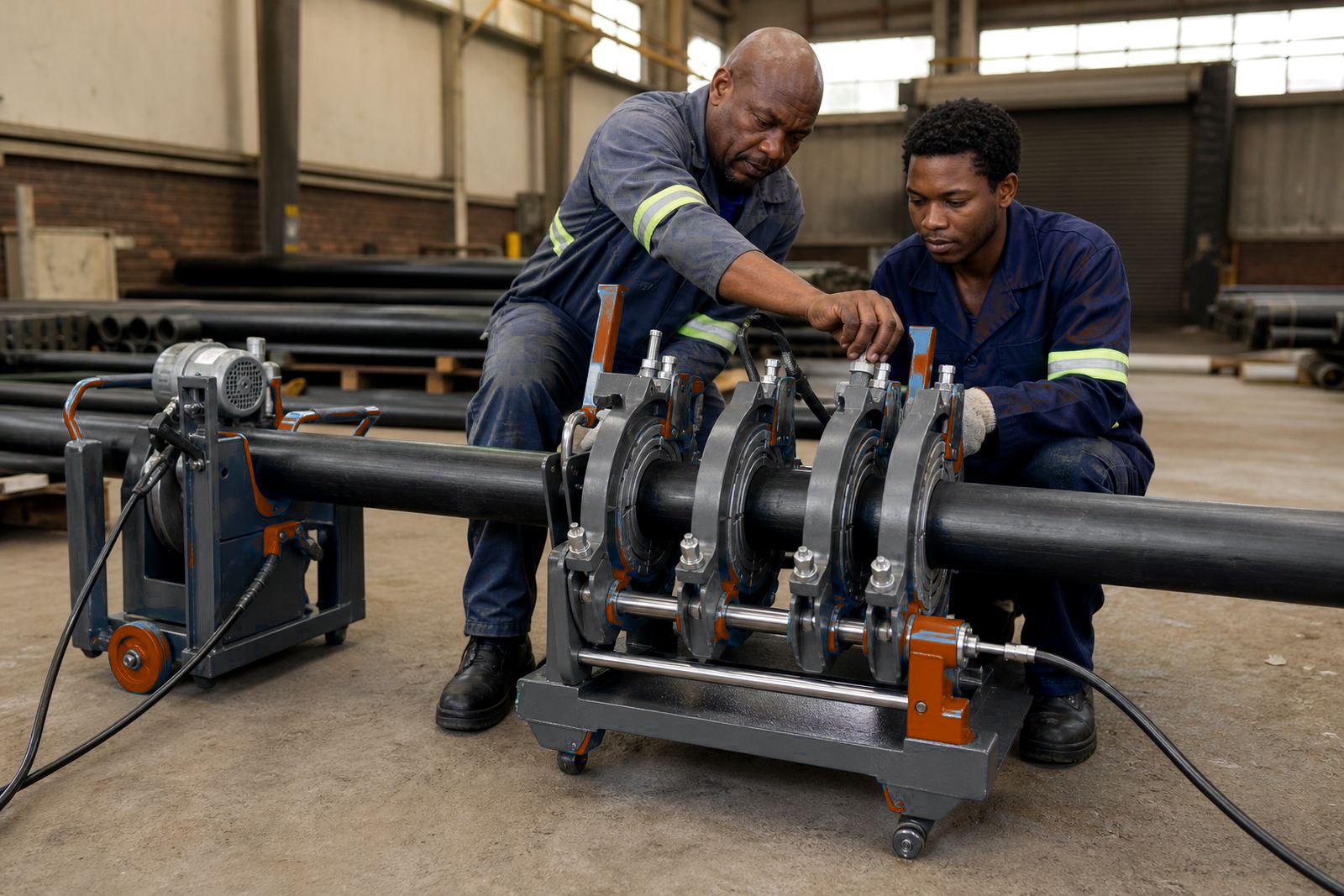
For SDR 11, SDR 13.6 and other common wall classes, the pipe must sit firmly in the clamps before facing begins. Any slip, mud on the outside diameter or burrs left from a rough cut can shift alignment by a few millimetres. That is enough to alter the bead shape and the way the molten material flows during fusion.
- Trim back crushed or cracked sections before clamping.
- Brush out grit from the clamping area and carriage bed.
Heater plate contact should be on bare material
If dust sits on the face, the heat transfer becomes patchy. If water is trapped on the pipe end, steam can disturb the melt layer and create tiny voids. In coastal Durban work, humid air and damp pipe stock cause this problem, especially when pipe arrives after an early morning offload.
Clean ends also help the operator read the melt bead correctly during the heat soak stage. A smooth, uniform bead around the full circumference is easier to judge than a bead that breaks, pulls or lifts on one side. That visual check is part of normal weld control and should happen before the plate is removed.
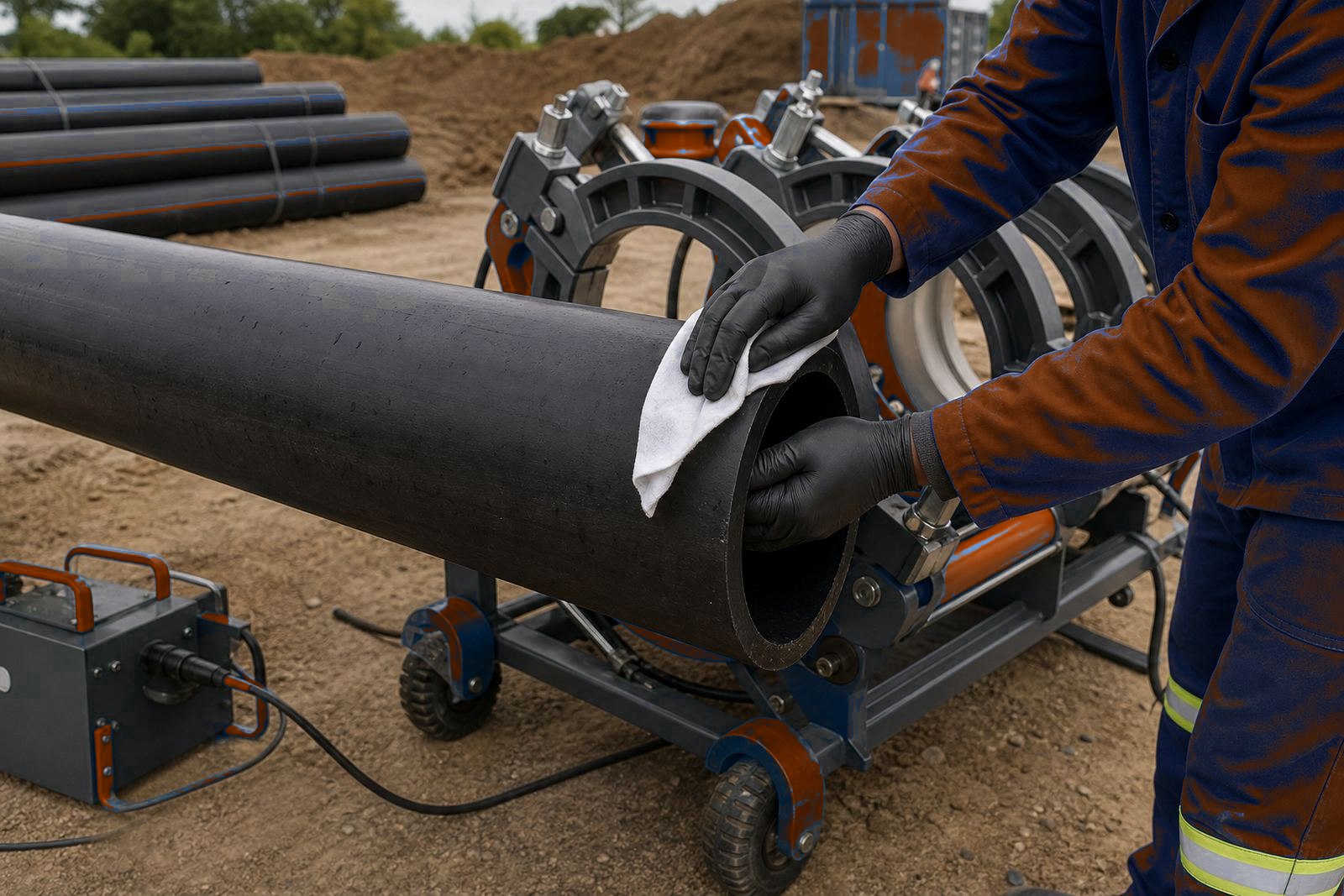
- Dry off any moisture you can see using a lint free cloth that is clean.
- Reject pipe ends with heavy gouges or embedded grit.
Dirty ends at changeover
Clean pipe ends slide into alignment more easily and meet face to face without dragging dirt through the molten layer. Contamination on the edge smears at first contact, and the pressure spike can push debris into the weld zone.
Experienced crews clean the pipe ends before every weld cycle. The same applies to trench work where pipe may rest on wet soil all day.
On a Polokwane service yard job, for example, a pipe stack that has picked up fine red dust needs a close inspection before the first weld starts. The outer skin, the cut edge and the clamp contact points all need inspection before the first weld starts.
Bead inspection and surface condition
A ragged bead, one side thicker than the other, or a bead that looks folded can point to dirt on the pipe face, poor clamping or a rushed changeover.
Operators should look at the bead after cooling and also check the joint area for marks where contamination might have moved during fusion. Handling mistakes show more on 160 mm, 250 mm and 315 mm pipe, where the surface is larger and the window shorter.
- Inspect the full circumference.
- Check for uneven bead roll, cold spots and trapped debris.
Protecting the pipe end on site
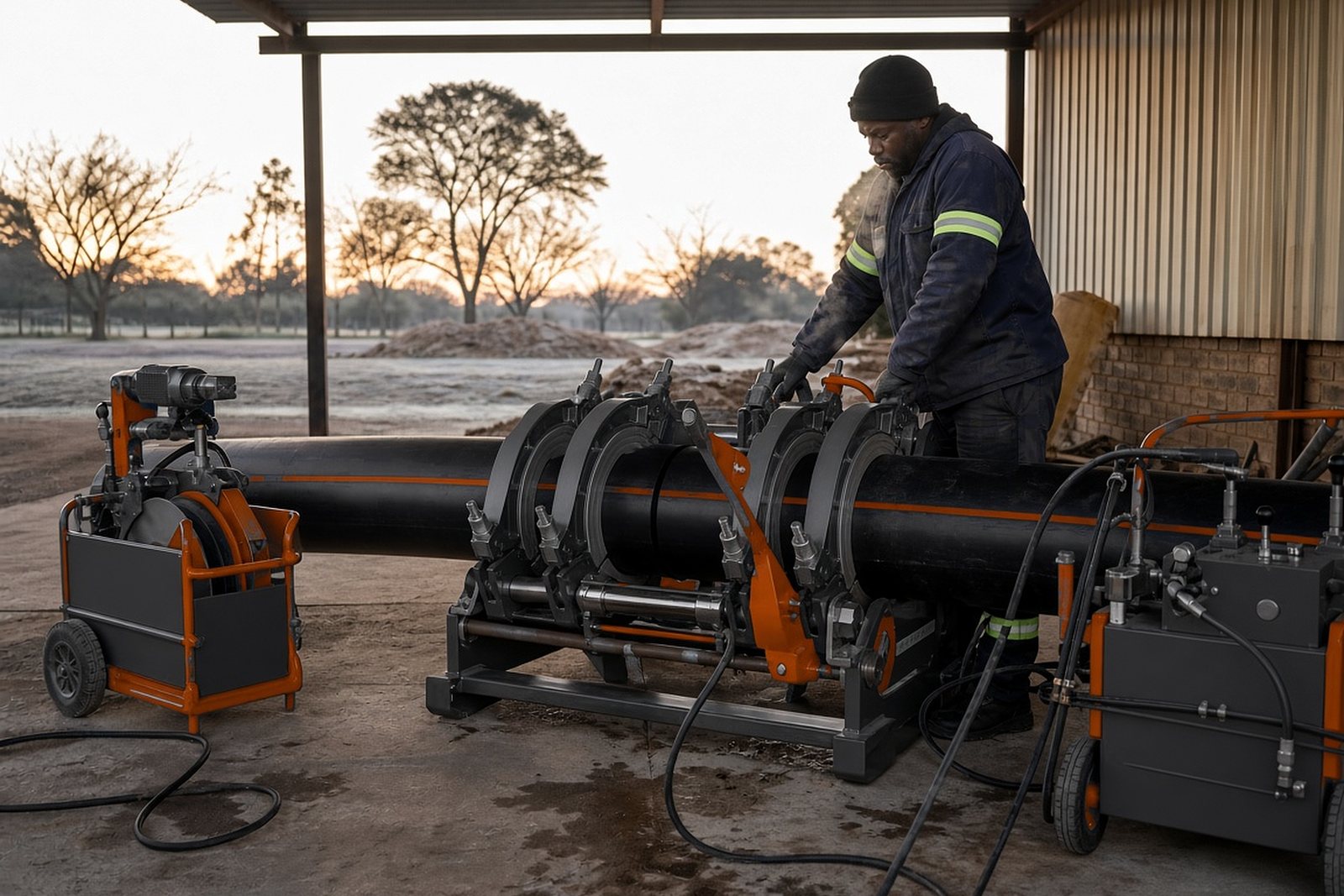
Store pipe off the ground where possible, cover open ends, and keep cutting tools sharp enough to leave a clean square face. In a yard or on a remote site in Mpumalanga, the same rule applies: if the pipe end is left open to dust and drizzle, the joint starts in poor condition before the machine is even clamped.
PlasticWelder works with contractors whose machines face hard site conditions. Our training on pipe preparation covers the pipe end itself. Clean ends are part of all of it, because the machine can only fuse what it is given.
Clean the pipe, inspect the face, then move into facing, heating, handover and cooling in sequence.