Why a cold morning changes the job
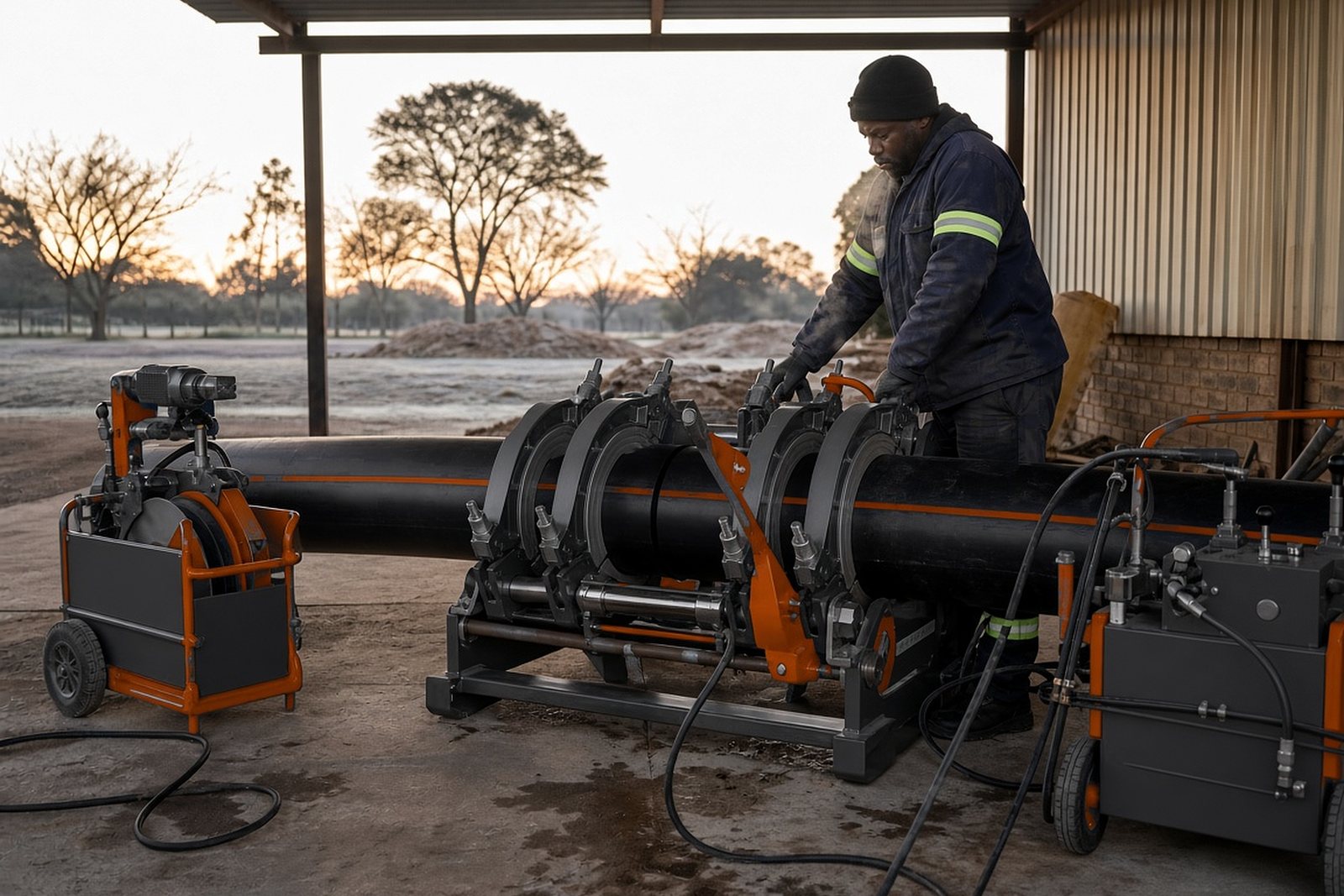
In cold air, heating takes longer and the pipe needs to be kept covered. Pipe ends are slower to warm through, moisture can sit on the surface longer, and a wind that feels minor on site can pull heat away from the joint area while the crew is setting up.
Chilled-through pipe can give a neat outer bead over an uneven internal heat pattern.
On a cold Highveld morning, steel frames, clamps and hydraulic parts stay sluggish until they are checked and loaded. The machine is still doing the same job, but the operator has to read the setup with more care.
Getting the pipe ready before the heater plate goes in
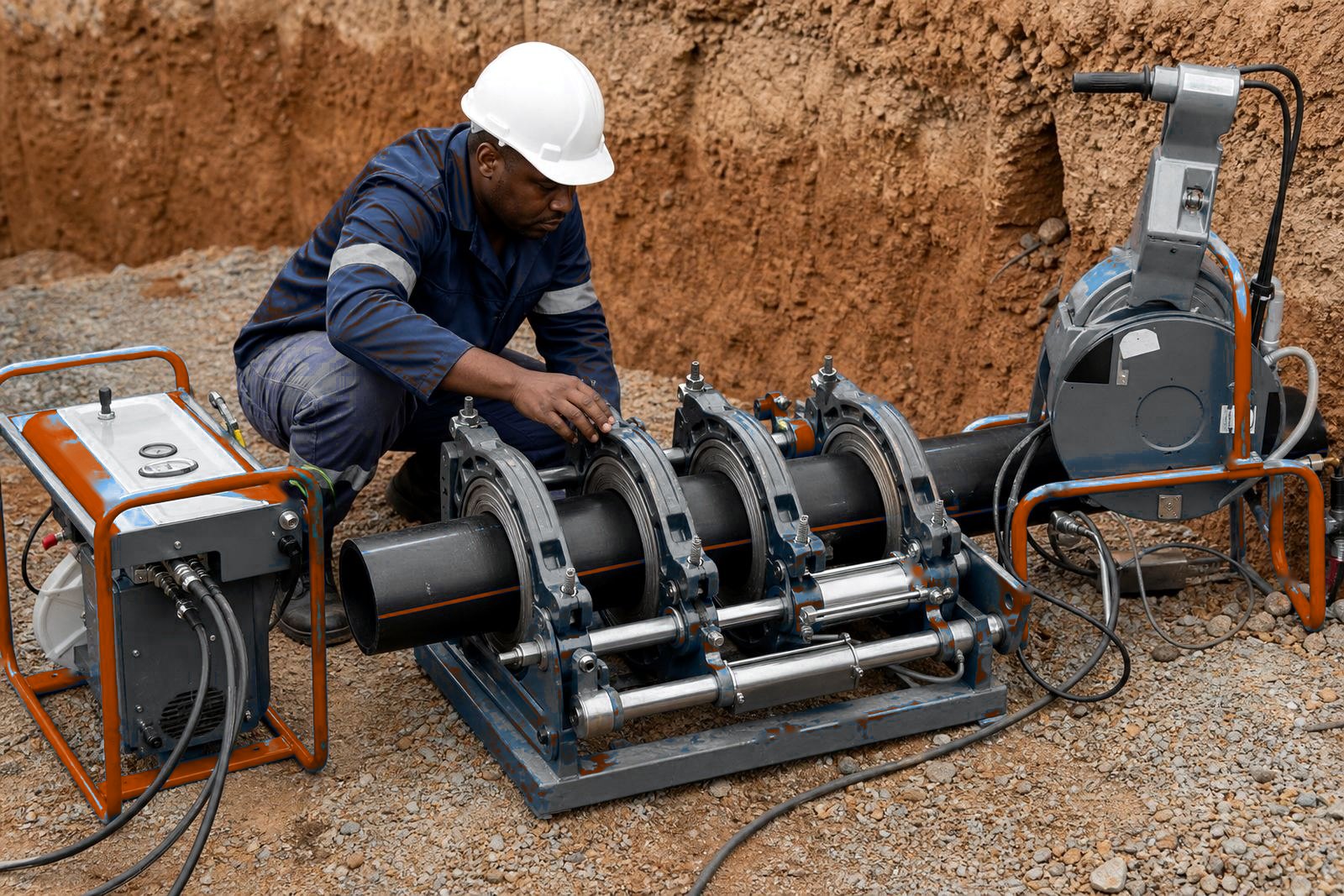
Handle chilled pipe carefully, because it is more brittle. Pipe should be kept dry, protected from mud and scraped clean where the jaws grip. Pipe left out overnight in the cold keeps its ends covered until facing, especially on small diameters.
Facing should produce full, even shavings on both ends. In cold weather, a rough or chattering facer leaves more risk of uneven contact and that becomes harder to hide once the heater plate is in play. When the first cut is not true, the pipe may sit out of line and need clamp adjustment before heating.
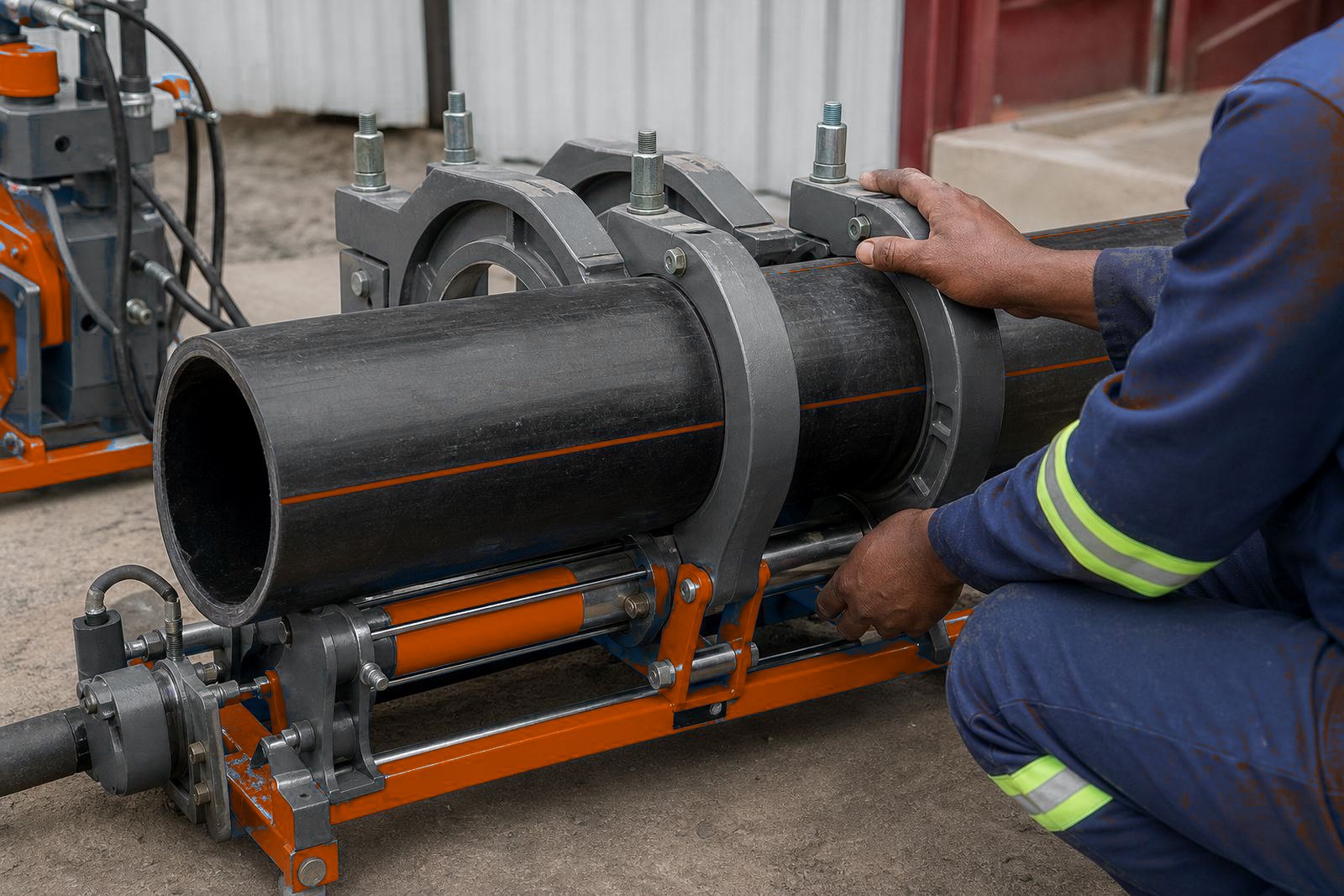
- Check that clamps grip evenly without crushing the wall.
- Do not rush alignment just because the weather is sharp.
Heat soak, changeover and the pressure window
Cold air keeps the need for the correct heater plate temperature. It can affect how quickly the pipe face comes up to fusion condition.
That changeover is where many cold-weather joints lose consistency. Slow handling lets the exposed faces cool before they meet. If the close-up is rushed and the pressure is not settled properly, the bead can form unevenly or squeeze material in a way that makes later inspection harder.
Hold fusion pressure steady at the gauge reading. Look up fusion pressure in the weld table for the pipe size, SDR and machine. Large-diameter water pipe needs longer heating and cooling times than a short run on a lighter line, so set each job from its own weld sheet.
Reading the bead after every joint
In cold conditions, the bead can look acceptable over a weak bond, so the operator combines visual checks with the job record and the setup details.
Switch on data logging for cold-weather welds. When the machine records pressure, time, temperature and the job sequence, the team has a cleaner picture of what happened on site. Repeat contracts on mine lines feel a cold-weather lapse over long sections.
- Use the logger or written record to track the joint cycle.
- Keep the cooling period intact before moving the pipe.
What changes at different pipe sizes and SDRs
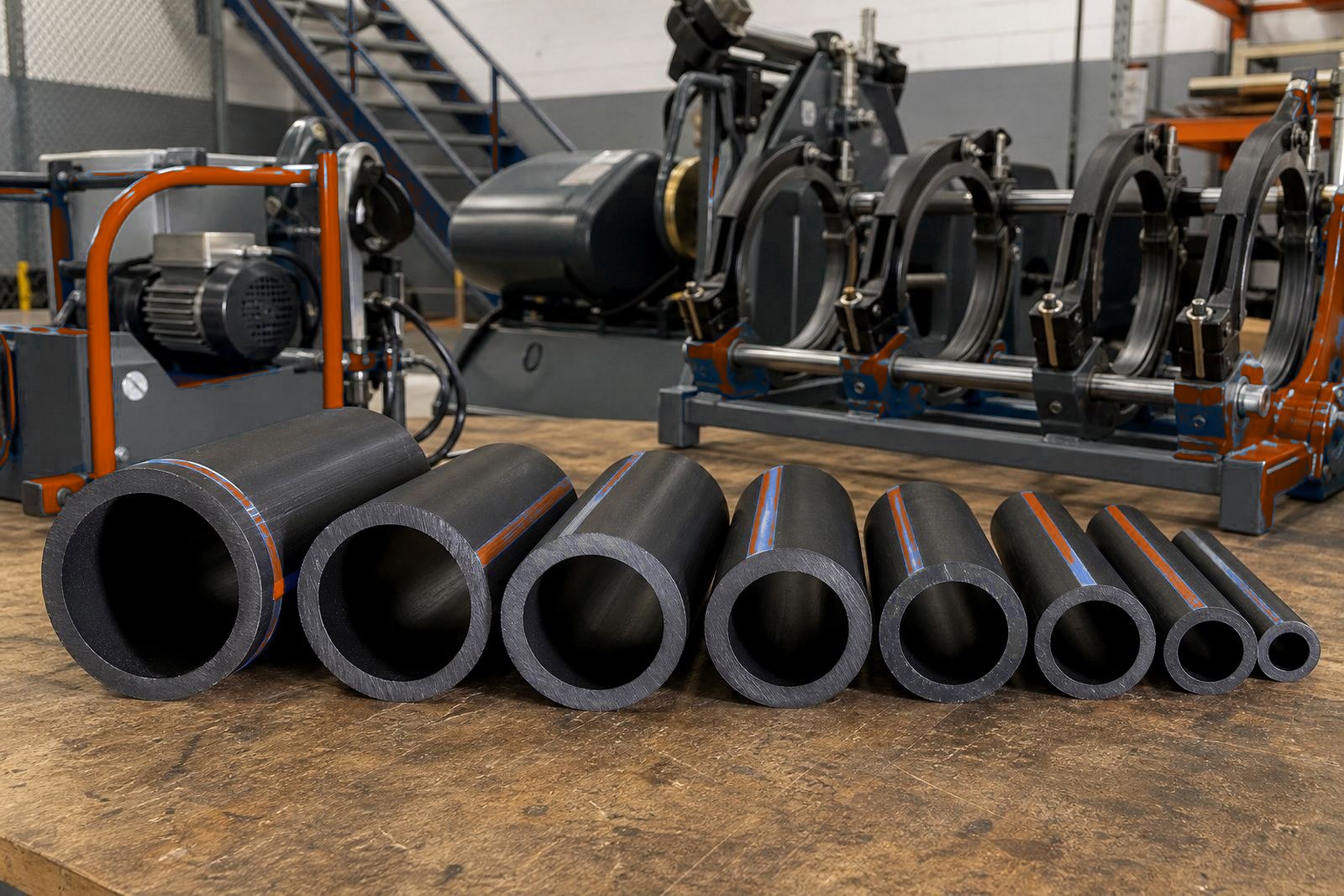
Cold weather affects thin-wall and long-string jobs most. Smaller pipe sizes lose temperature faster during the changeover, so the crew has less margin for hesitation. Larger pipe sizes stay hot longer at the contact face, but they demand more care with pressure control and clamp rigidity because the mass of the pipe can mask a poor setup until the joint is already cooling.
SDR changes the settings. Thin walls are sensitive to pressure errors and short soaks, while thick walls need longer for the fusion zone to form. A fitter who knows the machine settings for the pipe on hand adjusts the cycle from the chart.
On a cold Rustenburg morning, for example, a water line install may need extra attention to pipe storage and clamp alignment before the first weld of the day. The joint is still made by the same steps, yet the crew has to respect the colder pipe, the wind and the longer recovery time before the pipe can be handled.
Winter training points for the joint
Operator training involves using the controls well. In winter, allow longer heat soak and cooling times and keep the sequence in order. That means checking the heater plate surface, confirming facer sharpness, verifying clamp alignment and reviewing the cycle numbers before the first joint starts.
Crews with plenty of summer work but little cold-weather experience benefit from refresher training. They may know the process well, yet still benefit from a run-through on moisture control, pipe temperature, data logging and the cooling period before release. Weather differs from site to site, so the settings are checked against the pipe temperature each day.
Before a winter job, we check the heater plate reaches temperature on a cold start. A machine in good shape lets the operator focus on the weld with confidence in the setup.