First lessons: the pipe and the machine
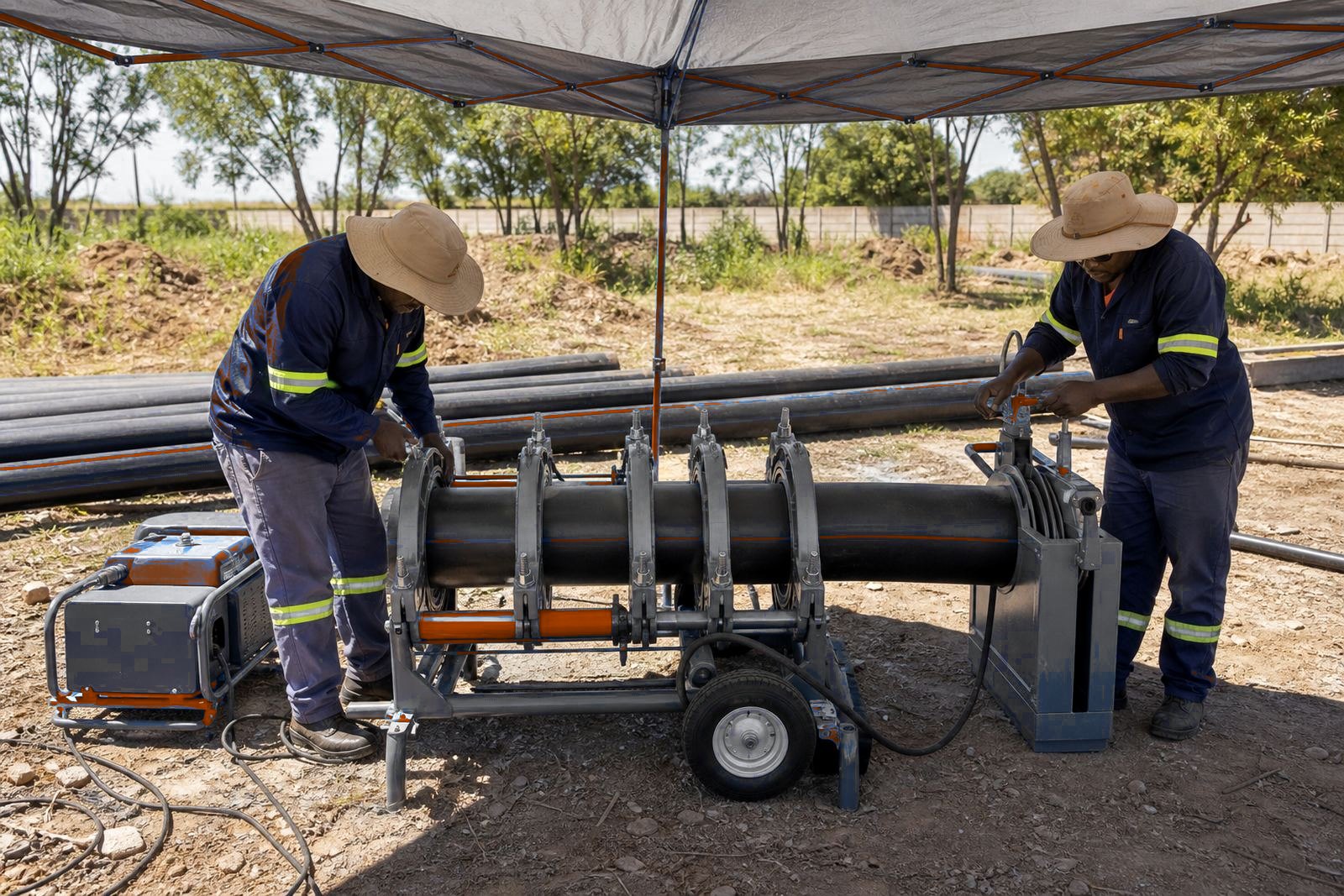
New operators learn to prepare the pipe ends first. Operators need to identify the SDR, confirm the wall thickness and check that the pipe sizes match the machine setup before any heating starts. New operators learn to cut cleanly and align before any heat. Oval, dirty or badly clamped pipe carries its fault through the whole cycle.
For new hands, the first lesson is often about restraint. Do not force the facer, do not rush the clamp alignment, and do not treat the heater plate like a hot press. Each step needs care, especially on longer runs where the pipe has weight and can pull out of line.
- Inspect the cut face for squareness and damage.
- Keep the clamps aligned so the pipe stays centred.
- Remove dust and moisture from the joining faces.
Reading the fusion cycle
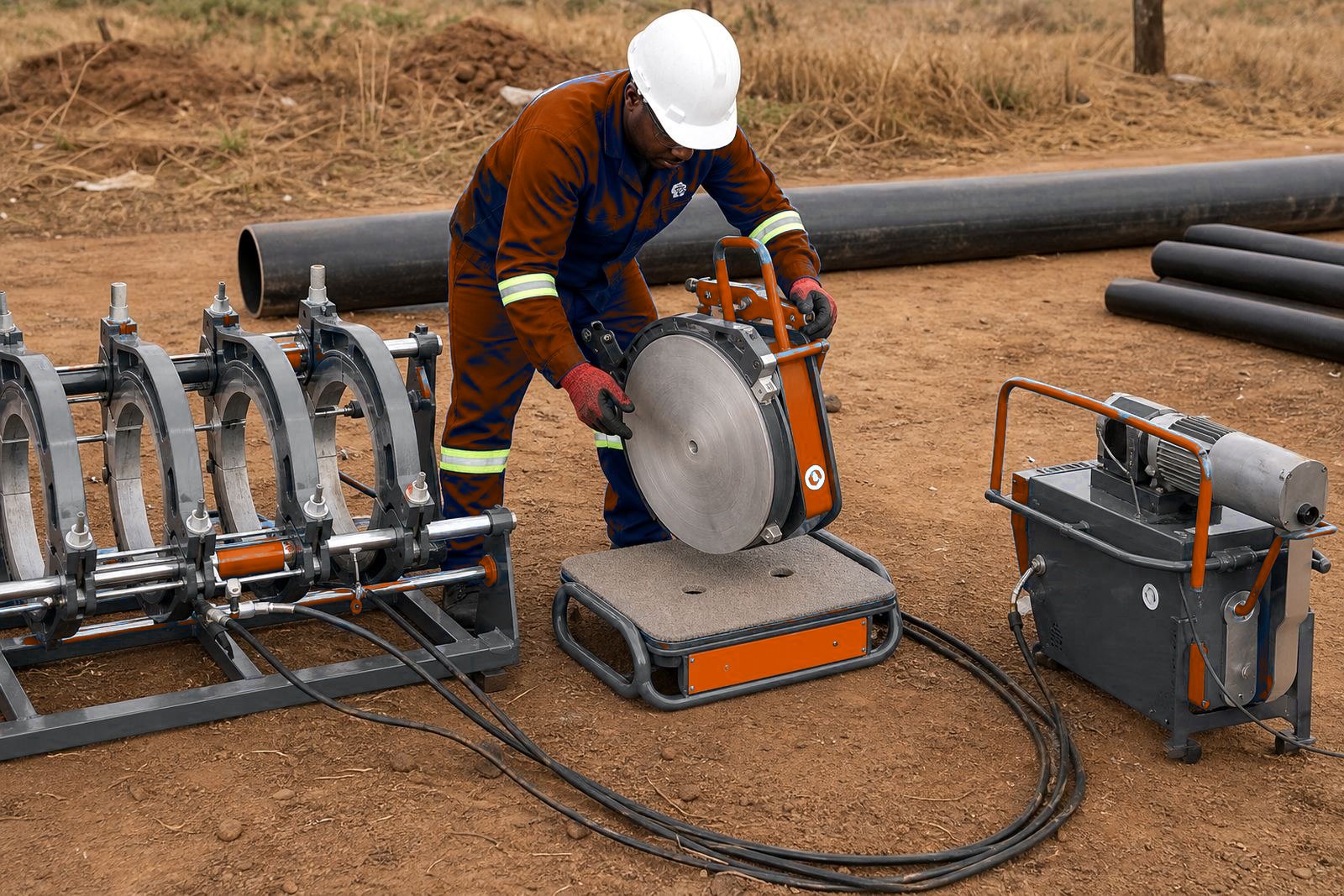
With the pipe clamped, the operator faces the ends, heats them, changes over, applies fusion pressure and waits out the cooling time. That order must stay consistent. The facer removes a thin layer from both ends so the surfaces are fresh and true. The heater plate then brings each face to fusion temperature, and the changeover needs to happen without delay or loss of heat. New operators often pause too long at this point, which can spoil the joint.
Training works best when the learner sees the whole cycle more than once. The heater plate comes out, the pipe ends meet under the correct pressure, and the bead forms evenly around the joint. During cooling, the joint must stay still. Moving it early can break the bond before the pipe has set fully.
- Keep the fusion pressure steady and measured.
- Do not release clamps until the pipe has set properly.
What a clean bead is telling you
Trainees learn bead inspection from their first week. Even, neat bead lines suggest the ends were prepared properly and the pressure was controlled through heating and fusion. A thin bead on one side, or a lopsided roll, can point to poor alignment, uneven facer work or movement during cooling. Training covers visual checks as well as machine handling.
On bigger pipe, the bead becomes easier to read. On smaller diameters the signs are subtler, so the operator needs to know what normal looks like across the machine range. That skill grows through repeated supervised joints over several shifts. New operators practise on both yard work and site work.
- Check bead size for even roll and shape.
- Compare the squeeze-out with the expected bead size for the pipe.
- Compare both sides of the joint for symmetry.
- Record anything unusual in the weld log.
Data logging that helps crews later
Weld logging gives the crew a reference when the same line is extended, repaired or inspected later. New operators should learn how to note the pipe size, SDR, heater plate setting, fusion pressure, cooling time and job location. Recorded weld conditions let trainees compare their joints later.
The habit suits long line sections and sites that change daily. A clear log helps the supervisor spot patterns if a joint needs review. It also gives the operator a calmer way to work, because the details are captured while the weld is fresh in mind.
- Write down the pipe size, SDR and joint number.
- Note the pressure used at fusion and holding stages.
- Capture cooling time before the joint is moved.
- Save or print the data where the machine allows it.
Repeating the same routine
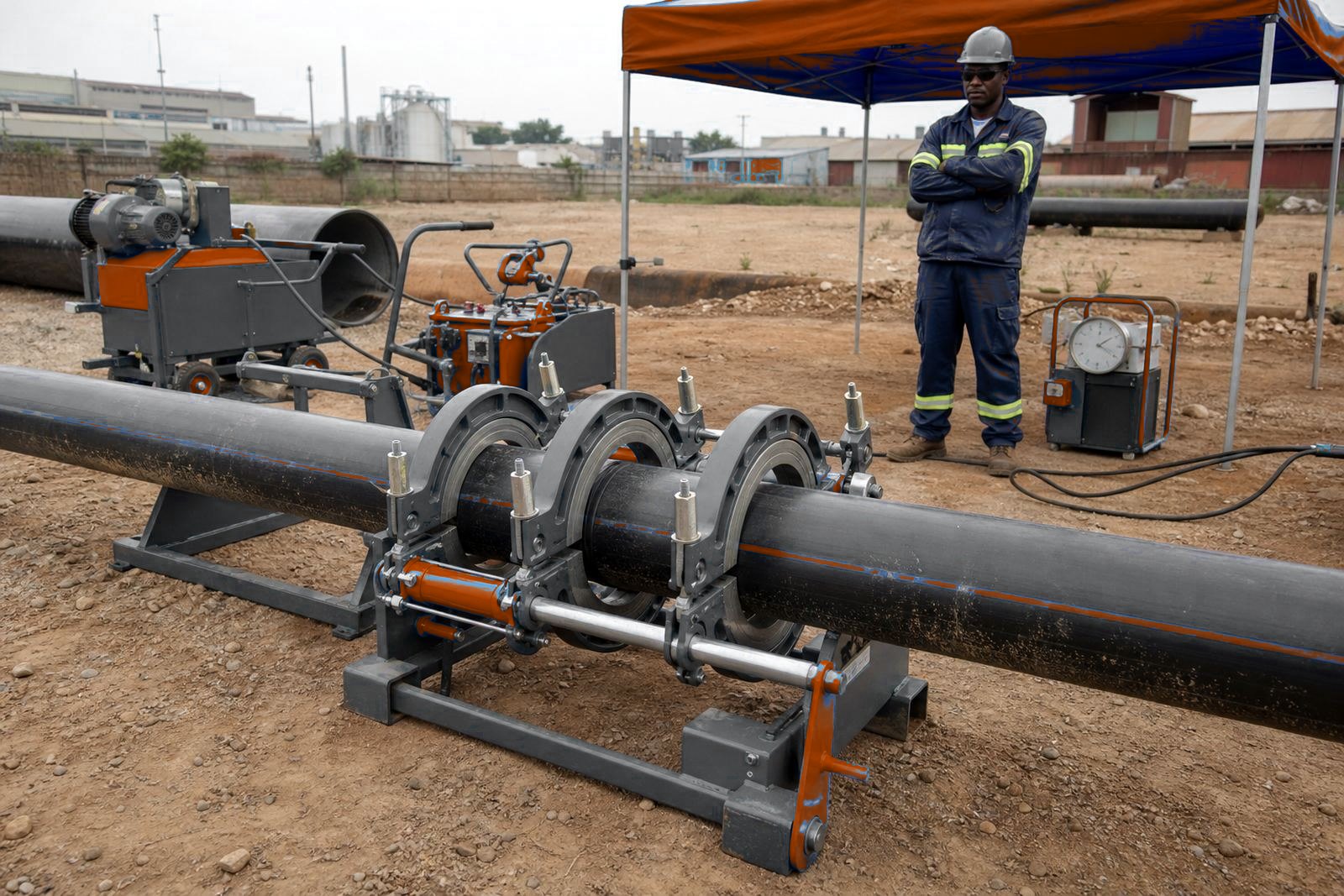
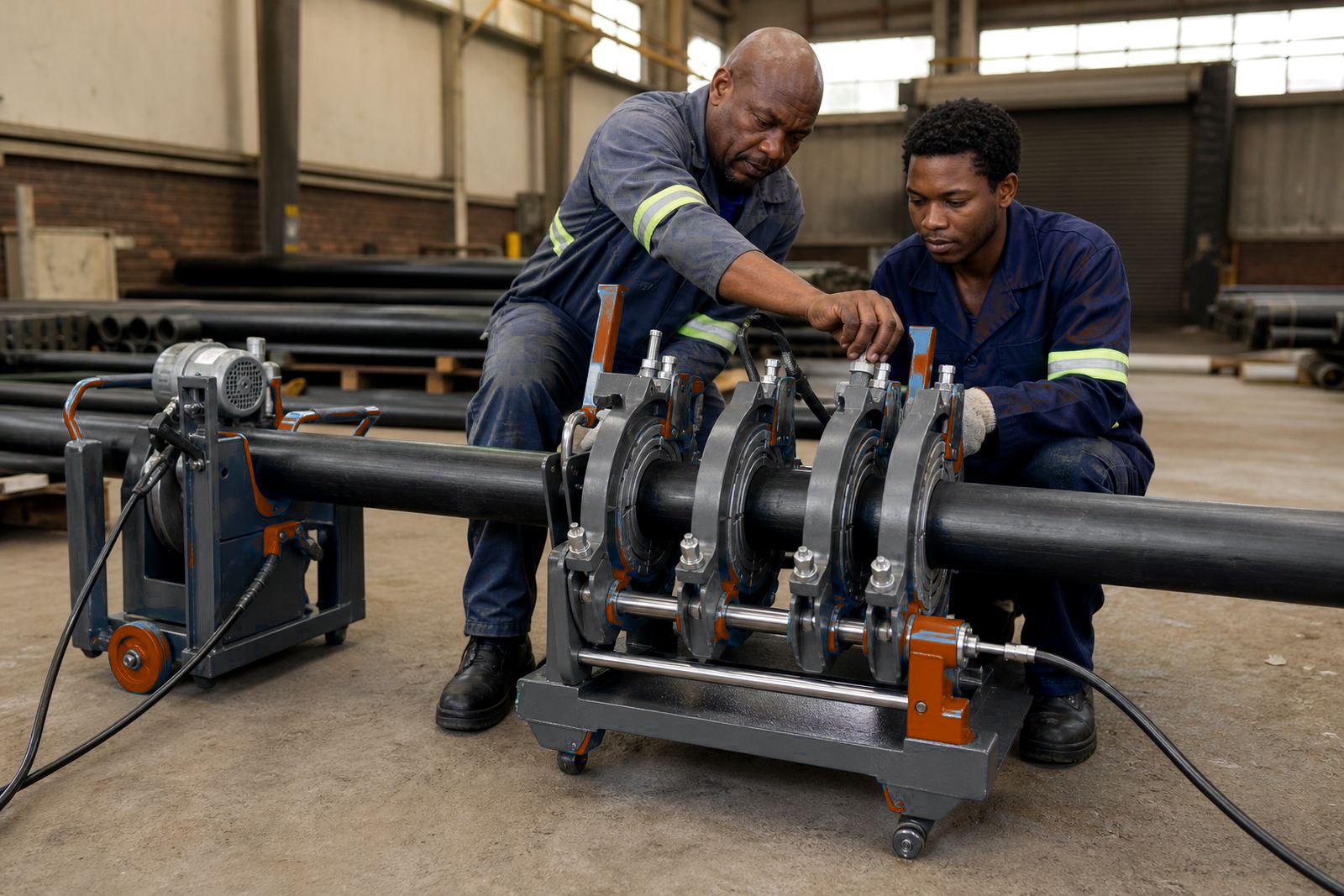
Supervised repetition is where most new operators settle in. Trainees weld several joints in a row to the same standard. Training should cover short pipe sections first, then longer lengths, then the work patterns that appear on site where pipe has to be handled around trenches, bunds or tight access. The operator learns how the machine feels when the alignment is right and how the heater plate should move in and out without dragging the pipe ends.
A contractor in Rustenburg may need a crew to manage water pipe work with a tight shutdown window. In that situation, the operator cannot allow any doubt. Trainees check each step and keep the sequence steady on every practice joint.
- Repeat the full cycle until the steps become familiar.
- Move from short test pieces to longer pipe lengths.
- Practise on the actual machine model used on site.
- Review the bead and the log after each weld.
Support that fits the whole crew and the operator
Service the machine before a training session. A machine with poor clamp alignment, a worn facer or a heater plate that does not hold even temperature will confuse the learner. That is why new operators train on a machine that has just been serviced. The crew then sees how equipment condition affects every weld.
Thabo Mabena covers field work for new crews, and Ayanda Naicker books the training sessions.