Why HDPE pipe is joined with heat
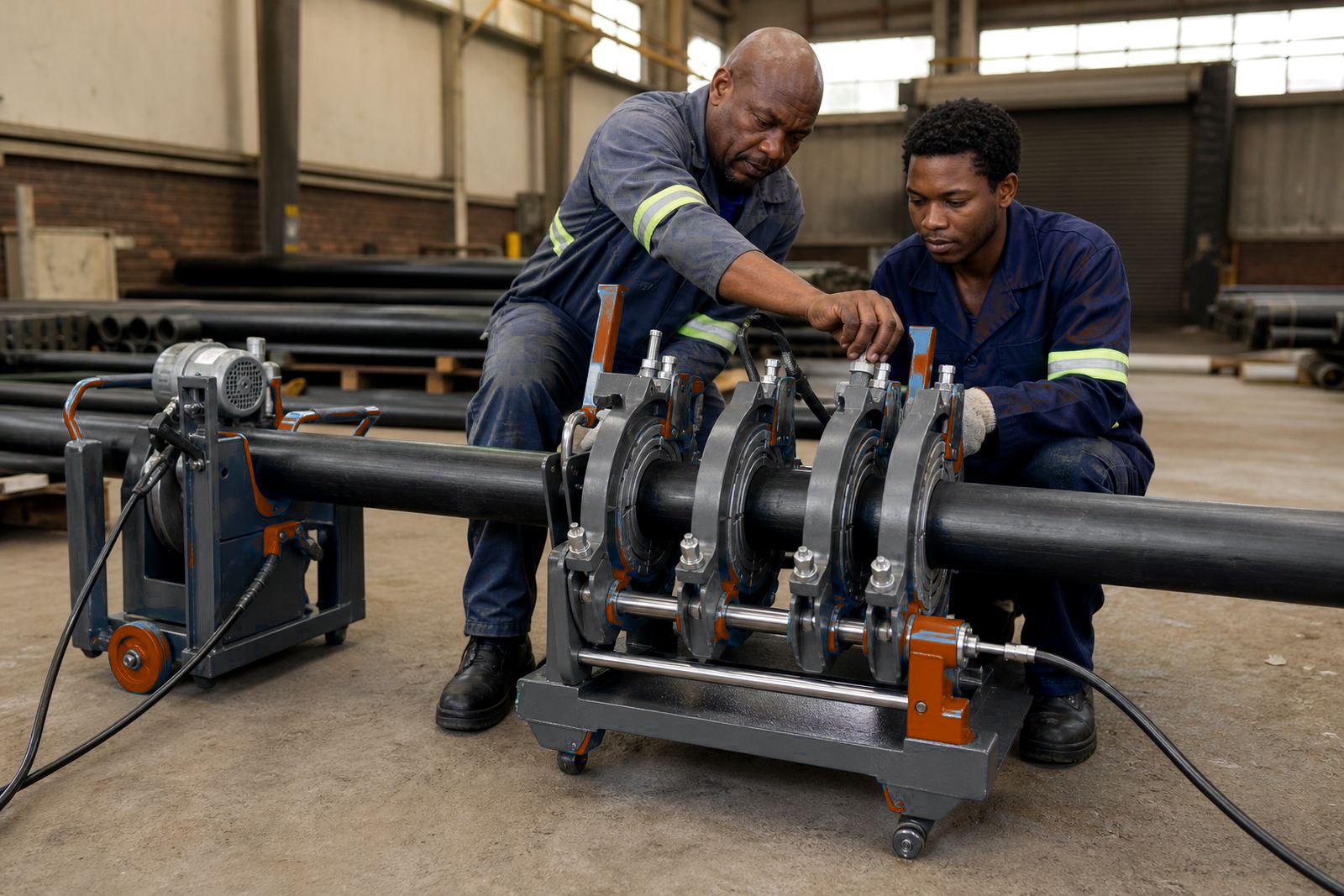
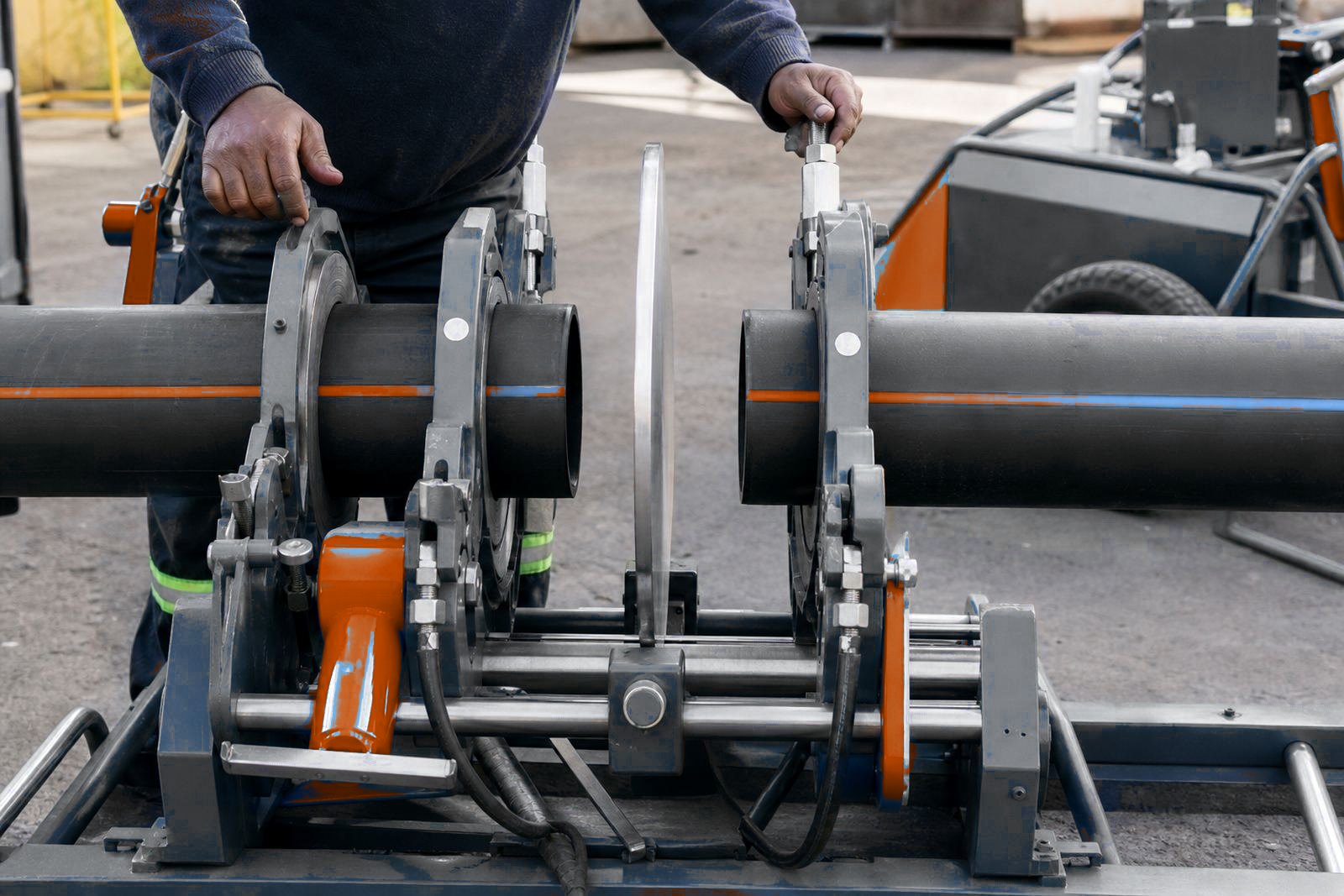
HDPE pipe is often run in long lengths because it handles movement, abrasion and corrosive ground conditions better than many rigid systems. In butt fusion, two plain pipe ends are cut square, faced smooth and heated until the surface softens enough to form a proper bond.
The process joins the pipe so the joint becomes part of the pipe wall itself. A fused joint holds on sites where buried lines and wet trenches place stress on the pipe. A correct fusion joint relies on control from the first clamp to the last cooling minute.
- Before welding, make sure the pipe ends are dry, clean and cut square.
- The machine holds alignment while the ends are faced.
- Heat is applied evenly across the full pipe face.
- Fusion pressure is held while the joint cools in the clamp.
The weld sequence step by step
Most butt-fusion work follows the same physical sequence, whether the pipe is small enough for a compact unit or large enough for a tracked machine on a civil site. The operator sets SDR and size, clamps, faces and checks the faces meet before heating.
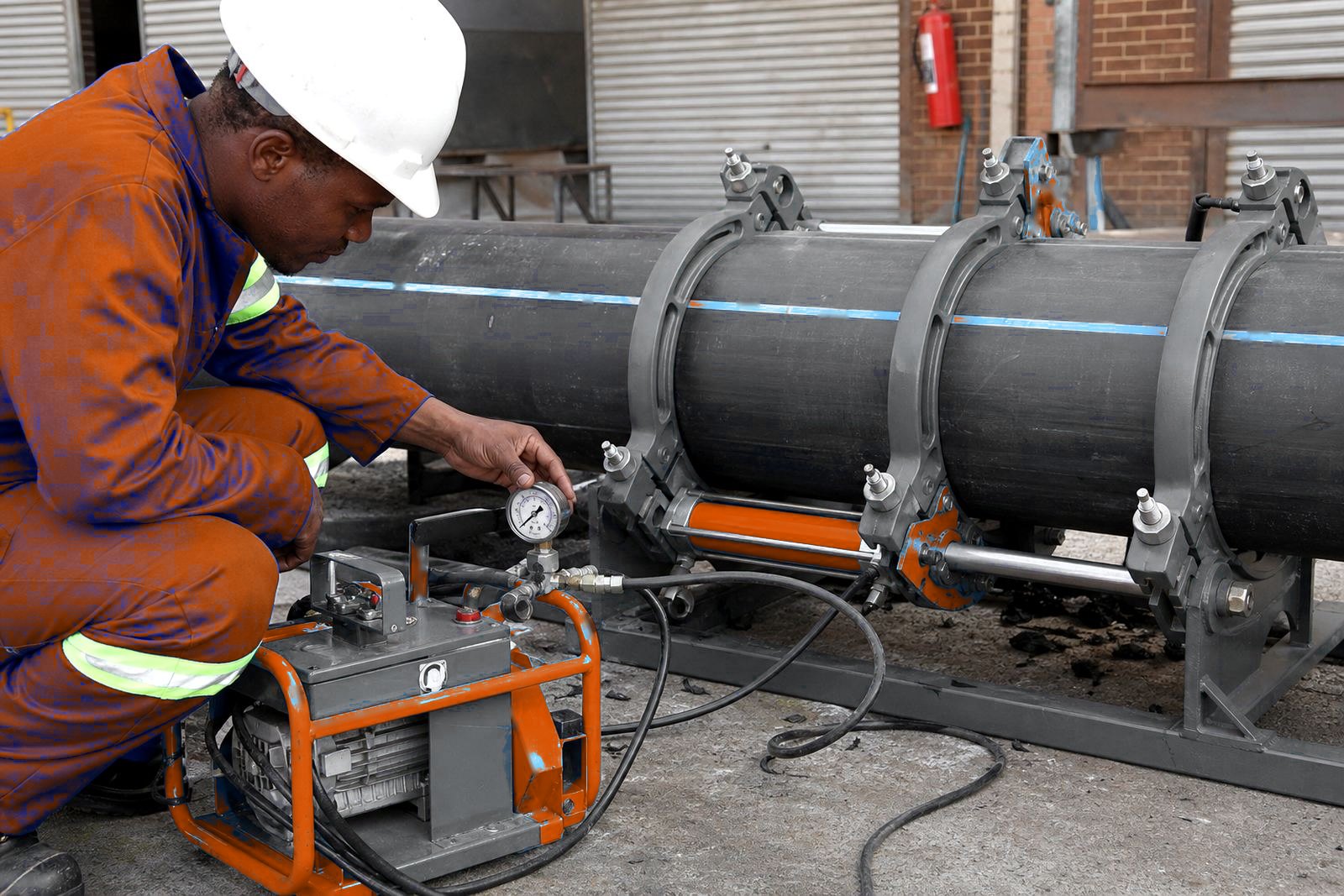
After the heating time, the plate is removed in the changeover window and the softened ends are pushed together at the required fusion pressure. Cooling follows with the joint clamped, because movement at that stage can spoil the weld.
- Facing removes oxidised material and uneven edges.
- Heat soak must suit the pipe diameter and wall thickness.
- Changeover needs a steady hand and a clean machine bed.
- The joint stays in the clamps until the cooling time on the chart has run.
SDR, pipe size and what changes on site
SDR, or standard dimension ratio, tells the operator how thick the pipe wall is relative to the outside diameter. A lower SDR means a thicker wall and usually a different heating and pressure profile from a thinner wall pipe. One line needs a different machine setup for another.
Pipe size also changes the working method. Smaller diameters can be handled with lighter clamping equipment, while larger lines need stronger frame alignment and better support at the pipe ends. In a Rustenburg water line, for example, a crew may need long straight runs and careful pipe handling because a bent or oval end can upset the weld face before the heating stage even starts.
Good operators check the material grade, the pipe series and the machine range before any weld begins. On mixed jobs around Johannesburg or Durban, those three checks are repeated each time the pipe size changes.
What the bead tells the operator
After cooling, the external bead gives the first visual clue about the weld. The weld bead is a field check that shows whether the pipe ends met evenly under pressure.
Operators also look for signs that the joint moved too soon, overheated at the plate, or slipped during clamp pressure. Buried mining lines are hard to inspect again, so small signs at the joint get recorded before backfill.
- Even bead width usually suggests steady pressure and alignment.
- Thin patches can point to poor contact or uneven heating.
- Heavy one-sided bead may show clamp movement or pipe ovality.
- Scorching or chatter marks call for a closer machine check.
Data logging, records and handover
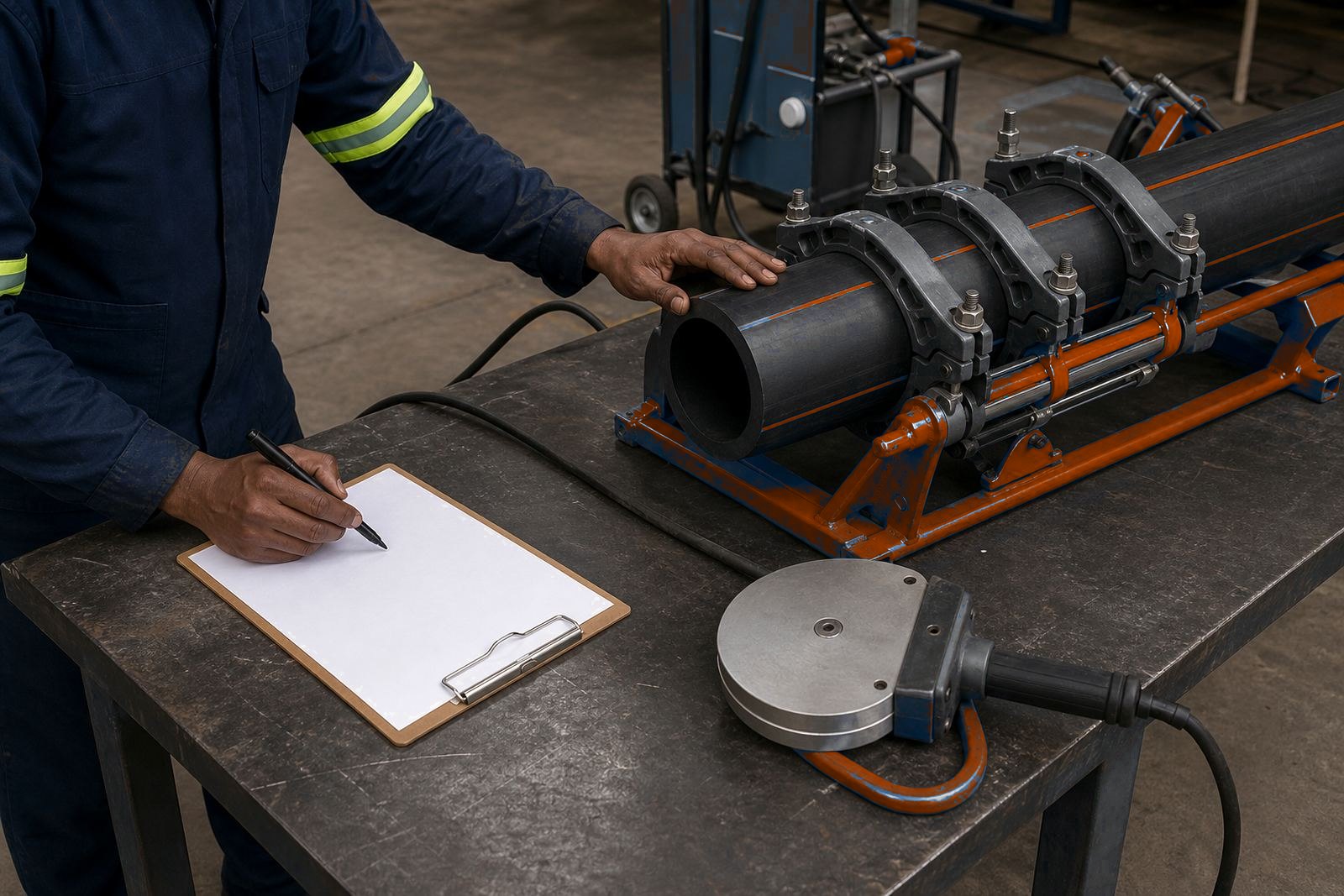
Many project teams now ask for weld logging because records help trace what was done on each joint. A log may note pipe size, SDR, heating time, changeover time, fusion pressure, cooling time and the operator who made the weld. A clear record lets a foreman, QA lead or site manager review the work later.
PlasticWelder supports weld logging help on jobs where a crew needs a cleaner handover process. On bigger programmes, several welders may work on the same line and the paper trail must match the ground work. Fill in the log from the actual weld as it happens.
Holding the weld to programme
Operator training gives a crew with its own machine tighter control over the weld cycle. Refresher training helps when new staff join, a new pipe size arrives or the team is moving to heavier pipe. Site startup help is also practical when the first few joints need extra supervision.
Hire makes sense on short jobs, temporary shutdown work or where the contractor wants the right frame size without buying straight away. Servicing keeps heater plates, facers, clamps and hydraulic systems working as they should. On a busy schedule, a machine that grips poorly or heats unevenly can slow the whole crew, so servicing and pressure checks are not side issues.
- Refreshers for crews who need to revisit welding technique
- A written joint record kept on site
A water run, joint by joint
A contractor may be joining HDPE for a new water run that crosses tight yard space and traffic movement. The team needs the pipe aligned, the heater plate clean, and the fusion cycle kept steady even while forklifts, trench spoil and weather keep changing around the bay. In that setting, butt fusion does what it should only if the machine is set correctly and the crew respects the cooling stage.
That is what the method delivers. It gives one continuous line once facing, heating, changeover, fusion pressure and cooling time are each done to the weld sheet.