SDR is the pipe’s outside diameter divided by the wall thickness
Standard dimension ratio is the pipe’s outside diameter divided by the wall thickness. A lower SDR means a thicker wall. As the ratio goes up, the pipe side is thinner, which affects how it responds during facing, heating and joining under pressure.
The SDR number shows how much material is available for fusion and how long the heat soak should run. A pipe marked SDR 11 will not behave like SDR 21 even when both are the same outside diameter. The joint needs the right fusion pressure, enough heating, and a calm changeover so the molten faces meet evenly.
Wall thickness changes heating time, pressure and cooling
With thicker wall pipe, there is more thermal mass to heat through, so the heater plate must be clean, steady and hot enough to soften the full fusion face. Thinner wall pipe needs less time on the plate, because excess heat can distort the end faces and upset alignment.
A good operator reads the pipe before touching the machine. The SDR tells you how much wall you have, but the outside diameter still has to sit true in the clamps, with the facer shaving both ends square and even.
- Lower SDR usually means thicker walls and longer heat soak.
- Higher SDR usually means thinner walls and tighter control on heat.
- Thin-wall pipe needs closer clamp alignment.
- Fusion pressure must suit the pipe and the machine setting.
Heating, changeover and the bead
Melt beads are watched all round before the heater is lifted out without dragging the faces apart.
Many weld failures happen during that changeover window. Thin-walled pipe leaves little margin between heat and contact. If it is thick-walled, slow handling can cool the faces unevenly. The finished external bead should be regular all the way round, with a consistent profile and no signs of sideways pull or dry spots.
Fusion pressure is set from the SDR and diameter
Each joint gets its own calculated fusion force. Diameter, SDR and wall thickness feed the pressure calculation. The operator has to factor in drag pressure from the carriage and use the correct total value during the fusion phase.
Larger jobs need weld logging for clear records. Recorded weld data helps the team check the settings used on each joint, and it gives a proper trail when the job moves from one trench or section to the next. Long water runs often require those records at handover.
- Set the facing tool so both ends are square and even.
- Check heater plate temperature before each run of joints.
- Allow full cooling time before moving or loading the pipe.
- Keep weld logs tidy, especially on long sectional work.
Mixed SDR pipe on one job
In the yard or on a trench line outside Johannesburg, the same diameter often turns up in different SDRs on one job. One section may need a thicker wall for pressure, while another section runs lighter pipe where the design allows it. Treating two SDRs alike lets the set-up drift.
A practical example is a water line with one batch of SDR 11 pipe for a higher pressure section and another batch of SDR 17 on a lower stress run. Heat time, pressure and cooling change with SDR, even on the same machine. Training helps the crew read the pipe before the weld starts so they can pick up problems before the bead shows them.
What the crew watches before the clamp opens
After fusion, leave the joint clamped until the chart time has run. In hot inland weather, the outer surface can mislead the eye, so the team has to respect the full cooling period for that wall thickness and pipe size.
The final inspection covers bead, alignment and squeeze-out. One-sided squeeze-out or drifting alignment means the SDR settings are rechecked. On a sound machine, the data log, the bead and the pipe face agree. If they do not, the weld needs a closer look before the line is placed in service.
Learning to read SDR in the field
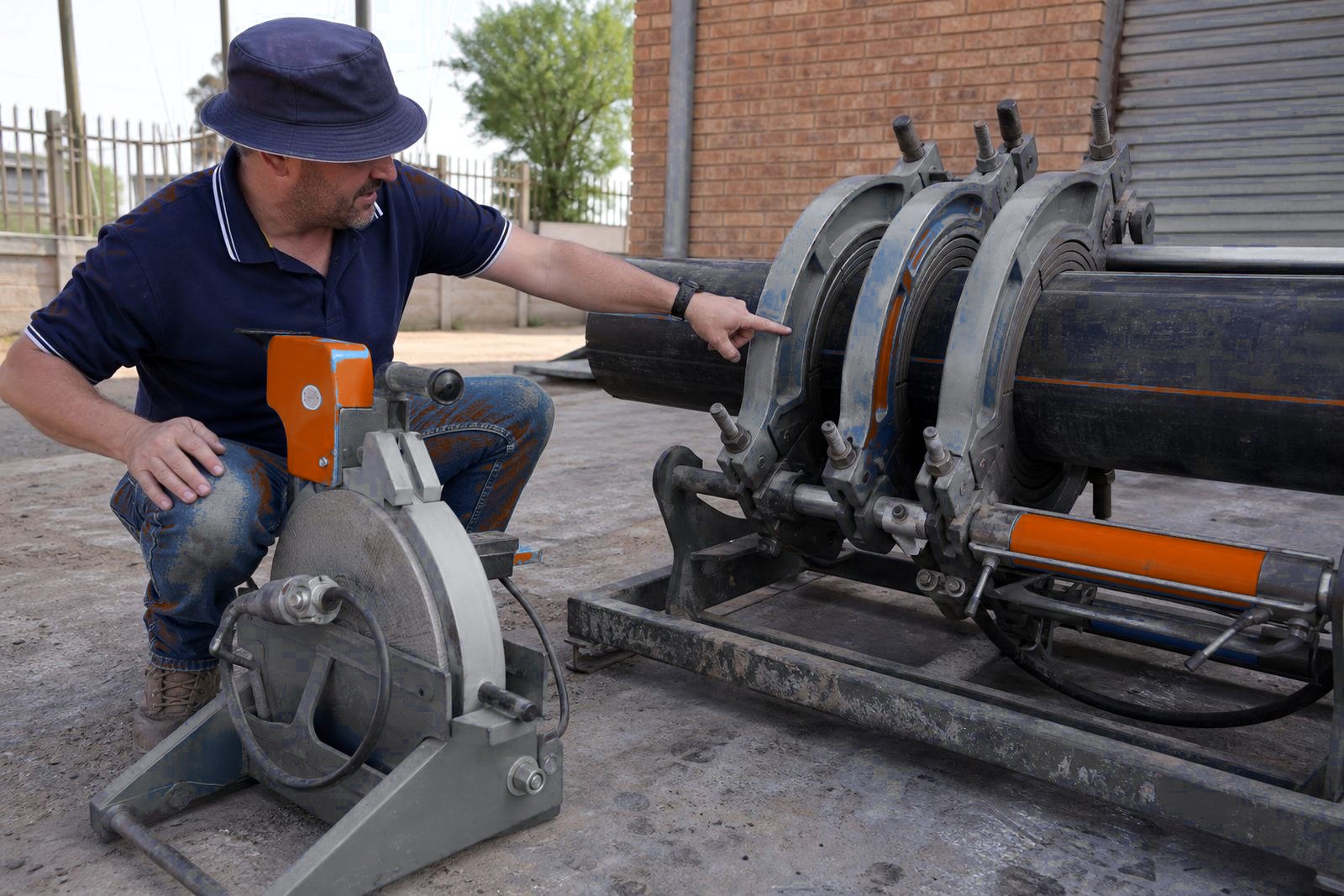
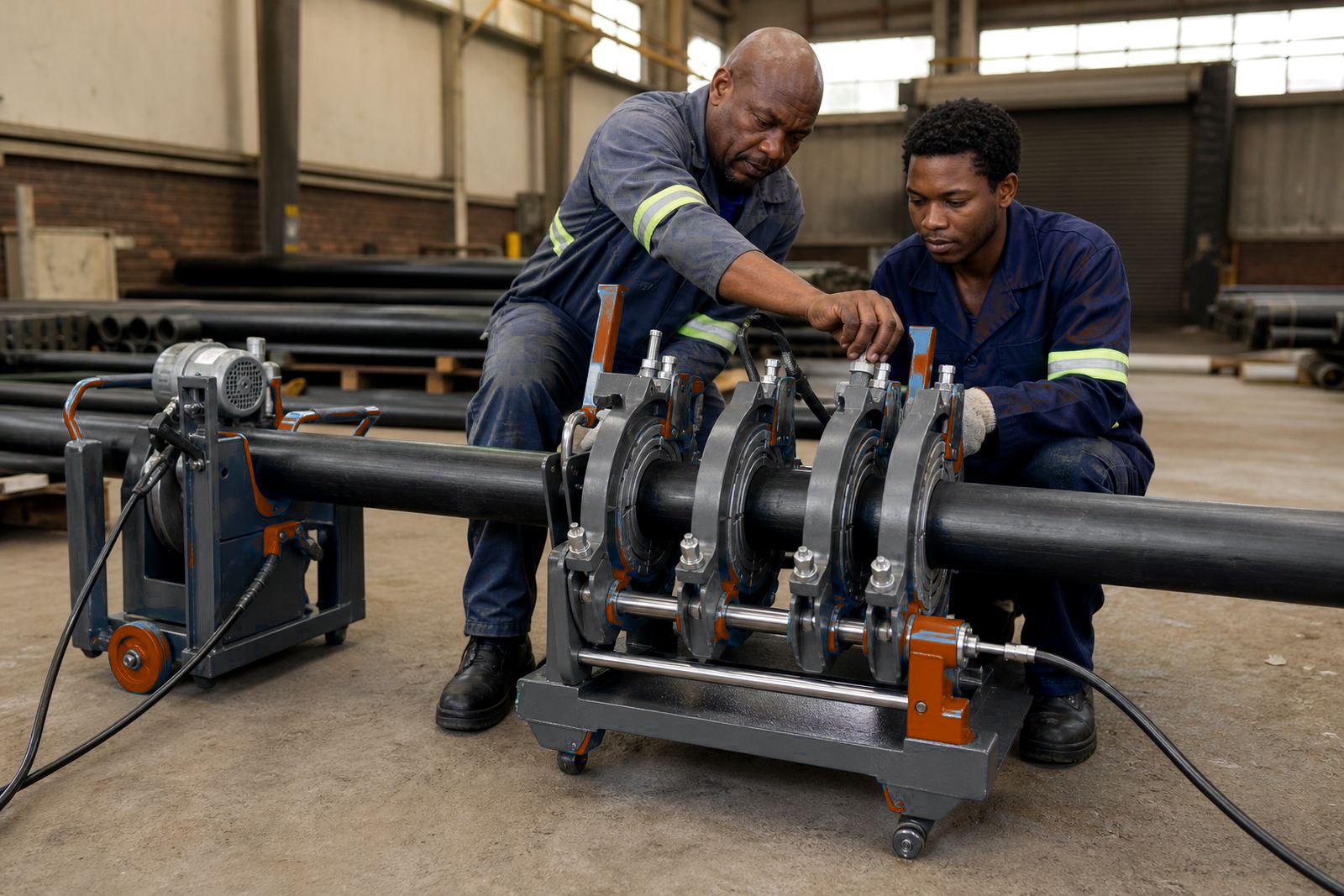
SDR is easiest to understand when the team sees it on real pipe, with the actual clamps, facer and heater plate they will use on site. Our training has the crew handle different pipe sizes, check the pressure set-up and read the bead after cooling.
The pipe wall still governs the weld. When SDR is read properly, the fusion set-up becomes measured, the machine work becomes cleaner and the joint is easier to trust under real pressure.