Built for fixed-bay HDPE jointing
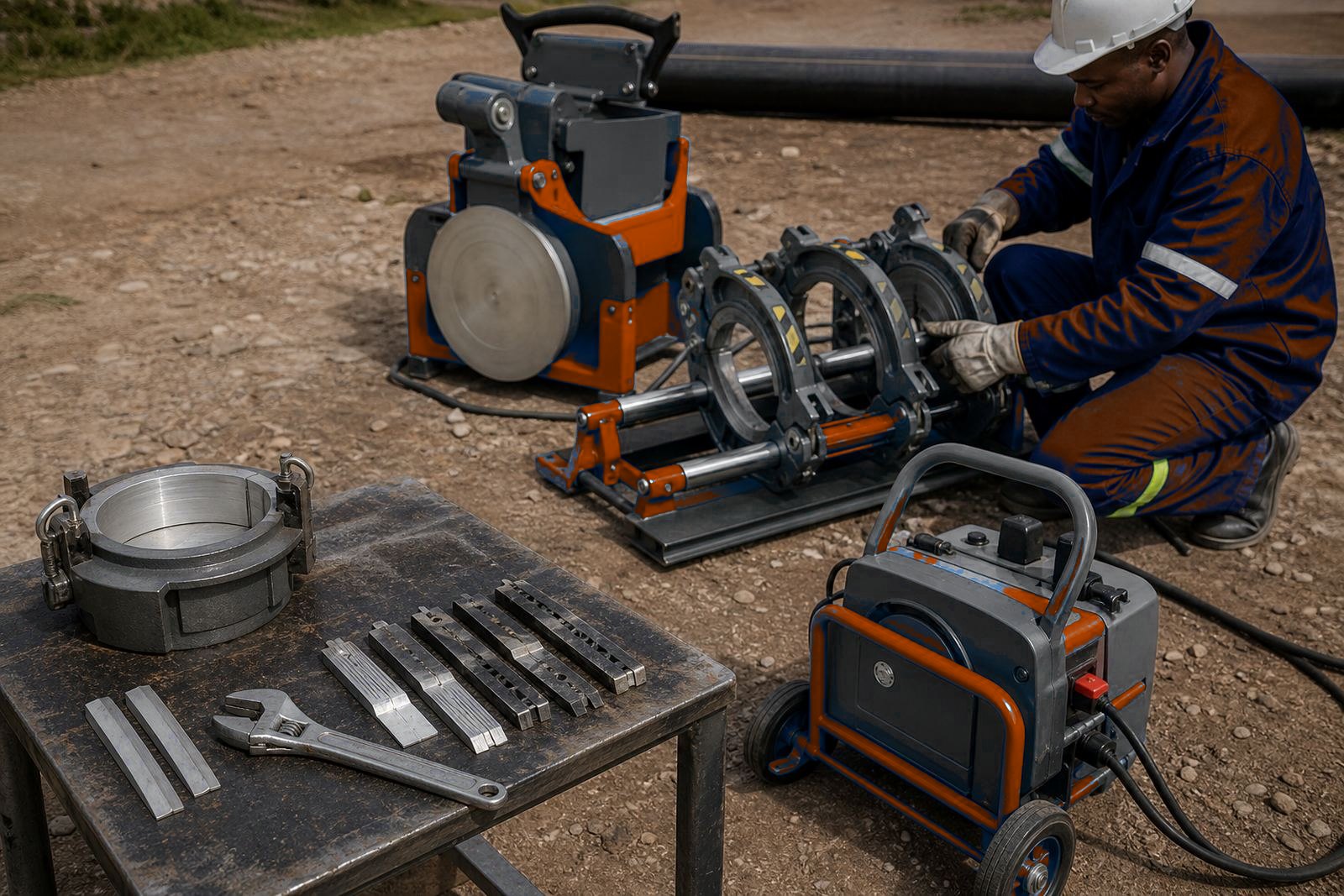
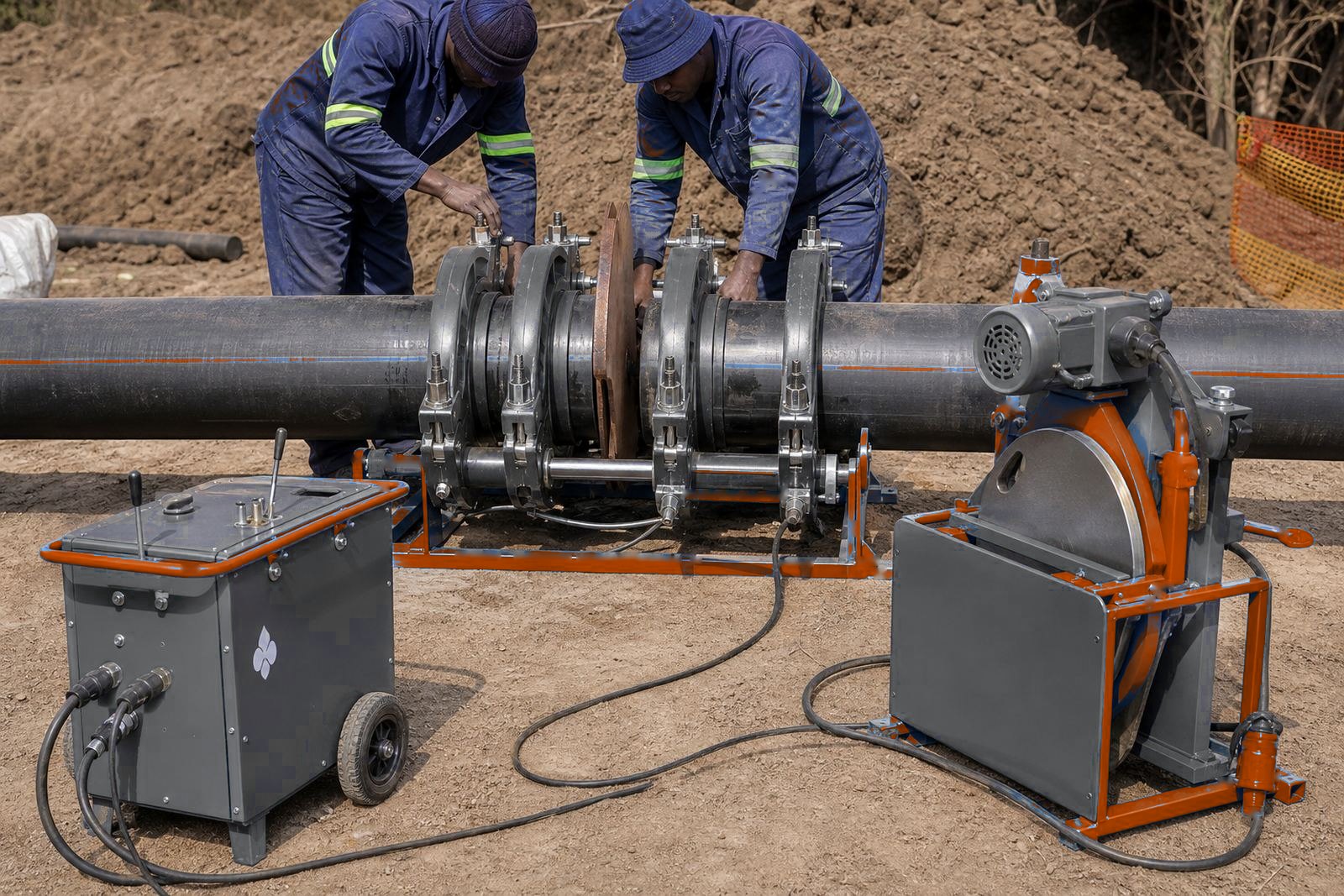
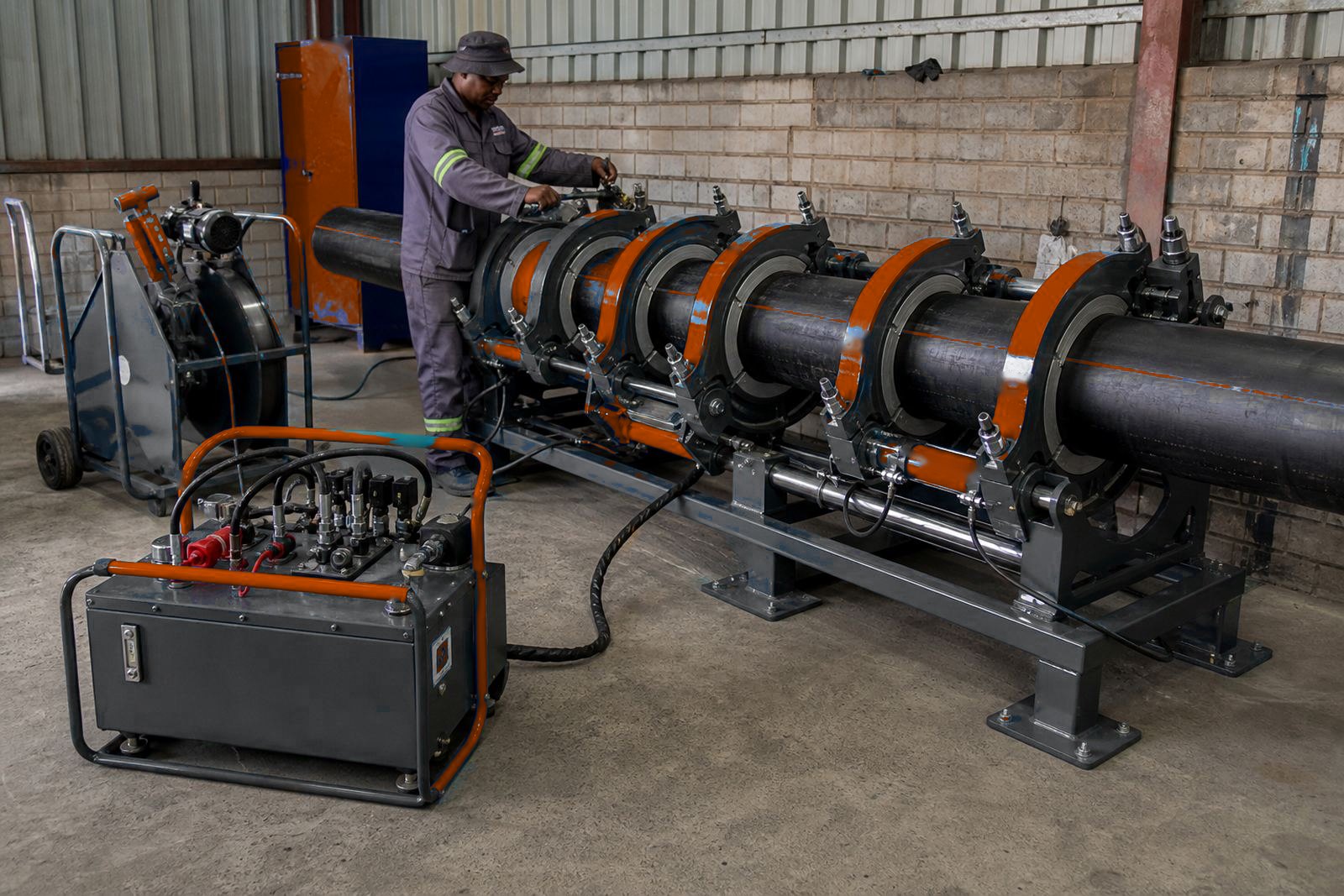
This static butt-fusion setup joins HDPE pipe in a planned work area, with fixed alignment and repeatable pressure. Used in fabrication yards, service workshops and indoor welding spaces, it lets pipe sections be prepared, clamped, faced and fused in a controlled sequence. The frame holds the pipe ends steady while the facer trims the faces clean, the heater plate brings both ends to fusion temperature, and the clamp set keeps the joint true during changeover and cooling.
This rig is used for common HDPE pipe work in the workshop. It suits straight runs, prefabricated assemblies and longer pipe sections that need solid end preparation before they leave the yard. In a workshop setting, the operator has better access to the pipe line, the hydraulic controls and the joint face, which makes bead inspection easier once the weld has cooled.
Pipe sizes, SDR ranges and clamping options
Size the rig for the pipe outside diameter, wall thickness and the range of SDR values being joined. Heavier wall pipe needs stronger clamping and steadier pressure control, while lighter pipe still needs accurate centring so the heated ends meet cleanly. Workshop rigs are commonly selected for sizes from 63 mm through to 315 mm, with larger frames available where fabrication work calls for wider pipe. The clamp shoes, reducers and carriage travel should suit the pipe range used most often in the bay.
- Pipe diameter range matched to the work carried out in the yard
- SDR compatibility for the pipe wall thickness being fused
- Clamp inserts sized for each pipe diameter in use
- Carriage travel that allows facing, heating and changeover without strain
- Hydraulic pressure control for consistent fusion loading
Bench-style units handle short lengths and accessory work, and heavier frames take long pipes and production runs. The choice should also reflect how the pipe is handled before and after fusion, because a longer welded assembly needs room for loading, support and cooling.
What the fusion cycle asks of the operator
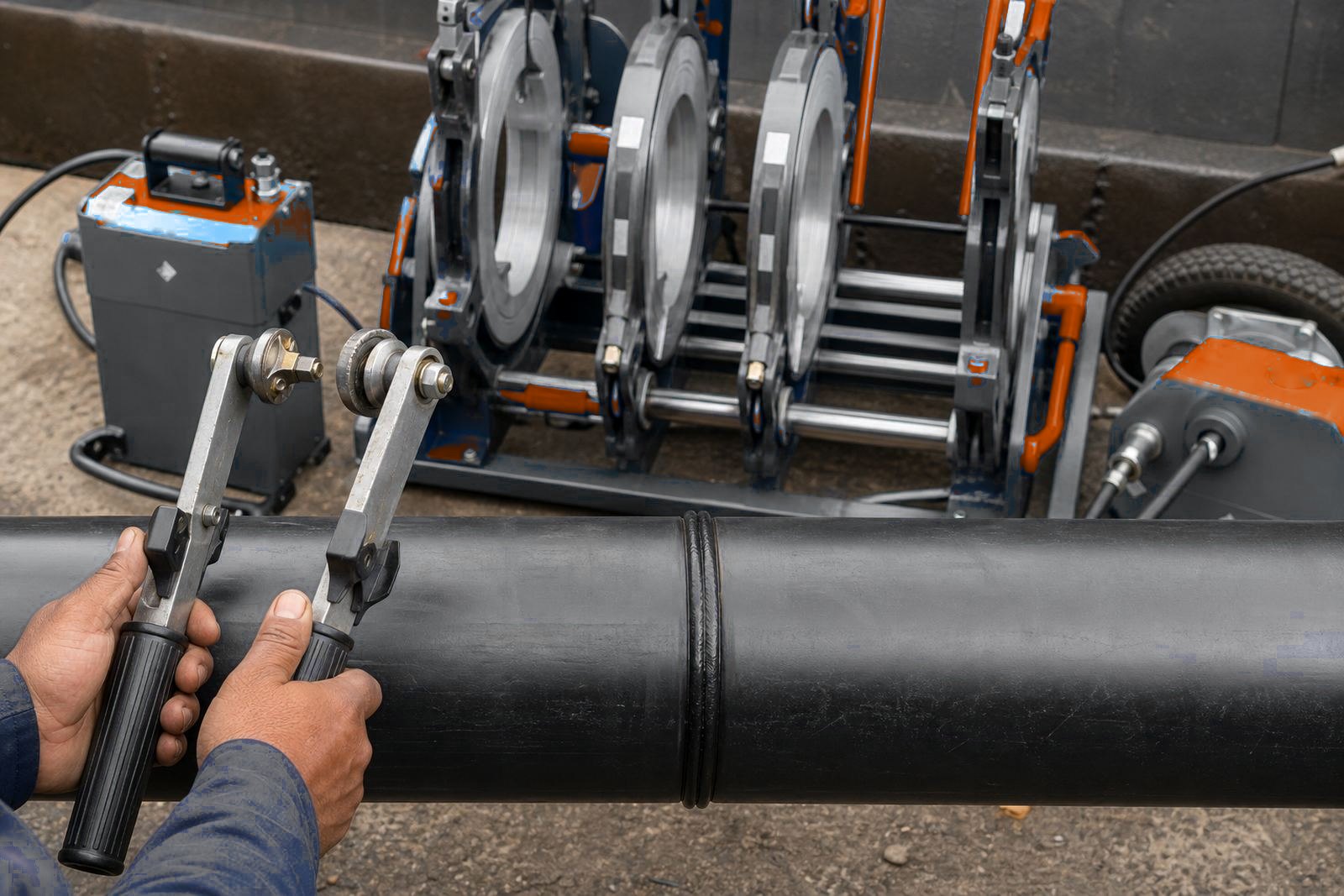
After the heating phase, the plate is removed and the pipe ends are brought together in the changeover window, with fusion pressure applied steadily until the bead forms. Keep the joint clamped through the cooling time so the weld can settle without movement.
The sequence is timed at each stage. The workshop rig helps keep the pipe aligned through each stage, and the controlled setting reduces the risk of twisted joints, dirty faces or uneven pressure. For repeated fabrication work, the operator can work from the same setup on each weld, which makes bead shape and joint consistency easier to manage.
Jobs suited to a fixed rig
This setup suits yards that prepare pipe assemblies for site installation, as well as service teams that do indoor welding on planned lengths. Use it where the pipe can be brought to the machine, for welding in a trench or open area. Teams use this sort of rig for prefabricated sections and manifold work before they move to site.
- Fabrication yards making HDPE spools and straight runs
- Controlled indoor welding bays with steady floor space
- Projects where pipe ends need repeatable alignment before site delivery
- Training spaces for operators learning the full butt-fusion cycle
Because the rig stays in one place, the work area should allow easy loading from both sides, safe access to the heater plate and enough room for pipe support. Fit good lighting for checking the bead after cooling, especially on thicker wall pipe.
Power, installation and workshop fit-out
A workshop fusion rig is normally set up in a fixed bay with a proper power supply for the facer, heater plate and hydraulic system, if fitted. The supply rating for the workshop rig depends on machine size and heater control type. A level, stable base keeps the carriage running true on long lengths in the workshop. Where the rig is installed in a fabrication yard, there should be enough space for loading pipe sections, moving the heater plate clear and storing clamps, inserts and logging sheets nearby.
Fitting also includes checking the hydraulic hoses, controls and electrical connections, then confirming that the heater reaches and holds the correct working temperature for the pipe grade in use. On larger rigs, keep the bay clean and organised around the machine. Dust, moisture and loose offcuts can get in the way of accurate handling, and they add to daily cleaning.
Care and workshop checks
Routine care keeps the rig ready for steady production. Workshop rig upkeep means an even plate face, sharp facer blades and clamp faces that grip without slipping. Hydraulic pressure should be checked against the work being done, and the carriage should move without binding. For workshops handling regular production, a logbook helps track heater checks, facer wear, clamp alignment and pressure test records.
- Check facer blades and replace worn cutters before they nick the pipe face
- Keep clamp inserts clean so pipe does not twist under pressure
- Inspect hydraulic lines and fittings for seepage or damage
- Record joint details, bead inspection notes and operator entries where required
A rig in daily use needs a weekly check of the clamps and heater plate. A heater that does not hold temperature properly, or a carriage that drifts off line, can spoil a run of welds before anyone notices. Servicing the machine on a regular basis helps keep it ready for use and makes weld results more consistent.
What we need to confirm before the order is processed
Tell us the pipe sizes, SDR range and production pattern in the yard when ordering a workshop fusion rig. List the largest and smallest pipe diameters, whether the work is mostly straight lengths or prefabricated spools, and if the rig needs data logging or a basic manual setup. State whether the team needs training on the machine or project-period support.
For a proper fit, the order details should include the pipe material grade, the working size range, the power available in the workshop and any accessories needed for the clamp set or logging station. If the rig will be used for heavier assemblies, the workflow may also need a different carriage length or more support rollers. A precise brief makes it easier to fit the frame to the yard.
Key facts
| Product type | Static butt-fusion workshop rig for HDPE pipe |
|---|---|
| Typical pipe range | 63 mm to 315 mm, with larger frames available |
| Fusion method | Facing, heater plate fusion, changeover and pressure-controlled cooling |
| Pipe compatibility | HDPE pipe in common SDR ranges for workshop fabrication |
| Work setting | Fabrication yards, indoor welding bays and controlled workshop spaces |