
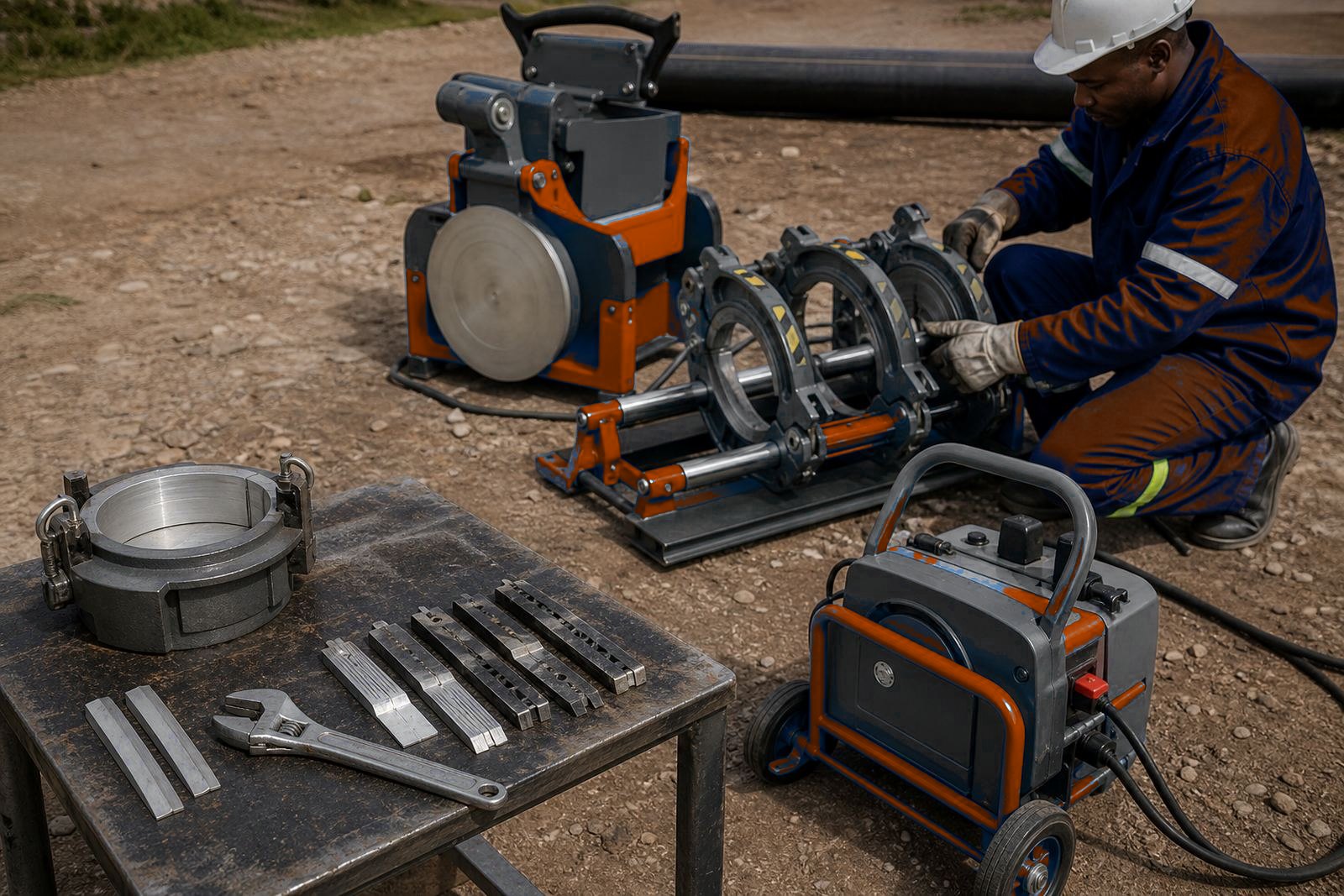
Blade sets for a clean facing cut
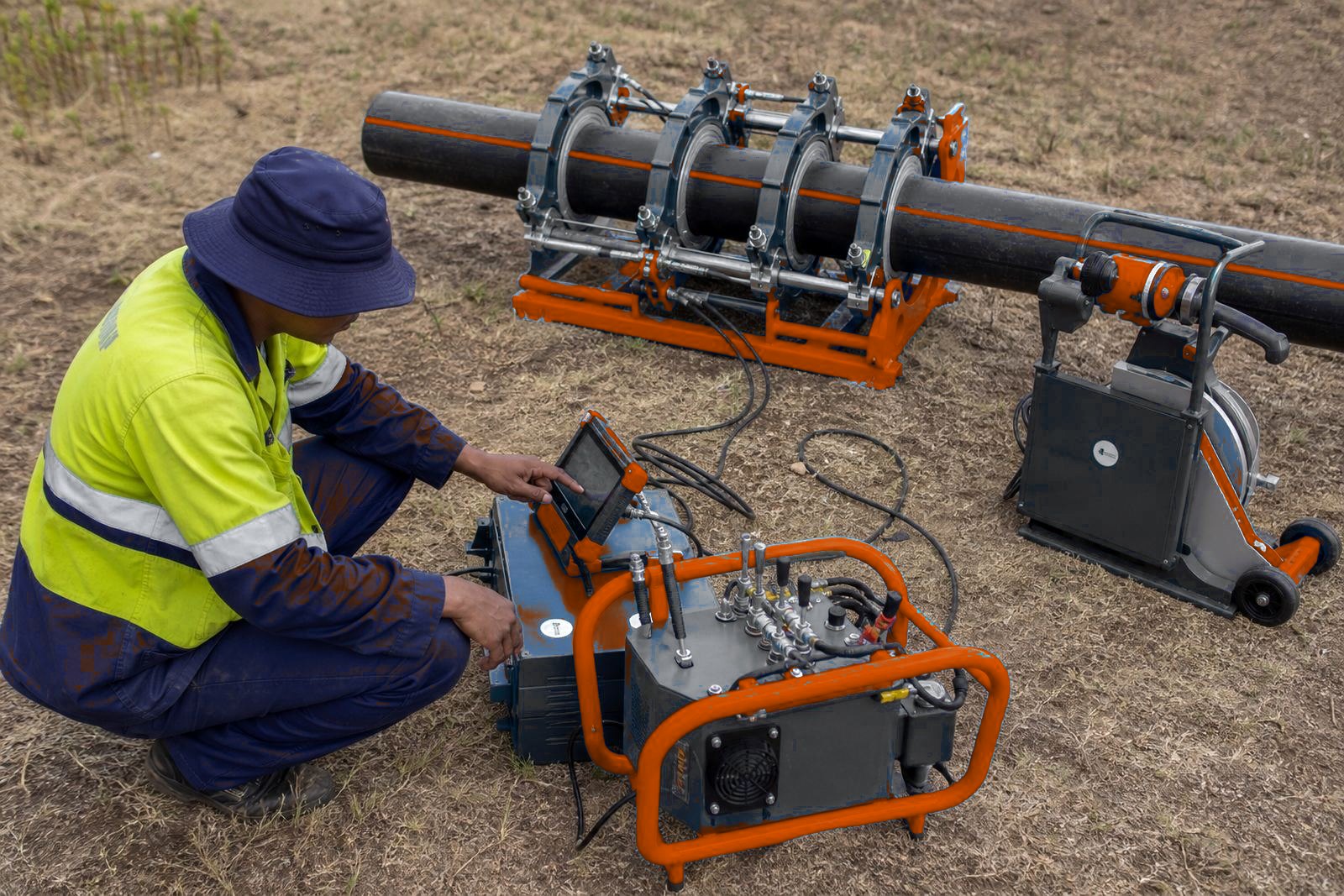
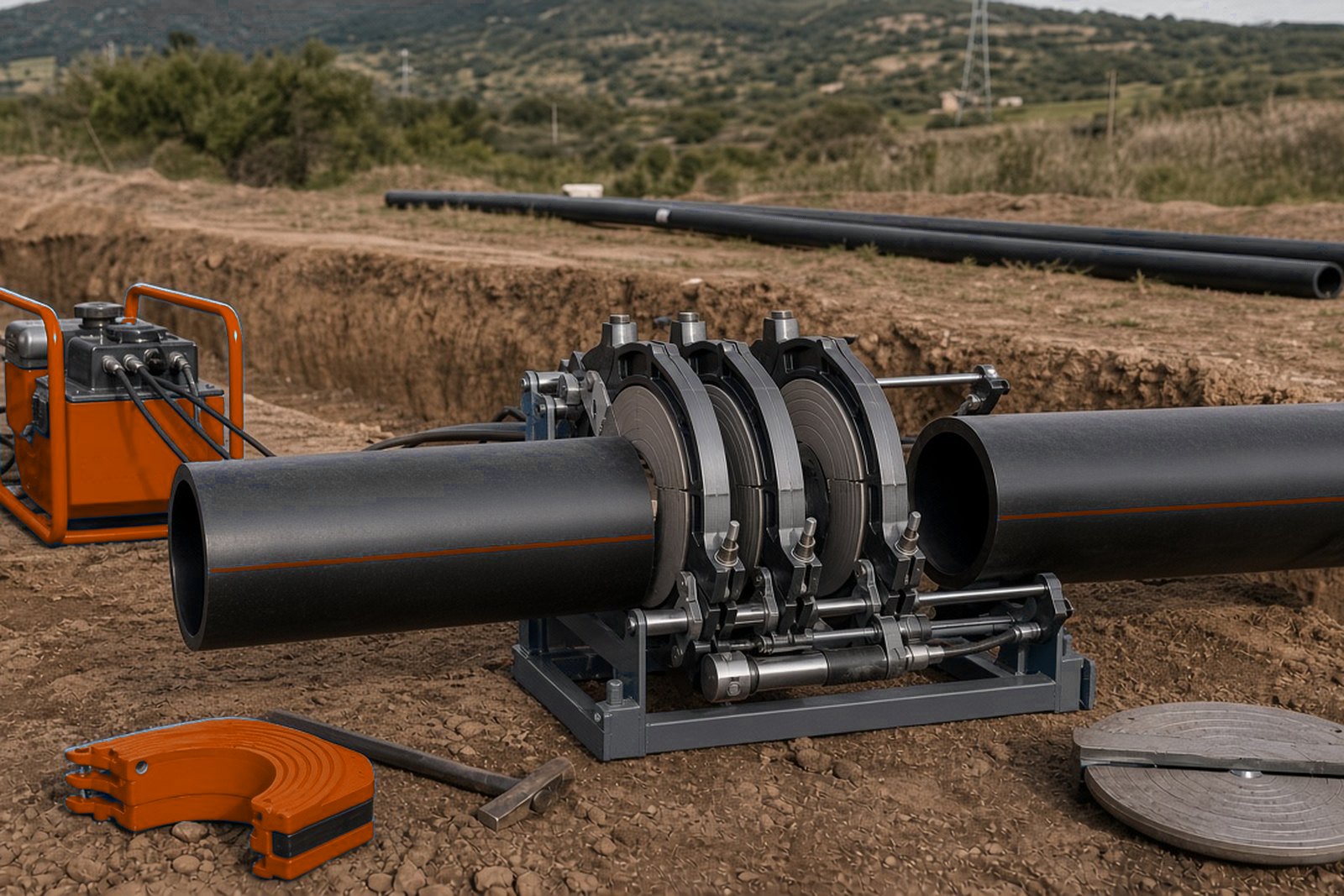
Facer blade sets do the cutting work inside the facer, trimming both pipe ends to a flat, square face before the heating stage. On butt-fusion HDPE pipe, that cut needs to be clean enough for the two ends to meet evenly after changeover, with no high spots that throw the joint out. A worn blade usually shows up as chatter marks, feathered edges or a face that needs too much hand cleaning before the pipe can move on.
These replacement blade sets suit butt-fusion machines used on HDPE lines where pipe diameters change from one job to the next. A sound blade set keeps the facer tracking smoothly, which helps leave a truer end face and reduces scuffing on the pipe wall. Wide pipe shows an uneven cut most, pulling the weld off line and slowing clamp-up.
- Replacement blades for HDPE facer units
- Cleaner square facing on pipe ends
- Reduced chatter and tearing during cut
- Suitable for site machines and workshop equipment
Where these blades suit the work
Facer blades suit butt-fusion setups used on SDR pipe across common site sizes, from smaller utility work through to large diameter water lines. The cutter has to handle the pipe wall without snagging, so the blade edge and mount need to match the facer body properly. If the set is wrong for the machine, the operator will feel it in the feed and see it in the face finish.
Blades on long runs, where pipe moves in and out of the clamp often, wear from grit, oxidation and repeated contact with the pipe edge. In coastal conditions such as Durban, or where dust and fine sand move through the yard, check the cutter edge more often. A spare set on hand helps keep the facer serviceable when the current blades are nearing the end of their cut life.
- Used with HDPE pipe across different SDR ratings
- Fits machine-facing work in yards and at site staging areas
- Useful where pipe ends need repeated re-facing after handling
Sizing and fitment details to confirm
Blade sets suit specific facer models and blade carrier types. Some machines use paired cutters, others use segmented knives or a set that locks into a specific drum or plate arrangement. The overall diameter, fixing holes, blade width and blade angle all need to line up with the machine before fitting starts.
When you order, confirm the pipe size range your machine handles, the facer unit type and whether the current blades are straight, curved or segmented. If the cutter assembly has been modified over time, a matching blade set may need to follow that exact layout. A blade that does not match the facer exactly can leave a rough edge, bind under load or wear the carriage unevenly.
- Facer make and model
- Blade length, width and fixing pattern
- Single blade or paired blade arrangement
- Any special carrier or drum layout
Fitting and first use on a live job
To fit a new blade set, isolate the machine, clean out the blade chamber and check the carrier for scoring or play. A worn mounting face can make even a fresh set cut badly. Once the blades are in place, the operator should check alignment, free movement and the hand feed before the first pipe is faced. Hydraulic clamp pressure must be steady during facing, since loose pipe ruins the cut quickly.
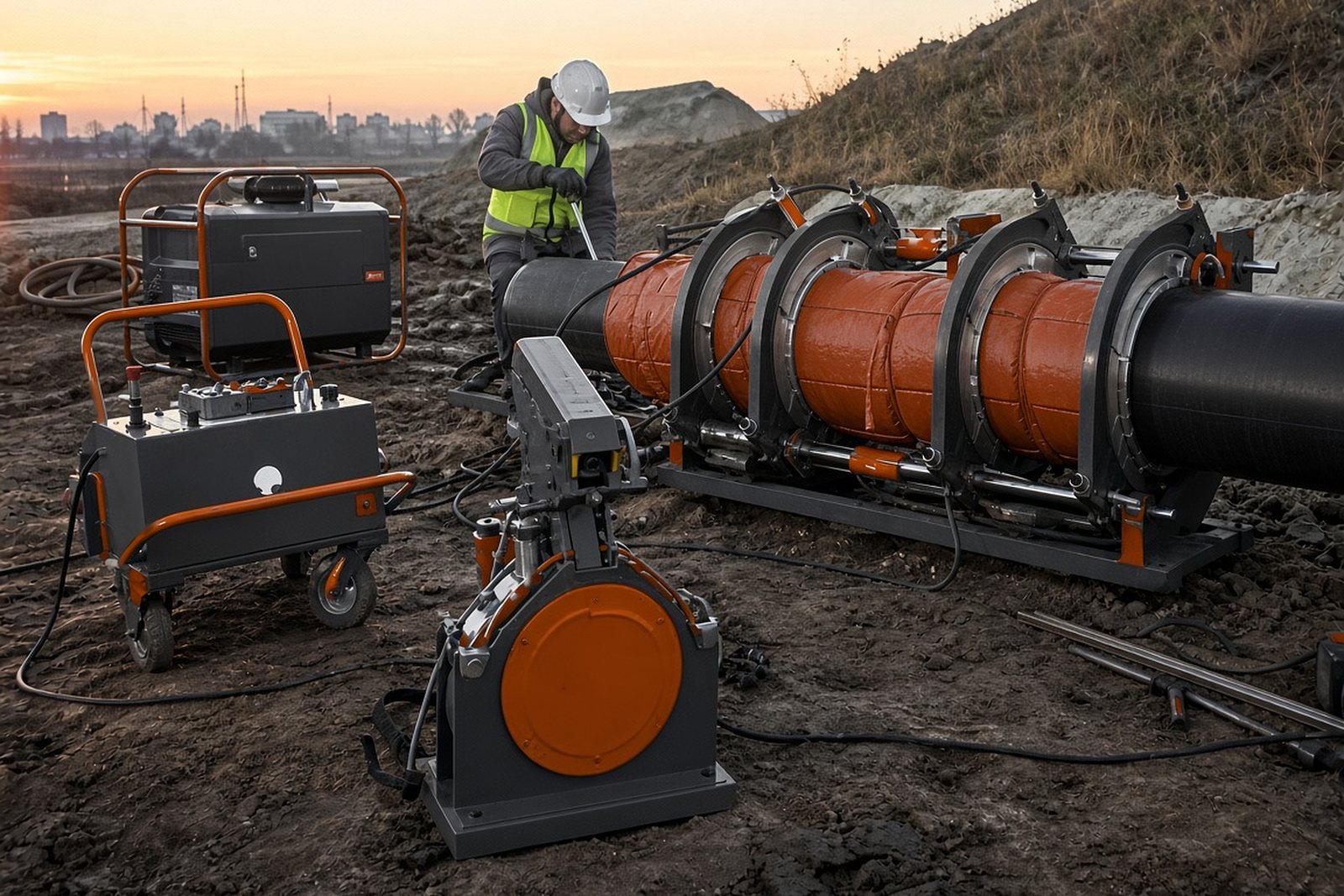
On a proper butt-fusion sequence, the facing step comes before heating, then changeover, fusion pressure and the cooling period. If the face is not square, the heater plate will not make even contact and the bead may end up heavier on one side. That can affect bead shape, fusion pressure control and the final inspection of the weld. A sharp blade set gives the operator a better start and cuts down on rework at the joint.
- Clean the facer body before installing the blades
- Check carrier movement and blade clearance
- Test the face on a short pipe section first
Care, wear signs and workshop habits
Blade care is mostly about keeping grit off the cutting edge and stopping the set from running dry and hot. Clear swarf and residue off the blades after use and store them away from damp and knocks. A nick in the edge can start chatter on the next job, especially where the pipe wall is thick and the facer is under heavier load.
Operators often notice wear in a few plain ways: rough faces, more vibration through the handle, slow cutting and a finish that needs extra trimming. A set that starts to pull at the pipe face needs its edge and mounting points inspected. Keep a spare blade set with busy site machines.
- Remove swarf after each use
- Keep the set dry and safe from impact
- Watch for chatter, drag and rough pipe faces
- Fit new blades before the final cut begins to wander
What to send with your order details
Blade set matching needs the machine type, pipe size range and a note on the current blade layout. Mention the largest pipe diameter the machine covers and whether the job mixes sizes. That helps match the cutter set to the work it sees most often.
State whether the blades fit a complete butt-fusion machine, a standalone facing tool or a hire unit. If there are signs of bearing wear, loose carriers or uneven clamp alignment, mention that. The blade set may be only one part of the fix, and a cutter that runs against a tired frame will not hold its edge for long.
- Machine model and facer type
- Blade count, shape and fixing style
- Signs of chatter, rough cut or pull marks
- Any service notes on the carrier or clamp line-up
Support for sites and hire fleets
Facer blade sets are kept in stock. Change the blade set when the shavings tear or come off uneven. For crews training new operators, a sharp and correctly fitted blade set makes the first facing pass easier to read and easier to repeat.
Before a hire machine leaves, the cutter is checked. The operator then has a facer that cuts square ends with a steady feed. The blade sets the face quality for the rest of the joint.
Key facts
| Product | Facer Blade Sets |
|---|---|
| Use | Replacement cutting blades for HDPE butt-fusion facer units |
| Pipe sizes | Match to machine range and blade carrier layout |
| Typical job use | Replacing worn facer blades |
| Material support | HDPE pipe across common SDR ranges |
| Service fit | Site machines, hire fleets and workshop equipment |