A cover that sits around the fusion area
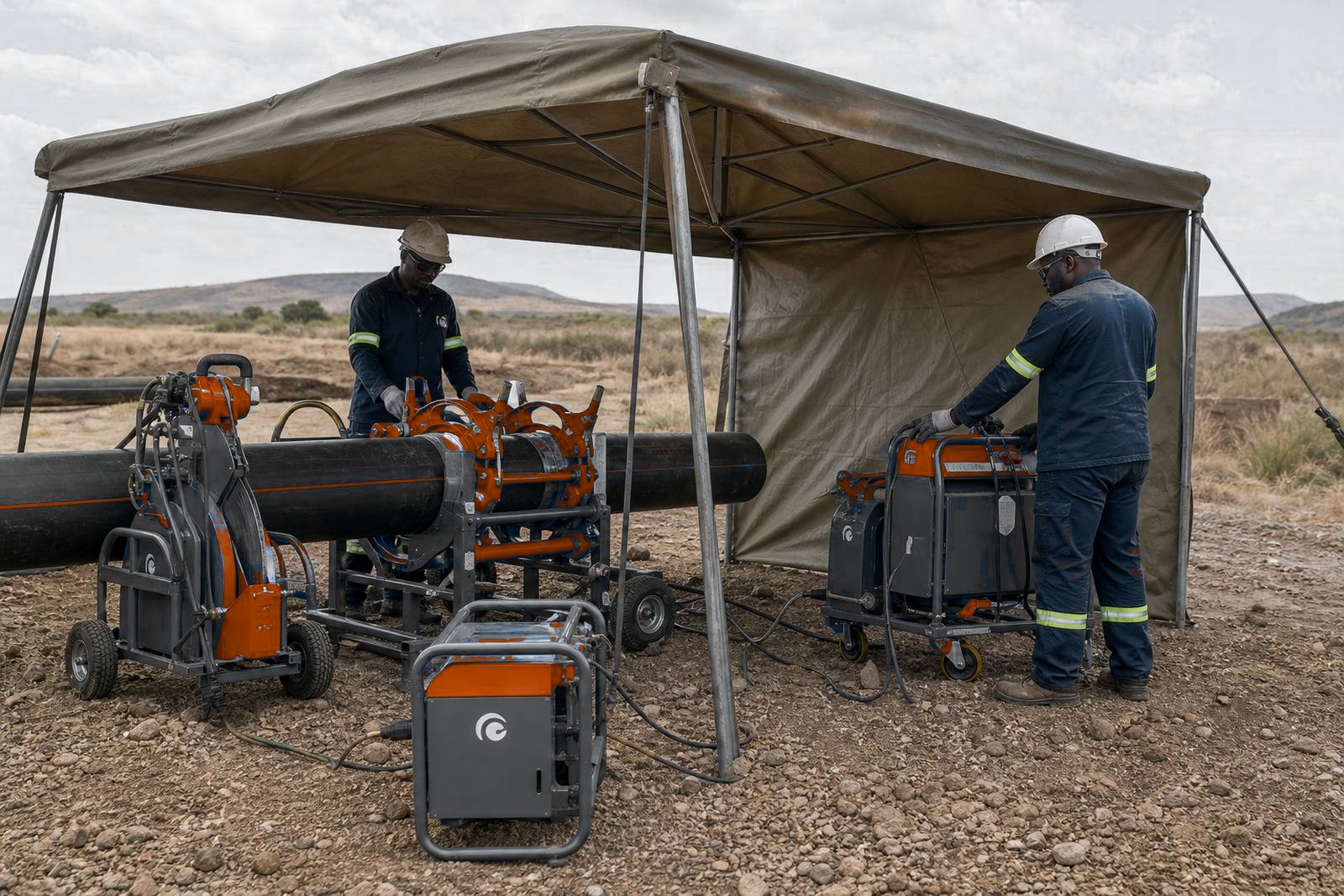
The Weather Shelter Kit is a portable site cover made for butt-fusion work on HDPE pipe. The shelter gives machine and operator a protected zone with room for pipe ends, carriage and plate.
The kit is used where weather can disturb the bead or contaminate prepared faces. Wind can cool the ends too fast, dust can settle on the heated surface and rain can leave moisture on the pipe before clamping. A fitted shelter helps keep the weld area cleaner, and more stable during the full fusion sequence.
- Portable cover for fusion work in the field
- Helps shield the weld area from rain, wind and dust
- Suitable for pipe crews working on open sites
Sizes and layout choices for pipe crews
The shelter is usually picked around pipe diameter, machine size and the room needed for handling long lengths or shorter cut pieces. Smaller kits suit compact repairs and utility lines, while larger covers work better for long runs and heavier machines used on mining jobs. Check the opening height gives the operator room to set alignment and watch the bead during heat soak.
Where the job uses larger SDR ranges, the pipe wall thickness and clamp arrangement can change the footprint. A wider shelter leaves space for pipe supports, staging and inspection after cooling. Where wind and coastal moisture shift quickly, set a tighter perimeter around the work area.
- Sizes matched to pipe OD and machine footprint
- Options for smaller repairs or long-run installation work
- Useful clearance for alignment checks and bead inspection
- Works around short lengths, coils and straight pipe sections
Using the shelter during fusion
Weather can interfere with every one of those steps. The shelter helps the crew keep the facing area dry, reduces airborne grit and gives the operator a more predictable zone for timing the fusion cycle.
A long run of welds needs the same joint quality from first to last. Pipe arriving at varied lengths and open crosswind sites are where shelters help most. The shelter gives the machine and operator a better environment to work in while good technique stays essential.
Fitting needs and site setup details
The kit is normally set out before the first weld is prepared. The frame or support points need to sit on level ground, with enough room for pipe feed, operator movement and inspection of the finished bead. If the site is uneven, the crew may need packing or base support so the shelter stays steady while the machine clamps are loaded and released.
Place the shelter clear of lifting gear, vehicle access and trench-edge limits. The setup also needs enough working space for data logging if the crew records weld settings, pipe size and cooling time. A practical fit gives the operator room to work without squeezing the machine or fouling the pipe ends.
- Level ground helps keep the cover stable
- Check access for lifting, loading and joint inspection
- Useful where weld records and job notes are kept on site
Care, cleaning and storage between jobs
After use, the shelter should be shaken free of dust, wiped down and packed so the fabric or panels do not hold moisture. On coastal jobs, salt air can leave a fine film on fittings and fasteners, so a regular clean helps the kit stay serviceable. If the shelter has straps, joints or hinges, those parts should be checked for wear before the next deployment.
Dry storage is the second half of cleaning. A folded cover left wet in a truck or container can pick up odour, corrosion or dirt that later drops into the weld area. Keep the kit dry, keep the fasteners together and inspect any damaged section before it goes back into the field.
What to confirm before ordering the kit
Shelters are sized to the machine frame, pipe range and site conditions. Crews often ask for a cover that fits both hire machines and their own equipment, so give us both machine models. Size the shelter to clear the clamps and the pipe support arrangement.
Shelter enquiries should list the pipe diameter range, SDR range, whether the job is trench side or yard based, and whether the shelter must fit a transport trailer or service vehicle. Give us the pipe size and machine model and we size the shelter to that setup.
- Pipe OD and SDR range
- Machine frame dimensions and clamp travel
- Job type and site exposure
- Transport space and storage method
Key facts
| Product type | Portable weather shelter for HDPE butt-fusion work |
|---|---|
| Use area | Fusion zone and operator area |
| Typical application | Rain, wind and dust control around facing, heating and cooling |
| Fit range | Sized to suit pipe diameter, machine frame and site layout |
| Site use | Fusion in wind, dust or rain |