Centring the pipe before the heater plate comes in
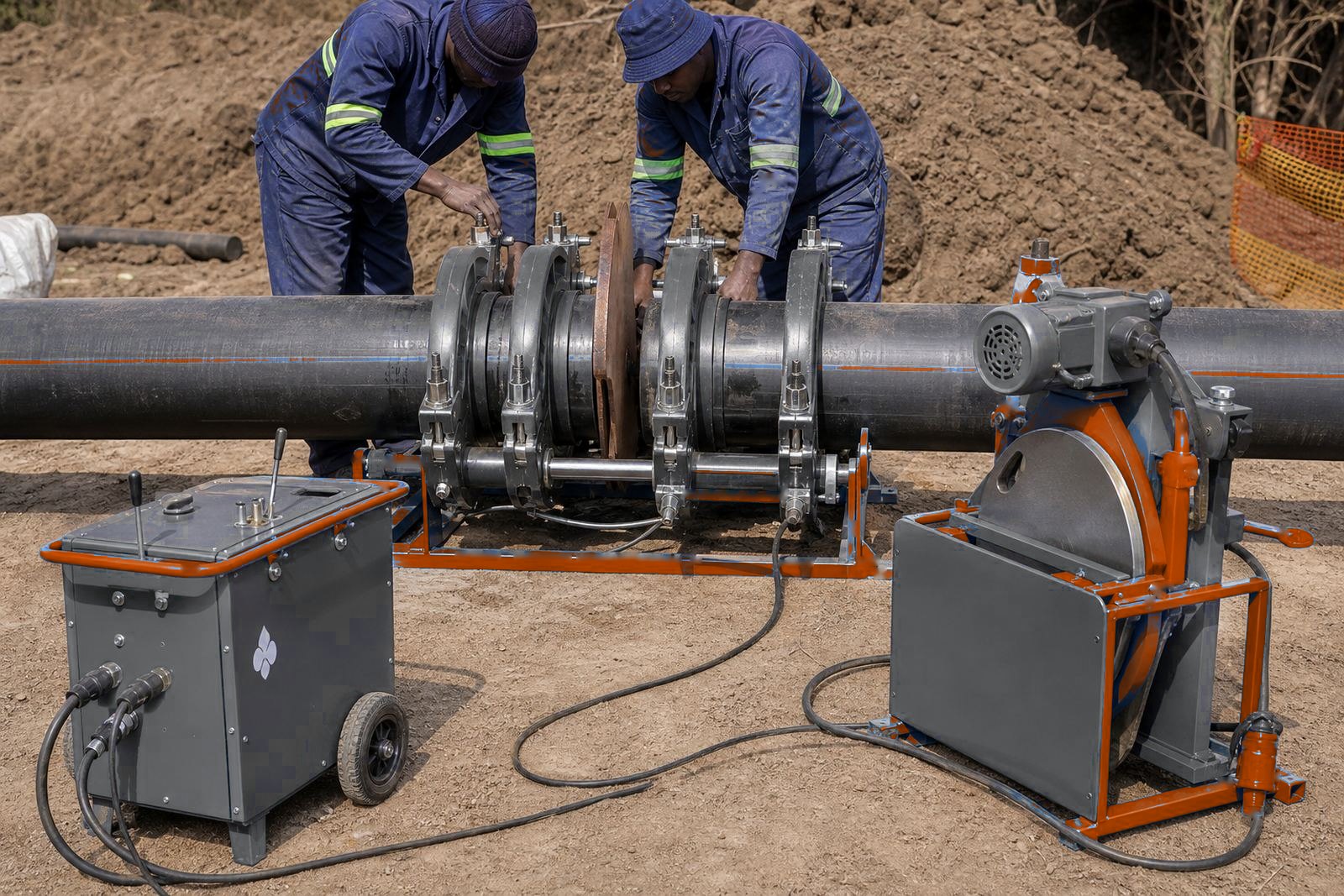
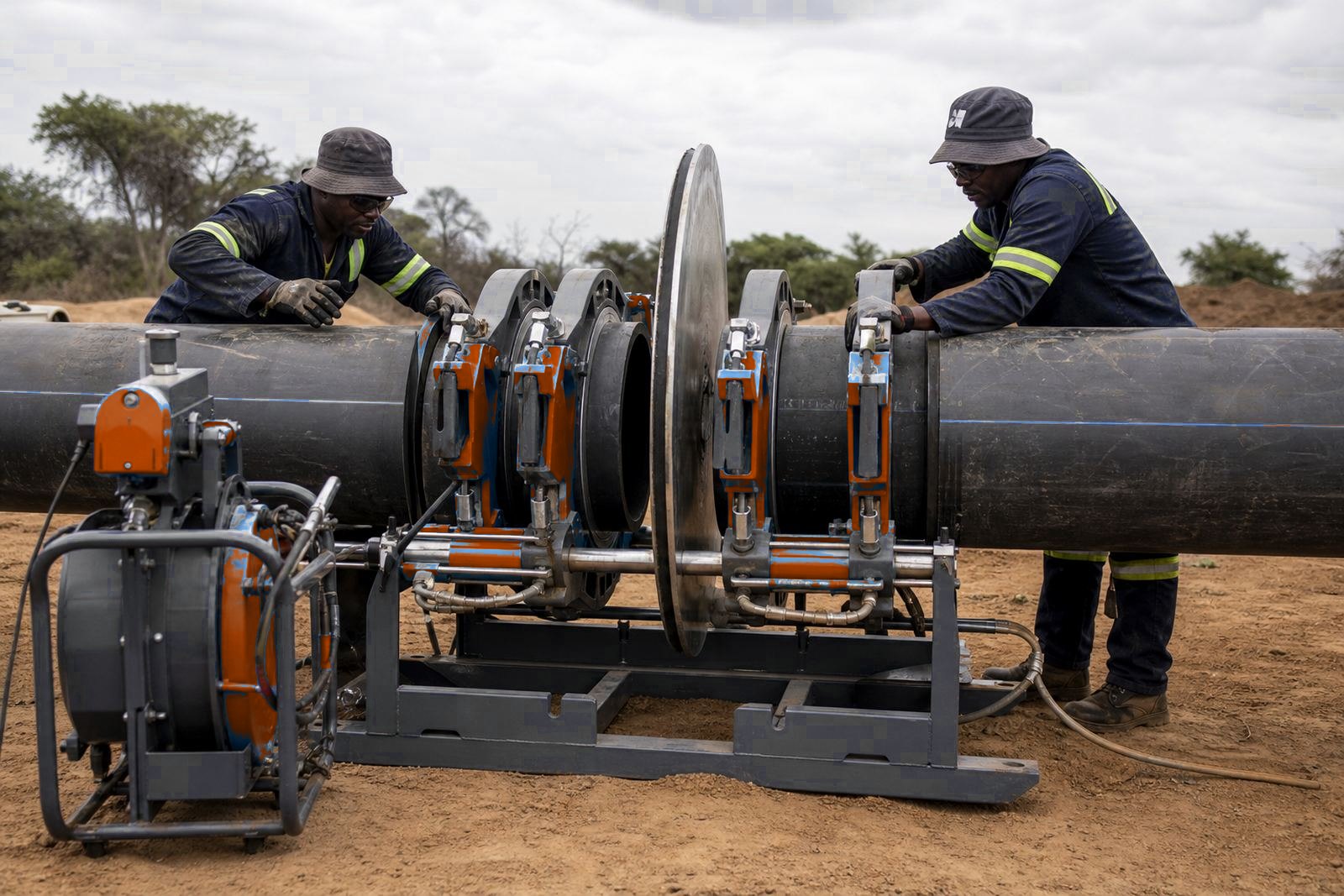
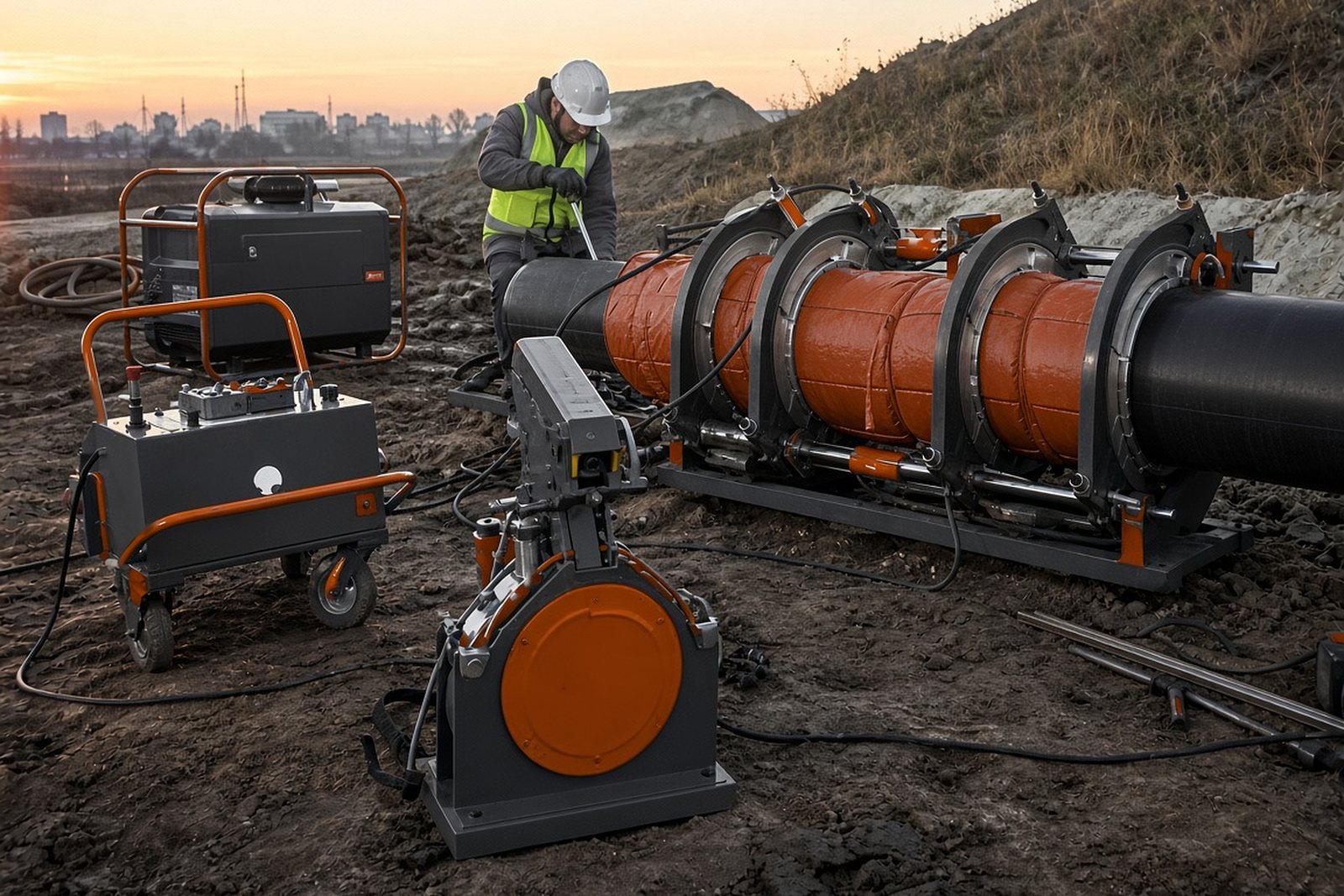
A Basic Clamp Set is used during the preparation stage of butt-fusion welding for HDPE pipe. The clamp inserts and rings hold both pipe ends in line, so the facer can trim clean square faces and the heater plate can sit evenly across the joint area. Off-centre pipe in these clamps gives an uneven bead and patchy face contact at changeover.
On the ground, this applies on water reticulation jobs, pump lines and yard pipework where the pipe has to be held still before the weld is made. The clamp set holds both pipe ends on one centre line through facing, heating, fusion and cooling. It supports a neat fit-up, then releases once the joint has completed cooling and the pipe can be handled without disturbing the bead.
- Used for prep, alignment and holding before fusion
- Supports straight pipe ends for facing and heating
- Helps keep the joint axis true during changeover
- Works with standard HDPE pipe diameters in the clamp range
Sizes, inserts and ring pairs that match the pipe
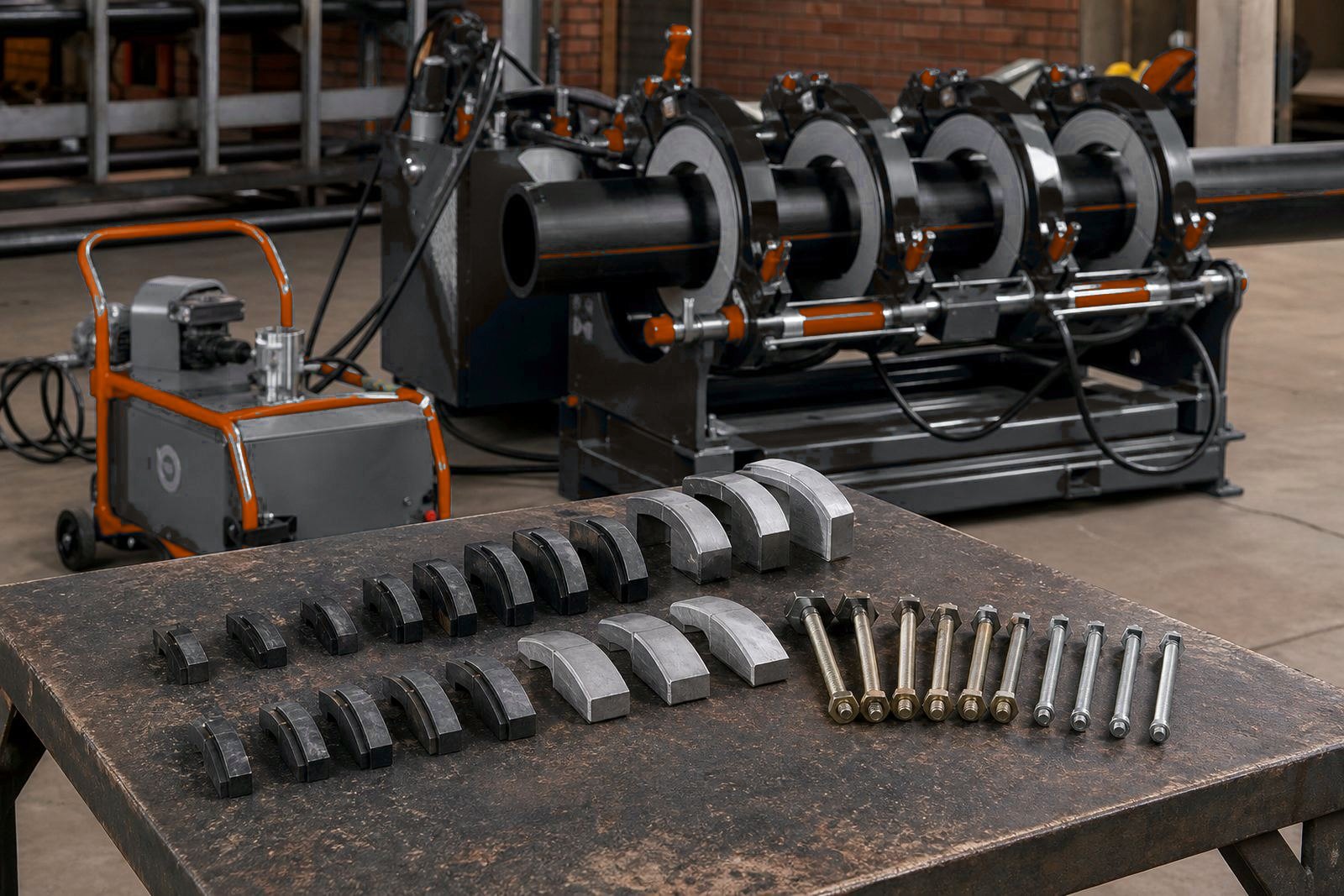
Clamp sets are selected around the pipe outside diameter and the machine frame they will sit in. Insert rings are sized to the pipe, and the jaws grip SDR pipe without crushing the wall. Contractors often ask for sets matched to the common pipe sizes they run most often, so the same tooling can be used across water, sewage and service lines where the pipe wall thickness changes with the SDR.
The right set needs to fit the actual pipe and the nominal size on the drawing. Inserts for 63 mm, 90 mm and 110 mm lines differ, and each face width must let the pipe sit square in the clamp body. Check the clamp sizes against the pipe before collection.
- Common clamp diameters are matched to the machine frame
- Insert rings must suit the actual pipe outside diameter
- Grip should hold SDR pipe without marking the wall
- Used across standard HDPE sizes from smaller service work to larger mains
Where the clamp set is used on site
Basic Clamp Sets suit crews who need the pipe held correctly before fusion. The basic clamp set suits trench lines where the pipe must be set up, faced and welded without side pull.
In hot weather, pipe on an exposed site can move as it warms in the sun. A steady clamp set reduces that movement during prep. Shift work with many repeat joints keeps the same line-up from one section to the next.
- Suitable for field welding and workshop prep areas
- Useful on straight runs and repair sections
- Helps manage pipe movement in heat and wind
- Supports consistent line-up across repeated joints
Fit-up, alignment and the steps around the weld
The clamp set works with the rest of the butt-fusion sequence. After the changeover, the joint is brought together under the set fusion pressure, then held still through the cooling time so the molten interface can set without twist or pull.
Good clamping helps the operator read the bead after the weld cools. A uniform internal and external bead is easier to inspect when the pipe was centred at the start, so these clamp sets are serviced on a schedule. On data logged jobs, the clamp setup also supports cleaner records because the pipe sits consistently in the machine before the weld cycle is noted.
- Used before facing, heating, changeover and fusion
- Supports even pressure across both pipe ends
- Helps bead inspection after cooling
- Makes logged welds easier to repeat with the same set-up
Keeping the set clean, square and ready for the next joint
Clamp inserts and rings should be kept free of grit, mud and weld residue. Grit on the jaws can score the pipe surface and small build-up around the ring faces can upset alignment. After site use, the set should be wiped clean and checked for wear, especially where the insert meets the pipe contact point. If a clamp has been bent, the pipe may sit off-centre even when it looks tight by hand.
In workshop and hire fleet use, inspect the clamps after every job. Clamp set inspection covers the locking action, ring cracks and even closing on both sides. On machines used around dusty roads or coastal humidity, the moving parts need attention so the clamp action stays free and the pipe still seats properly. The set carries the first load of the weld, so check that it stays true.
- Wipe off dust, slurry and weld residue after use
- Check inserts for scoring, cracks and bending
- Test locking action and even closure on both sides
- Keep contact faces dry and free from corrosion build-up
The details to confirm before you order
Clamp set orders need the pipe diameter range, the machine frame or carriage, and whether inserts are for one size or a mixed set. Confirm the pipe wall range you run most often, because SDR changes how the pipe sits in the clamp and how much grip is needed at the jaw face. If the set will be used with a facer and heater plate on the same machine, the clamp opening and alignment path should suit that equipment layout.
Put the exact pipe sizes on the request so the clamp inserts can be matched before dispatch. List the nominal diameter, the SDR, and whether the work is on new install lines or repair joints. If the set is needed for training use, note it on the order so the right configuration is supplied.
- Pipe outside diameter and SDR
- Machine frame or carriage fitment
- Single-size or mixed insert requirement
- Job type: new install or repair
Key facts
| Product | Basic Clamp Set |
|---|---|
| Use | Pipe centring and holding during HDPE butt-fusion preparation |
| Pipe range | Size dependent, matched to the clamp insert set ordered |
| Material | Metal clamp body with matching inserts and rings |
| Typical use | Holding HDPE pipe square for fusion |
| Fitment note | Must match the machine frame and pipe outside diameter |