Facing work that sets the joint up properly
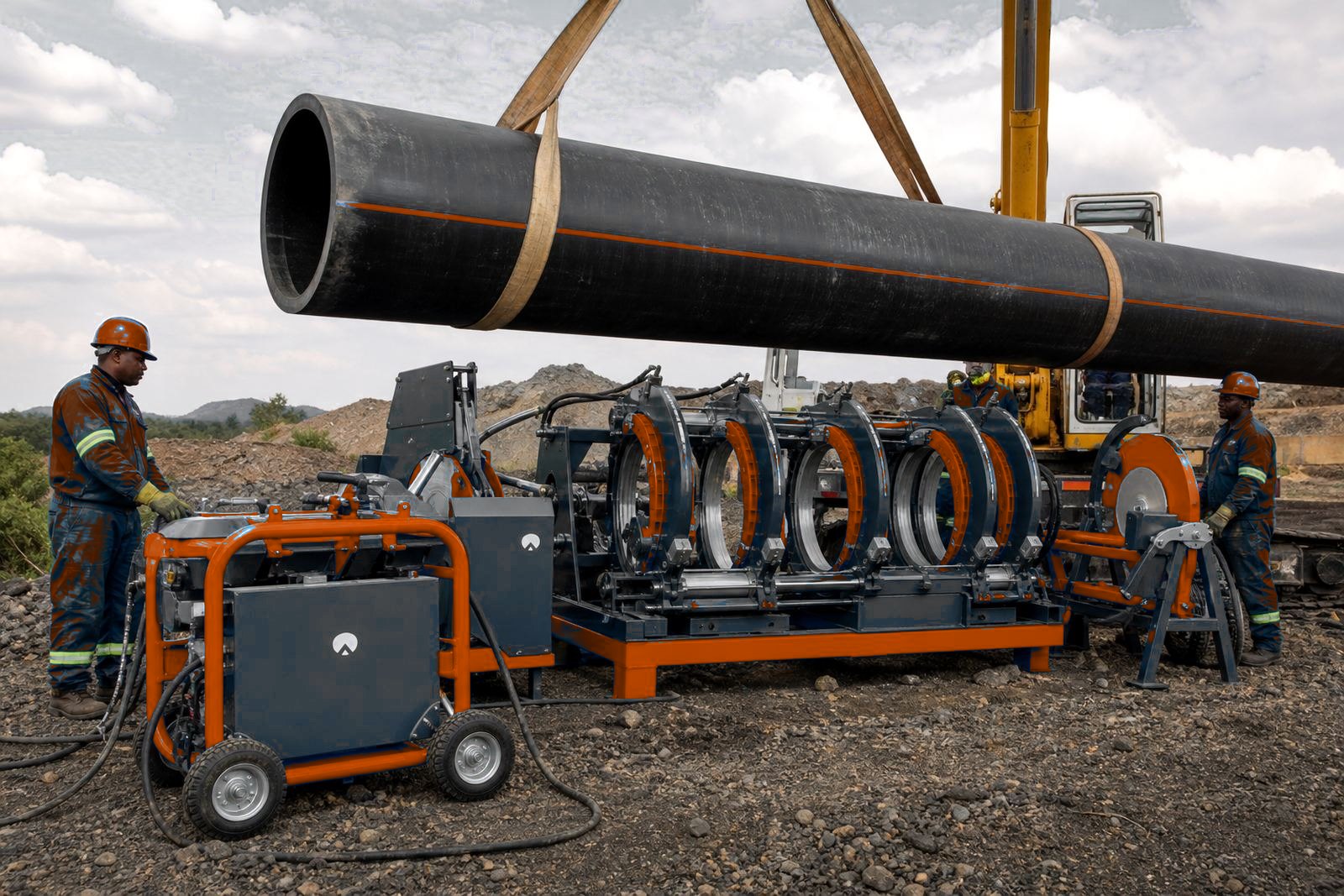
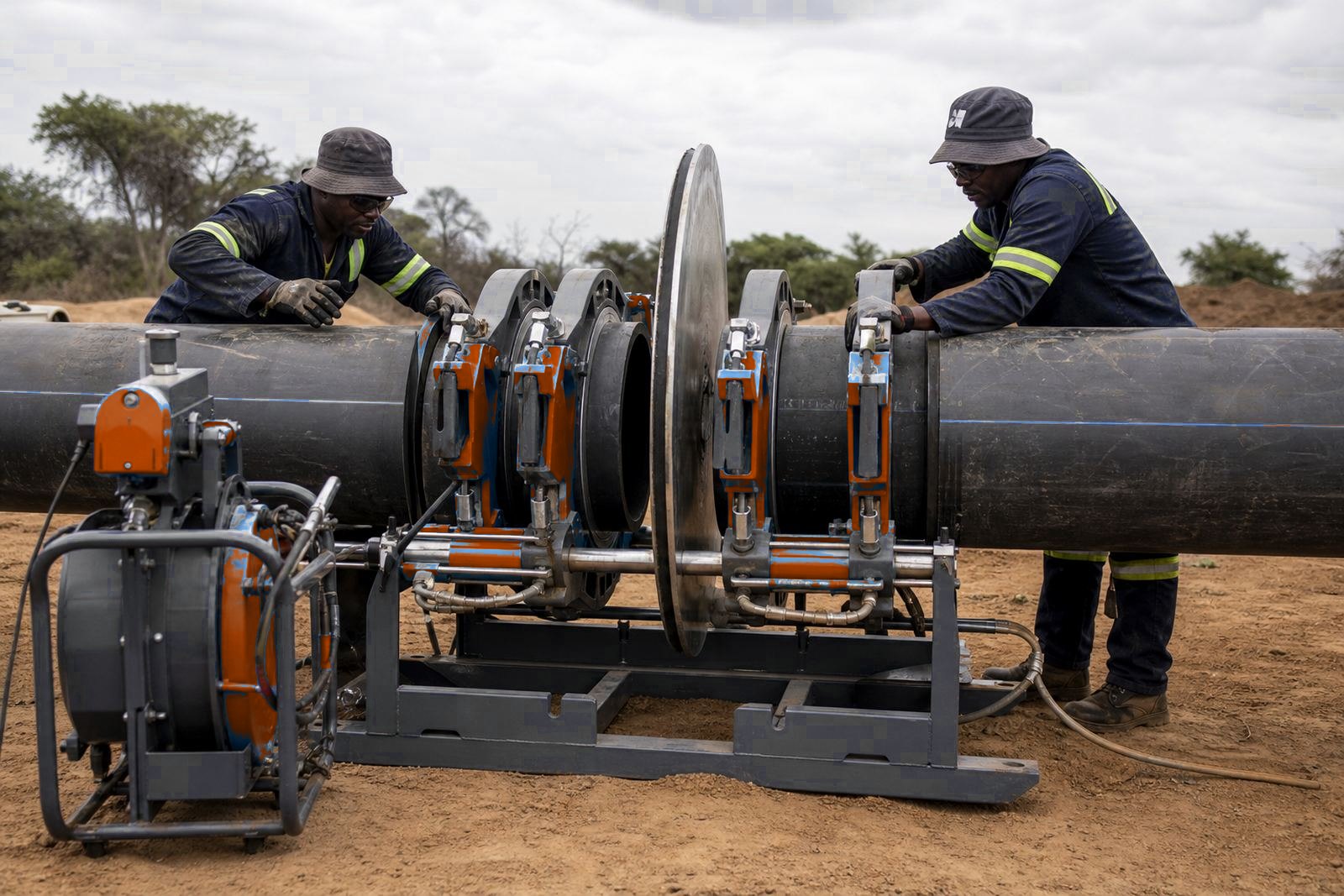
Large facer cuts trim both pipe ends back to a fresh, square face. On larger HDPE lines, even a small skew can leave one side proud, which affects alignment, bead formation and the final fusion pressure. This unit is used after the pipe is clamped and before heat soak starts, so the cut face meets cleanly across the full width.
It is the kind of tool used when the joint face is broad and the wall thickness gives the operator more material to remove. For bigger diameter pipe the facing step sets the reference for changeover, bead symmetry and the cooling hold that follows the weld.
- For large OD HDPE pipe in butt-fusion sets
- Used after clamp-up and before heating
- Helps keep the trimmed faces parallel
- Suitable for on-site bead inspection
Pipe sizes and fusion ranges it is built for
The tool is specified for larger diameter pipe beyond the reach of a standard hand facer. It is commonly matched to workshop and site machines handling medium to heavy wall HDPE, including SDR ranges used on pressure water lines. The carriage and clamp set it is paired with fix the exact diameter range.
When ordering, match the facer to the machine frame and the largest pipe you plan to process, including the everyday sizes on the yard. If a project moves between 250 mm, 315 mm and 355 mm pipe, the facing head and drive arrangement must suit the full working range.
- Typical use on larger OD HDPE pipe
- Match to SDR and wall thickness on the job
- Check carriage width and clamp opening
- Confirm the largest and smallest pipe size in use
Pipe sizes and jobs for the large facer
The large facer suits municipal water lines where wide pipe ends need a steady trim before the weld cycle starts. Yards making repeat joins for long runs, spool pieces and repair sections use the large facer daily. A larger facing head gives better control when the pipe section is awkward to rotate or when the joint has to stay true across a broad face.
On damp coastal jobs or dusty inland sites, grit, moisture and pipe ovality can spoil the cut, so clean the pipe before facing. Operators often use the facer with clamp checks, heater plate inspection and logging notes so the joint history stays clear.
- Water reticulation and pressure lines
- Yard work with repeated butt-fusion joints
Fitting, drive and workshop handling
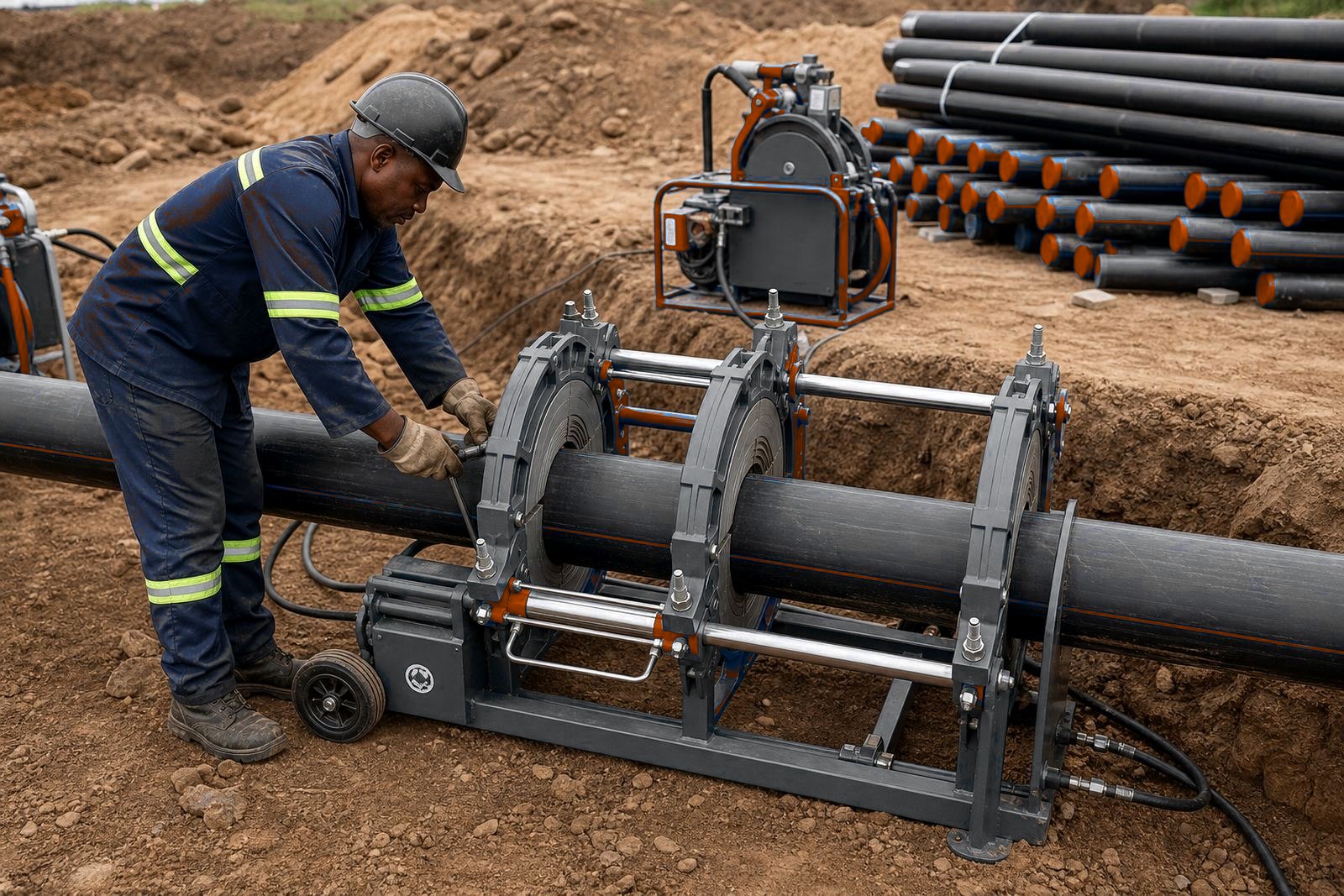
The tool normally sits in the butt-fusion machine frame and runs from the machine’s drive arrangement, so fit-up needs to match the carriage, clamp layout and facing spindle position. Powered facers need a matching supply and an operator who knows the start, feed and stop sequence. The tool should sit square in the frame with enough clearance for full travel and chip removal.
Before use, check that the blades are sharp, the guide surfaces are clean and the pipe sits concentric in the clamps. A poor fit on the machine makes one side shave faster than the other, so the bead is lopsided.
- Frame and carriage compatibility
- Clearance for full facing travel
- Blade sharpness and chip removal
- Pipe centring in the clamps
Care that keeps the cut face square
Service the large facer after every job. Keep the blades clean, inspect wear on the cutting edges and remove plastic chips before they pack into the guide path. If the tool has moving parts or drive components, check for looseness and signs of strain after heavy site use. A rough-running facer leaves a stepped trim line.
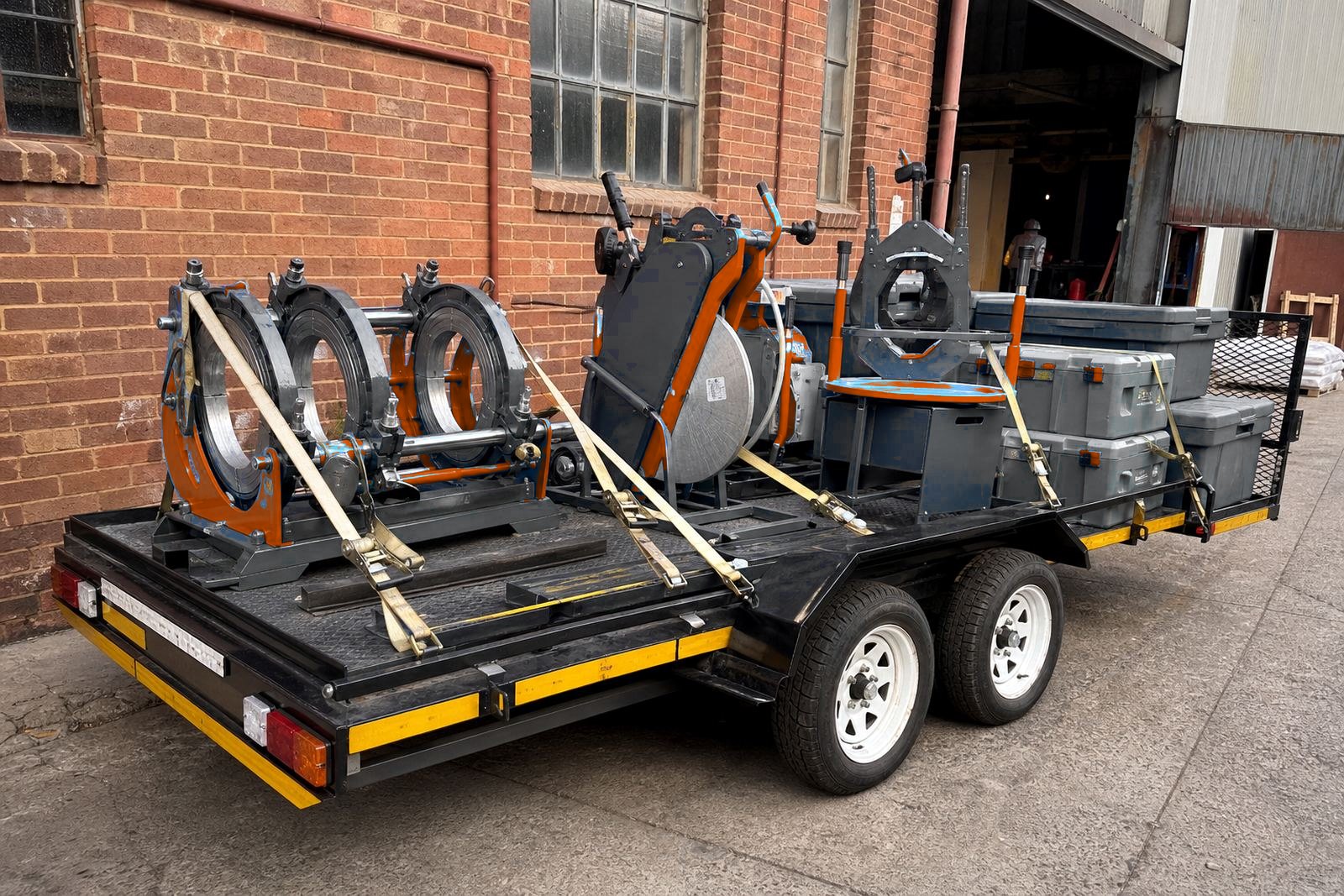
After transport or hire use, the unit should be checked for knocks, bent guides and any change in alignment.
- Clean chips out after each use
- Inspect blades and guide wear
- Check for impact damage after transport
- Store dry where rust can be avoided
What to confirm before you order one
Give the pipe outside diameter, SDR, wall thickness and the machine model or frame size it must fit. If the job is for a repair crew, include the range of diameters the team will face on site, plus whether the work is workshop based or carried to remote trenches. That helps match the facing tool to the clamp opening, drive set and the pipe handling method.
A machine check can be added to the large facing tool order. For larger butt-fusion work, the face quality, heater plate condition and clamp alignment all sit together, so the full set-up is checked as one.
- Pipe OD and SDR
- Machine frame or carriage size
- Purchase or hire request
- Site type and working diameter range
Key facts
| Product type | Large facing tool for HDPE butt-fusion prep |
|---|---|
| Pipe size range | For larger diameter HDPE pipe, matched to the machine frame |
| Typical use | Facing before heating, changeover and fusion |
| Compatible work | Facing large-diameter pipe ends |
| Key functions | Square trimming, chip removal, alignment support |