Pipe sizes that sit in the working range
This manual welder is set up for HDPE pipe from 160mm to 315mm, the range many crews use for mains, site services and industrial runs. A practical option for pipe diameters below larger hydraulic plant, while the job still needs accurate face matching and controlled fusion pressure.
- Suitable for SDR work where wall thickness stays within the machine clamp capacity
- Manual operation gives the operator direct control over pressure build-up and hold time
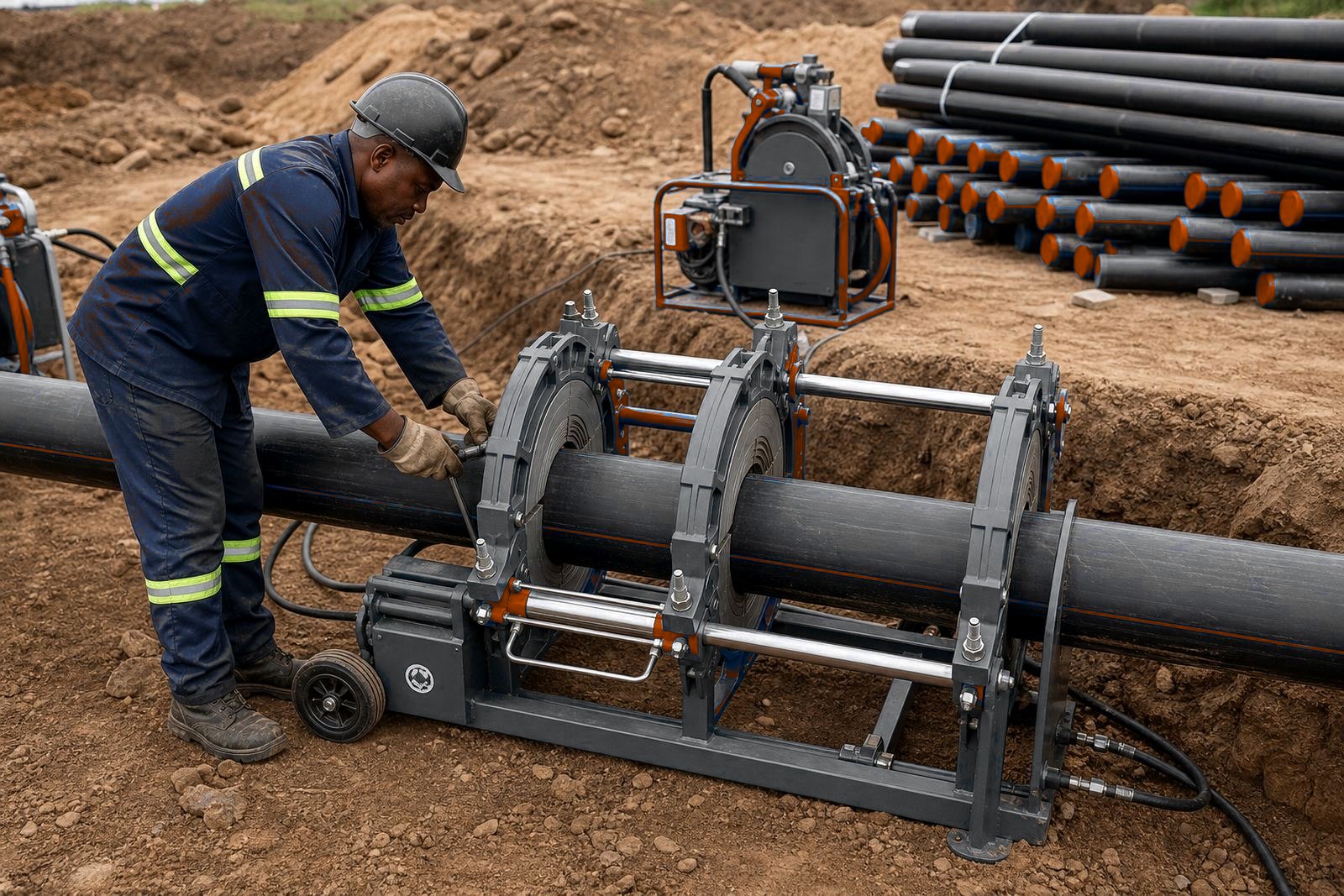
- Useful for trench work, yard fabrication and tight access installs
What the machine brings to the weld line
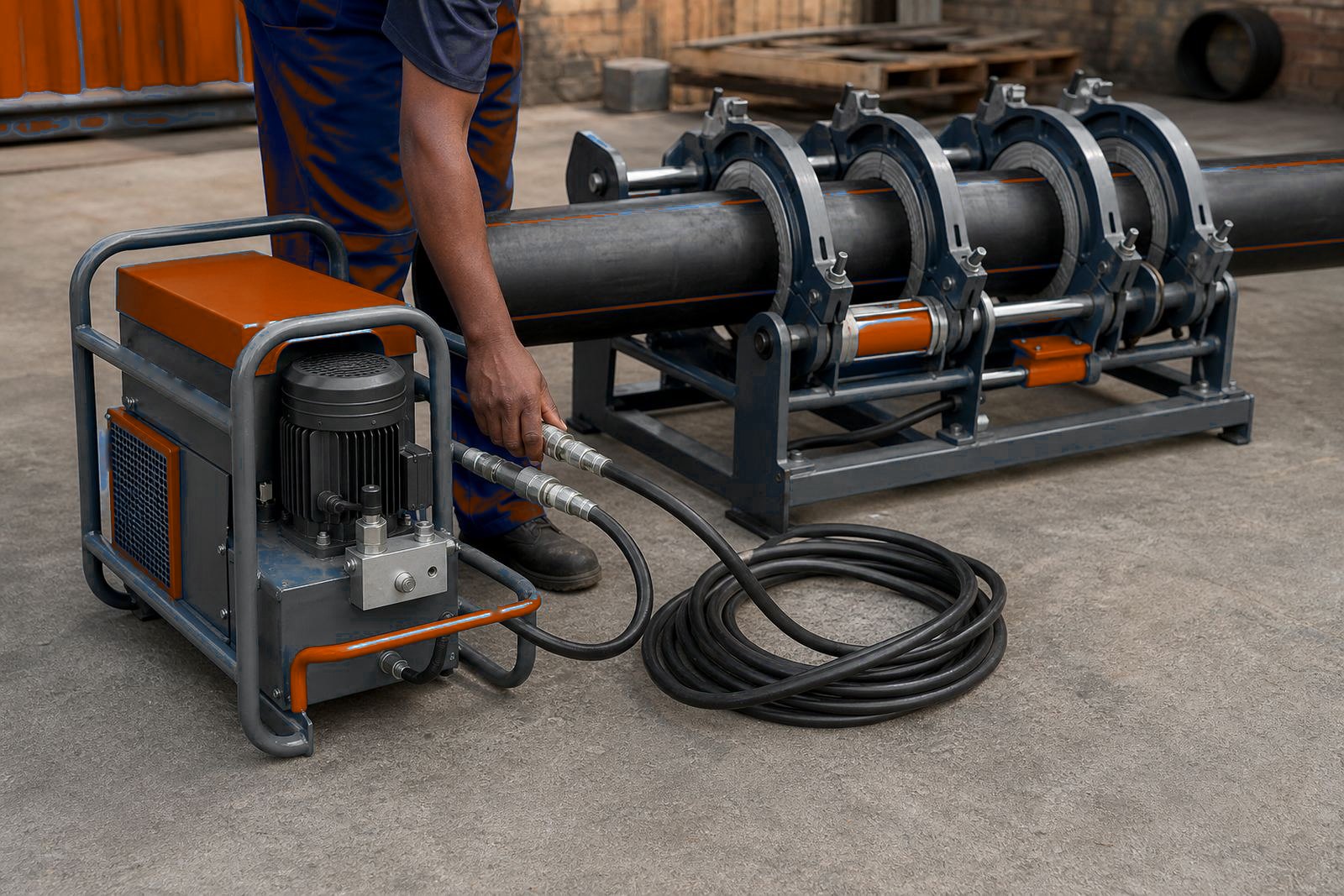
The frame is made for holding round pipe true while the ends are faced, heated and fused. On manual machines, the operator works the pressure source by hand, so the welder needs a solid bed, smooth sliding movement and clamps that stop the pipe creeping during heat soak or cool-down.
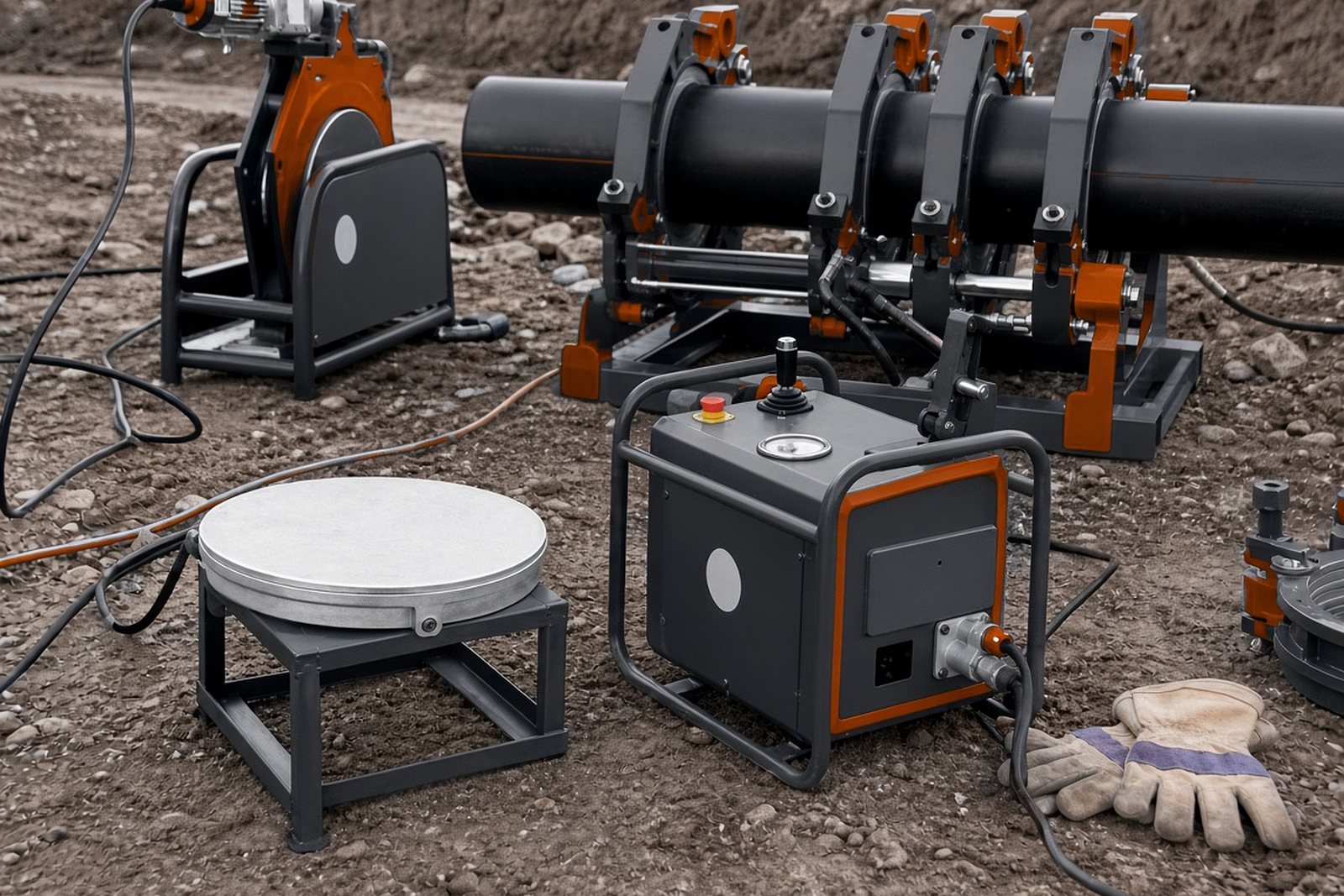
For crews working across different sites, the machine benefits from a layout that is easy to load into a bakkie or trailer and simple to set on firm ground. Look first for a clean heater plate, a facer with sharp cutting edges and straight clamps, since joint quality comes from repeatable setup and steady pressure.
- Manual hydraulic control for controlled fusion pressure
- Four clamp arrangement for stable pipe holding
- Facer fitted for square trimming before weld-up
- Transportable frame for site use and depot work
Where this welder makes sense on site
The 160-315mm manual unit suits water reticulation crews, especially where pipe lengths move around in trenches or across rough ground. It is often the right fit for jobs that are too large for hand-held joining methods but do not justify a fully automated machine.
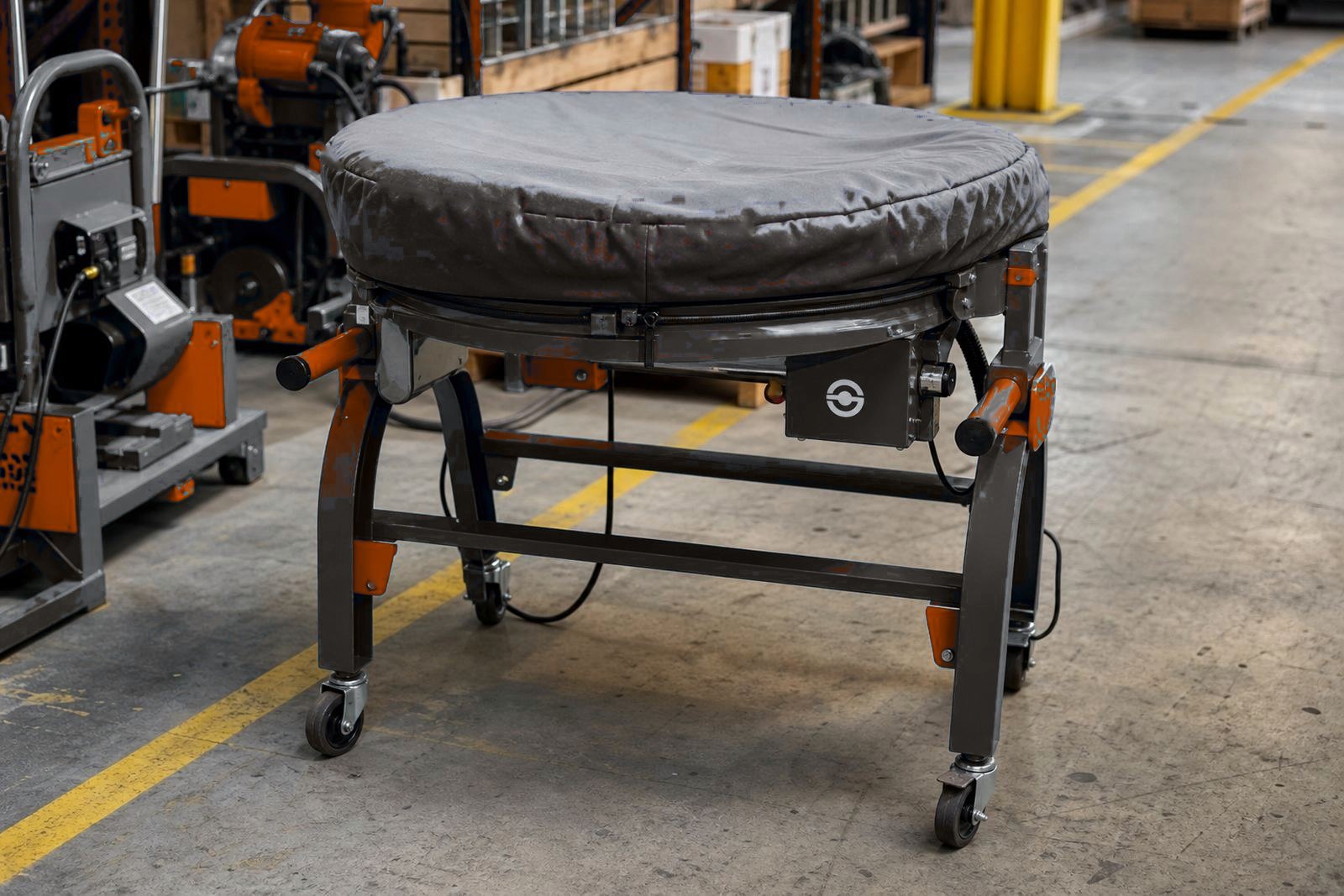
The 160-315mm frame needs clean pipe ends and the right heat cycle. Good results rely on proper pipe support, careful facing, dust control around the joint area and enough working room for the heater plate to move in and out without scraping the prepared faces. In humid coastal conditions, especially around Durban or Cape Town, keep the heater plate clean and the pipe ends dry before clamping.
For long lines, operators also need to manage bead inspection after cooling. A proper external bead should look even around the full circle, without obvious gaps, undercutting or one-sided squeeze-out that points to poor alignment or uneven pressure.
Fitting needs and jobsite setup details
This machine is used with HDPE pipe and fittings that are prepared for butt-fusion. Square cuts, clean faces and a shared axis are required before heating on this manual frame.
Installation planning covers the whole sequence, including straight pipe handling space, safe heater plate movement, dry storage for clean ends and a firm b. The work area often needs barricading and clear access for pipe handling gear.
- Used with HDPE pipe prepared for butt-fusion joints
- Works with matched pipe ends and accurate clamp alignment
- Requires space for facing, heating and changeover movement
- Best on a level, firm surface with safe operator access
- Suitable for site crews doing repeated straight-run welds
Care, servicing and weld quality control
Clean the heater plate, facer and clamps after every shift. The heater face should stay clean, the facer blades or cutters need checking for sharpness, and the clamp faces must hold without marking the pipe. Check hydraulic hoses and fittings for seepage, because a leak lets fusion pressure drift.
The machine benefits from regular checking of slide movement and pressure holding. Uneven facer pull or hot spots on the plate melt the faces at different rates. Many teams also keep weld logs so the operator records pipe size, SDR, heat soak timing, changeover, pressure and cooling time for each joint.
What to confirm before ordering
When ordering the 160-315mm manual welder, list the pipe outside diameters and SDR values on your jobs. That tells the team whether the clamps will suit the wall thickness and whether the machine frame fits the pipe lengths and site conditions you handle.
State whether the 160-315mm manual welder is for hire or purchase. Transport checks can be added for machines moving between sites. Fleets with several welders can match the heater plate condition, facer type and clamp set-up across the fleet so operators use the same settings on every machine.
- Pipe OD range and SDR values used on your jobs
- Site type: trench work, yard fabrication, plant area or municipal route
- Whether site startup help is needed
- Preferred collection point or delivery area across South Africa
Key facts
| Working range | 160mm to 315mm HDPE pipe |
|---|---|
| Joint method | Manual butt-fusion with facing, heating, changeover and cool-down |
| Pressure control | Hand-operated hydraulic pressure application |
| Pipe fit | Suitable for common SDR pipe wall thicknesses within clamp capacity |
| Main components | Frame, clamps, facer and heater plate |
| Typical use | Mains and site services from 160mm to 315mm |