
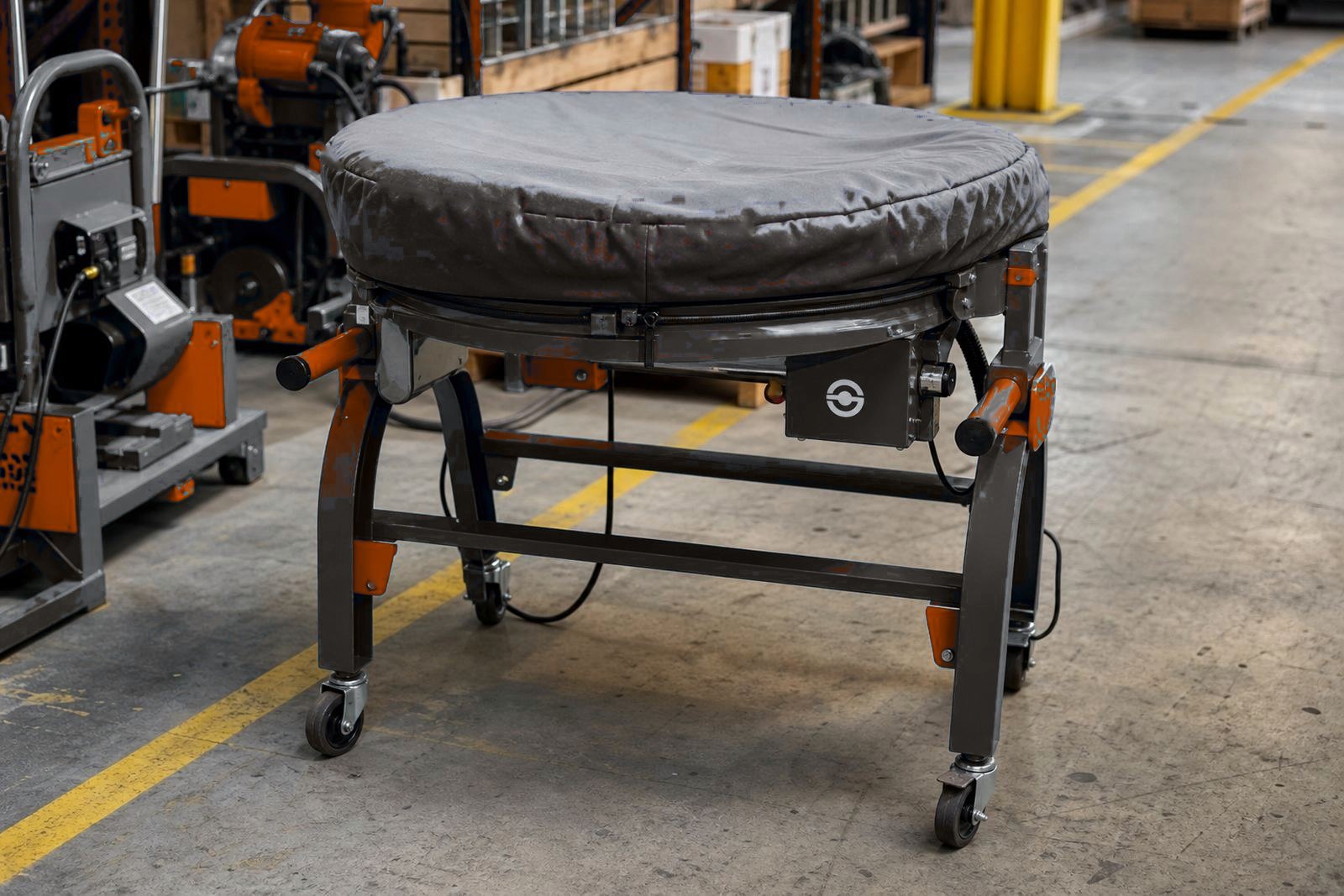
A cleaner layer over the heated face
The cover guards the coated face from dust, grit, spatter and handling marks. Between yards, pumps, trenches and truck beds, the cover gives the plate a cleaner carry while it is not in use.
These covers are for heater plates used in HDPE butt fusion, where the plate brings both pipe ends to fusion temperature before changeover and pressure is applied for the weld. A damaged coating can leave marks on the pipe face, so a neat cover is part of normal kit care.
- Protects coated heater surfaces during storage and transport
- Helps keep dust and grit off the fusion face
- Supports cleaner handling between weld sets
- Useful for hire fleets and workshop storage
Sizes and fit options for common plate shapes
Heater plate covers are made to suit common rectangular plate forms used on butt-fusion machines. The right cover matches the working face length and width, with enough depth to cover the plate without forcing the edges. On larger sets, the cover should also allow for handles or mounting points where those sit proud of the frame.
Covers are made for compact plates on small diameters and wide plates on heavy machines. Where the plate has a dedicated carry handle, a side cut-out or a hinged storage position, that detail guides the fit choice.
- Match the working face length and width
- Check handle position and depth of the plate body
- Confirm whether the plate stores flat or in a cradle
- Ask about covers for single-plate or paired heater setups
Jobs that use heater plate covers
These covers suit contractors who move between depots, laydown areas and live work zones. They are common where a heater plate may be loaded, unloaded and stored more than once in a shift.
They also help on hire fleets. Trailers, bakkies and toolbox bays coat plates in dust that transfers to the hot face later. On coastal routes to Durban or Cape Town, the cover also gives the plate a cleaner barrier when salt air and moisture are part of daily transport.
- Workshop storage between welding days
- Vehicle transport to remote sites
- Service rooms where equipment is stacked with other tools
Fitting, handling and plate care on site
The surface should be free of loose debris before the cover goes on, because grit trapped under a cover can mark the coating during movement. Warm plates are left to cool fully before the cover goes on and the unit is stored.
For crews running repeated welds, the cover should be removed only when the plate is being set up for the next cycle. It is best kept dry and stored where it will not fold sharply over hot edges or sharp frame corners.
- Fit after the plate has cooled enough for handling
- Brush off dust before covering the surface
- Store dry and out of sharp edges or loose swarf
- Inspect stitching, corners and fastening points regularly
Details to confirm before ordering
Order the cover to the exact heater plate size in use. Measure the coated face, since some plates are wider than the main frame or have an offset handle. Give the plate size, the machine type and whether the plate is carried flat or upright.
Note whether the cover is for a workshop unit, a hire machine or a field machine that travels between sites. That tells us how much handling the cover will see and whether extra reinforcement at the edges would be sensible for your work.
- Plate shape, handle position and mounting style
- Machine make and model if available
- Single unit or multiple covers for a fleet
- Site use, hire use or workshop storage
Keeping the cover and heater plate in workable condition
Good care is plain and practical. Wipe the cover clean, check for tears, and keep it away from cutting tools, hot metal offcuts and oily rags. Plates used in rain or dusty trenches are dried before they go back under cover. A dry fit avoids trapped moisture and keeps the plate easy to inspect.
Put the cover on the heater plate after each use, once the face has been cleaned. It protects the heater plate when the job starts. It helps the equipment arrive cleaner when the job starts.
- Clean and dry before storage
- Keep away from sharp tools and grinder dust
- Replace worn covers before they start fraying
- Include the cover in fleet checks
Key facts
| Product type | Protective heater plate cover for HDPE butt-fusion equipment |
|---|---|
| Use | Transport and storage protection for coated heater surfaces |
| Typical fit | Rectangular heater plates on small to large fusion machines |
| Material | Tough protective outer cover with reinforced edges |
| Finish protection | Helps reduce dust, grit and handling marks |
| Coverage | Sized to match working face, handle position and plate depth |