Built for larger diameter HDPE butt fusion
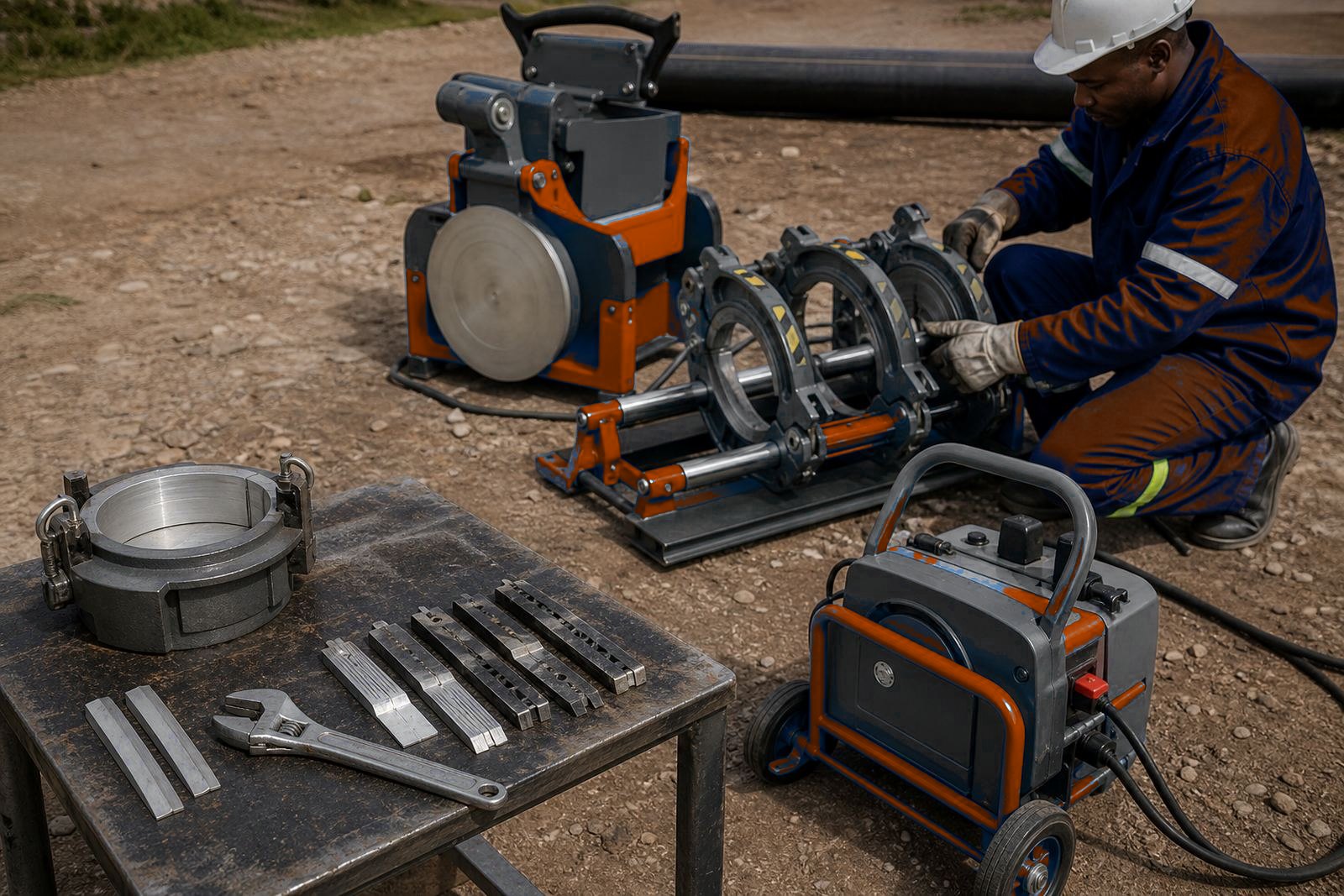
This hydraulic welder handles 250mm, 280mm, 315mm, 355mm, 400mm and 450mm HDPE pipe, depending on the jaw sets and inserts fitted. Used for butt fusion work, two pipe ends are faced true, heated on the plate, changed over cleanly and then brought together under controlled fusion pressure.
On larger pipe the clamp frame has to hold the pipe steady while the facer takes off a fine, even shaving and the heater plate brings both ends to the right melt condition. A hydraulic unit holds even pressure through heating, changeover and the cooling period that follows. For field crews, that steadiness helps keep the bead shape consistent and the line on grade.
- Pipe range: 250mm to 450mm
- Fusion method: hydraulic butt fusion
- Pipe material: HDPE
- Suitable for straight lengths, fabricated runs and site repairs
What the machine brings to the job
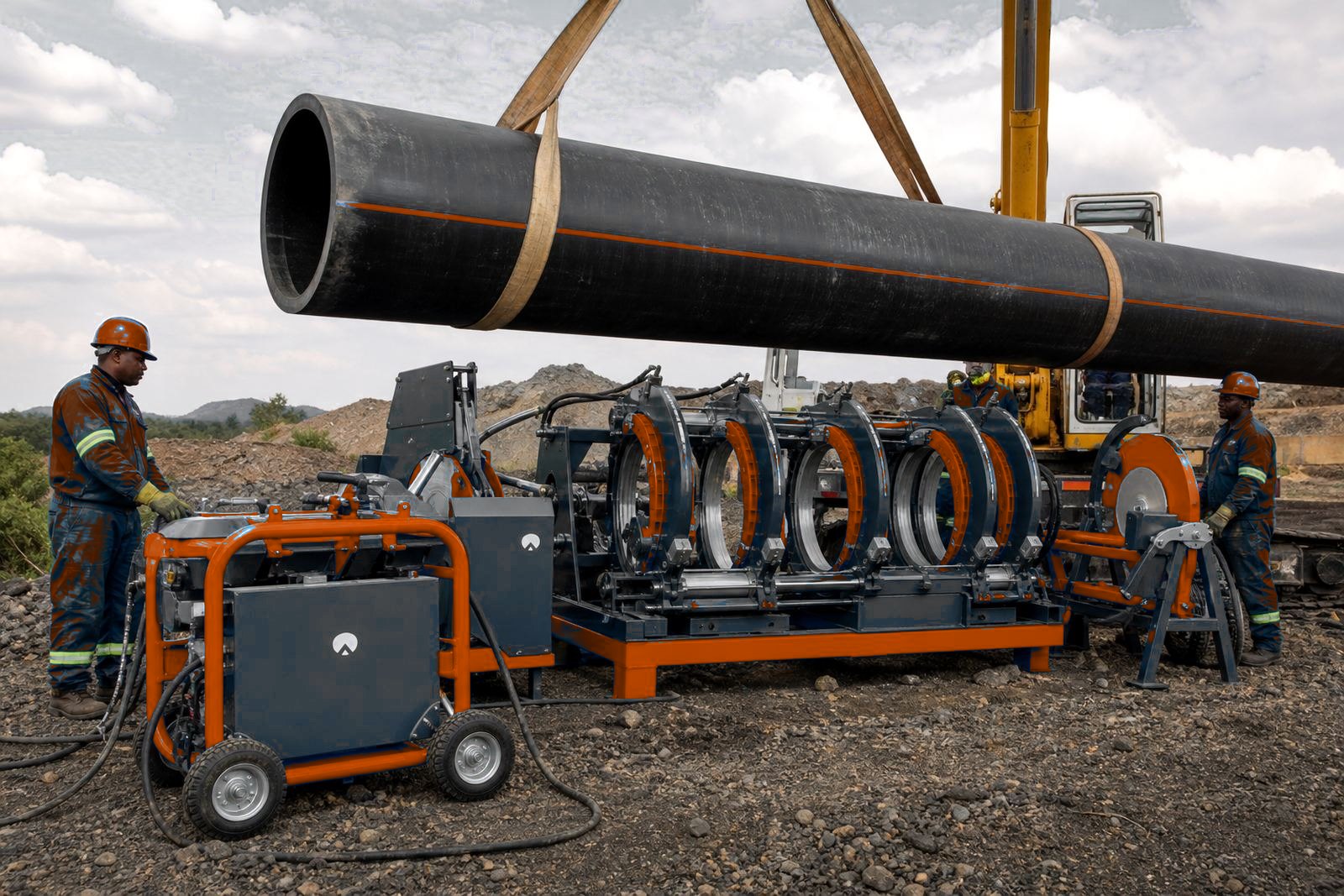
The frame, heater plate, facer and hydraulic system work as one set. Pipe above 250mm carries more mass and ovality, so clamp pressure has to close the gap without misaligning the joint. The hydraulic system lets the operator bring the pipe ends together in a controlled way, then hold the set fusion pressure during the weld cycle.
Many crews use this size machine where shutdowns are planned around live plant tie-ins. Long day shifts with several joints in a row rely on repeatable setup.
- Hydraulic clamp pressure for larger wall sections
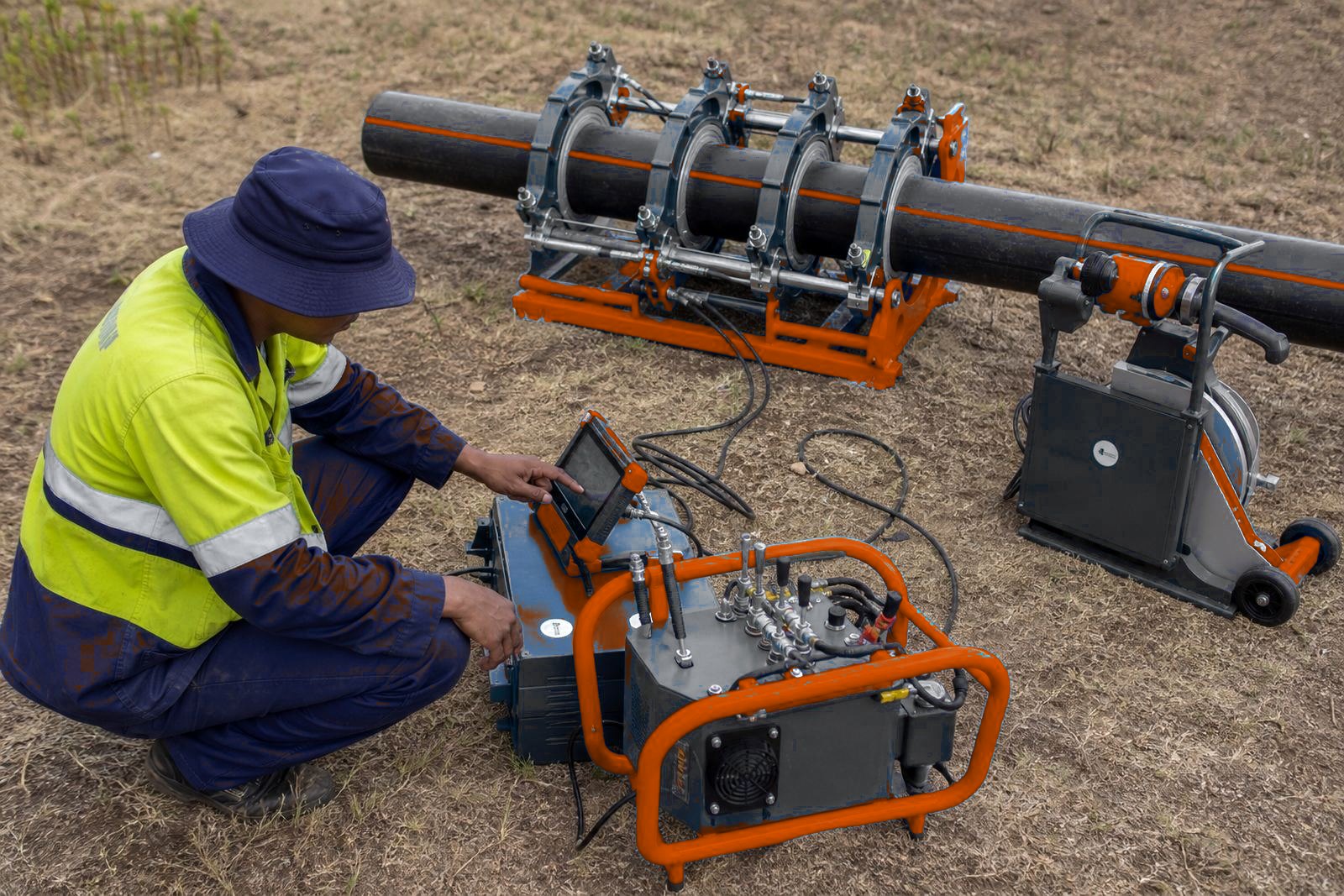
- Data logging options for weld records where required
Typical jobs for 250-450mm welders
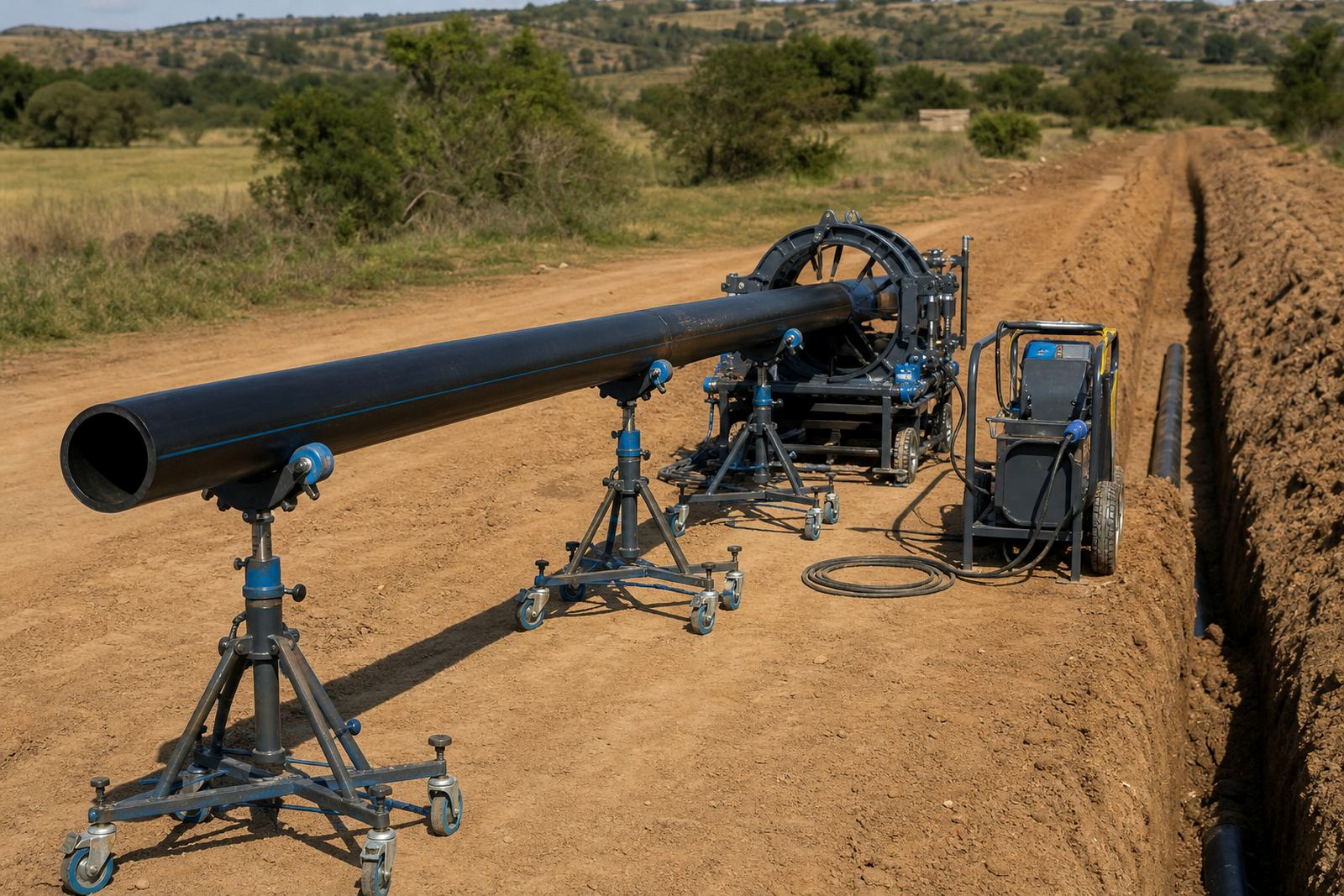
This size fits high-volume pipe work on long runs. It is common on pump station connections where larger HDPE pipe is welded on the ground before installation. In Durban and other coastal areas, crews also need to keep fittings and pipe ends clean and dry because moisture and grit can upset the face and heat cycle.
The machine suits contractors who need a larger unit that works in the field as well as the workshop. If the work shifts between open ground, trench side assembly and yard preparation, the welder should be easy to transport, stable once parked and ready for repeated clamp cycles without sloppy movement.
- Water reticulation and bulk supply lines
- Pump station manifolds at 315mm and 400mm
- Tie-ins on long 400mm and 450mm runs
Sizes, options and weld record choices
There are practical options that change how the machine fits the job. The pipe diameter set, clamp inserts, heater plate size and facer arrangement all need to match the pipe schedule and wall thickness. SDR changes the wall thickness, which affects heat soak, fusion pressure and cooling time, so the operator needs the right settings for the exact pipe on site.
Some teams want a basic hydraulic frame and others want weld logging for records and handover files. Data logging can capture weld details for job records where the site team wants traceability across a line. If the work is moving between towns or branches, the chosen setup should also suit transport, storage and regular inspection.
- Jaw and insert sets matched to the pipe size
- Heater plate temperature control
- Manual or logged weld cycle recording
- Frame and carriage setup for field movement
Setting it up on site without rough handling
Installation means getting the pipe line level, the clamps square and the work area clean. The base should be firm and level so the pipe does not pull one way when the clamps close. The facer should take a neat cut across both ends and the heater plate must be clean, flat and checked before use.
On larger jobs the team also needs space for pipe handling, rollers or supports and a safe area for heating and cooling. Changeover must be quick and organised, with both pipe ends moved from facer to heater and back into the clamps without touching the molten face.
- Level ground or a stable prepared work area
- Pipe supports for long and heavy lengths
- Clean heater plate faces before each shift
- Room for heating, changeover and cooling control
Keeping the machine in working shape
Hydraulic welders take wear in the clamps, hoses, pressure gear and facing unit, so regular care is needed. Heater plates should be checked for surface damage, thermoregulation drift and contamination. The facer blades need attention when the cut starts to feather or chatter, and clamp alignment should be checked if the pipe starts showing uneven bead formation.
For site teams, a routine inspection before hire, before dispatch or after a long run is good practice. Leaks in the hydraulic circuit, worn jaws, damaged cables on the heater plate or a loose carriage can affect the joint long before anyone notices at the end of the line. Store the 250-450mm welder clean and dry with faces and moving parts protected.
What to confirm before ordering this model
Welder selection needs pipe diameter range, SDR range, site power and weld logging needs. Moving this machine between sites means planning transport and site handling space. Larger pipe needs extra working room beside the frame.
Let us know whether the work is mostly straight-line butt fusion, repair work or repeated fabrication. That changes the preferred clamp arrangement, insert sets and the way the heater plate and facer are used.
- Pipe diameter and SDR range
- Power available on site
- Weld logging help, if the crew needs it
Key facts
| Pipe diameter range | 250mm to 450mm |
|---|---|
| Fusion type | Hydraulic butt fusion for HDPE pipe |
| Main functions | Facing, heating, changeover, fusion pressure and cooling |
| Control features | Hydraulic pressure control with weld logging options |
| Typical use | Thick-wall pipe in the 250-450mm range |