What these roller stands do on a butt-fusion setup
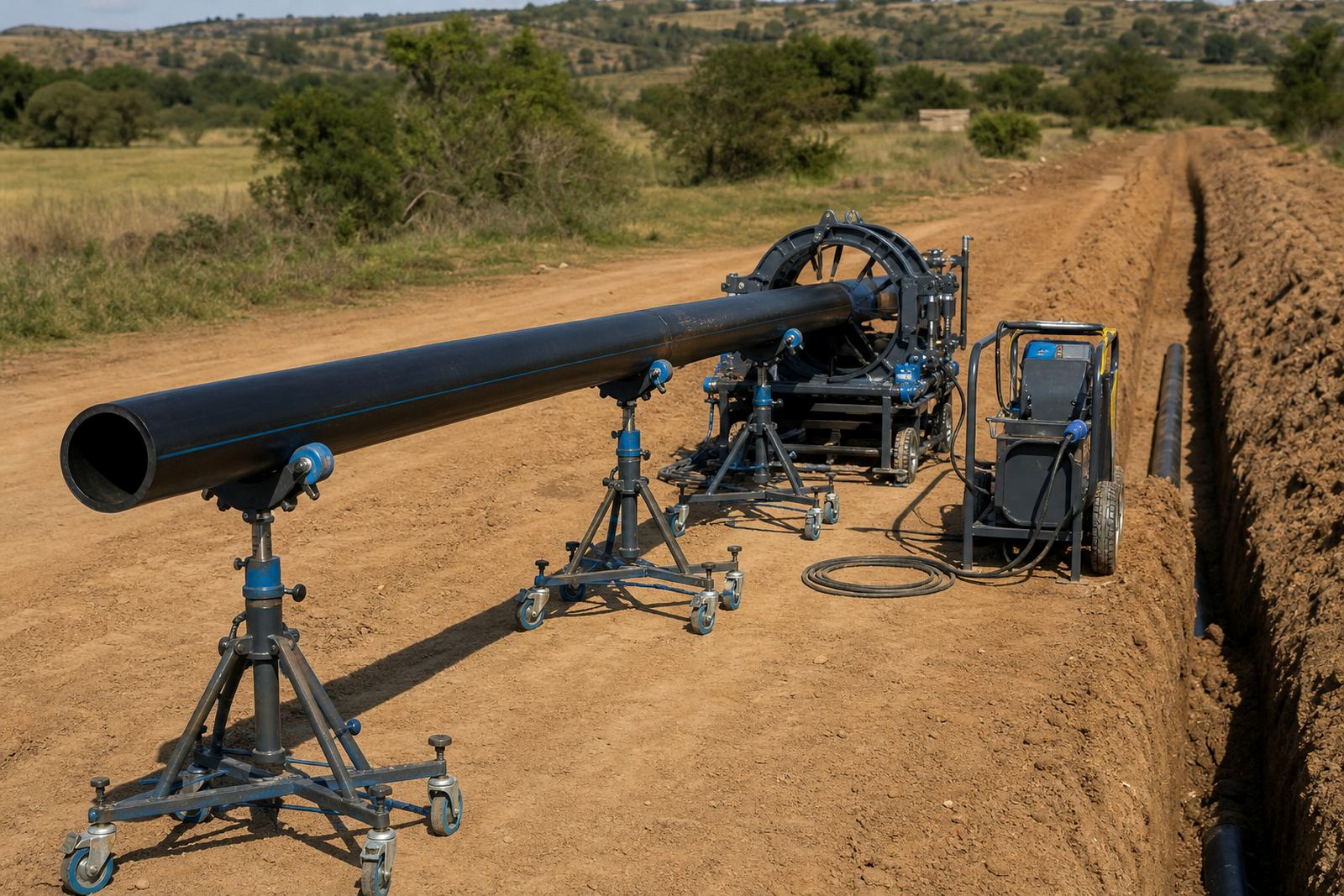
Pipe roller stands sit under the pipe line and carry the weight while the crew squares up, faces and brings the ends together. On long lengths of HDPE, rollers keep the pipe in line as the facer retracts and the heater plate comes out. They let the pipe move in a controlled way across gravel, concrete and uneven ground.
Roller stands stay in use from first clamp-up through to cooling. The rollers support the pipe during facing, heating, changeover, fusion pressure and the cooling hold, so the line stays where the operator set it. On bigger diameter pipe the stand height and load rating need to suit the job, because a line that sags even a little can spoil bead shape and upset alignment.
- Rollers keep straight lengths in line for the operator
- Reduces drag when the pipe is moved in and out of clamps
- Helps keep the pipe centreline steady on long joints
- Useful in yards, trench lines and lay-down areas
Pipe sizes, stand lengths and load ranges we see in the field
Roller stands are usually selected around the pipe diameter, wall thickness and how much pipe is being handled at one time. Smaller polyethylene pipe can run on lighter stands, while large bore work needs heavier frames with wider roller spacing. The wrong spacing can let the pipe belly between supports, especially on warm days or where the pipe has been stored in coils or in direct sun.
We supply stands that suit short weld bays and longer stringing lines. Adjustable height lets the pipe line up with a fusion machine, a cradle or a clamp set on uneven ground. For wider diameters, the roller width and bearing quality become important too, because the pipe must roll without binding when the operator makes minor alignment changes.
- Light, medium and heavy duty frames
- Adjustable height for site level changes
- Single roller and multi-roller options
- Suitable for straight pipe runs and staged lay-down areas
Where roller stands are used on site
These stands suit contractors laying long HDPE runs, including dusty, abrasive sites. They also help on civil jobs where pipe has to be joined near trenches, manholes or road crossings. Smooth rolling surfaces stop sticking and scuffing in Durban humidity and on the Cape coast.
They are practical where pipe length is awkward to manage by hand and where the crew needs to keep the line aligned while the heater plate is in and out of the machine. On a long weld, even a small change in support can alter the fit-up. A roller stand keeps the pipe moving in a predictable way while the operator checks the bead and holds the correct fusion pressure through cooling.
- Water reticulation pipe work
- Workshop pre-assembly and yard staging
Fitment, positioning and day-to-day handling
Roller stands need to sit level and in line with the pipe path. If the stand is too low, the pipe can drag as it enters the facer or clamps. If it is too high, the pipe may ride up and pull against the clamps. A good setup keeps the line feeding cleanly into the fusion unit, with enough support on both sides of the weld area to stop the pipe from tipping or twisting.
On site, the crew should place stands where they can be reached without stepping over the fusion area or crossing the hot plate path. For long pipe, use enough stands to spread the load and keep the pipe from dipping between supports. In windy outdoor conditions, stable footing is needed because a shifting stand can move the pipe out of line at the wrong moment.
- Set stands level before bringing pipe into the machine
- Match stand spacing to pipe diameter and length
- Keep rollers free of sand, weld dust and grit
Care, inspection and wear points to watch
Like any handling gear, roller stands work best when they are kept clean and inspected often. Dust, grit and hardened mud can slow the rollers and mark the pipe jacket. Bearings and pivot points should be checked for play, while the frame should be watched for bends after rough handling in the truck or on site. Snagging pipe or witness marks on the stand mean it is serviced before the next weld line.
Crews moving between regions should inspect the stands at collection and again before the next shift. Look at the roller surface, the height adjustment points and any locking parts. If the stand is being used beside a heater plate or facer, keep it clear of hot metal and welding debris so the rollers stay true and the pipe does not pick up scars.
- Clean rollers after dusty or muddy work
- Check bearings, pins and height locks
- Store stands where they will not be knocked over
- Replace worn rollers before they flat-spot the pipe
What to confirm before ordering
Pipe roller stands should match the pipe work, the fusion machine and the way the crew handles the line. Share the pipe diameter range, the wall thickness or SDR, the longest pipe length you expect to carry and whether the stand will be used in a workshop bay or on rough ground. Repeated moves, long straight runs and bundled pipe each change the support needed.
Confirm whether you need fixed height or adjustable height, light handling or heavy duty support, and how many stands are needed for each side of the weld. For site crews working across South Africa, transport space can be an issue too, because some stands need a smaller footprint for loading and collection.
- Pipe diameter range and SDR
- Pipe length and expected load per stand
- Fixed or adjustable height
- Workshop use, site use or mixed handling
- Number of stands needed per weld bay
Key facts
| Type | Pipe roller stands for HDPE butt-fusion handling |
|---|---|
| Use | Pipe support during alignment, facing, heating and changeover |
| Pipe range | Commonly matched to 50 mm to 630 mm and larger by arrangement |
| Frame | Steel construction with roller support and height adjustment options |
| Site use | Workshop bays, lay-down areas, trench lines and yard staging |
| Associated trade | Supporting pipe lengths during fusion |