Holding the branch line in the right relationship
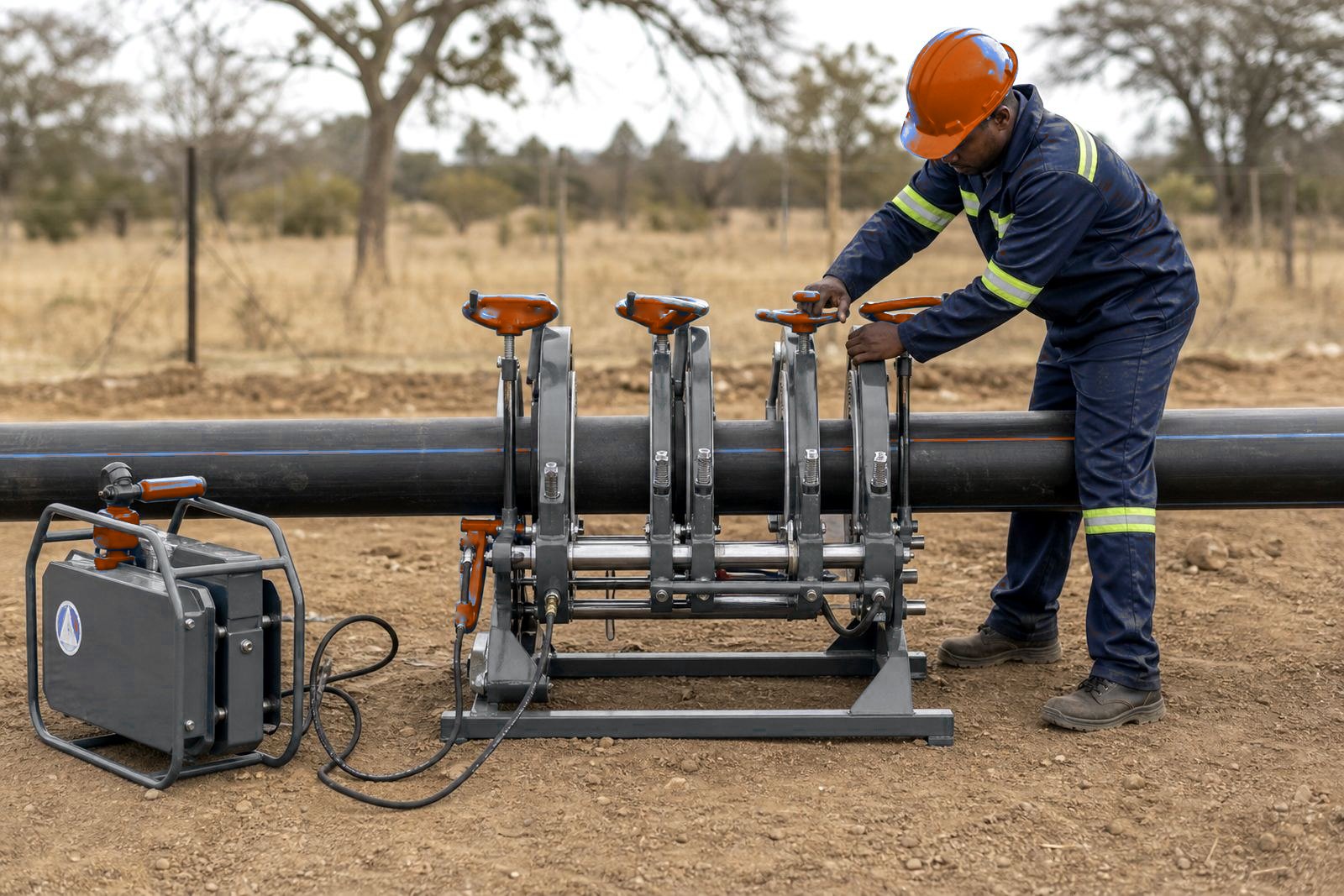
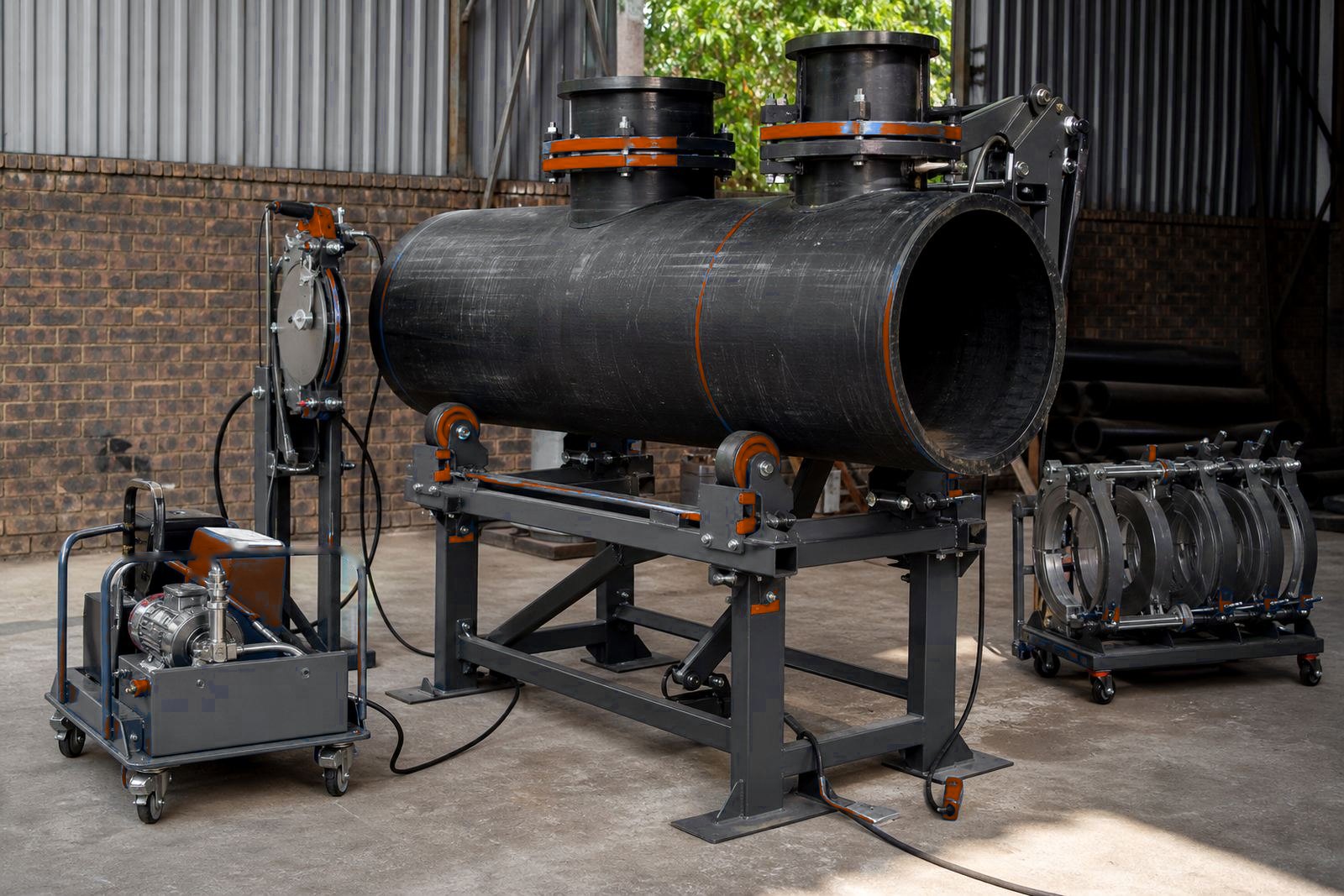
Tee fabrication clamps are built for branch connections made from prepared HDPE pipe and fittings. The clamp frame keeps the main run and branch in position while the operator checks alignment, trims the ends, and brings the joint faces together for fusion.
The fixture controls squareness, branch angle and centreline before heat goes in. A tee has to sit neatly in line with the rest of the pipework, held against pull from weight or pipe memory.
The clamp does the holding while the welding process is carried out by the machine and operator, so the branch piece stays where it should during the full cycle.
Sizes and options for common HDPE tee work
We supply tee fabrication clamps for a range of pipe diameters and branch combinations. Clamp set, shoe set and fabrication layout fix the working range, while pipe size and tee pattern guide the choice.
- Tee clamps cover 63 mm up to 630 mm, with larger sets for special work.
- Branch arrangements: equal tee, reducing tee and custom branch offsets
- Pipe class matching: SDR matched to the job requirement, with the branch and run kept compatible
- Clamp format: portable site frames, heavier workshop frames and modular sets for repeated fabrication
- Mounting style: fixed base, adjustable carriage or removable support arrangement
Pipe yards and maintenance work use a compact set, and repeated branch fabrication uses a heavier frame that stays in place. The pipe wall thickness, diameter and branch angle all affect how the clamp is set up.
Jobs that use tee fabrication clamps
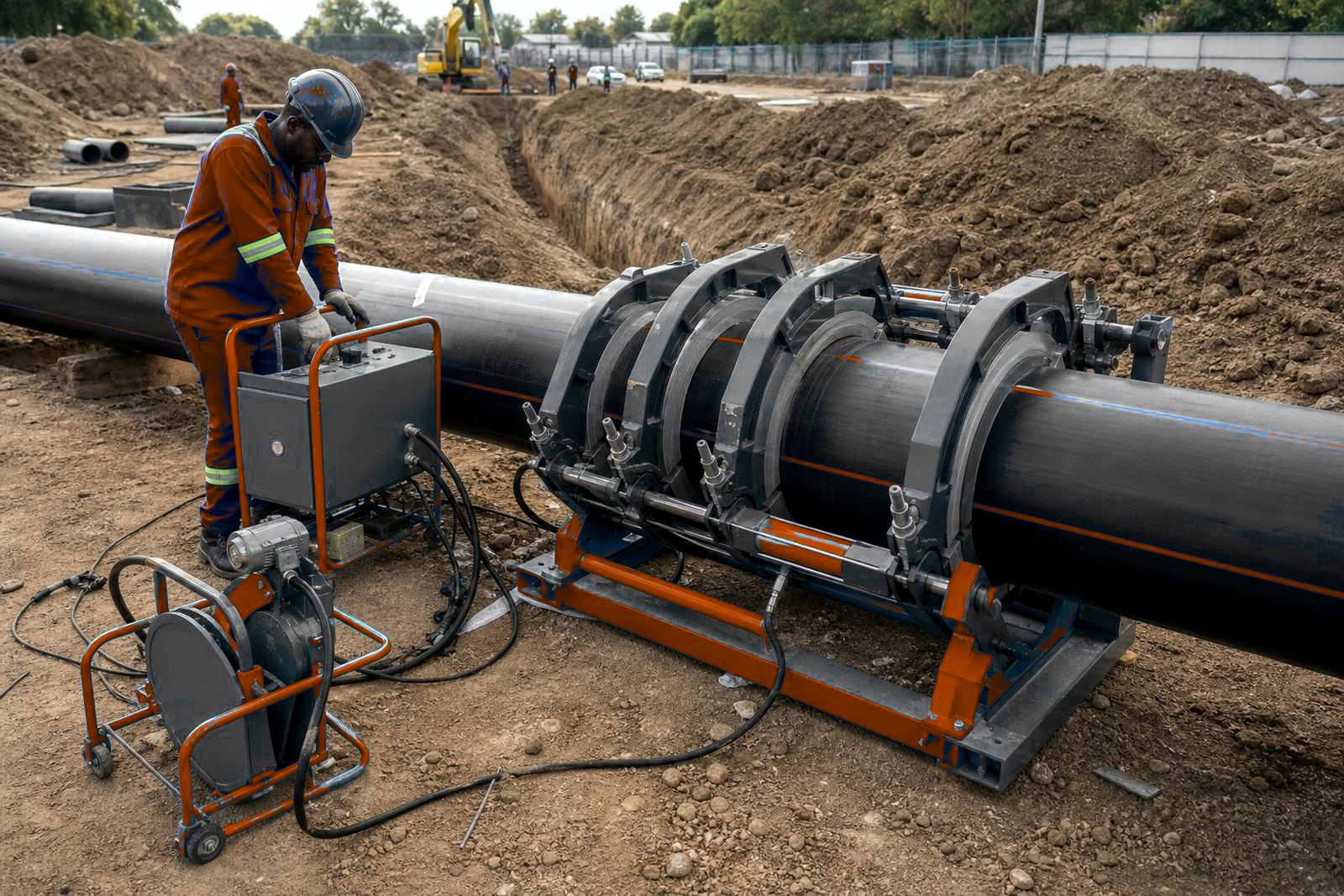
Tee fabrication clamps suit contractors who fabricate HDPE branch connections at pump stations. Workshops use them to build tee assemblies before moving them to site.
Twist at the tee makes alignment harder further down a long run. A well-set clamp helps the operator keep the prepared faces even, and it reduces strain while the fusion joint is brought up to pressure and held for cooling.
Tee clamps are bought mostly for repetitive builds in service yards, plant pipework and contractor fabrication bays. In those settings the same fixture can be used for multiple pipe sections, with only the shoe positions and branch setup changing from job to job.
- Civil drainage and pressure pipeline fabrication
- Workshop pre-assembly before site installation
Setting the fixture before the weld cycle starts
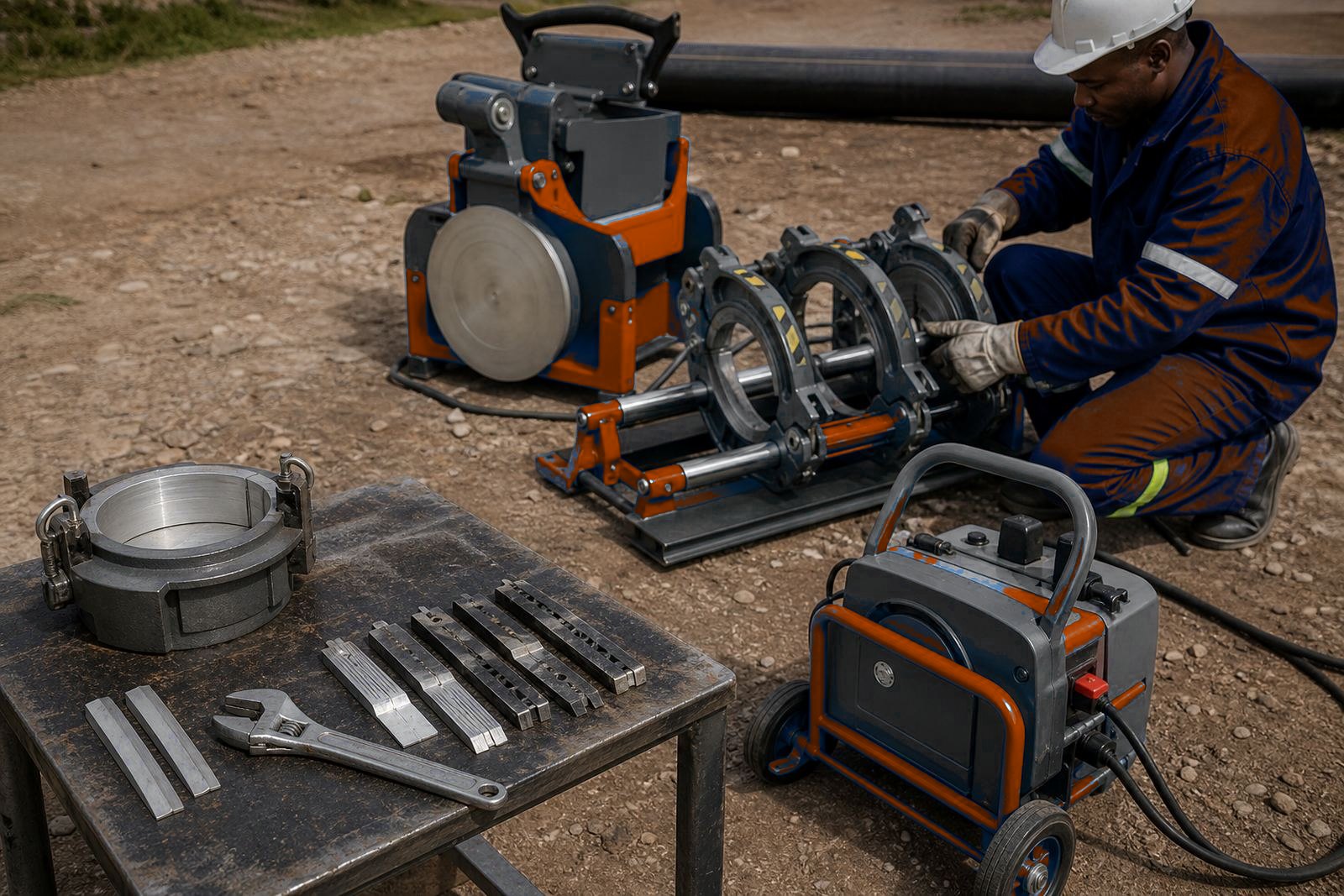
Before a tee is fused, the pipe ends are prepared and checked for fit. The clamp holds the run and branch while the operator faces the surfaces, clears shavings, and confirms that the pipe ends meet correctly with no rocking or visible offset.
Once the faces are ready, the setup supports the heating phase and the changeover into fusion. The fixture helps preserve the correct position during the handover from facer to heater plate and then into final pressure application, which is where many branch joints can shift if the setup is loose.
For longer assemblies the clamp may be used with a level base, support rollers or lifting help so the pipe mass does not pull the joint out of line. On larger diameters the branch section carries its own weight, so the clamp has to hold the joint face still through heating and cooling.
Care, inspection and day-to-day handling
A tee fabrication clamp works best when the sliding faces stay clean and the locking points remain true. Dust, grit and dried HDPE shavings can affect movement, so the frame should be cleared after use and stored where it will not pick up damage from heavy pipe or loose steel offcuts.
Hydraulic or mechanical parts should be checked for leaks, wear and uneven movement. Repeated branch work calls for checks on jaw condition, alignment points and fasteners.
- Clean the shoes and clamping faces after each shift
- Check that moving parts travel smoothly without binding
- Inspect clamps, pins and bolts for wear or play
- Store the fixture level so the frame does not distort
- Keep the setup clear of heat, mud and welding debris
Where the fixture is used with heated pipe and plates, allow it to cool before moving or packing away. Rough handling knocks the clamp out of alignment and the branch leg will not fit square.
Details to confirm before you order a clamp set
To match the fixture to the job, the important details are the pipe size, branch size, SDR and the shape of the tee being fabricated. Workshop, transportable or repeated production use changes the tee clamp choice.
Please confirm the following when ordering:
- Main pipe diameter and branch diameter
- Equal tee, reducing tee or special branch angle
- Site use or workshop use
- Manual, hydraulic or mixed clamping preference
- Any need for data logging on the welding record
Good setup details make the clamp easier to match with the pipe, and they help the crew keep the prepared components steady through the weld cycle. If the tee forms part of a tracked job, the clamp setup should also leave room for the job sheet or data capture process.
Support for field work
Tee fabrication clamps are stocked and serviced in our own workshop.
Short-programme tee clamp hire can be added to the rest of the fusion kit. For crews that own their fixtures, servicing and alignment checks help keep the frame working properly between jobs, especially where the same clamp is used on different pipe sizes and branch formats.
A tee clamp quote needs the main diameter, branch diameter, SDR and whether the work is for site or workshop use.
Key facts
| Product type | Tee fabrication clamp for HDPE branch assembly |
|---|---|
| Pipe size range | Typically 63 mm to 630 mm, larger on request |
| Joint type | Equal tee, reducing tee and custom branch arrangements |
| Material use | Prepared HDPE components for butt-fusion fabrication |
| Set-up | Manual or hydraulic clamping options depending on configuration |
| Use areas | Tee fabrication, workshop or site use |