A heavy-duty fusion set for larger HDPE lines
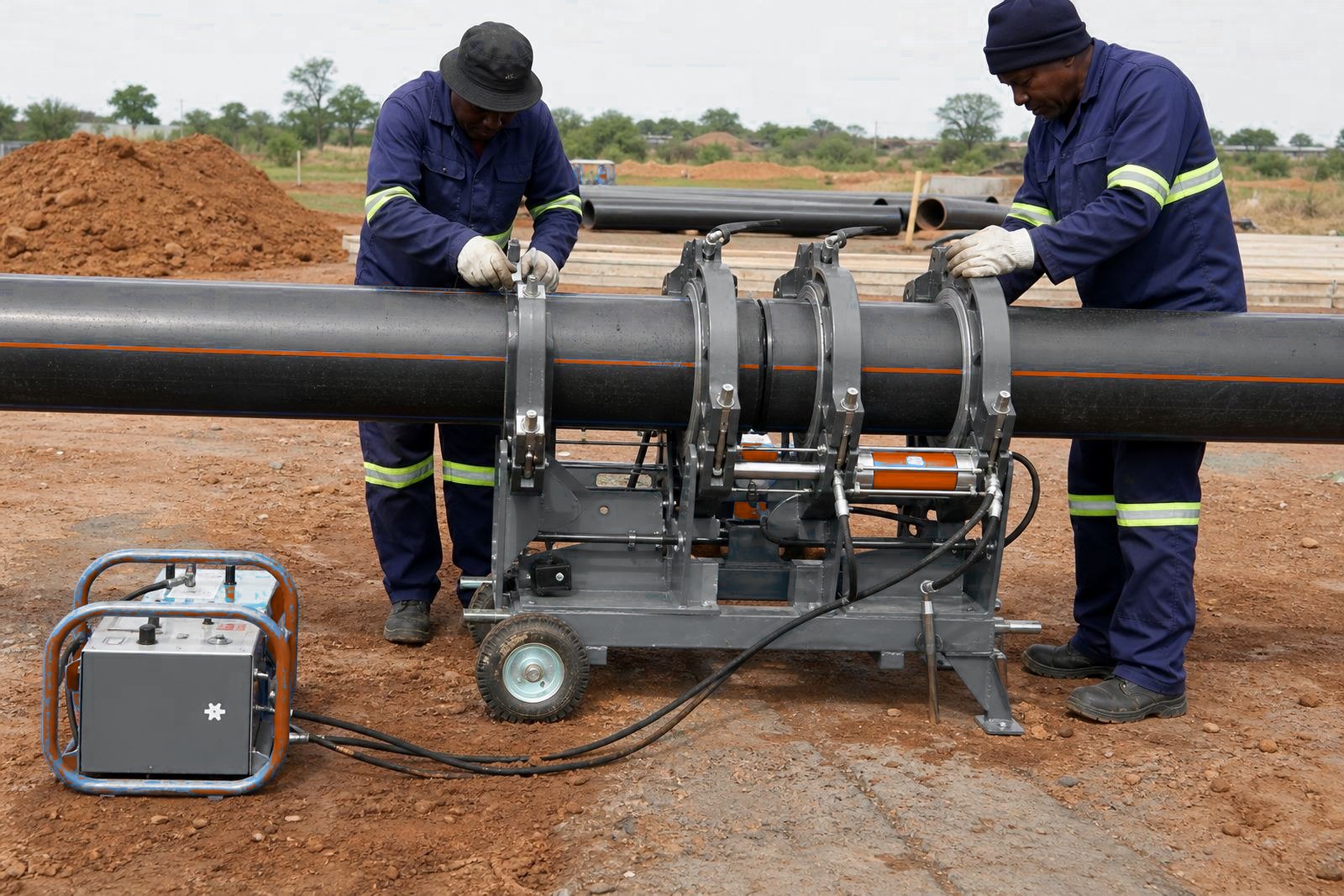
This welder is built for butt-fusion work on HDPE pipe in the 315mm to 630mm range, where pipe wall thickness, ovality and joint consistency become harder to control on every set-up. It suits main runs, transfer lines, pump station work and civil sections where the crew needs a hydraulic machine with proper clamping force and stable heating control.
The 315-630mm frame is intended for teams already experienced with large-diameter weld sequences.
- Hydraulic clamping for large diameter HDPE pipe
- Stable heating plate control for repeatable fusion faces
- Suitable for long straight runs and site welding bays
- Used with SDR-rated pipe where wall thickness is matched to the joint plan
Pipe sizes, SDR ranges and job types it suits
The 315-630mm frame is usually selected when smaller machines are no longer practical for pipe mass, joint area or handling. It is a good fit for larger drainage and transfer installations. The actual pipe size and SDR must be matched before the job starts, because the heating time, bead build and pressure profile change with wall thickness.
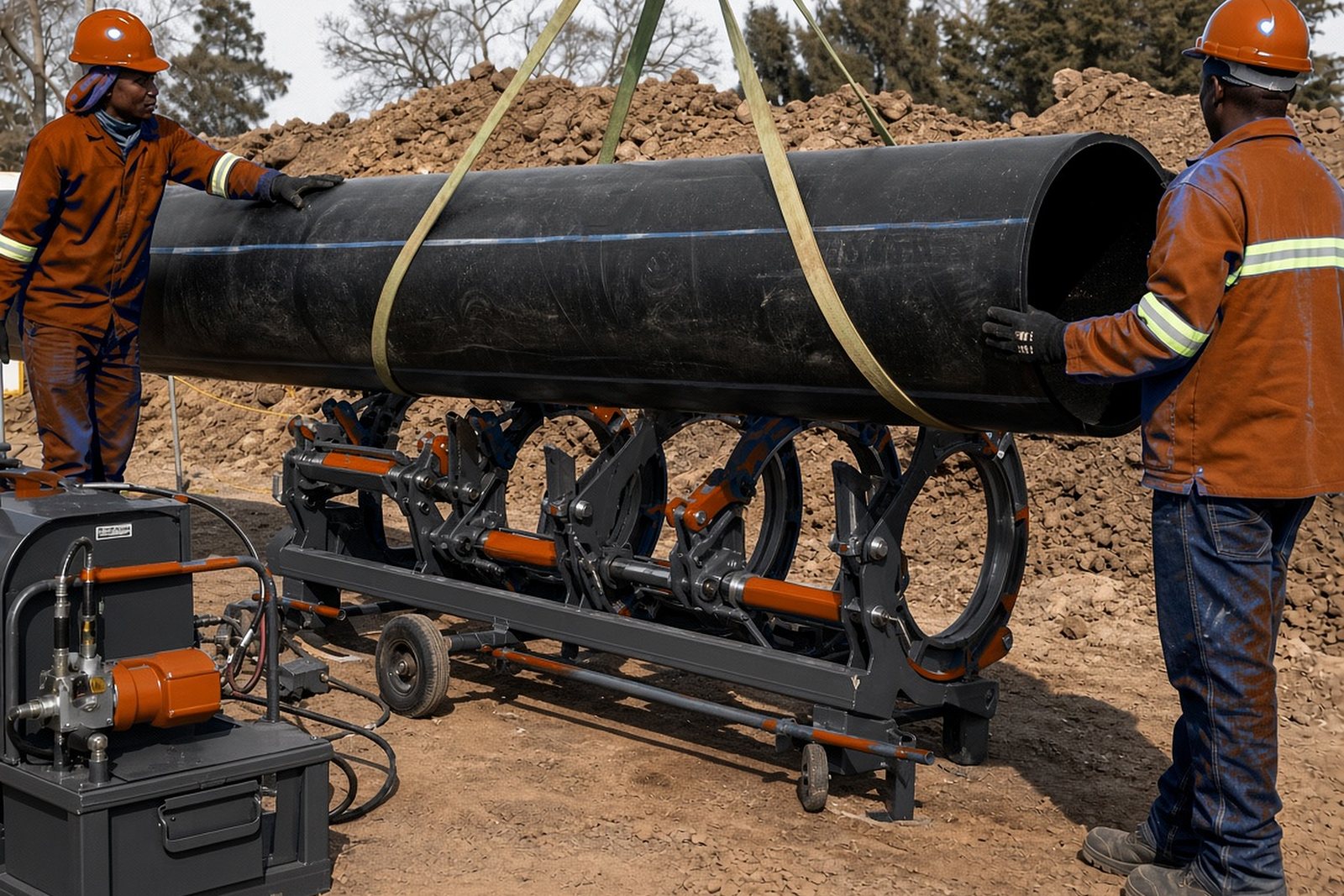
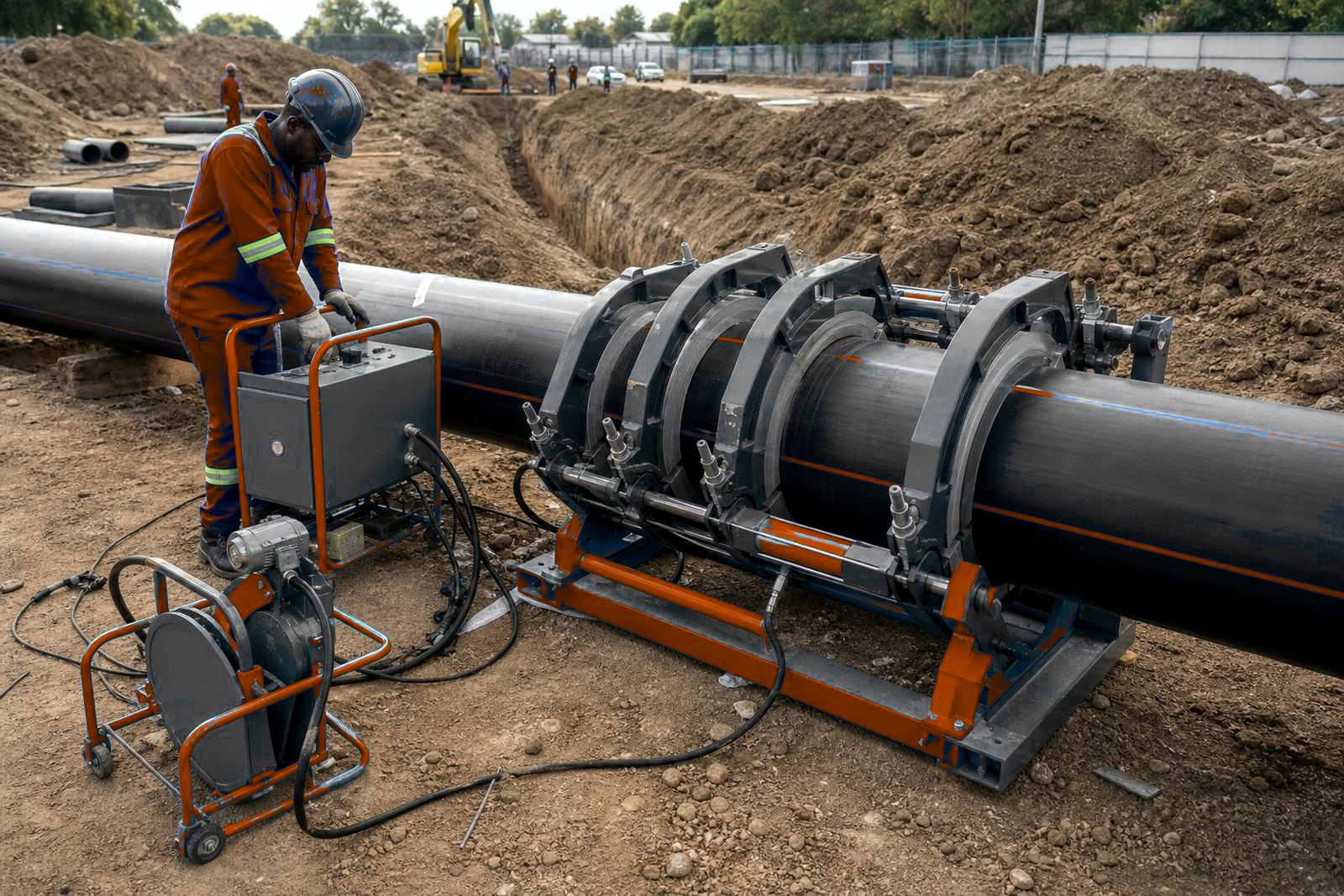
Leave room for pipe support, accurate facing and a straight approach into the clamps. For some jobs the team will work in a trench line, while others are carried out on skids or a prepared welding pad. The machine needs enough space for loading, clamp closure and safe changeover, so plan the laydown area early.
- Typical range: 315mm, 355mm, 400mm, 450mm, 500mm, 560mm and 630mm
- Best used where joint traceability and bead control are required
- Useful for new installations, extensions and sectional repairs
- Can support logged welding records where the crew keeps joint data
Hydraulic control, facing and heat plate details
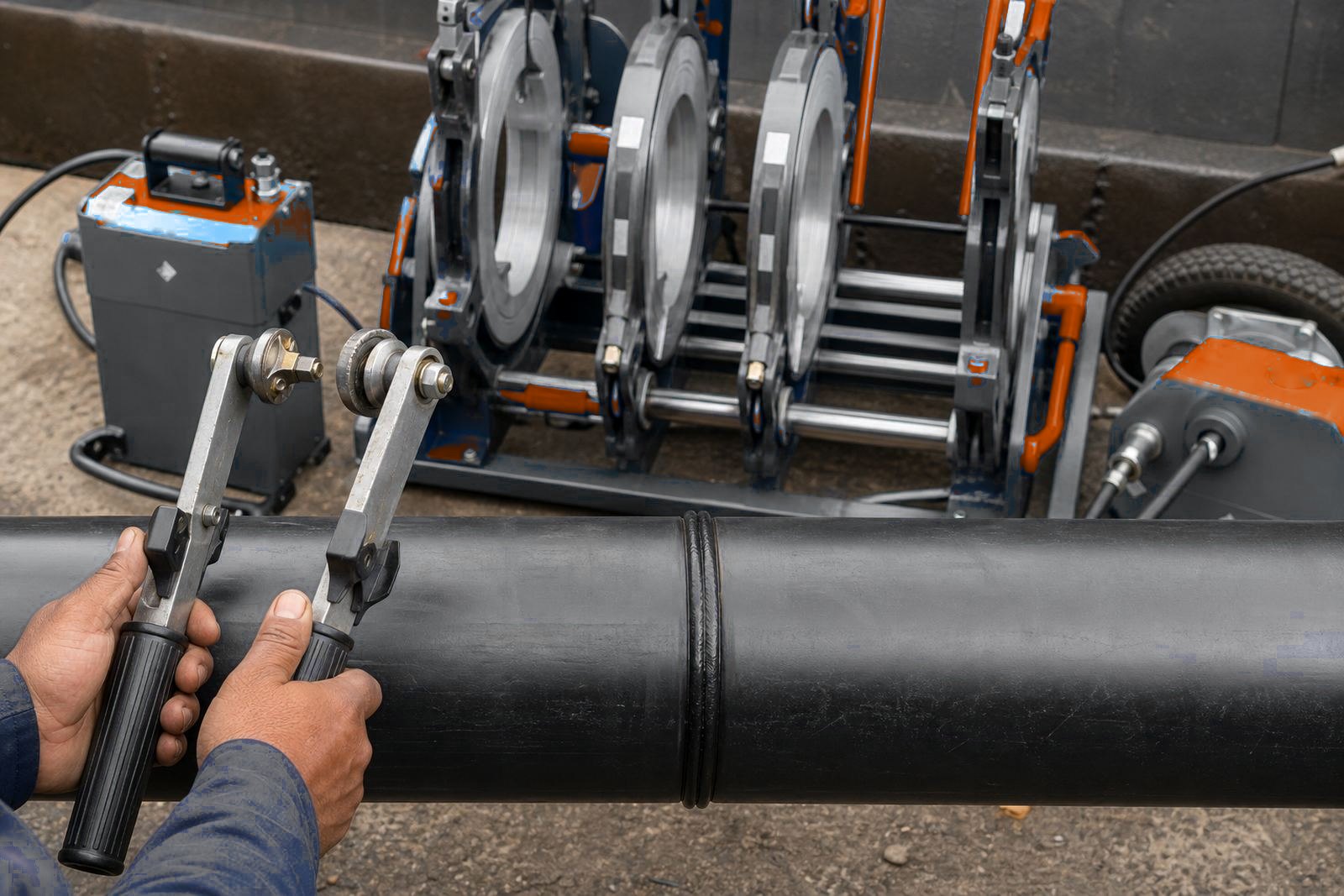
The machine package centres on hydraulic movement, a facer for true pipe ends, and a heater plate sized for the larger fusion faces. Hydraulic control helps the operator bring the pipe ends together under the right force, while the facer removes uneven cuts and contamination from the pipe ends before heating. On 315-630mm pipe, patchy plate heat leaves a different bead on each side.
For this size class, crews often want a machine that can carry the pipe without flex at the clamps, with enough pressure stability to hold fusion pressure and then maintain cooling time without movement. The fitter should also check the carriage action, clamp centring and the condition of the heating surface before any shift starts.
- Hydraulic drive for controlled approach and joint pressure
- Facer for square pipe ends and proper face preparation
- Clamp set and reducer inserts for the selected pipe diameter
Where crews use it on South African sites
The welder goes out for projects that need a larger machine on standby, or for a specific contract where pipe diameter is fixed and the programme is tight. It suits contractor yards, temporary welding zones and mobile site work where the pipe is brought to a prepared area for fusion.
Repeated joints with careful logging are common on mine work. Sections change as the pipe run grows, so the welder gets moved along with them. Alignment has to stay steady and easy to inspect between sets on longer joint sequences. On a hot day in Durban, or in dusty inland conditions near Rustenburg, keep pipe ends clean and heater surfaces covered.
- Feeder lines in larger HDPE sizes
- Reticulation, transfer and storage links
Fitting, site setup and operator handling
Equipment is set up with care and clear guidance. The crew should have a flat working surface, correct pipe supports, room for the hydraulic unit and enough space to move pipe lengths safely into the clamps. For large diameter welding, align the line carefully during setup, because even a small twist can show up as poor bead shape or a joint that drifts during cooling.
Hired welders get a handling check before dispatch. Servicing on the 315-630mm unit covers the hydraulic pump and hoses. Sites with several welders need clear settings per pipe size and SDR to avoid waste.
- Confirm the hydraulic system is holding pressure correctly
- Make sure the clamp liners match the pipe diameter
Care, checks and ordering guidance
Before an order or hire is confirmed, the usual details are the pipe diameter, SDR, pipe material grade, whether the job needs logging, and whether the machine will stay in one yard or move between sites. Refresher training may be needed if the team moves up to a larger welder, since the crew should know its sequence and limits.
Routine care is practical. After rough transport, the 315-630mm frame gets a hose and coupler inspection and a clamp alignment check. After coastal humidity or dusty mining ground, inspect the moving parts and electrical panels. Worn seals or a drifting gauge on a 315-630 unit show up as uneven beads.
- Confirm pipe size range and the SDR values on site
- Note if weld data logging or inspection records are required
- Specify transport, collection and return handling needs
Key facts
| Working range | 315mm to 630mm HDPE pipe |
|---|---|
| Fusion method | Hydraulic butt-fusion with facing, heating and controlled changeover |
| Pressure control | Hydraulic fusion pressure with cooling hold |
| Main components | Clamp frame, facer, heater plate, hydraulic unit and inserts |
| Typical use | Large-bore line work over long distances |