Soft lifting support for HDPE pipe sections
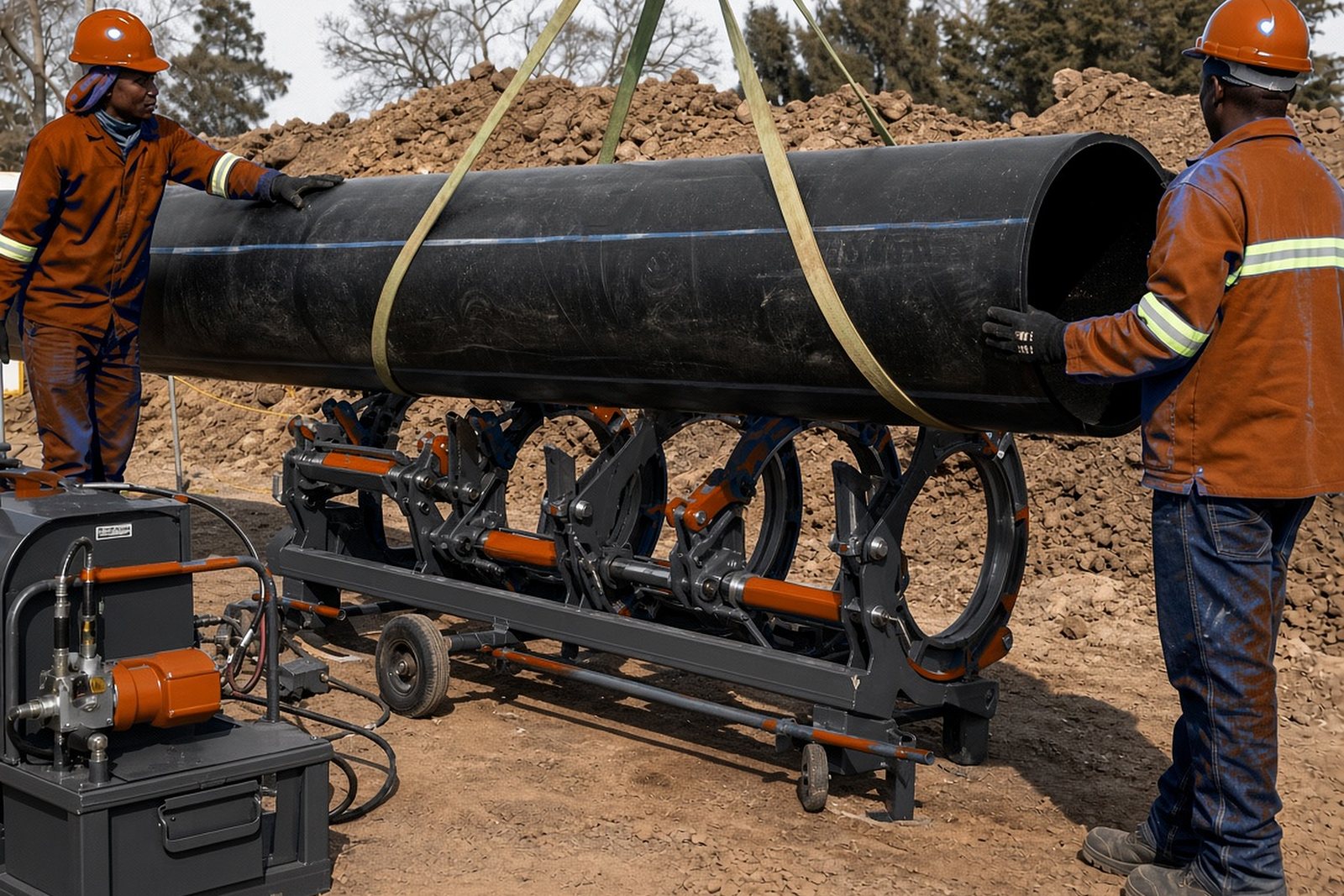
Wide, soft strap contact replaces chain, hooks or bare slings when moving HDPE sections. Straps keep the pipe clean, round and ready for facing, heating and changeover without extra surface damage.
These straps suit crews handling large-bore pipe in yards, trench lines and laydown areas. They help place pipe onto rollers, skids, fusion stands and clamp sets while limiting scuffing on the outer wall, which helps when the pipe still needs alignment checks and butt-fusion prep.
The strap body is normally made from woven synthetic lifting material with stitched eyes or reinforced loops. Width, working length and safe working load all need to match the pipe diameter and the way the crew lifts. A short strap works for controlled lifts close to the machine, and longer lengths guide pipe around supports or into awkward setup areas.
Sizes, working lengths and pipe ranges
Different pipe diameters need different strap widths and sling lengths. Straps for 63 mm or 90 mm pipe handle differently from those for 200 mm, 315 mm or 500 mm sections. The lifting point, pipe wall thickness and section weight all affect the correct choice.
- Width options commonly suit light, medium and heavier HDPE sections
- Working lengths can be selected for close handling or wider reach
- Eye type may suit hook points, shackles or spreader arrangements
- Safe working load must be matched to the lifted section and method
- Colour coding helps the crew identify the correct strap quickly
Note the pipe OD, SDR and section length before ordering straps. A longer pipe with a thinner wall can behave very differently from a short heavy cut length, so the lifting plan should be matched to the actual pieces on site. Where pipe is being lifted from a truck bed or stock yard, the strap length also needs enough clearance for safe positioning over rollers or a fusion machine bed.
Where these straps fit into butt-fusion work
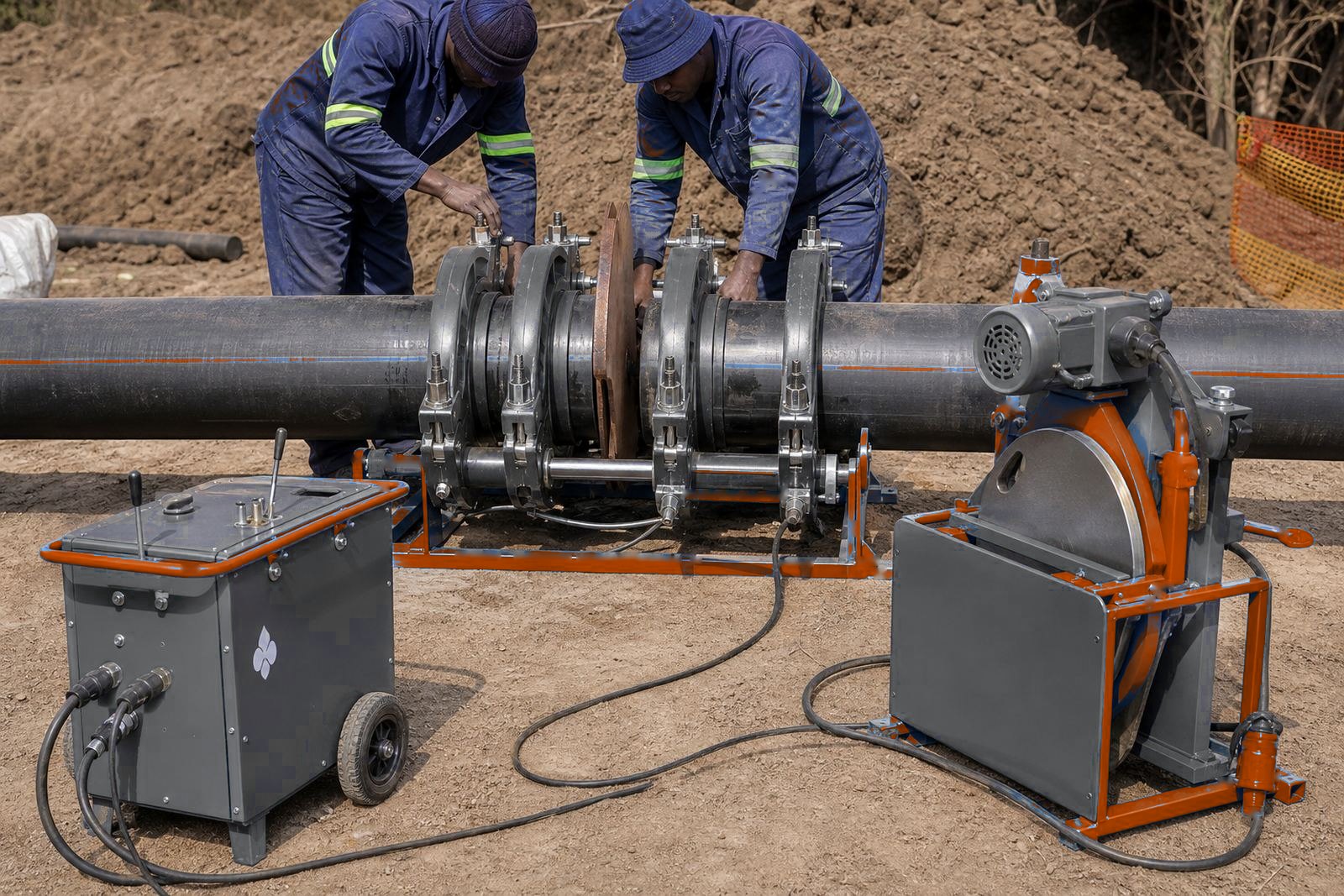
Pipe lift straps sit inside the handling stage of the butt-fusion process. Good handling makes that sequence easier to control.
Crews use them to move pipe sections onto clamps, adjust them after facing, or lift them clear during staging and inspection. The strap sits outside the weld itself and supports the steps around it. Less movement lowers the chance of grit, shell damage or knock marks on the pipe end, which keeps bead shape and joint cleanliness clear for checking before the next stage.
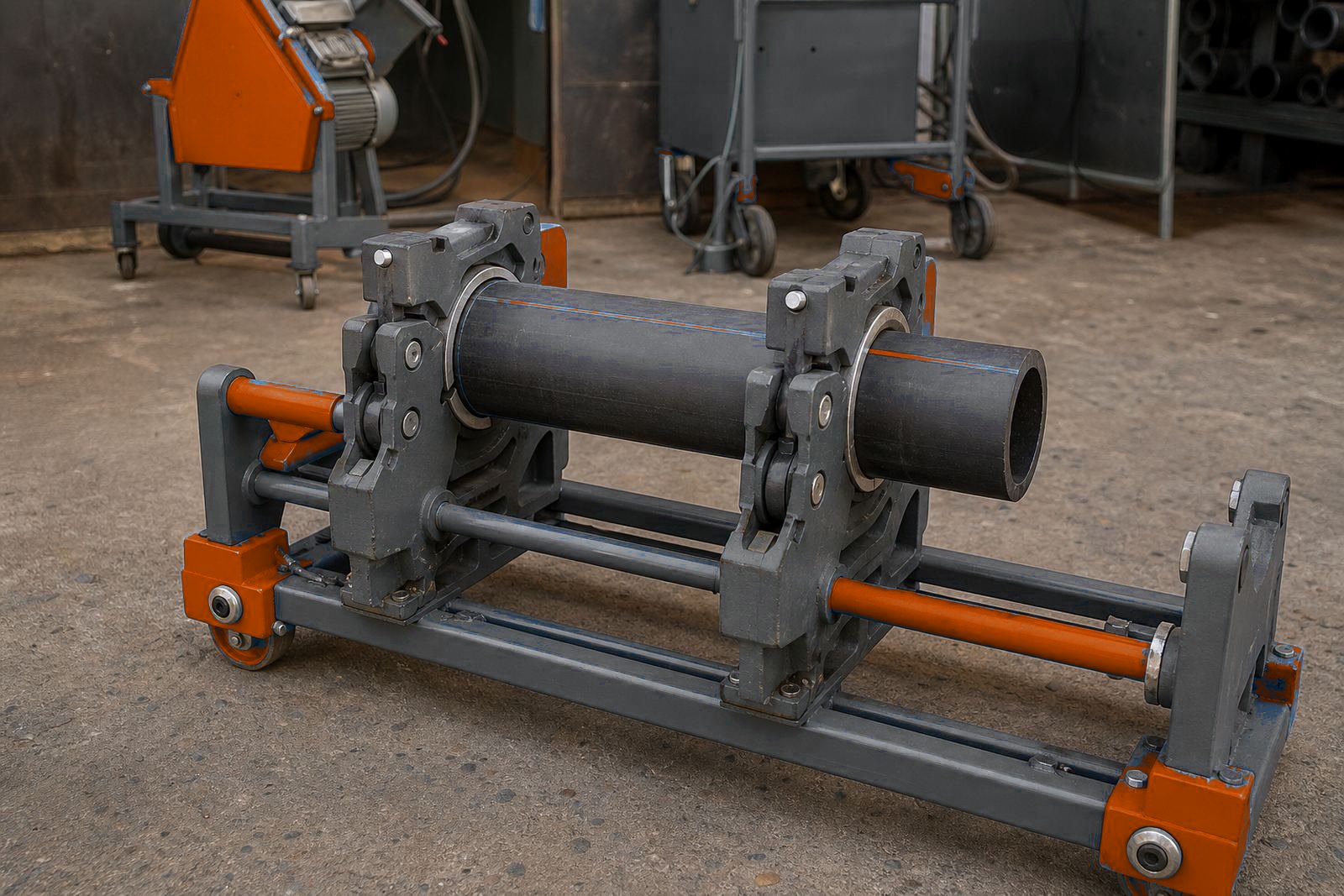
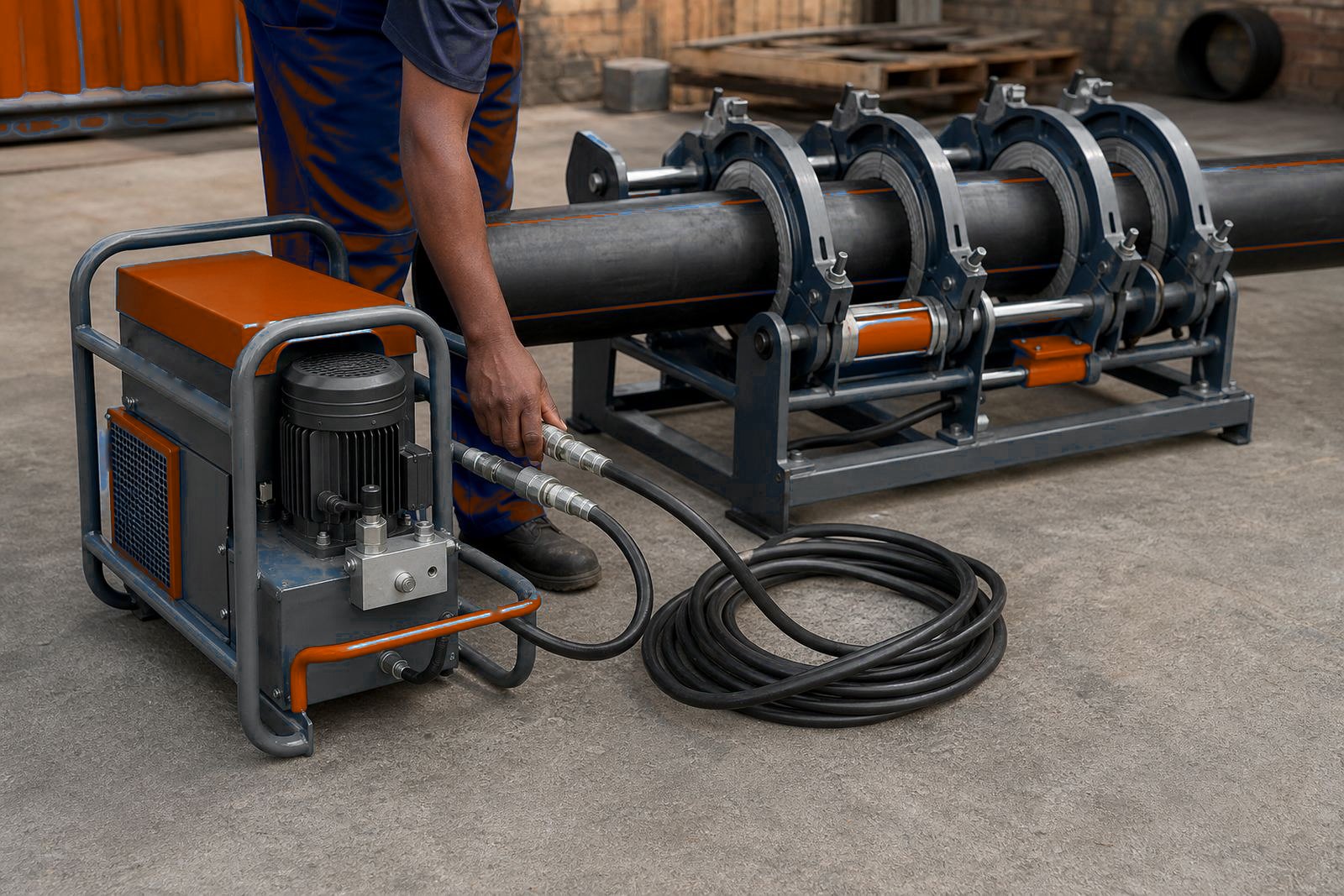
On bigger jobs, crews often use lift straps together with fusion machine clamps, rollers and support stands. That gives better control when shifting long sections into line, especially where the ground is uneven or the site layout leaves little working room around the machine.
Fitting points and handling practice on site
These straps are fitted around the pipe body at a balanced lifting point, usually clear of the fusion face and away from sharp edges. An even sling seat stops the pipe twisting during the lift. For long sections, two-point lifting is often easier to manage than trying to hold the pipe from one point only.
- Check the strap width against the pipe surface area
- Keep the lifting point away from the bevel or faced end
- Use only rated lifting gear with the same load path
- Watch for sand, stones and burrs that can cut the webbing
- Lower the pipe gently onto supports to avoid pinch damage
On fusion yards and project sites in humid coastal areas, straps should be left clean and dry after use. Wet webbing can collect dirt more easily, and grit trapped in the fibres may mark the pipe surface. If the strap has been dragged over concrete or steel, the stitching and edges should be checked before it goes back into service.
Care, inspection and storage between jobs
Pipe lift straps need regular inspection because the strap carries the load and the condition of the webbing affects the handling job. Look for frayed edges, flattened sections, cut fibres, loose stitching and damaged eyes. Any strap that shows heat damage, chemical attack or clear wear should be removed from use.
Store straps out of direct sun where possible, and keep them away from oil, sharp tools and welding heat. Coil them neatly, away from wet boxes and vehicle loads.
If straps are used near fusion machines, keep them clear of heater plates and hot pipe ends. A strap that brushes against a hot surface can lose strength fast, even if the damage is not obvious at first glance. Before a shift starts, the crew should check the tag, load rating and condition, then separate any suspect gear from the rest of the lifting kit.
Details to confirm before ordering
To supply the right pipe lift straps, we need the pipe size range, the usual section length and how the crew lifts on site. Pipe yards, trench edges, fusion tents and mobile machines each need a different strap length and handling, so the setup tells us what to supply.
- Typical section length and estimated lifted mass
- Preferred strap width and working length
- Lift method, including single point or two-point handling
- Need for stitched eyes, reinforced loops or special ends
- Site conditions, such as sand, slurry, rock or coastal humidity
Weld logging support can go out with the straps on the same delivery.
Key facts
| Product type | Soft lifting straps for HDPE pipe handling |
|---|---|
| Common use | Moving pipe sections around the fusion area |
| Typical sizes | Selected by pipe diameter, strap width and working length |
| Load rating | Matched to the lifted section and lifting method |
| Material | Woven synthetic lifting webbing with reinforced eyes or loops |
| Support areas |