Holding short HDPE pieces without letting the joint wander
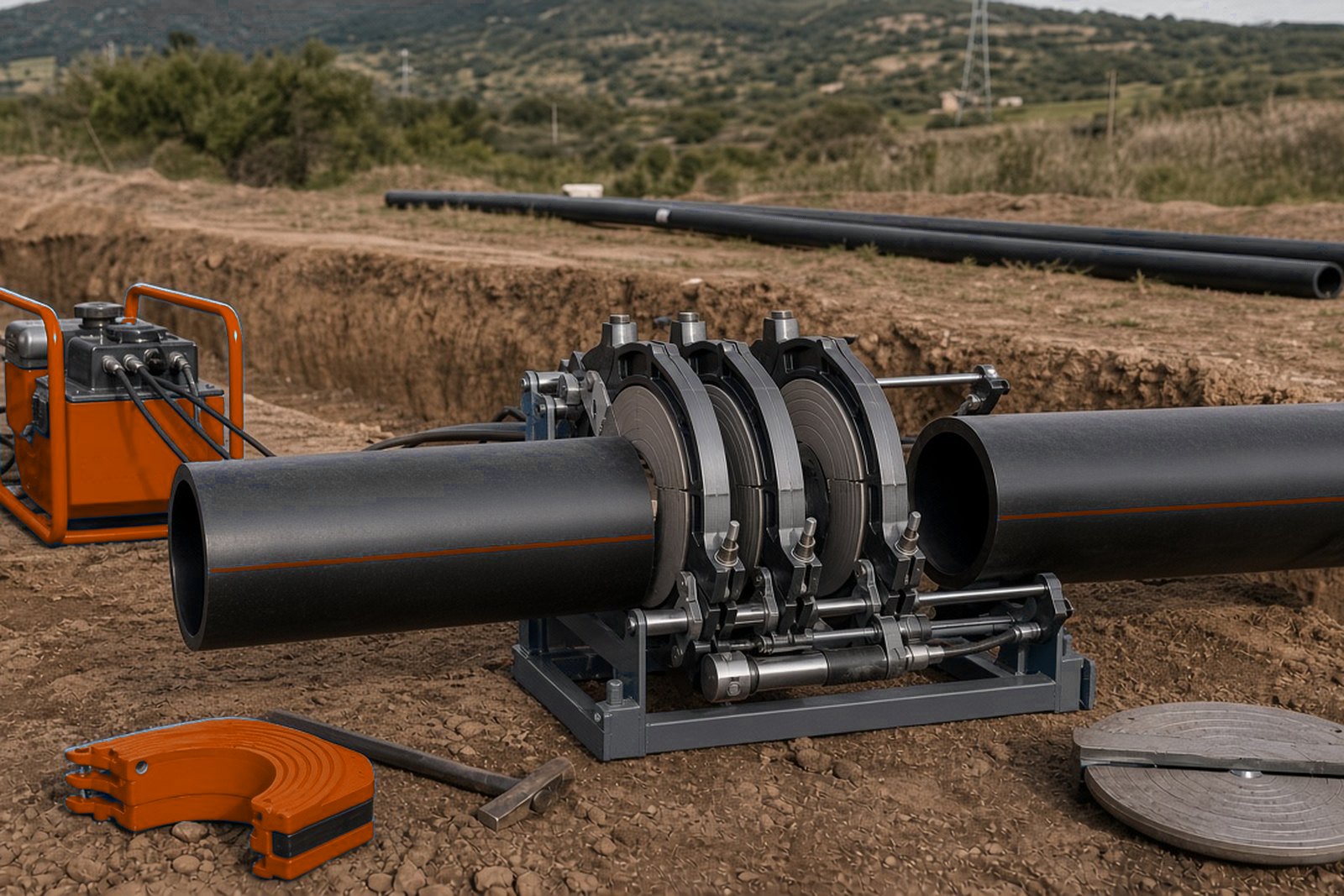
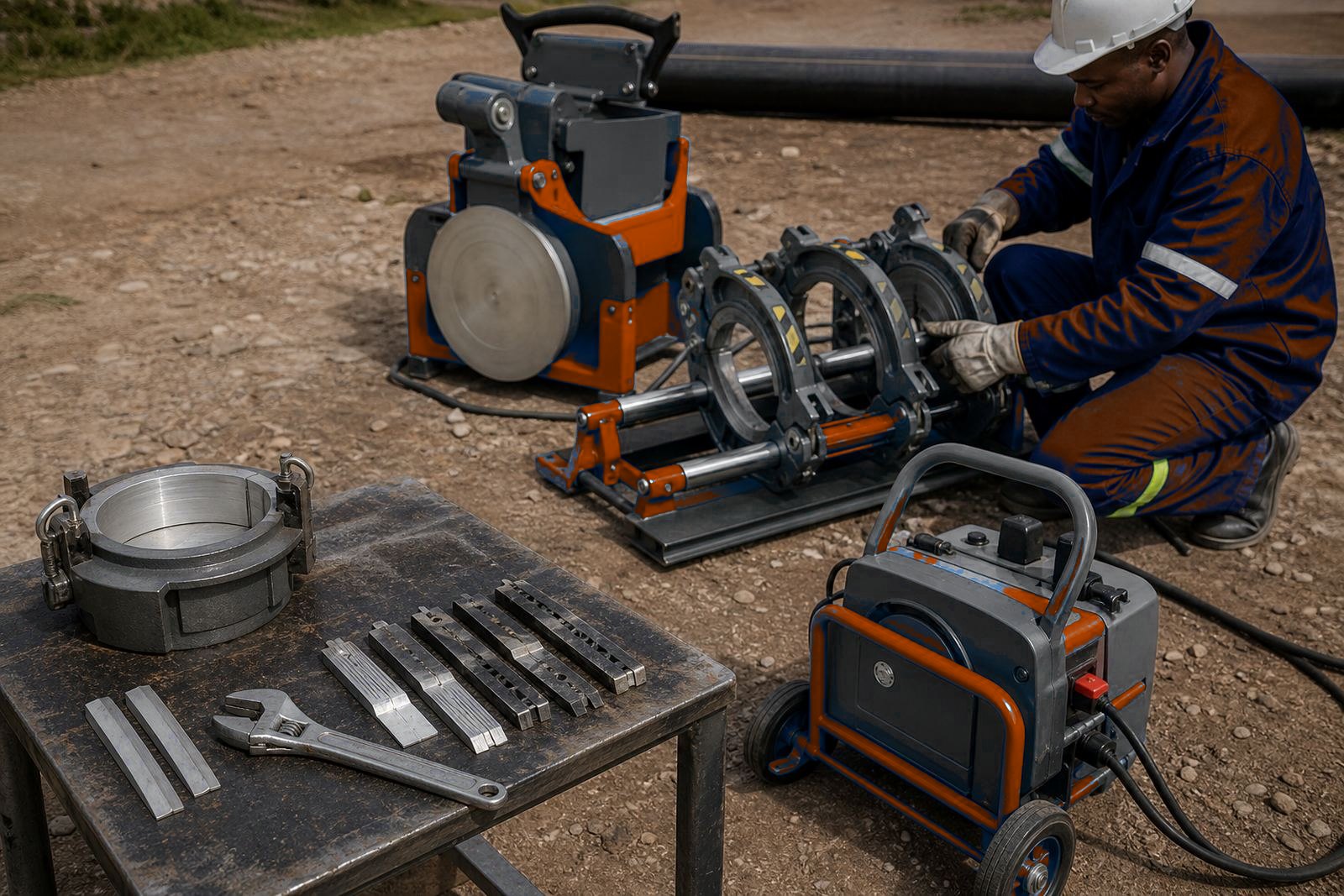
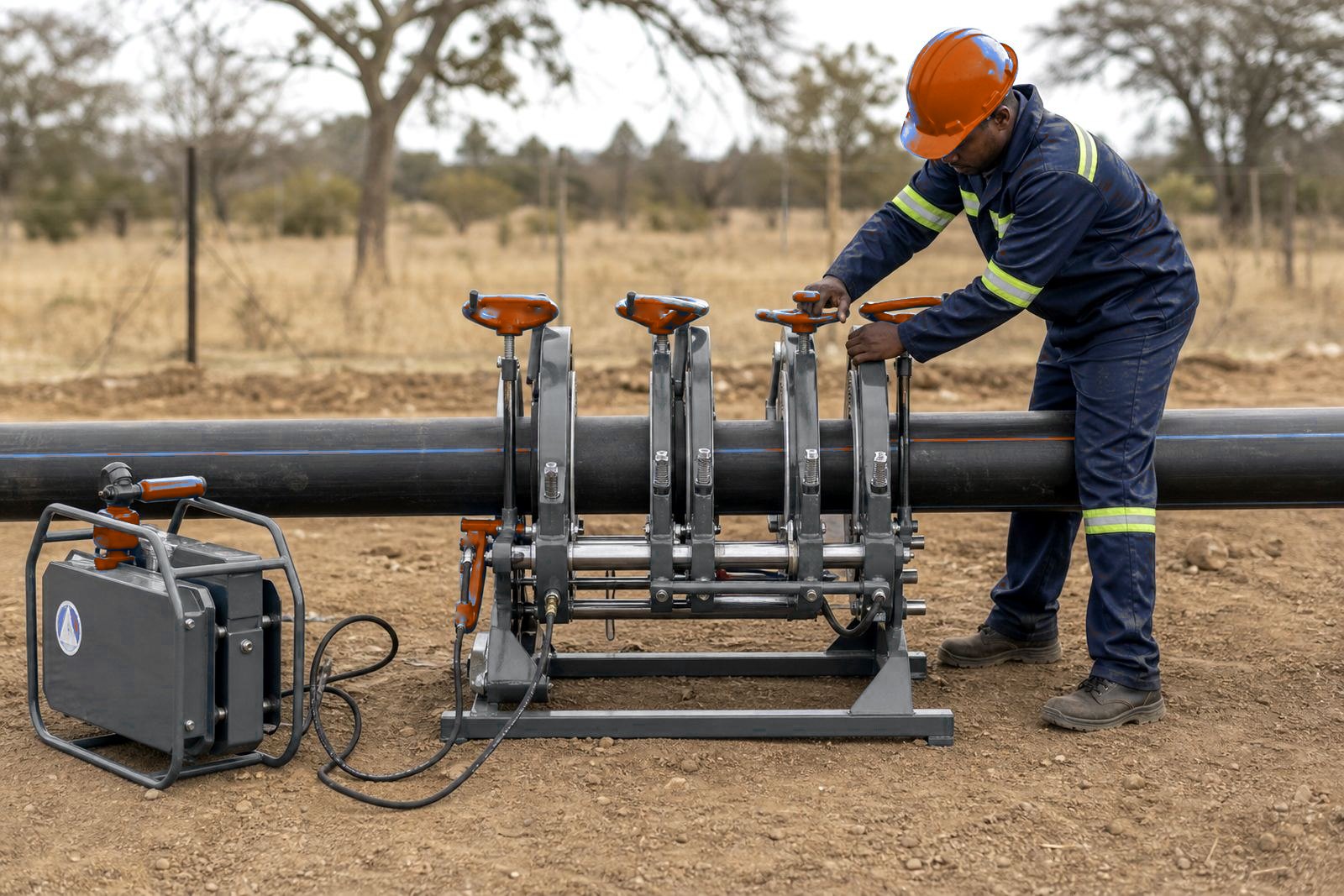
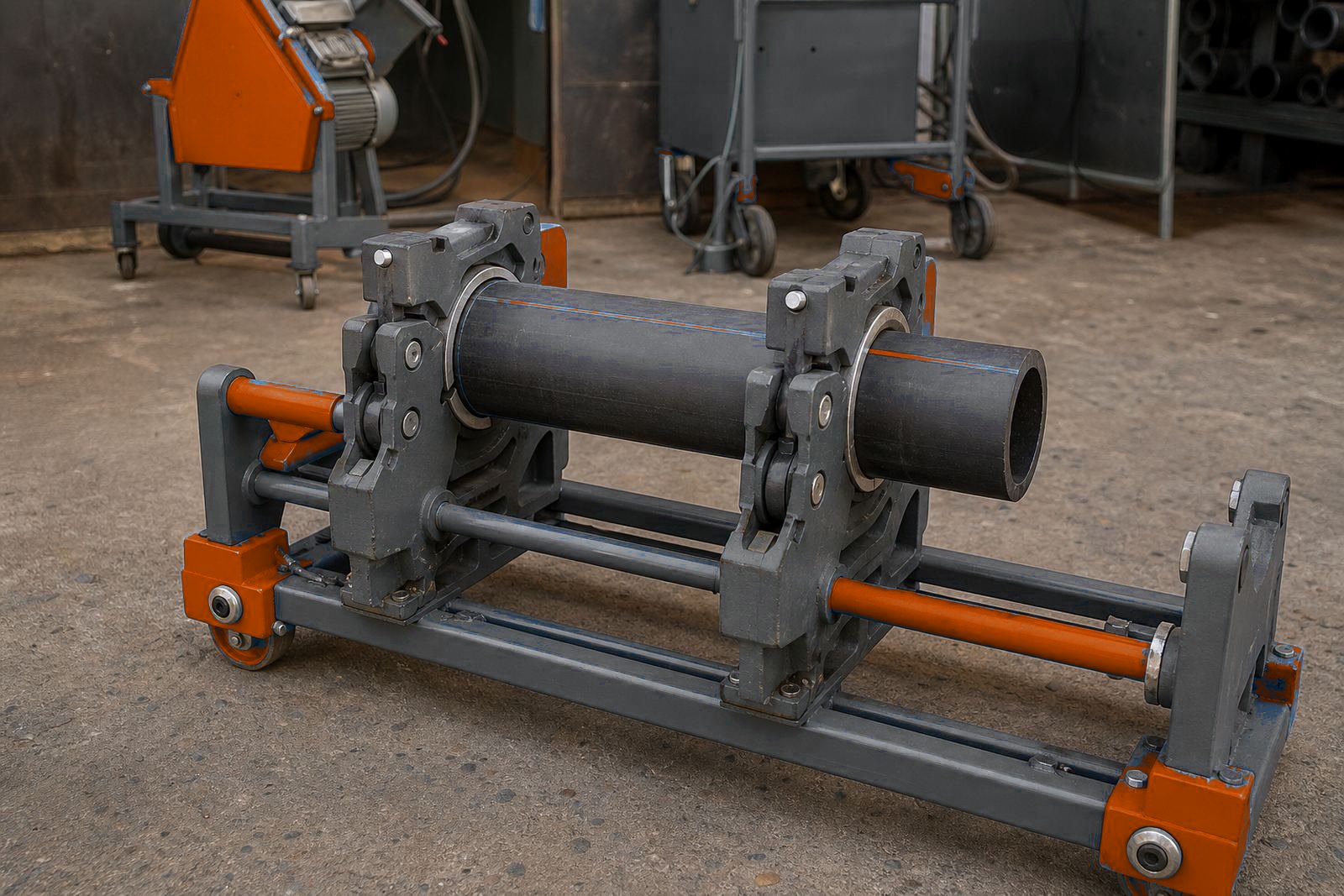
Stub end clamps are used on butt-fusion jobs where the pipe end is short, the assembly is uneven, or there is not enough straight pipe for a standard grip. In these situations the clamp holds the pipe and keeps the stub end aligned so the facing cut stays even and the fusion faces meet properly after changeover.
Stub end clamps grip without crushing the wall and keep the centreline true. Movement at any stage draws the bead unevenly.
- Used for stub ends, short spools and awkward fabrication pieces
- Helps keep pipe ends square during facing and platen contact
- Supports controlled changeover when the heater plate is removed
- Useful where a standard jaw set cannot reach the holding point
Sizes, grip ranges and clamp layout
Stub end clamps are selected by pipe outside diameter and the way the job is set up on site or in the shop. For HDPE pipe, that means checking the actual pipe size and the SDR so the wall thickness matches the clamping force and the machine’s jaw setup. A clamp set that suits one diameter may still need insert blocks or jaw liners to suit another wall section properly.
Common options include single-piece clamp bodies, paired clamp sets, adjustable ring support and removable inserts for different pipe sizes. Some fabrication work calls for a compact frame that can sit close to a wall or trench edge. Other work needs a wider opening so the pipe can be introduced without twisting the stub end out of line.
- Available across practical HDPE pipe ranges for site fabrication
- Works with short pieces where pipe length is limited
- May include liners, inserts or adjustable support points
- Chosen by diameter, wall thickness and work position
Where stub end clamps are used on site
These clamps suit fabrication where stub ends must be joined into a clean alignment before fusion. In the workshop, they hold flanges, fittings or short spools in a fixed line while the operator checks the joint face and the bead profile.
A short piece can rock, spring or rotate if the clamp is too light or the set-up is rushed. In tight spaces, the clamp holds the pipe steady through heating, changeover and the cooling period, keeping line and level.
For installations near live plant, the machine layout must leave enough space for the heater plate, facer and operator movement. The clamp is a mechanical holding item, so pick the frame and insert to suit the pipe with no extra force.
Fitting the clamp into a proper butt-fusion sequence
Stub end clamps stay on through the full welding sequence, from facing to cooling. After that the fitter checks the facing result, cleans the hot plate surface and brings the pipe ends into contact under the correct heating pressure.
The clamp must keep the assembly still while fusion pressure builds and during the cooling time that follows. If the clamp slips or flexes, the bead can end up uneven or one side may carry more load than the other. An even external bead on a stub end usually means the pipe stayed centred while it was heated and joined.
- Pipe ends must sit square before facing starts
- Clean contact surfaces are needed before heating
- Changeover should stay steady and free of twist
- Cooling time before releasing stub end clamps
Care, wear points and workshop handling
Stub end clamps need regular inspection because they work under force and often collect dust, grit and pipe shavings. Jaws, inserts, pins and locking points should be kept clean and checked for scoring or play. Inspect hydraulic or mechanical loading parts regularly so the holding pressure stays consistent.
After field use, wipe off mud, sand and weld residue before storage. In coastal or humid conditions, metal parts should be dried and stored in a clean area to limit surface corrosion. If the clamp is used with hire fleet equipment or moved between job sites, it should be checked for bent guides, worn liners and damaged faces before it goes back into service.
- Keep clamp jaws free of grit and clean
- Inspect pins, locks and support surfaces for wear
- Store dry after use, especially near coastal air
- Check alignment after rough transport or trench work
What to confirm before ordering a clamp set
Choose the right stub end clamp by confirming the size, pipe series and installation environment for the job. A clamp that works on 110 mm pipe may not suit a heavier wall or a different fabricating layout. Stub end orders describe the OD, SDR, wall, fitting type and whether work is in a workshop or on site.
Tell us whether the setup is for new fabrication, remedial work or repeated field use. For a hire fleet or workshop kit, confirm the storage method, transport length and whether the team needs spare inserts or jaw blocks. Logger leads and the operator's view need space around the stub end clamp arrangement.
- Pipe outside diameter and SDR
- Wall thickness and fitting or stub end type
- Work position, trench access and available clearance
- Need for inserts, jaw blocks or spare support parts
Key facts
| Product type | Stub end clamp arrangement for HDPE butt-fusion work |
|---|---|
| Pipe sizes | Made to suit specific HDPE outside diameters and wall ranges |
| Typical use | Short pieces, stub ends, spools and awkward fabrication setups |
| Holding method | Mechanical clamping with alignment support and insert options |
| Workflow support | Facing, heating, changeover, fusion pressure and cooling control |
| Use locations | Workshop, trench, plant area and field fabrication |