Where this manual fusion frame fits on site
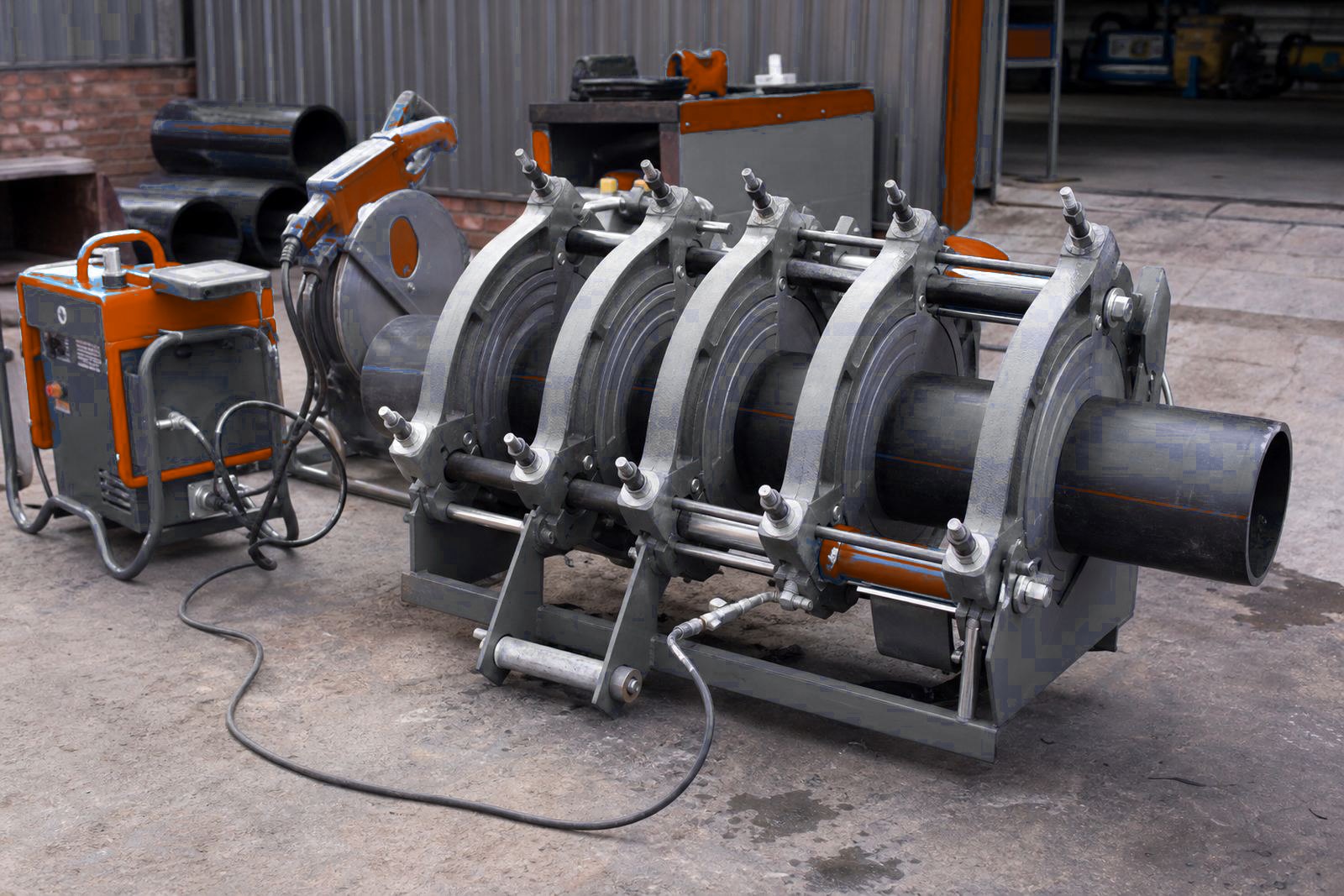
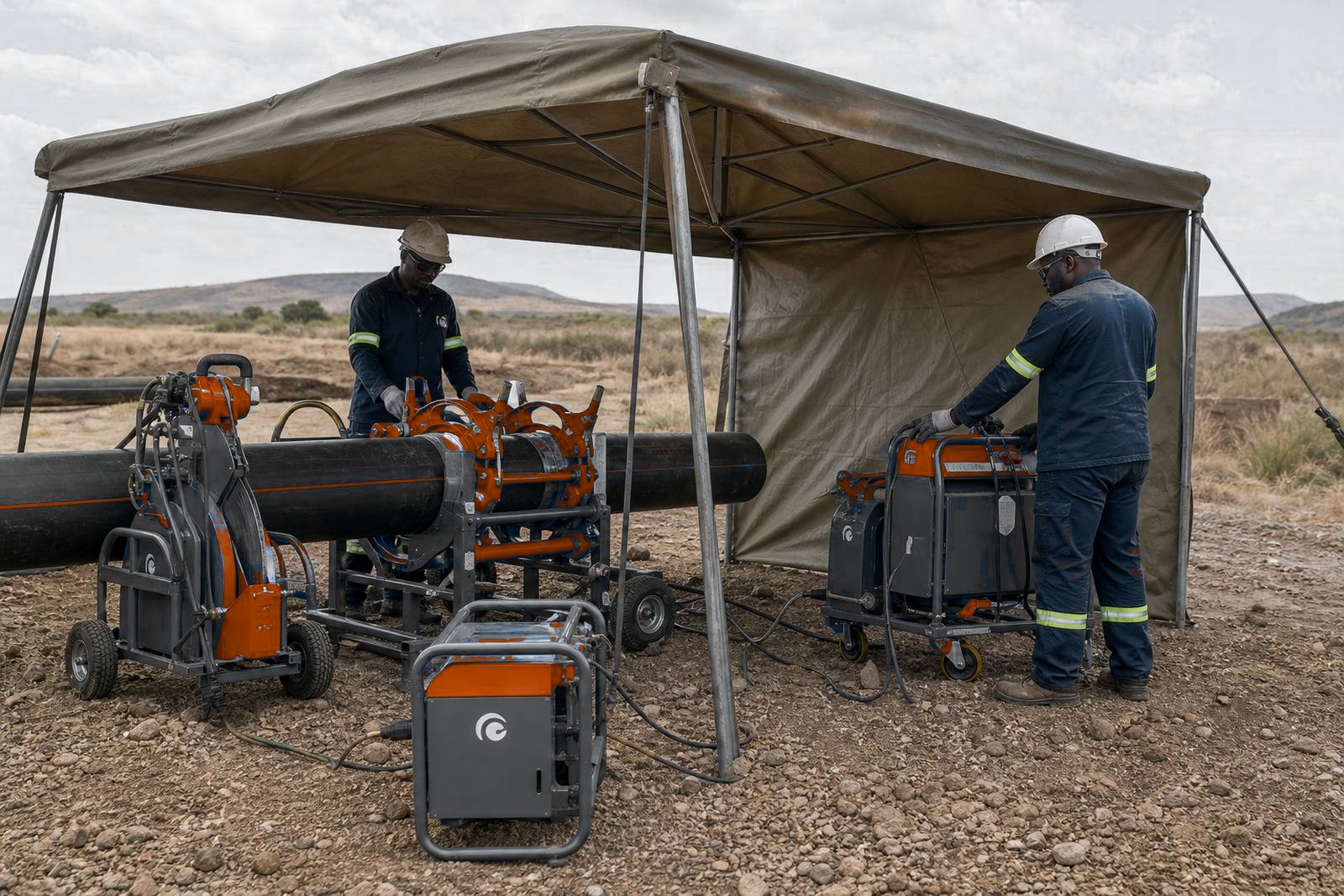
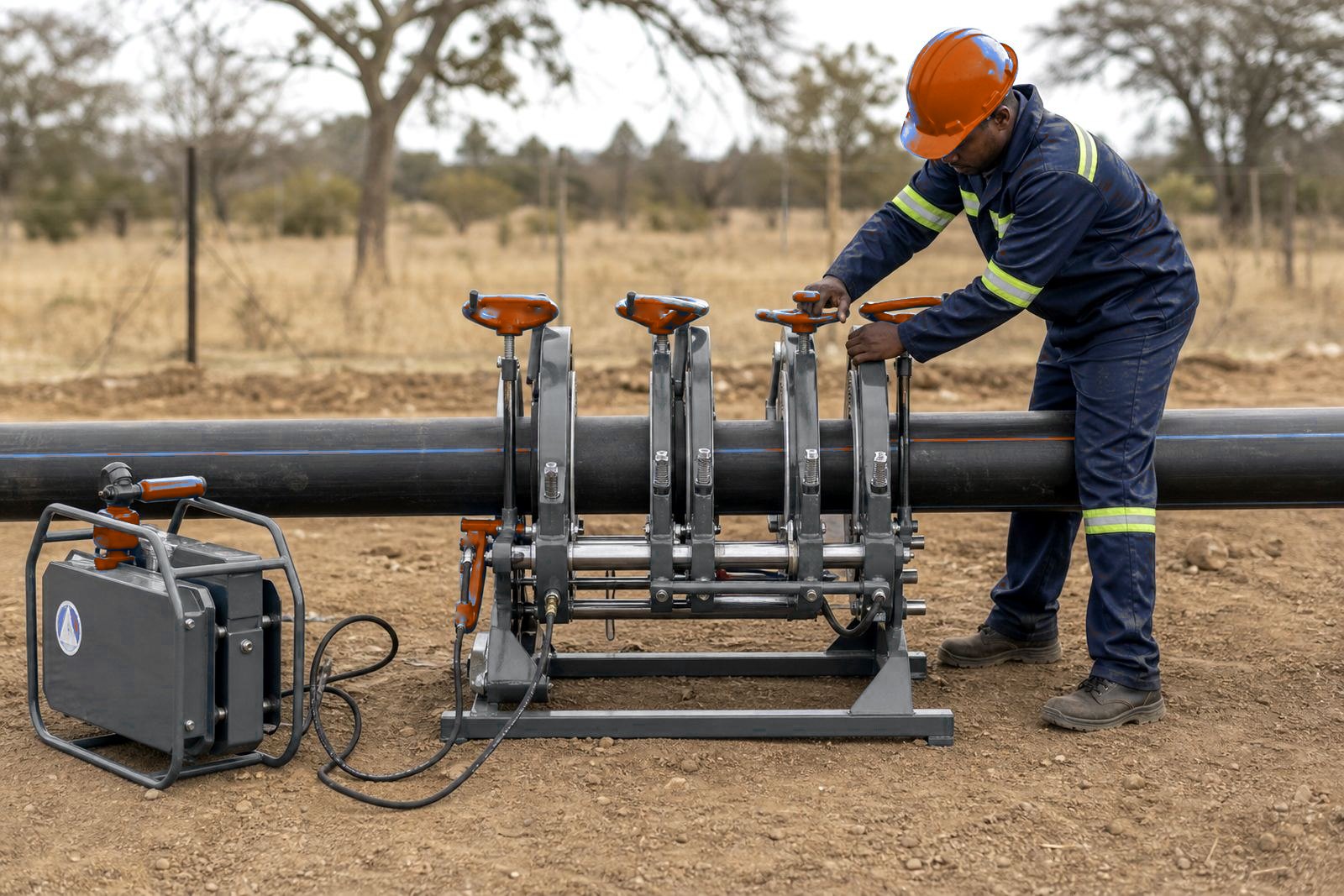
This manual welder is used for butt-fusion joins on HDPE pipe where the crew needs a compact frame, accurate clamp alignment and a heater plate that holds a stable face. A practical fit for municipal tie-ins where pipe sizes move between 90mm, 110mm, 125mm, 160mm, 200mm and 250mm.
The 90-250mm frame handles short runs, repair sections and planned tie-ins. The process needs clean pipe ends, square clamping and a steady changeover before the molten faces lose heat.
- Pipe range: 90mm to 250mm OD
- Manual operation for controlled field work
- Useful on trench lines, yard prefabrication and maintenance shutdowns
- Works with HDPE pipe in common SDR classes used on site
The weld cycle this unit is built around
The ends are clamped, faced until the cut faces are true, then cleaned and checked before the heater plate is brought in. Once the correct melt bead forms, the heater is removed, the pipe ends are changed over quickly and fusion pressure is applied evenly while the joint cools under clamp.
Manual frame follows that sequence, so the process stays on track. Misaligned pipe or a slow changeover can leave a joint that has to be cut out. A good crew watches bead shape, fusion pressure, heater temperature and the cooling time.
- Facing for square, clean pipe ends
- Heating with a stable plate temperature
- Fast changeover between heating and fusion
- Cooling under pressure before release
- Bead inspection for even roll and alignment
Sizes, clamps and setup choices
The frame size, reducer inserts and clamp layout need to match the pipe that arrives on site. A 90-250mm set suits crews who handle mixed diameters, with the working range set by the pipe wall and SDR. A larger wall section needs the right pull and hold, while lighter SDR lines need careful pressure control so the bead does not spread too far.
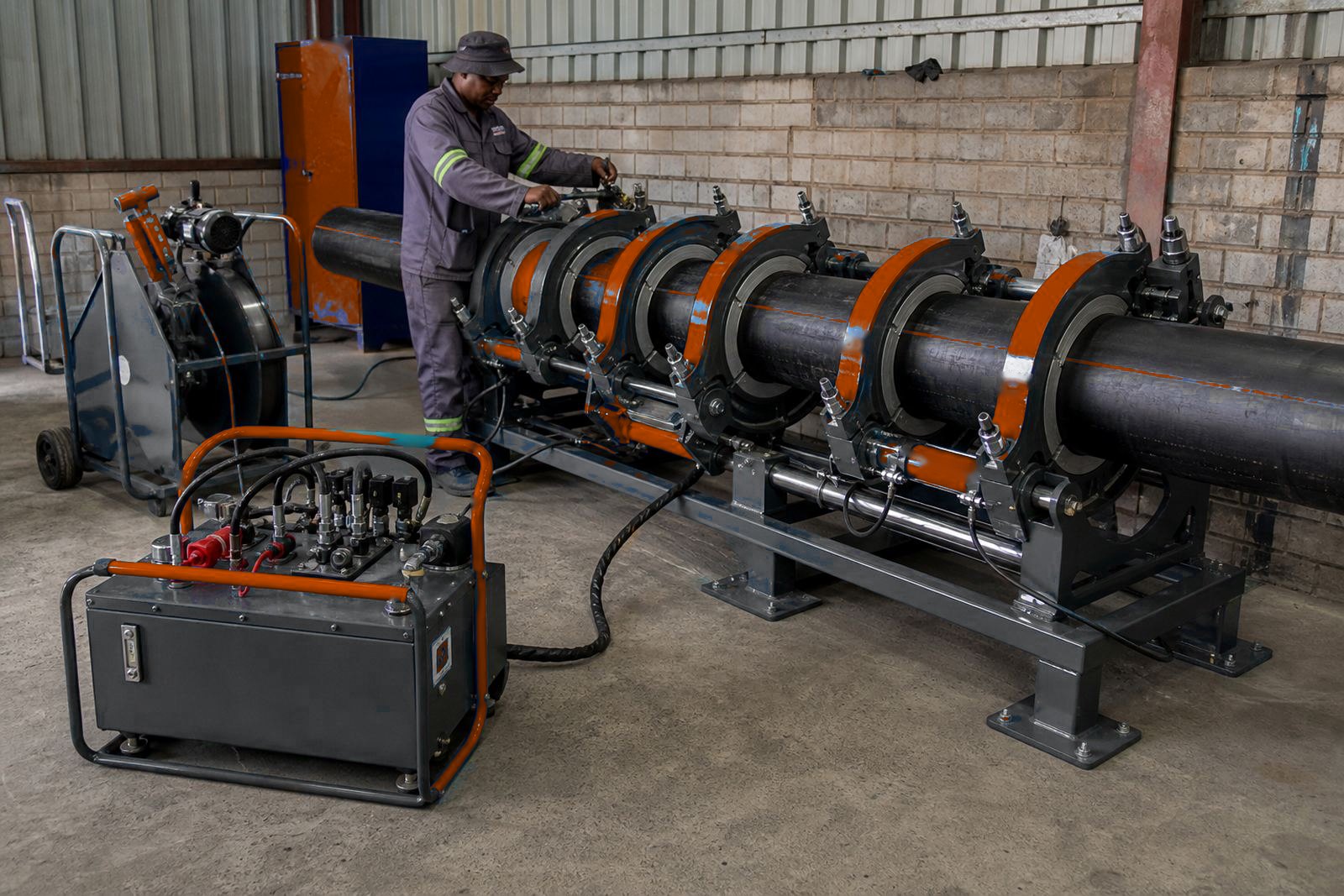
For crews doing water reticulation, a common setup includes a rigid base, centre clamps, a facer, heater plate, quick release handling and enough working room to keep the pipe ends clean. Logging on the 90-250mm manual welder records long runs, with pressure, timing and alignment still set by hand.
- Check clamp grip and pipe support length
- Match heater plate width to the largest joint size
- Use logging where project records are required
For water reticulation teams
This machine suits teams working across repairs, extensions and small to mid-size installations. On water reticulation work it is often used for pressure line joins and line extensions where a tidy, repeatable butt weld is needed. Chamber work with tighter access is within its reach too, as the frame stays steady.
Service lines, process water and replacement sections are all welded on this frame. The manual control helps when the job is awkward or the pipe is not lying perfectly level. With the right operator, the machine gives a clean weld profile and a joint that can be inspected before backfill or reinstatement.
Care on the machine, plate and hydraulic parts
Keep the facing knives sharp so they cut a continuous shave. Scorched plastic left on the plate marks the next joint, so the face is cleaned between welds. After heavy work, check clamp alignment, guide bars, hydraulic pressure and the facer drive so the frame remains straight under load.
For owned machines, a routine service should look at plate condition, cable integrity where fitted, seals, hoses, pressure readings and the general movement of the carriage. In coastal areas like Durban or Cape Town, salt air can work onto exposed metal quicker than inland, so crews wipe down and store machines dry.
What to confirm before a hire or purchase
With an order, include the pipe diameter range, pipe material, SDR class, job location and whether the crew wants data logging or a plain manual unit. Straight runs, short repairs or repeated tie-ins each change the clamp layout and support gear.
Practical job details let our teams match frame, facer, plate and clamps to the work.
- Pipe diameter and wall class
- SDR range and material type
- Site location and access limits
- Whether weld logging is needed
Key facts
| Pipe size range | 90mm to 250mm OD |
|---|---|
| Fusion type | Manual HDPE butt-fusion |
| Main components | Frame, clamps, facer, heater plate |
| Typical use | Pipework from 90mm to 250mm |
| Records | Manual weld logging with optional data support |