What these clamps do on a segmented bend build
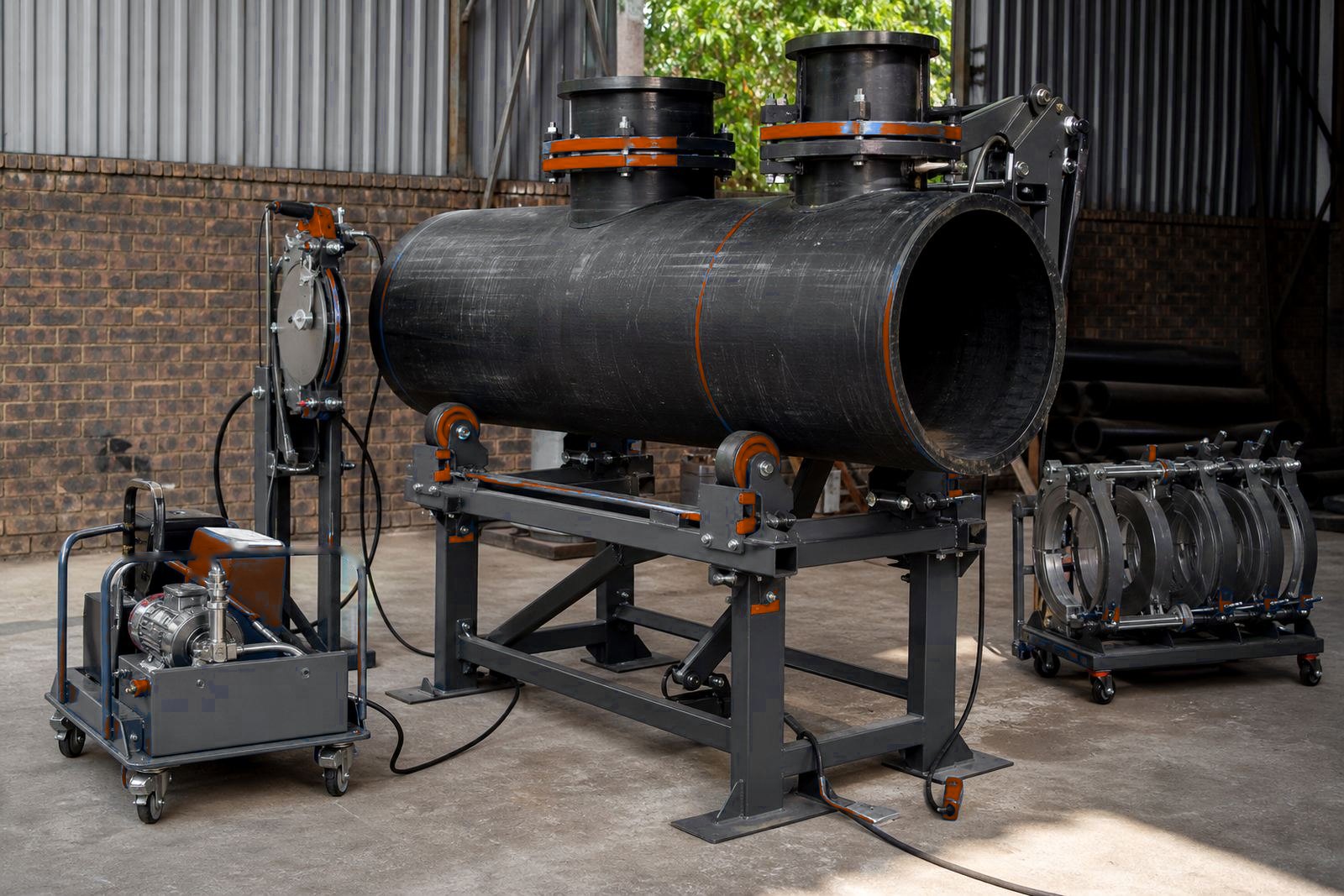
Elbow fabrication clamps hold cut sections while an HDPE bend is built up as a segmented elbow. Each segment must sit at the right angle before the heat cycle begins, because small shifts at the root or crown can throw the bend off line and leave the pipe face uneven.
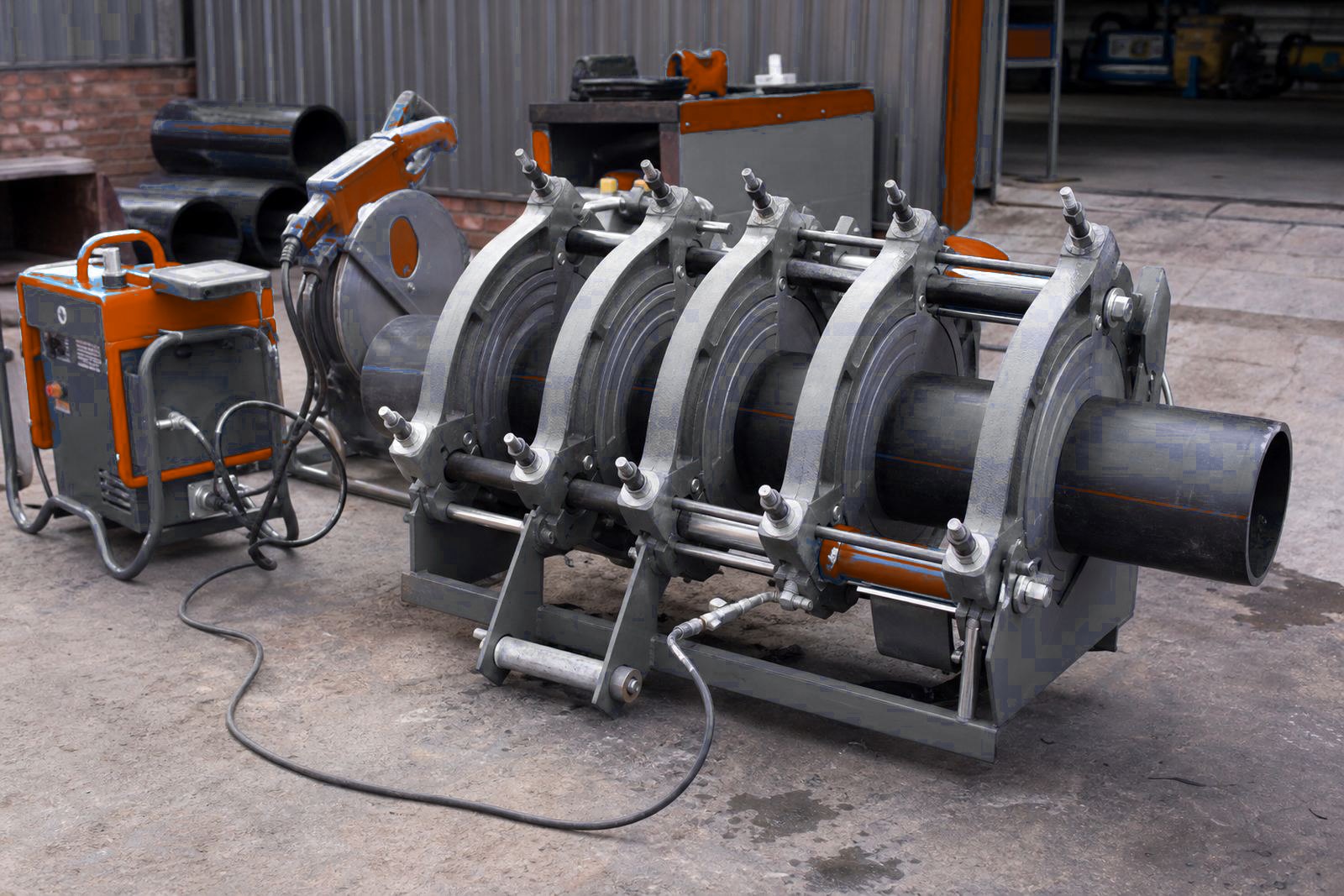
The clamp body keeps the segment ends stable during facing, heating, changeover and the pressure phase. Good setup keeps the bead even around the joint and makes bead inspection easier once the weld cools.
For fabrication teams working with HDPE, the clamp is part of the accuracy chain. Squareness, clean ends and bend geometry are still the fitter's job, with the clamp holding a fixed reference.
Sizes, angles and pipe ranges
Clamp sets are selected to match the pipe outside diameter and the bend layout. For fabrication work, the useful range usually includes medium and large diameters used on site, with inserts or jaws that suit the pipe wall without bruising the surface. The clamp must hold the pipe snugly without pinching it out of round.
- Pipe sizes can be matched to the project range, commonly from smaller utility pipe through to large bore lines.
- Clamp jaws may be fixed, adjustable or fitted with changeable inserts for different diameters.
- Angle setting helps position the segment pair for 11.25 degree, 22.5 degree, 30 degree, 45 degree and custom elbows.
- Some fabrication tables use a single centreline clamp, while others use paired clamps for longer segments.
- Heavy sections benefit from support arms or stands to carry the pipe weight during heating and cooling.
For SDR work, the clamp should match the pipe series being fabricated so the wall is held properly and the fusion faces stay square. Thin wall pipe needs gentler support than thick wall pipe, especially on long radius bends where the segment length is greater.
Where elbow clamps are used on site
These clamps suit installations where direction changes are built in on site. Segmented bends are common where the route follows uneven ground and a ready-made elbow will not match the angle required.
In workshop and field fabrication, the clamp helps with repeatable elbow sections for manifolds, pump lines and diversion runs. Lines built in stages and lifted in after the bend is made also use these clamps. The bend can be built to the line marked by the fitter, with no fixed fitting size to work around.
- Trench-side fabrication for long pipe strings.
- Workshop elbow preparation before installation.
When the elbow is part of a pressure line, the clamp setup should make it easy to inspect the finished bead and confirm that the segment faces stayed aligned through the full cycle.
Fitting, heat cycle and clamping pressure
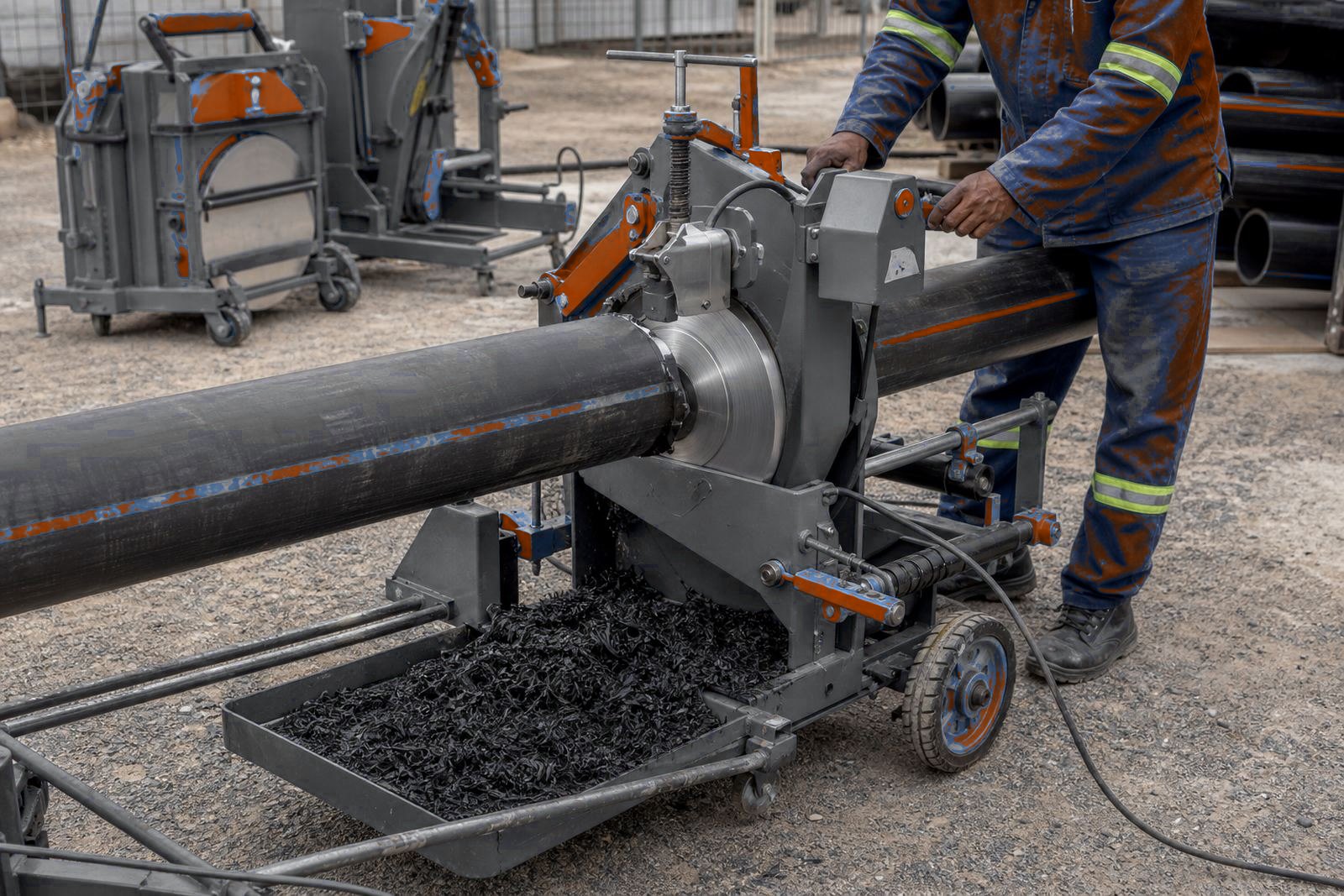
Set the segment angle and secure the first face before clamping the next segment. The fitter then planes or faces the pipe ends, checks the gap and makes sure the surfaces meet cleanly.
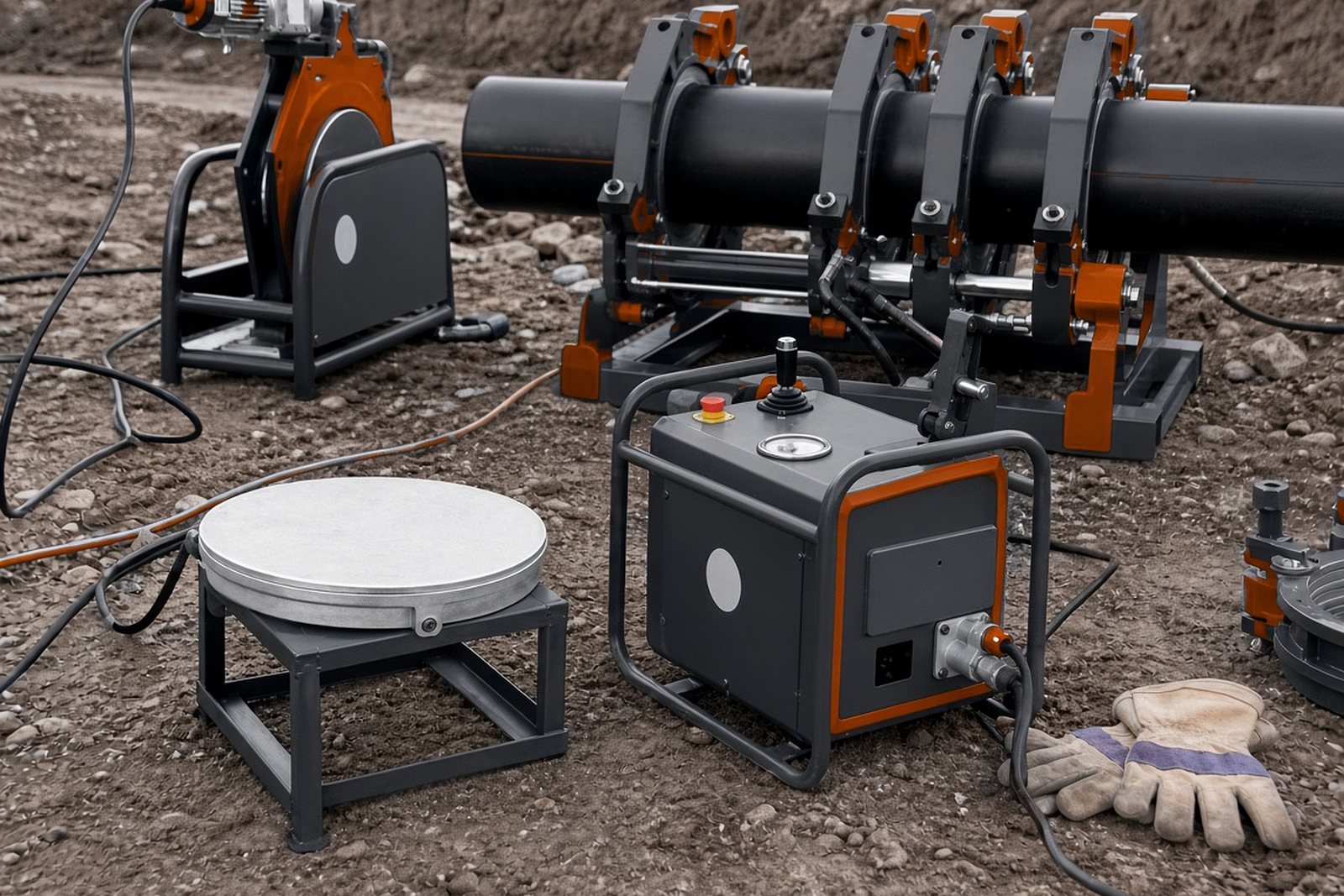
The clamp holds the elbow aligned through heating, transfer and cooling, with inserts sized to the pipe outside diameter. Pressure is adjusted to suit pipe size, wall thickness and the geometry of the elbow. Large-bore pipe can spring back or settle while the bend joint cools.
If the clamp is released too early, the elbow can move before the molten interface has gained strength. A well set clamp makes it easier to keep the bend angle steady until the bead has formed and the weld has taken hold.
Care, checks and workshop handling
Fabrication clamps work hard and need regular checking. Dust, grit and dried polyethylene shavings can sit in the jaws and reduce grip. Hydraulic parts, pins and adjustment threads should be kept clean and inspected for wear before a job starts. If the clamp is used in coastal air or damp storage, light surface corrosion should be dealt with before it becomes a movement problem.
- Wipe the clamp surfaces after each job and remove plastic residue.
- Check jaw faces for dents, burrs and uneven wear.
- Keep moving parts lubricated where the design calls for it.
- Keep clamps flat on level supports so the frames do not warp under their own weight.
- Inspect locks, pins and hydraulic connections before field use.
Where the pipe run is logged, the clamp setup should allow the team to note the size, SDR, angle and weld sequence. That helps with traceability on bigger jobs, especially when several bends are made in one shift and each joint must be easy to identify later.
Confirm these details before ordering a clamp set
Before ordering, confirm the OD, SDR, elbow angle and whether the work will be done in a workshop or on uneven site ground. Mention whether the elbow clamp runs with a facing tool, a heater plate setup or a separate fabrication stand. Send the elbow details so the clamp can be matched to the build.
- Required elbow angle and segment count.
- Pipe material grade and common job sizes.
- Whether the clamp must fit a fixed table, skid or portable frame.
- Need for hydraulic control, manual tightening or mixed adjustment.
- Any data logging, weld record or inspection routine used on site.
The clamp is chosen for how the elbow is fabricated. Choose the clamp for pipe size, bend angle and site conditions.
Key facts
| Product type | Elbow fabrication clamps for segmented HDPE bend assembly |
|---|---|
| Pipe sizes | Matched to the project diameter range, from smaller utility pipe to large bore |
| Angle support | Typical settings for 11.25 degree, 22.5 degree, 30 degree, 45 degree and custom bends |
| Pipe series | Suitable for multiple SDR wall thicknesses when jaws are correctly matched |
| Use with | Facing tools, heater plates and butt-fusion work tables or stands |
| Finish | Heavy duty fabricated frame with alignment jaws, adjustable locking and support points |