Facing work that keeps the joint line true
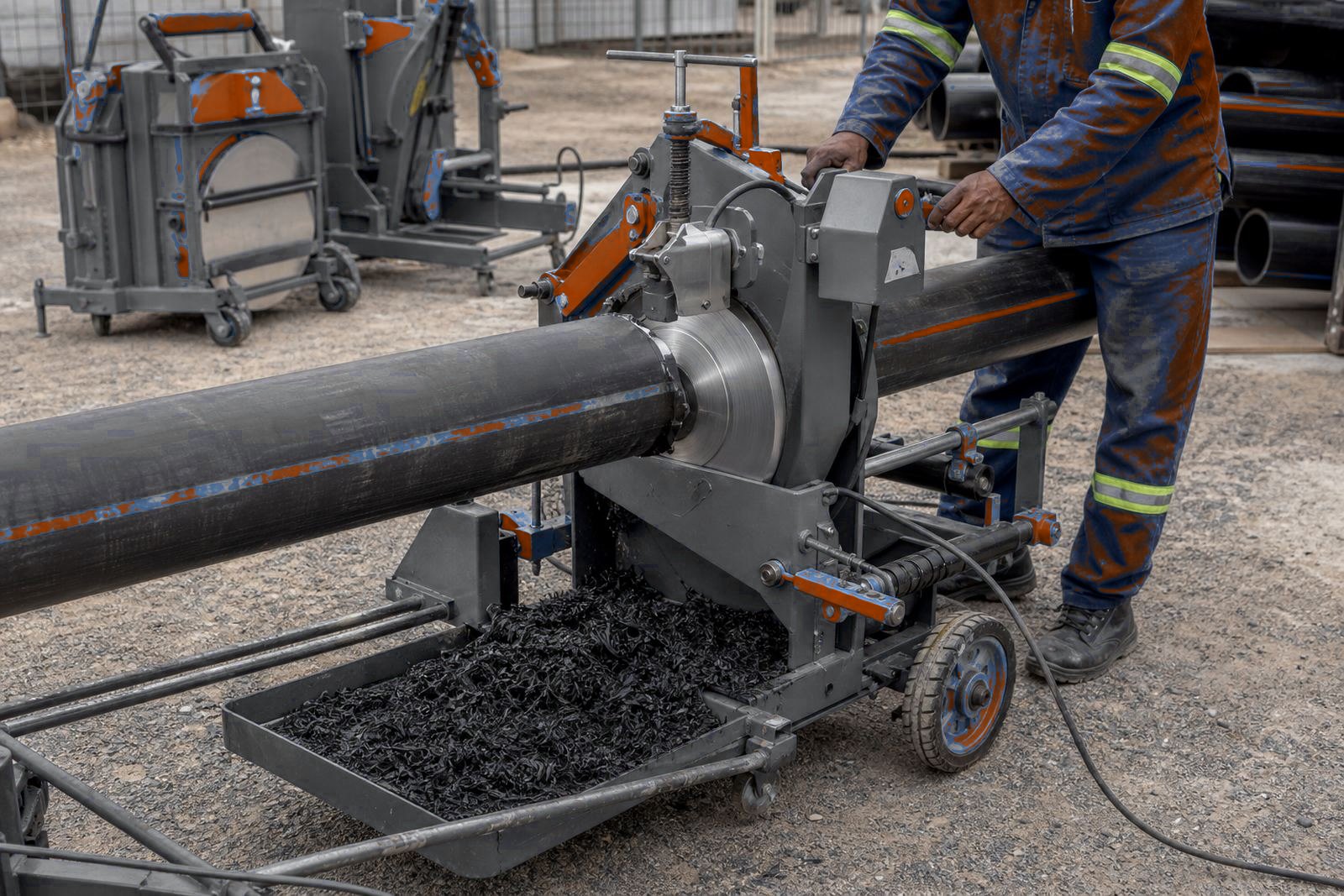
A facing tool trims the pipe ends before heating so both faces meet evenly across the full area. High spots on a badly faced end give uneven contact and let the pipe move under fusion pressure. A medium facing tool is used where crews need a practical workshop or site unit for everyday HDPE work, with enough blade reach and clamping control for the sizes most often found on contractor jobs.
For field use, the tool helps remove oxidation, light ovality and saw marks from the cut end. A cleaner face for the heater plate gives better bead formation and a joint that settles evenly during cooling. In wet coastal air or dusty inland yards, the cutting edges and clamp faces are cleaned regularly so the tool keeps its set and shaves the material cleanly.
Pipe sizes and site use for common contractor ranges
This medium facing tool suits HDPE pipe sizes that fit a practical clamp span. It suits crews handling medium diameters, from above small service pipe up to below large plant lines. Jaw set and frame layout set the medium facer's capacity, so check the pipe OD against the tool first.
- Common HDPE contractor sizes within the tool range
- Use on SDR pipe where wall thickness and clamping force are matched correctly
- Suitable for trench-side preparation, depot work and site assembly
- Works with butt-fusion machines that need consistent face alignment
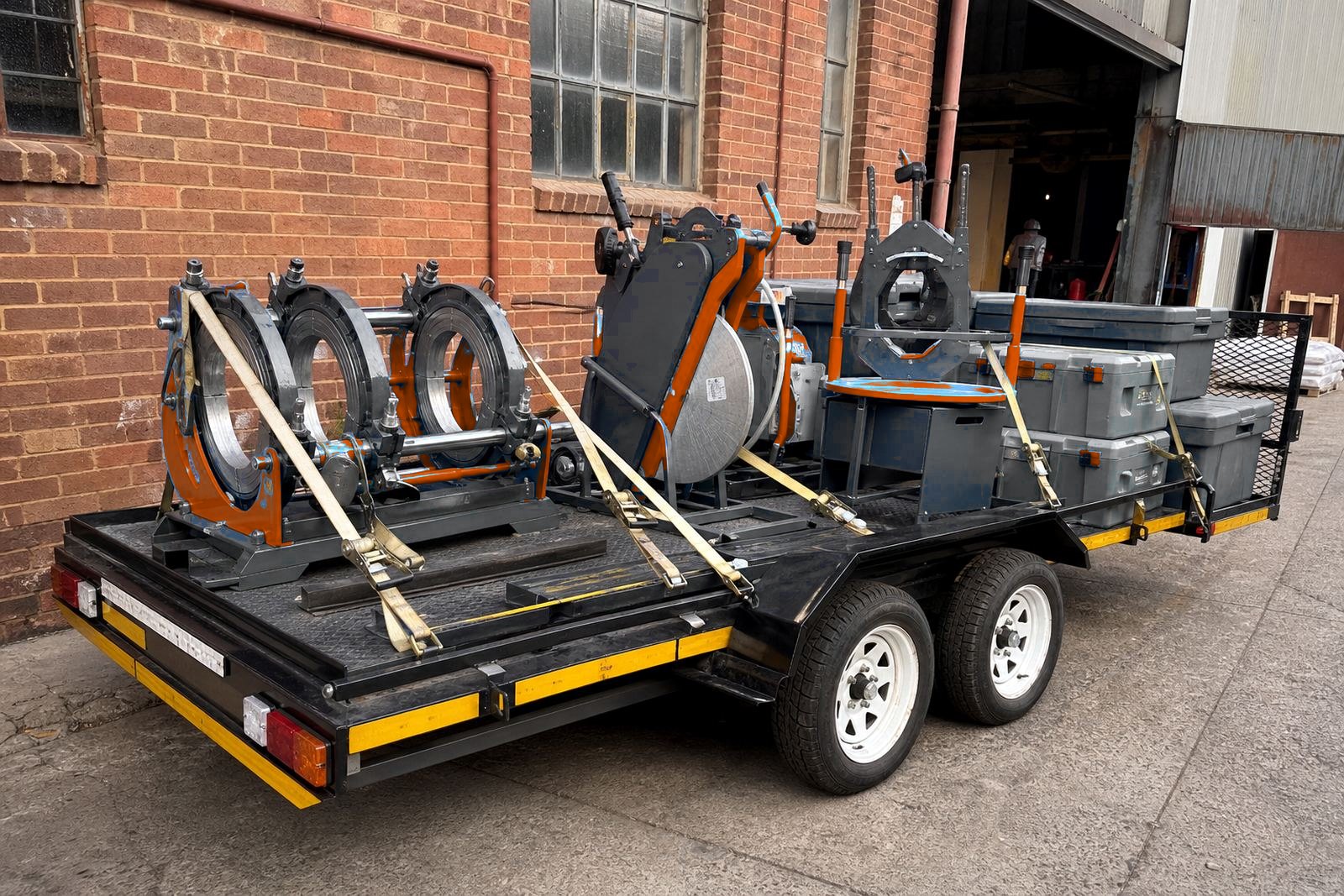
Where the line runs across different towns or long civil stretches, crews often move the facers between jobs. That makes the carry weight, lock points and service access worth checking, especially when the tool is being loaded in and out of site vehicles through muddy ground or tight yards.
What the tool does before heating and changeover
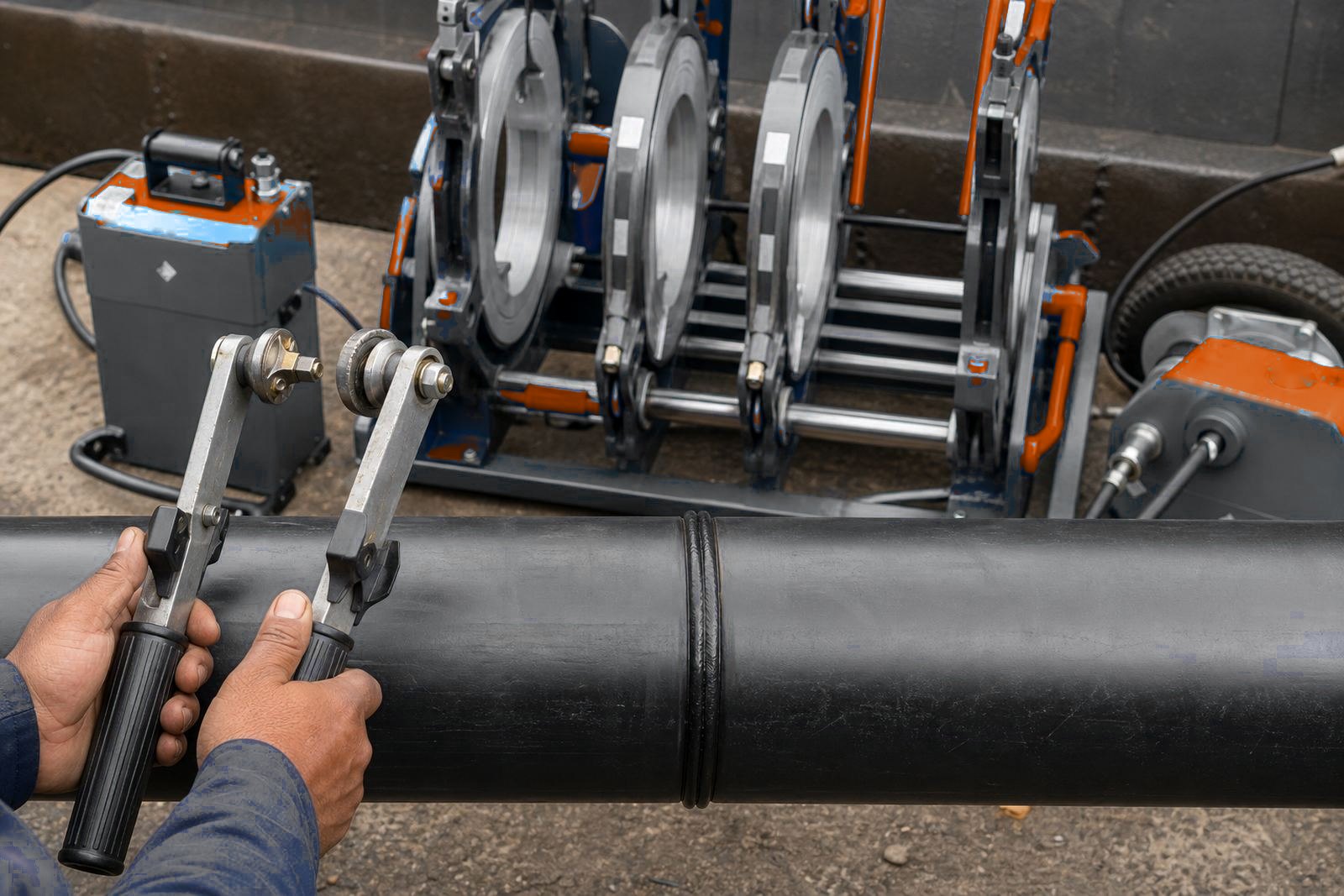
Rushing the facing stage upsets the butt-fusion sequence. The joint is then held during cooling so the bead can set without movement.
A medium facing tool supports that process by reducing end mismatch and helping the heating face sit flush. On the day, the operator looks for even shaving across the full circumference, no deep chatter marks and no burrs hanging into the bore. Bead shape also needs correct machine pressure, a clean heater plate and a steady cooling period, and good facing gives the weld its start.
Specs for a working HDPE line
The practical specifications affect the weld, including clamping stability, blade condition, allowable pipe diameter range and wh. Data logging is usually handled by the welding machine, while the facer still needs to leave a face that can be checked before the joint moves to heating.
- Rigid clamp alignment for end preparation on round pipe
- Replaceable cutting head or blade assembly for ongoing service
- Manual or powered operation depending on the set supplied
- Portable frame for site use and depot work
- Compatible with standard butt-fusion preparation steps
Weld records need both ends faced square and clean by the medium facer first.
Installation, fitting and set-up on site
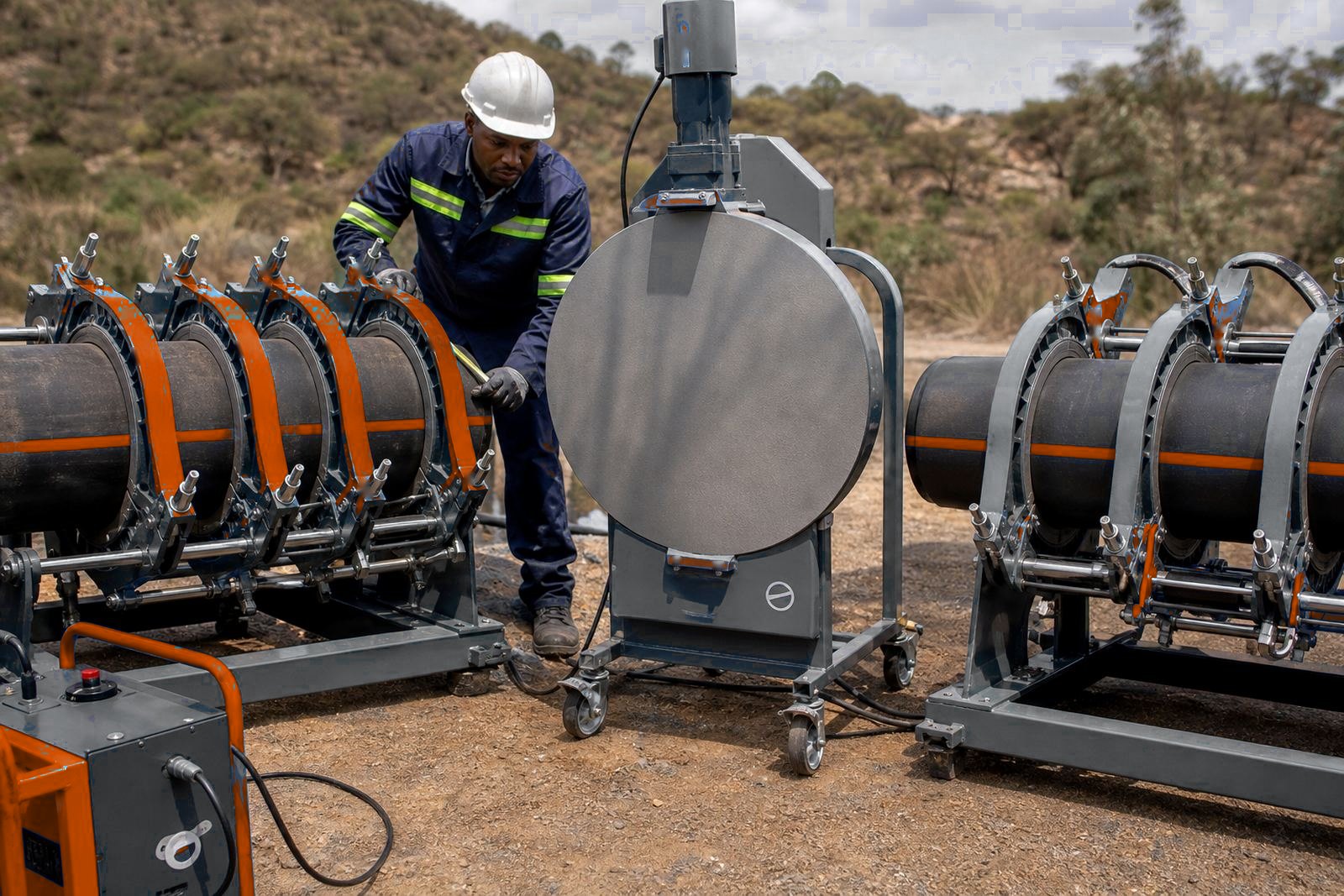
A medium facing tool normally sits between the pipe clamps on a butt-fusion machine or in a matching preparation frame. The fitter must confirm that the jaws grip the pipe evenly and that the facer sits true to the centreline. If the unit is powered, the cable route and supply point need to be kept clear of trench edges and vehicle tracks. On hydraulic setups, hose routing should not force the frame out of line while the cut is running.
When the tool is being introduced to a new crew, setup includes a quick check of the blade, the centring action and the stop position on the pipe. A poor fit shows up fast, usually as uneven shavings or one side taking more material than the other. That is why refresher training is often booked with the tool, especially where different teams share the same kit.
Tool care, servicing and when it needs attention
Facing tools work hard and the blade edges show it. Dust, slurry, pipe swarf and rough handling can all shift the cut quality. Regular care means cleaning after use, checking the blade for wear, inspecting the clamp faces and making sure the travel guides are not binding. If the tool starts leaving ridges or a rough finish, the weld prep is already being affected.
- Clean the cutting area before packing the unit away
- Check centring and clamp wear before each shift
- Keep moving parts lightly lubricated where required
- Inspect for bent handles, loose fasteners or blade damage
- Book servicing when the face quality starts to drift
In humid coastal conditions, especially around Durban and Cape Town, stored steel parts need a bit more care against surface rust. Inland, the issue is often dust getting into the moving parts. A service visit can include alignment checks, a blade change, general tightening and a check of the clamp action.
Ordering details to confirm before the tool leaves the yard
For a medium facing tool, the useful ordering details are the pipe size range, the type of butt-fusion machine it must fit, and whether the crew needs a manual or powered unit. Tell us if the medium facer goes out with clamps and heater plate support or alone for a shared workshop fleet. For remote work in Mpumalanga or the Northern Cape, pack the tool in a padded transport case.
Tell the team the HDPE pipe diameter and the SDR range. Collection inspection can also be arranged so the frame, blade and clamp action are checked before the tool goes out.
Key facts
| Product | Medium Facing Tool |
|---|---|
| Use | HDPE butt-fusion end preparation |
| Pipe range | Medium contractor pipe sizes, size set to be confirmed |
| Operation | Manual or powered, depending on unit supplied |
| Material | Heavy-duty metal frame with replaceable cutting parts |