A broad heating face for larger diameter butt-fusion
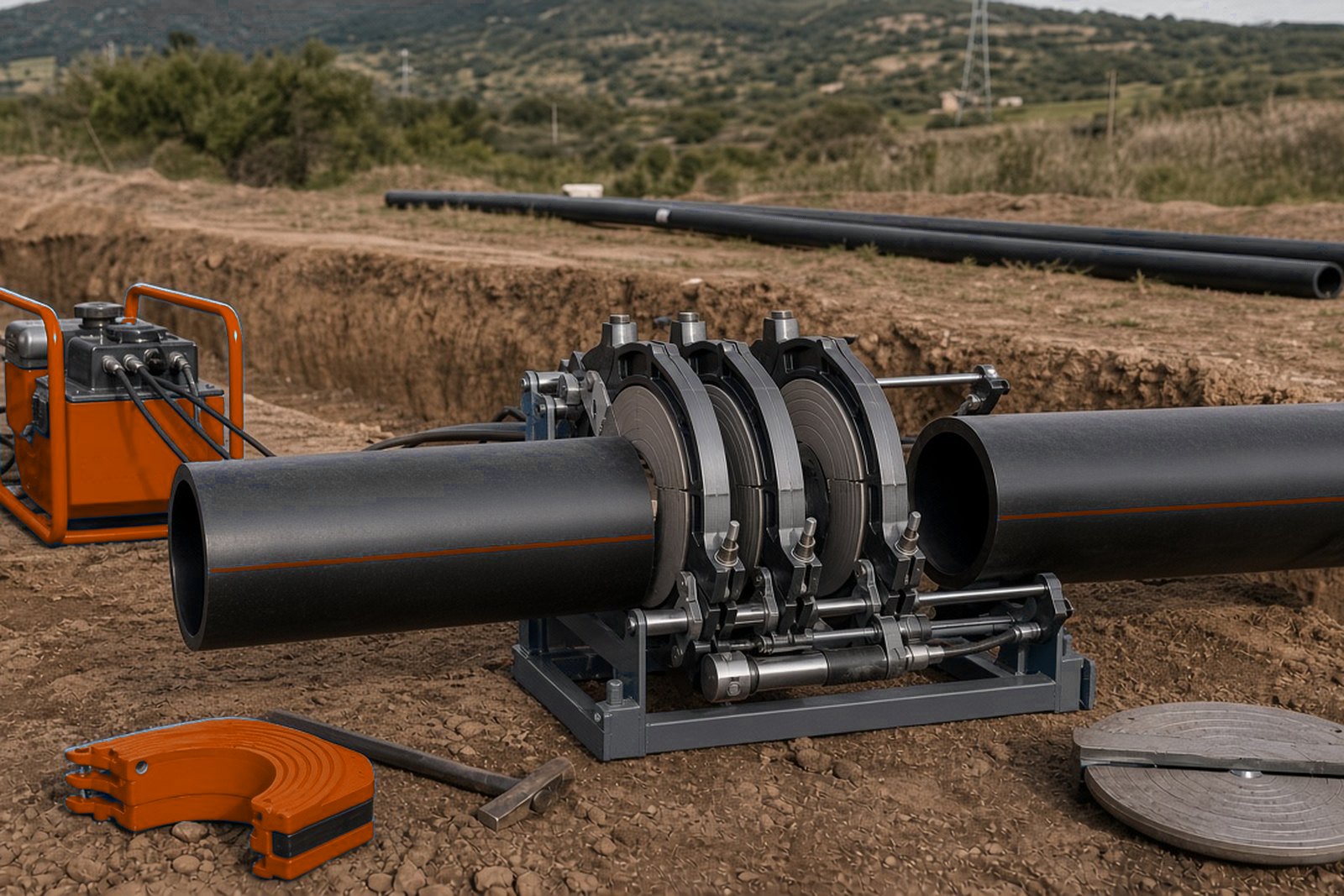
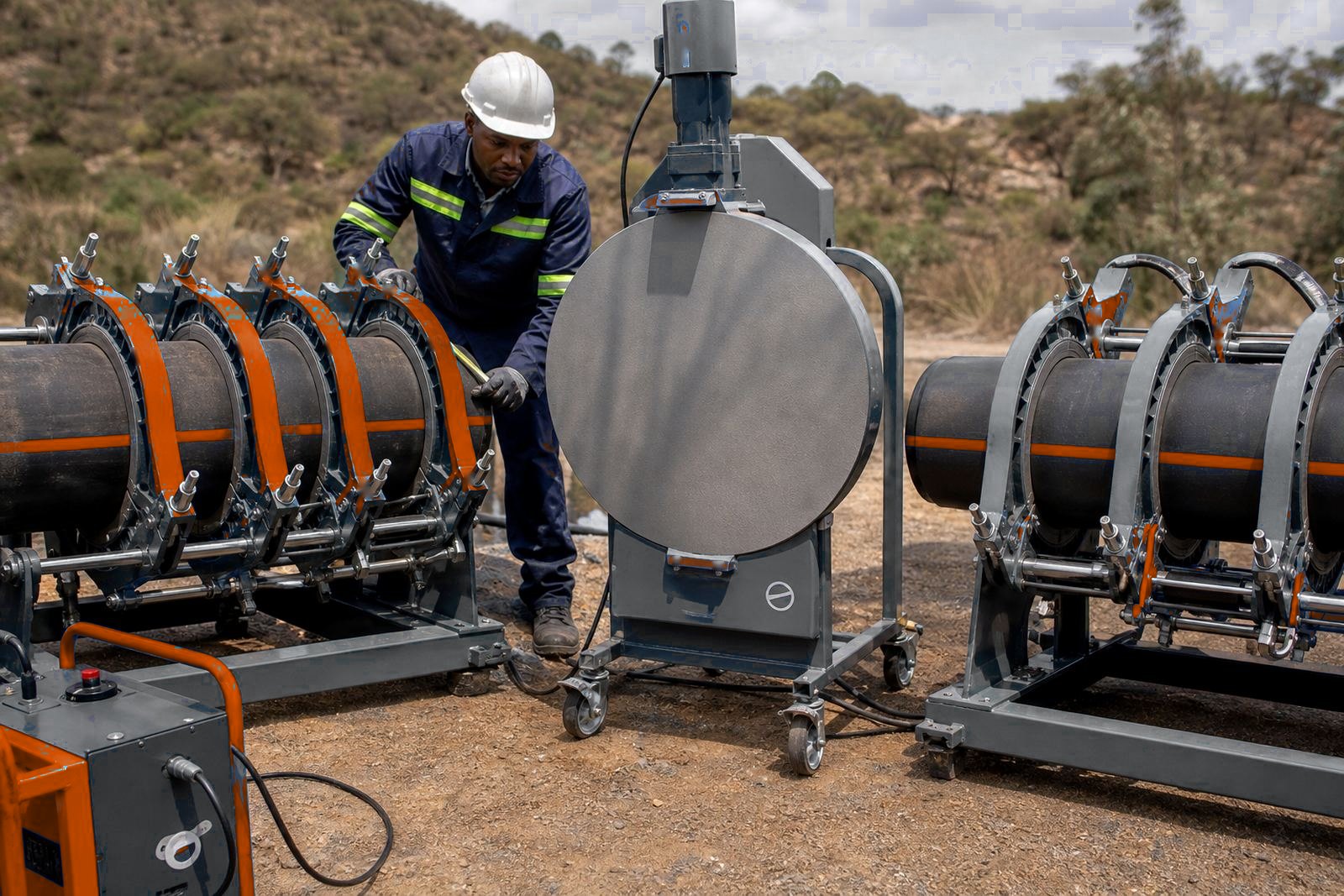
This large-format heating tool is for HDPE butt-fusion work on bigger pipe sizes.
Large-diameter pipe needs plate mass and coverage that hold temperature across the full contact area. That helps avoid cold bands, patchy melting and uneven bead formation on the outside edge. The operator sets the plate for the pipe wall thickness and SDR, and for the nominal diameter. That detail affects heat soak, bead build and the way pressure is held during fusion and cooling.
Contractors on bulk water lines use the 630mm plate where smaller plates are too limited. Order the 630 plate to suit the machine frame and the pipe programme being used, since the plate face and mounting differ between models.
Typical size range and build details
Contractors choose it for large-diameter HDPE pipe work in the upper range of fusion machines. Compatibility of the 630mm plate is fixed by the clamp set, machine frame and pipe OD. The working surface must suit the required diameter with enough allowance for thermal transfer and consistent bead formation.
- Nominal heating face for 630mm pipe work
- Suitable for PE pipe and fittings in matching SDR ranges
- Used with facer, clamps and fusion control setup
- Surface finish suited to clean, even heat transfer
- Supplied for workshop use and site welding sets
Options can include plate width matched to the frame, handle configuration, temperature control arrangement and lead length to suit the machine setup. Contractors moving the unit between sites need the carrying frame and protection case. For coastal work around Durban or Cape Town, store the plate dry and covered, because humidity and salt air corrode bare metal.
Jobs the 630mm plate suits
This heater plate is used where large-diameter HDPE joints are part of the job scope. A common example is long municipal water reticulation. Shop floor setup work suits it where pipe strings are fused before going out to site.
A 630mm heater plate plays its part in that sequence by giving the operator a stable thermal face over a wide diameter.
- Water transfer lines and bulk supply sections
- Large SDR pipe runs with matching wall thickness
- Sites needing logged weld data and traceable setup notes
Where weld logs are being kept, the plate temperature, soak period, changeover time and cooling period all need to be recorded with care. That makes the tool choice and the condition of the heater face part of the final weld record.
Installation, fitting and machine compatibility
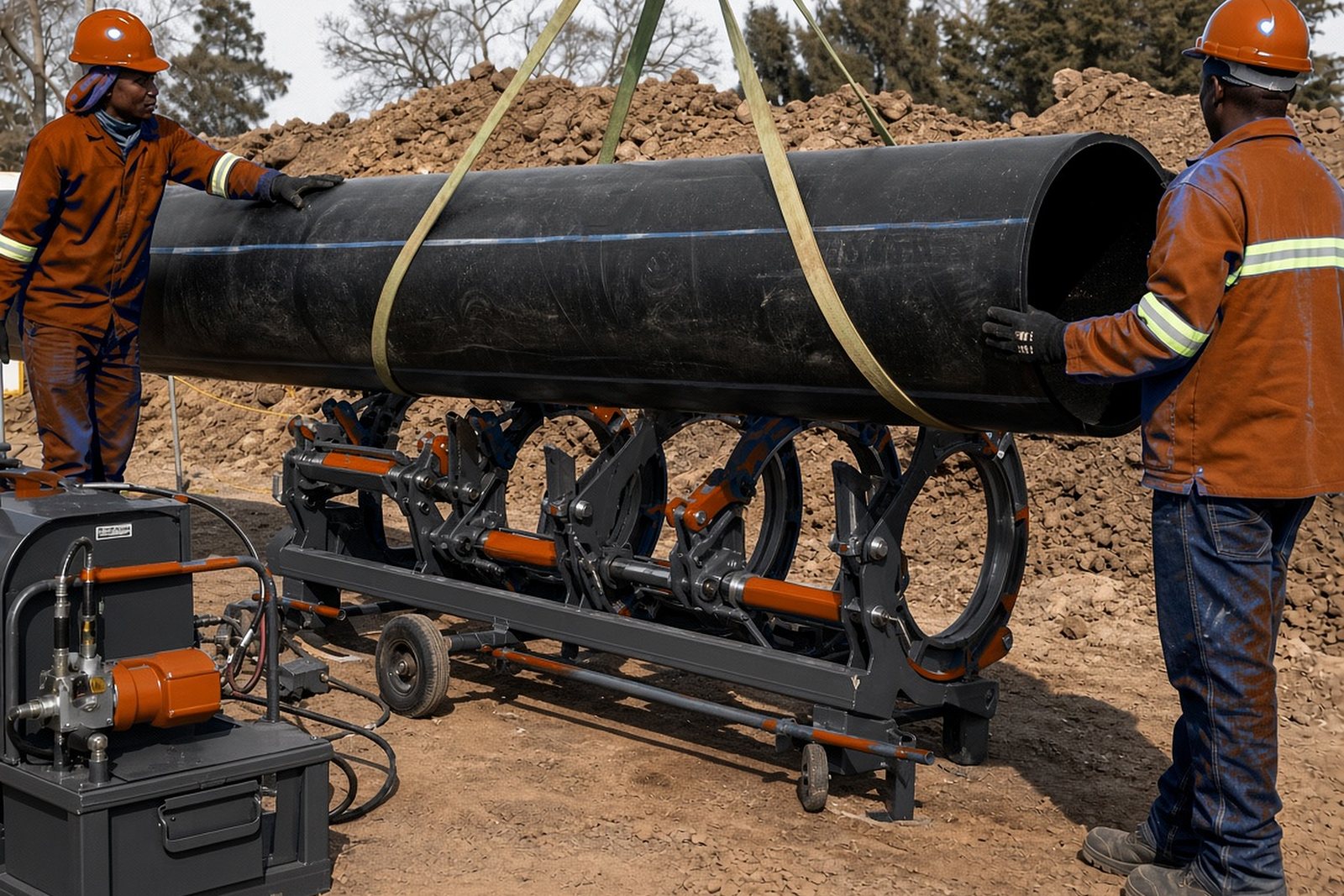
The plate has to fit the welding machine frame properly and sit square in use. The plate needs the correct carrier or mounting, sound temperature control and clean electrical connections where the machine uses mains power. The operator must also confirm that the plate area is appropriate for the pipe diameter being welded and that the clamping setup holds the pipe without twist.
For fitting on site or in the workshop, the surface must be clean and free of old polymer build-up before work starts. Bent, scored or worn 630mm plates heat unevenly, which shows in the bead. With larger pipe, small faults become more visible because the contact area is larger and the bead profile is easier to read.
- Check frame fit and mounting points before use
- Confirm temperature setting against the weld procedure
- Inspect the face for scratches, distortion or coating damage
- Use the correct changeover method to avoid heat loss
Care, storage and service work
The face should be wiped clean after use while it is still manageable, then stored so dust, grit and moisture do not sit on the coating. Dropping the plate or dragging it across steel marks the edge and affects flatness.
Routine care usually includes heater plate checks, lead inspection, temperature verification and a look at the handles or mounting points. Small faults on large-bore jobs turn into poor heat transfer and slow setup. A plate running hotter on one side or forming an uneven bead needs workshop service.
- After each shift, keep the heating face dry and free of dirt
- Store it in a case or padded cradle
- Inspect for warp, scoring and burnt polymer build-up
- Check temperature control and wiring before loading out
- Book service if the heat pattern looks uneven
Servicing for this plate is done in-house. For hired sets, the heater plate is checked with the rest of the fusion kit and its condition is recorded on the hire sheet.
Checks before you order a 630mm heater plate
Plate matching needs pipe diameter, SDR range, machine frame and whether use is workshop, hire or field. State the face type, mounting arrangement or replacement need for your existing setup.
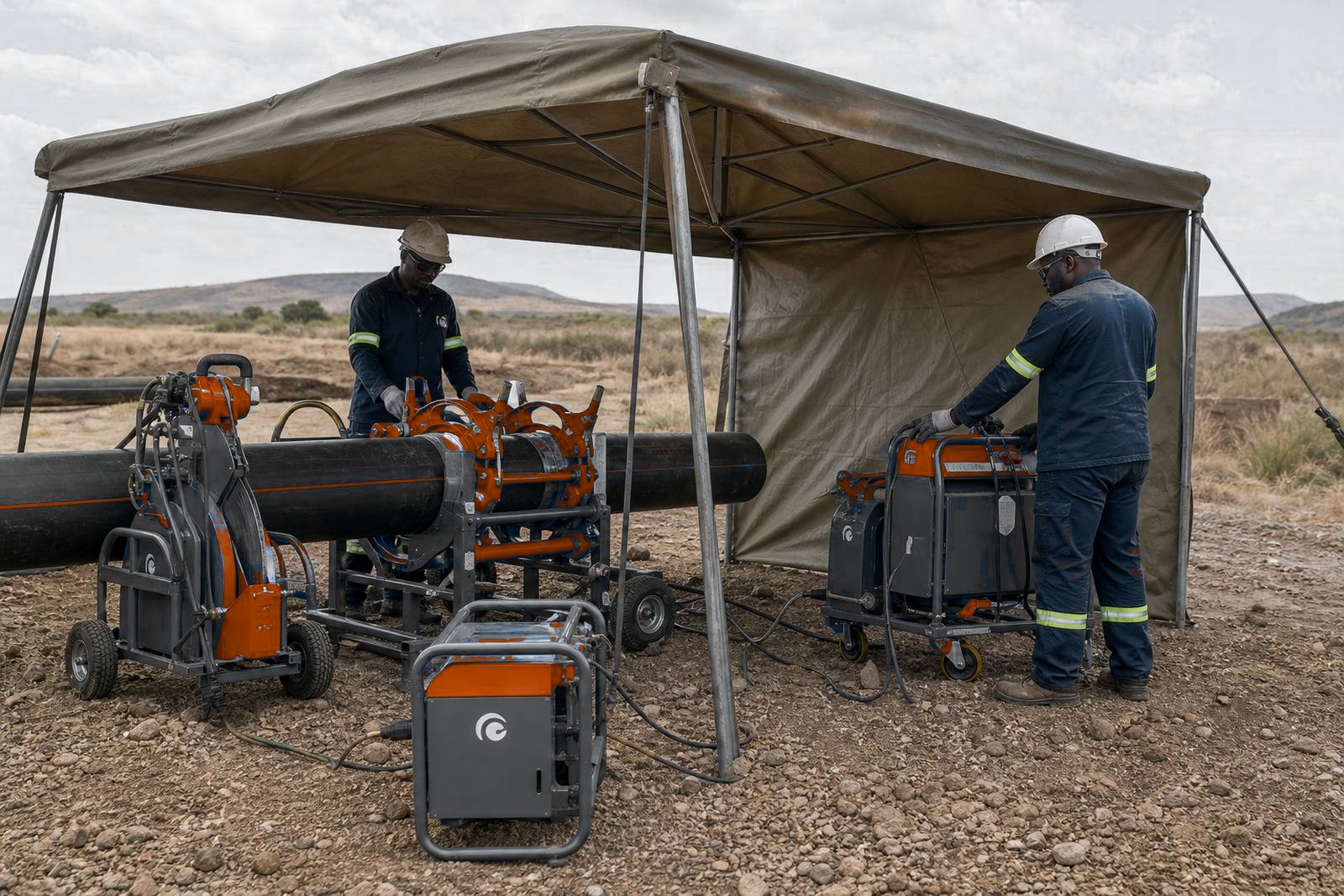
On larger HDPE work, the bead profile, heat soak and cooling control all depend on the full system. A 630mm heater plate works with the facer, clamps and hydraulic pressure setup so the weld holds together properly.
- Pipe OD and wall class or SDR
- Machine make-up and clamp capacity
- Heater plate face size and mounting style
- Temperature control method and power supply details
- Required accessories, carry case or cable length
Leanne Matlala supervises servicing on the 630mm plates.
Key facts
| Product | 630mm heater plate |
|---|---|
| Use | HDPE butt-fusion heating for large-diameter pipe |
| Compatible work | Heating 630mm pipe faces |
| Pipe range | Matched to 630mm class jobs and suitable SDR ranges |
| Power | Mains-powered heater assembly on compatible machines |