What the Site Hire Rig brings to a fusion crew
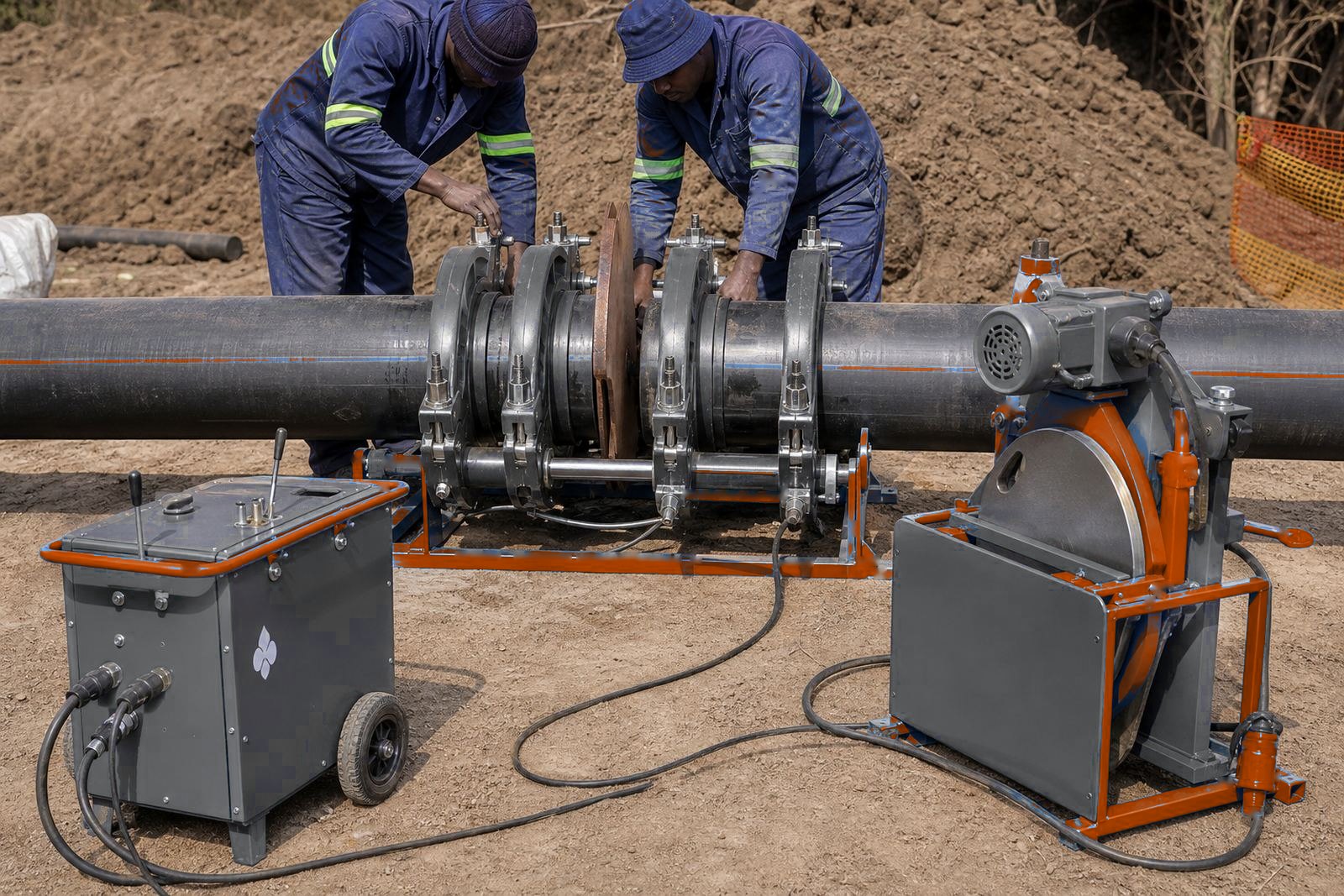
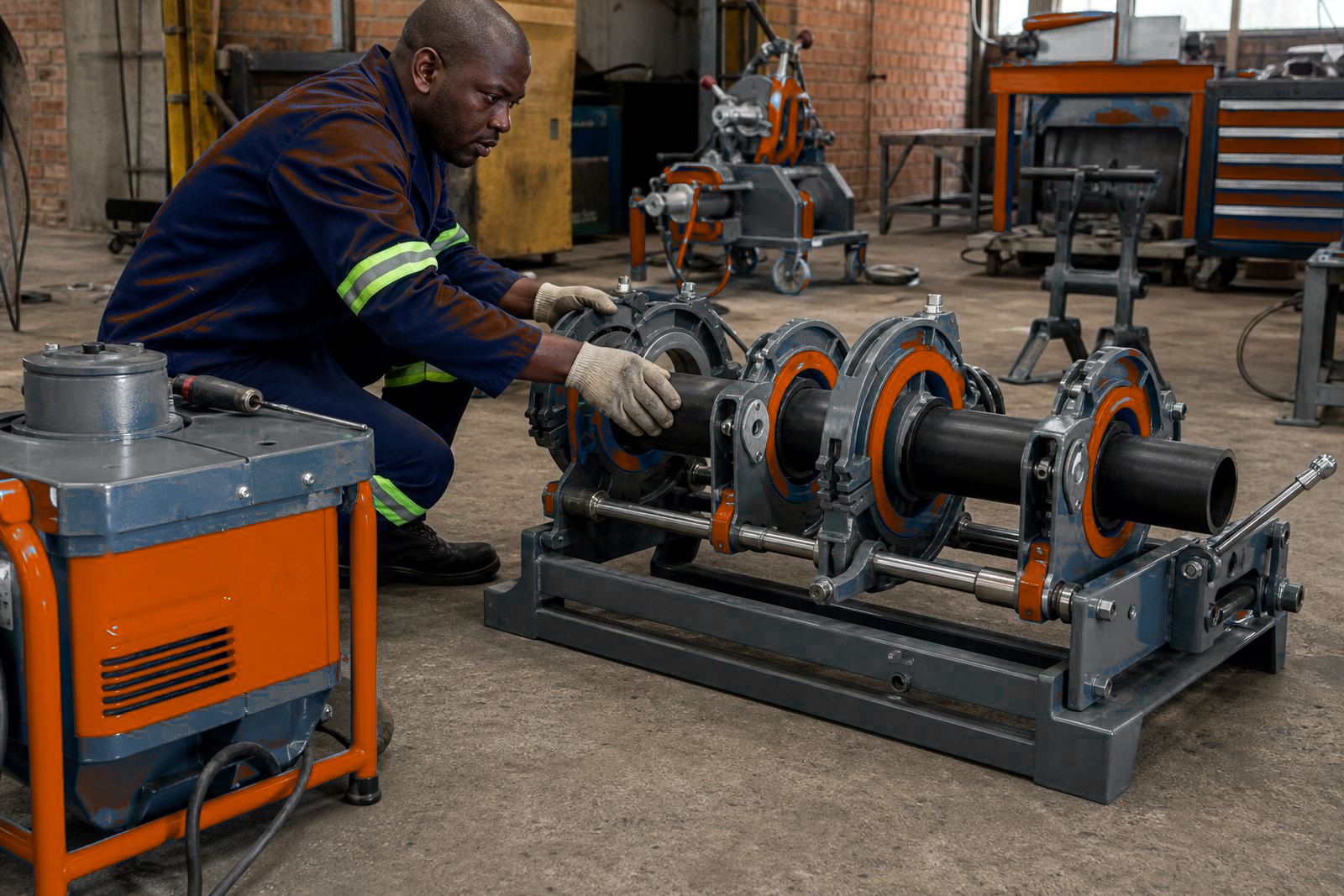
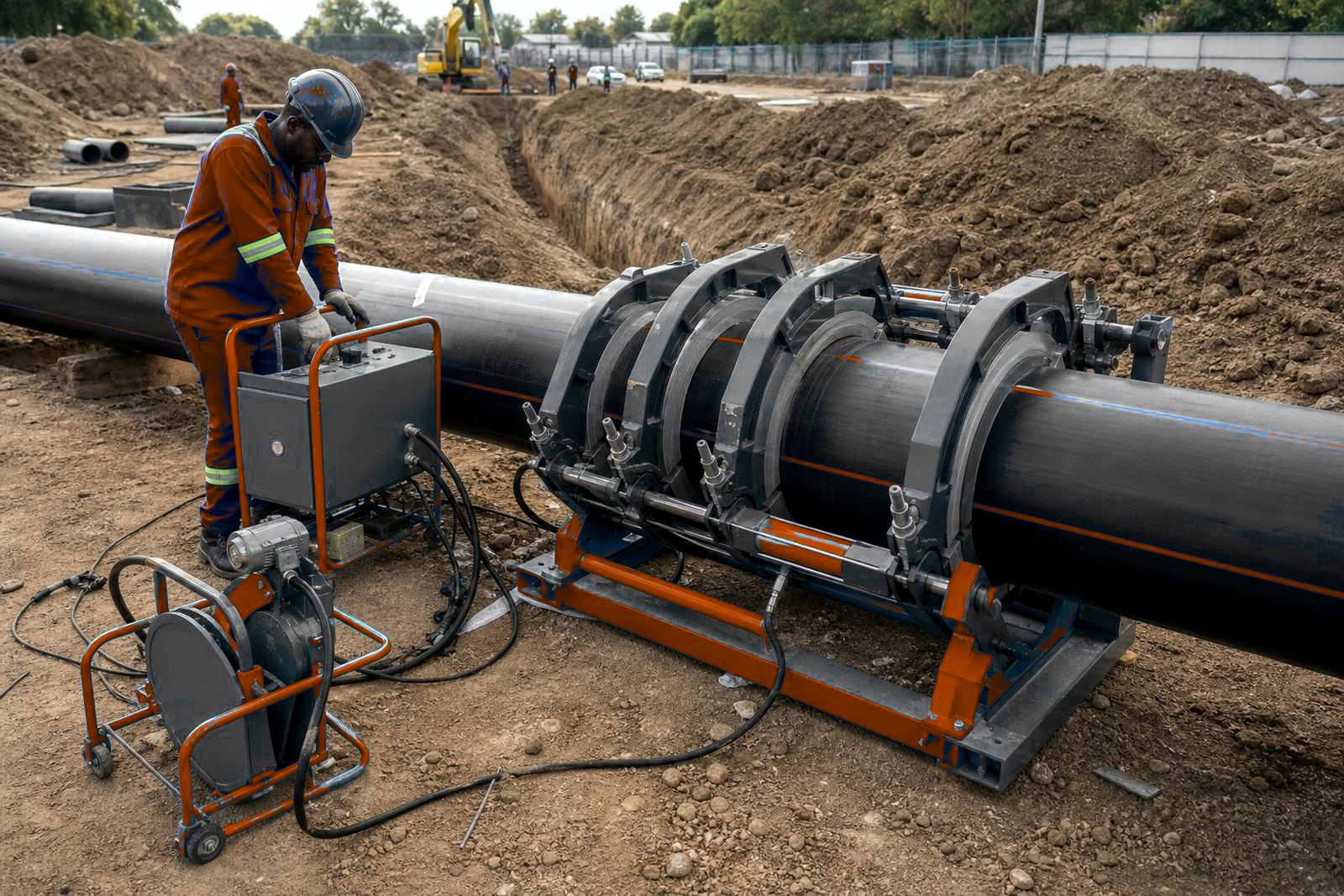
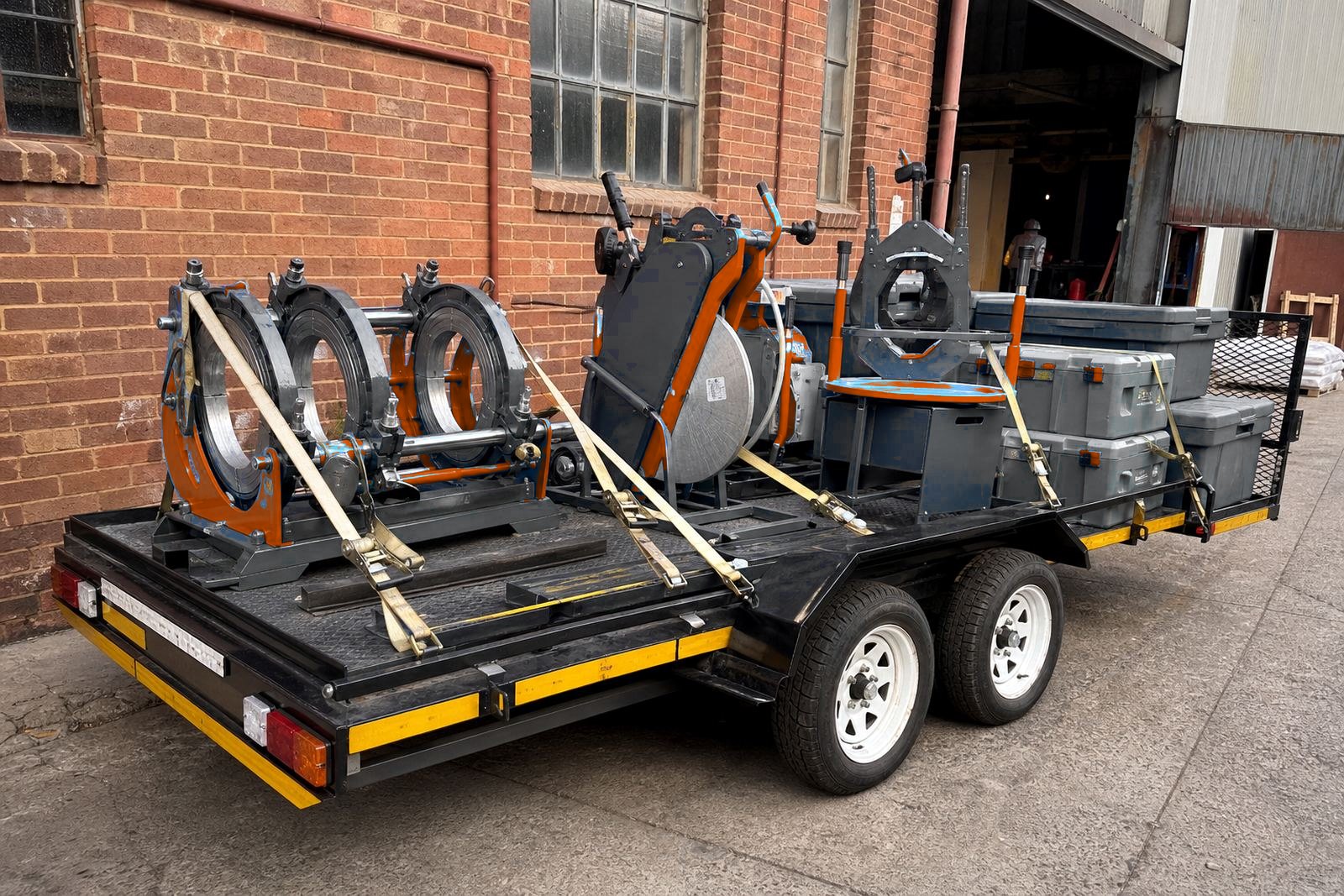
This hire package is put together for crews joining HDPE pipe by butt fusion on site. The rig brings the welding machine, heater plate, facer and the clamping set needed to hold the pipe ends square while the joint is prepared, heated, changed over and fused under the right pressure. Practical kit for trench work, yard work and long pipe runs where the weld is made at the pipe on site.
The machine setup supports the usual butt-fusion cycle. Pipe ends are faced to remove ovality and contamination, the heater plate brings both ends to fusion temperature, and the heater is removed for the changeover before the pipe ends are brought together at controlled fusion pressure.
- Complete hire package for butt-fusion welding of HDPE pipe
- Includes machine, heater plate, facer and clamp set
- Used where pipe ends must be faced, heated and fused in sequence
Pipe sizes, SDR ranges and the jobs it fits
Pipe diameter sets the clamp package and the machine size, so the hire rig is chosen to suit the line. On smaller water jobs it is handy for neat pipe work in service corridors. Wider diameters use the same method with longer heat soak and cooling.
The rig suits HDPE pipe across common SDR classes, provided the fusion parameters are set for the pipe wall and diameter in front of the crew. Set the pressure, the soak time on the heater plate and the cooling period before the joint is moved or loaded. The rig supports weld logging notes and basic traceability checks for each joint.
- Used on smaller service lines and larger diameter site pipe
- Works across common SDR pipe classes with correct settings
- Suitable for open site assembly
- Supports weld logging, bead checks and joint trace notes
When site hire makes sense
This rig suits contractors who need a dependable fusion package on site without setting up a full workshop. Sticks of pipe, changing weld bays and work around trenches, pump lines and culverts suit the rig. In coastal towns, humidity can leave dust and moisture on the pipe, so a clean faced end and a dry heater plate are needed. Inland, fine grit from civil sites can mark the fusion face if the pipe is handled roughly.
Pressure line repairs and reticulation work are common uses for the rig. Jobs where the crew needs supervised start-up help suit this too, because the fusion sequence has to be repeated properly every time. The hire package is compact enough for transport, yet complete enough to keep the weld station moving without borrowing missing pieces from other teams.
- Useful for trench tie-ins, shutdown work and line extensions
- Handy where crews move between sections of pipe during the day
- Works well in humid coastal weather and dusty inland areas
Setup and fitting details the crew should plan for
The machine needs a firm working area, enough room to line up the pipe and space for the facing stroke and heater exchange. The pipe must be supported so the ends stay concentric while clamping and facing take place. Long or uneven lines get extra supports or rollers to ease alignment. A dented heater face on a hire rig heats the pipe ends unevenly.
Site crews should also plan for power access where the machine model needs it, and for safe handling around moving pipe. Fusion work means pressing two ends together correctly. For recorded weld data, keep the pipe size, SDR, set temperature, pressure and cooling notes together for each joint.
- Needs a level work area with room for pipe alignment
- Pipe supports help keep the joint square during fusion
- Heater plate care affects heat transfer and bead formation
- Power access is part of planning where the machine requires mains supply
Care between hires and on the job
A hire rig lasts better when the heater plate is kept clean and the facer is cleared of swarf after use. Clamp faces should be checked for wear, hydraulic connections kept in good order and moving parts protected from grit. Mud packed round the guide bars makes alignment harder on the next shift. On coastal sites, moisture and salt air can mark exposed metal if the kit is packed away wet.
Before loading out, the crew should inspect the clamps, heater face, pressure system and cable or hose condition, then confirm that the right accessories are packed with the set. If a joint looks wrong, the bead shape, bead symmetry and cooling hold should be checked before the line is moved on. Reading the bead tells the operator whether the ends were clean and fused under control.
- After each shift, keep the heater plate dry and clean
- Clear the facer and protect moving parts from grit
- Check clamp wear, hydraulic condition and alignment before loading
- Look at bead shape, symmetry and cooling hold on each joint
Details to confirm when you place a hire order
Pipe outside diameter, wall thickness or SDR, number of joints, site location and whether the job needs logging support guide the right rig for the work. Knowing whether the crew is welding in a trench or along an open run helps us set up the rig, since handling and support can change. Elbows, tees and frequent tie-ins add handling and inspection time between welds.
Our hire counter also needs to know whether the job calls for start-up guidance before the rig moves out. Some crews want the package ready for immediate site use, with the heater plate checked, facer serviced and clamps aligned. Others need help setting the sequence for the first few welds, especially where pipe size changes or where site access is tight.
- Number of welds and the site location
- Whether the job needs a checked, ready-to-run hire package
Key facts
| Product type | HDPE butt-fusion site hire rig |
|---|---|
| Core inclusions | Fusion machine, heater plate, facer and clamp set |
| Typical use | Hired welding rig for site work |
| Pipe range | Matched to diameter and SDR for the job |
| Controls and checks | Fusion pressure, changeover, cooling and weld logging |
| Support options | Operator training |