Holding smaller HDPE pipe true in the frame
Reducer clamp sets are made for butt-fusion work where the main machine frame is sized for a wider range, but the pipe being welded sits below the standard clamp opening. The reducer inserts close that gap and let the jaws grip smaller SDR pipe without slack, twist or oval movement while the weld cycle runs.
In practical use, the pipe has to stay centred through facing, heating, changeover and fusion pressure. Pipe that rocks in the frame meets out of square. A proper reducer set gives a tighter fit around the pipe wall and keeps the joint line where it should be.
- Used with butt-fusion frames that take interchangeable clamp sizes
- Supports smaller OD pipe within a larger jaw set
- Helps maintain concentric alignment before and during fusion
- Useful on site, in the yard, or in a repair bay
Sizes, wall sections and machine fit
Reducer clamps are selected by the outside diameter of each pipe end. For HDPE, the outside diameter and SDR must be checked together because wall thickness changes the way the pipe sits in the clamp and how much support it needs at the fusion face.
We stock reducer clamp choices for the smaller HDPE pipe sizes. Frame, jaw opening and the pipe size your crew handles most often point to the right set. On some machines it is an insert. On others it is a matched ring or liner that settles into the main cradle.
- Common use ranges include smaller HDPE diameters used on site repairs and branch lines
- Fit must suit the frame, clamps and carriage travel
- Enough pipe surface is left for a clean facing cut through the reducer insert.
Where reducer clamps are used
These sets let a contractor weld mixed pipe sizes on the same machine. The clamps suit service runs, drains and transfer work where the pipe size changes from job to job. In coastal towns the clamp surfaces also need to stay clean and dry, because humidity and salt air leave fine corrosion on untreated steel parts.
Reducer clamps are also practical for training units. When a machine travels from one job to another, the reducer set allows the same frame to handle different pipe sizes without forcing a rough fit. Setup is quicker and the welding line stays consistent on jobs where the crew is already moving pipe, fittings and generator sets around the yard.
- Water and sewer contractor work
- Size changes at fittings and branch takeoffs
- Joins between two pipe classes on one line
Fitting notes for a clean butt-fusion setup
Reducer clamps must seat flat in the machine and lock without play. Before welding, the pipe ends should be cut square, the outside surface wiped clean and the clamping area checked for grit or stone dust. Slipping pipe in a reducer lets the joint drift and the bead form unevenly.
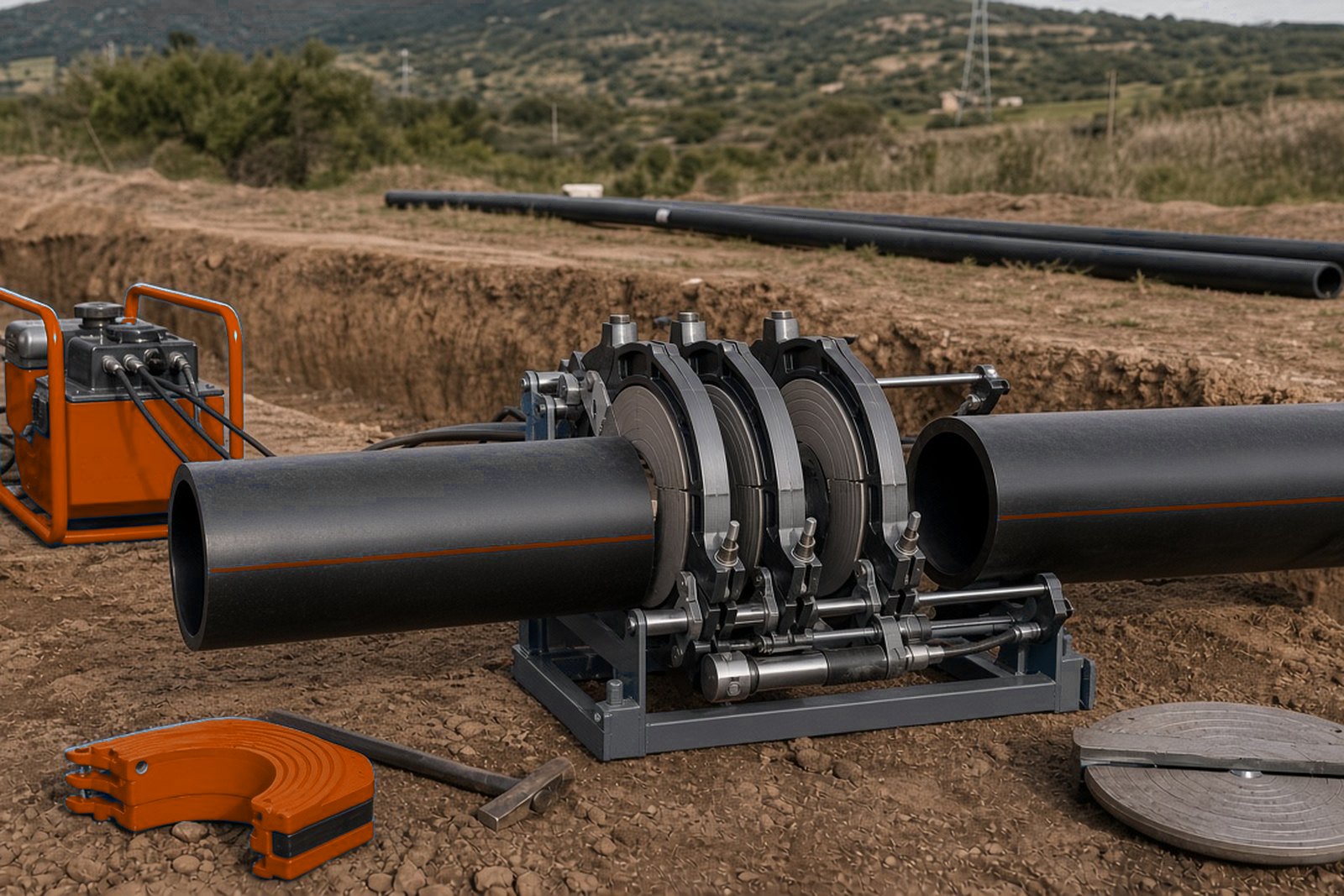
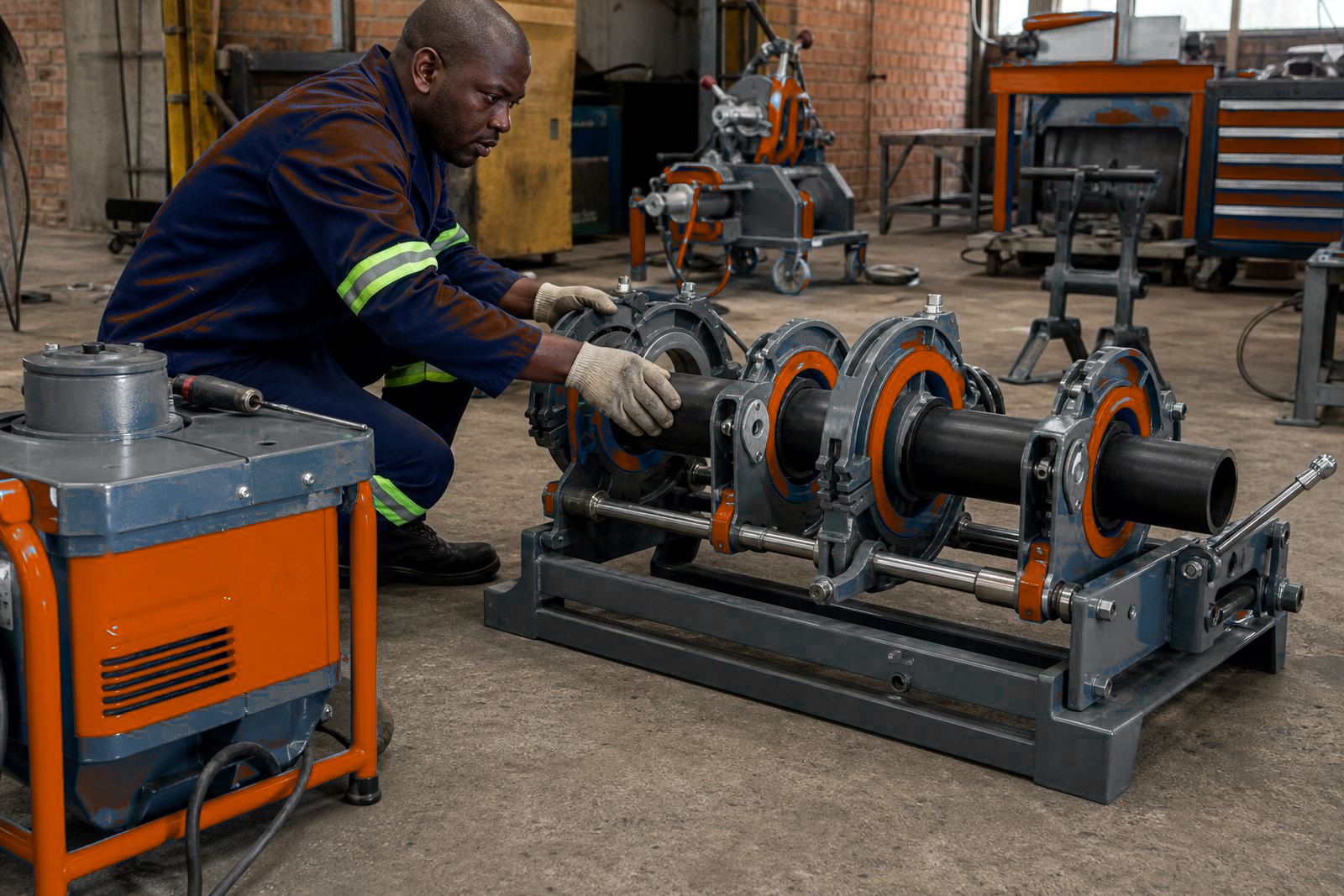
A reducer insert seats the smaller pipe size in the clamps while the machine runs the weld.
- Check clamp seating before the first face cut
- Keep the inner jaw surfaces free from mud and swarf
- Use matching reducer pieces on both sides of the frame
Care on the yard and on site
Reducer clamps last longer when the contact faces are kept free of welding spatter, sand and fine metal dust. After use, wipe them down and inspect the locking surfaces for wear marks. In damp stores or coastal depots, a light protective coat on steel parts helps reduce rust on the working faces and fasteners.
Check the clamp inserts for any damage where the pipe bears against them. A bent or scored reducer can leave a poor grip on the pipe wall, especially on thinner SDR pipe. Secure reducer clamps in transport so they do not bounce against the frame.
- Clean the working faces after each job
- Inspect locking points and bolt holes for wear
- Store in a dry place with the machine or accessory kit
- Keep a record of any cracked or bent inserts
What to confirm before ordering reducer clamps
Reducer clamp matching needs the frame type, OD range and most common SDR. Know whether the clamp is for workshop use, field repairs or a fixed truck setup. Some machines take a full ring insert, while others use a split reducer piece with a different locking pattern.
When the details are clear, we can match the clamp set to the frame and make sure it supports the pipe properly during fusion.
- Machine make and frame size
- Single size or mixed size job list
- Which machine the set will stay on
Key facts
| Product type | Reducer clamp set for HDPE butt-fusion machines |
|---|---|
| Use | Smaller pipe sizes held inside a larger machine frame |
| Pipe range | Matched by outside diameter and SDR |
| Material | Steel clamp body with machined or lined contact surfaces |
| Typical use | Welding smaller pipe in a larger machine |