Keeping the pipe ends true before the first cut
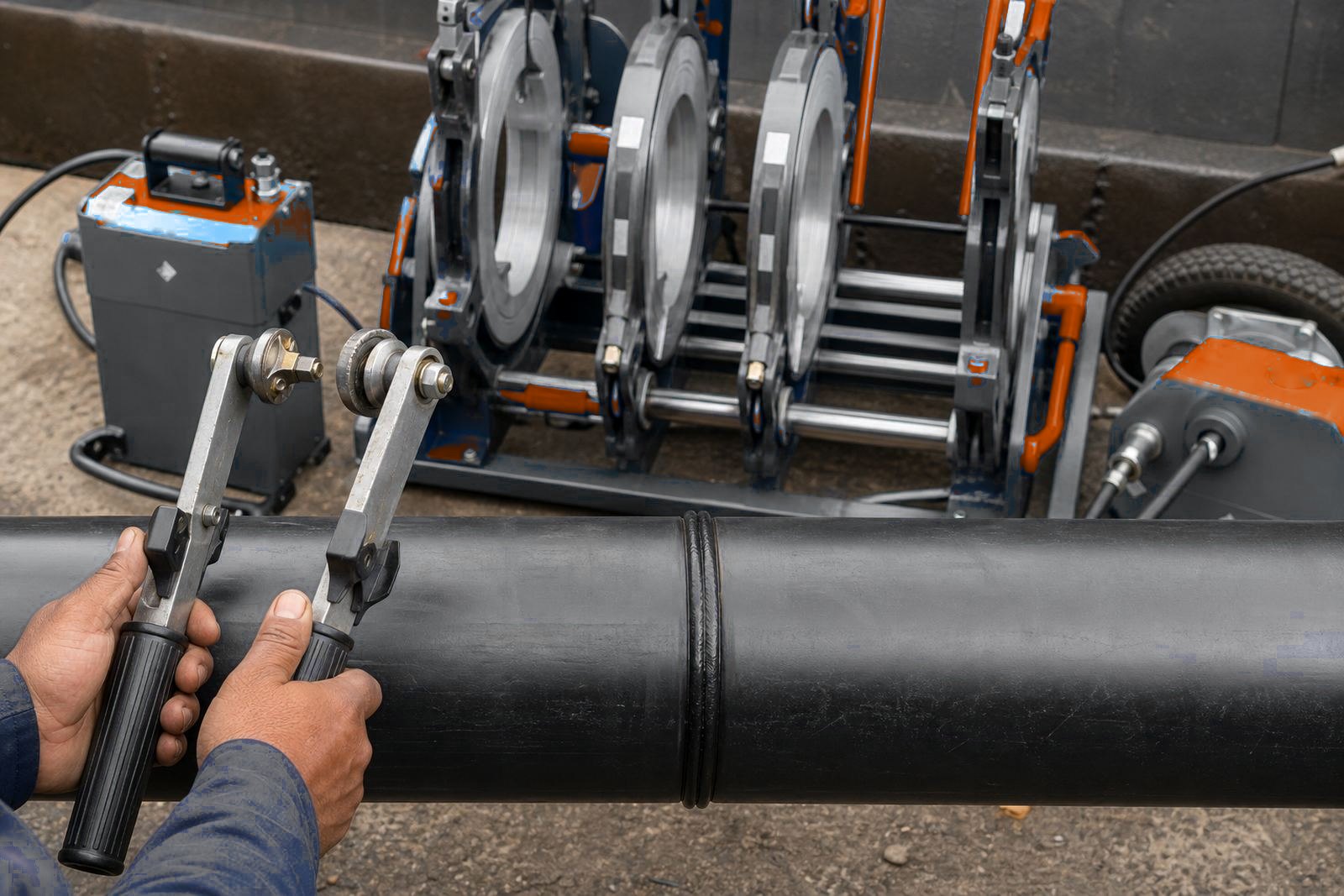
Pipe aligners hold two lengths of HDPE in line while the facer trims the ends. Crews need less hand pressure on the clamps and fewer small lifts under one side of the pipe. True pipe gives a clean facer cut and full plate contact.
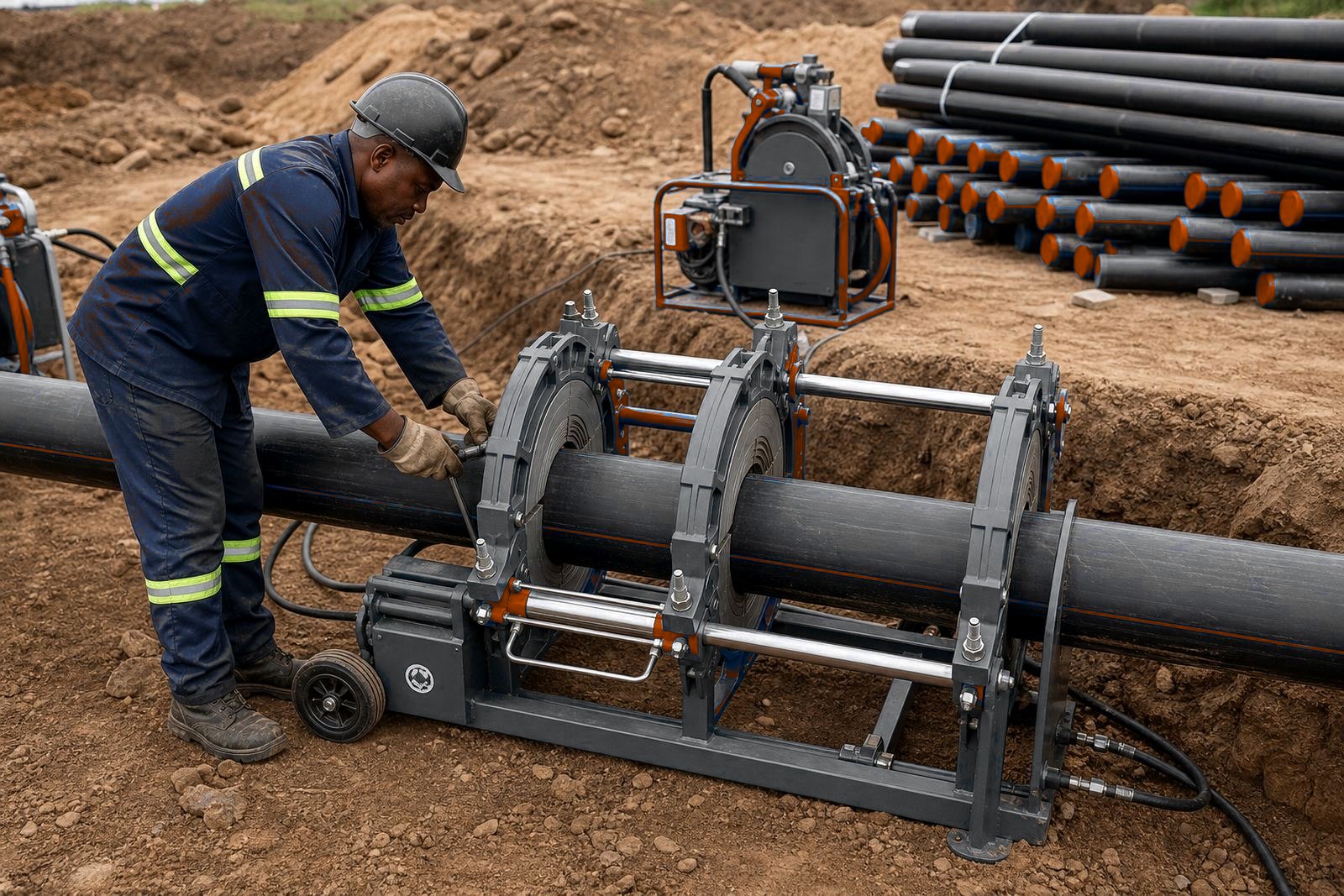
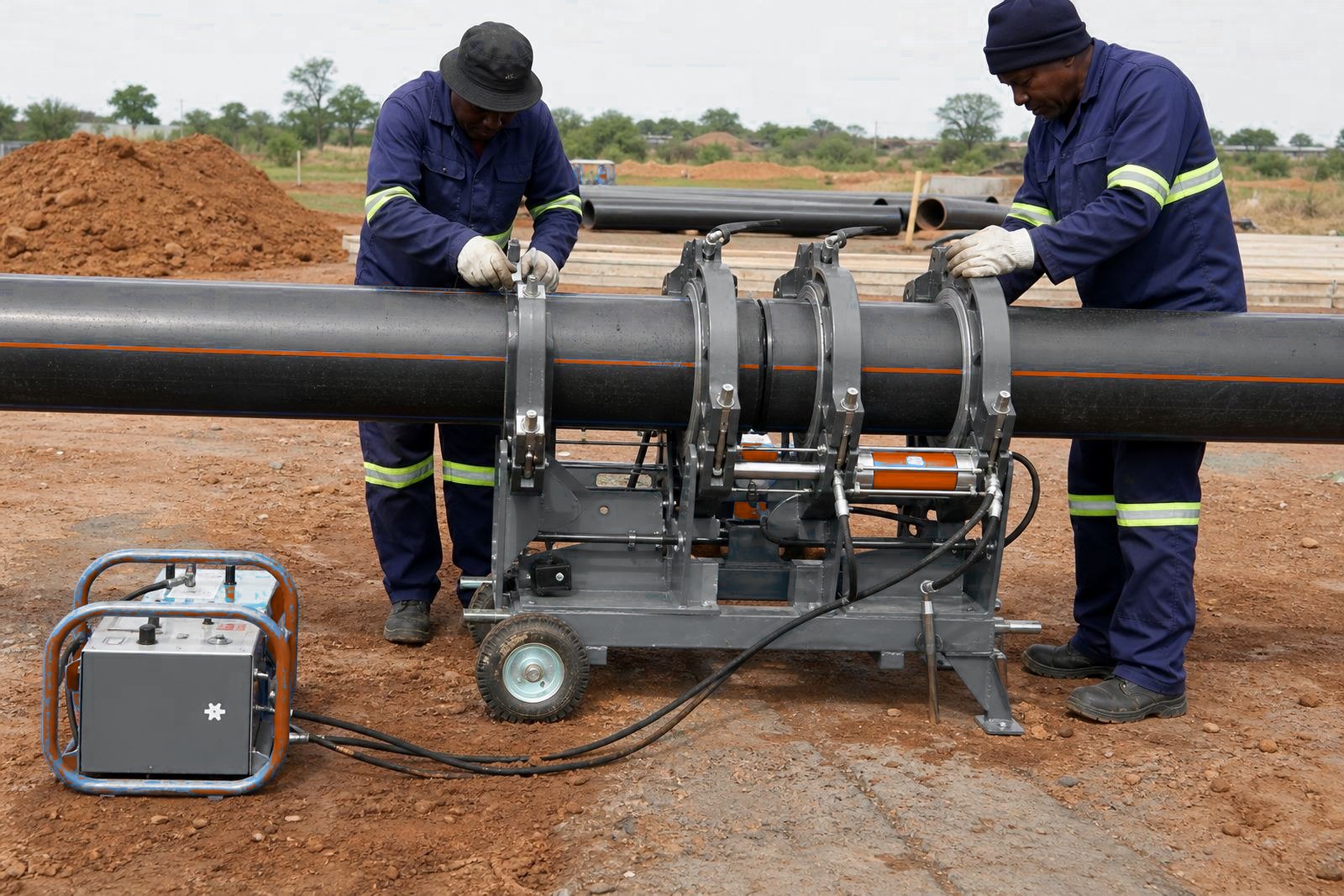
Pipe aligners are used with butt-fusion machines on trench work. They are set around the pipe, locked on, then adjusted so the pipe centres meet with even support. That helps the operator hold the fusion line straight through heating, changeover and the cooling period.
Sizes, clamp styles and working range
Pipe aligners are selected to suit the pipe outside diameter and the wall series in use. For smaller crews, a lighter frame makes it easier to position pipe in a trench or on a pipe rack. Heavier aligner frames with wider clamping faces steady large pipe as it is lifted into line.
- Aligners cover 63 mm to 630 mm, with larger sets for specific jobs.
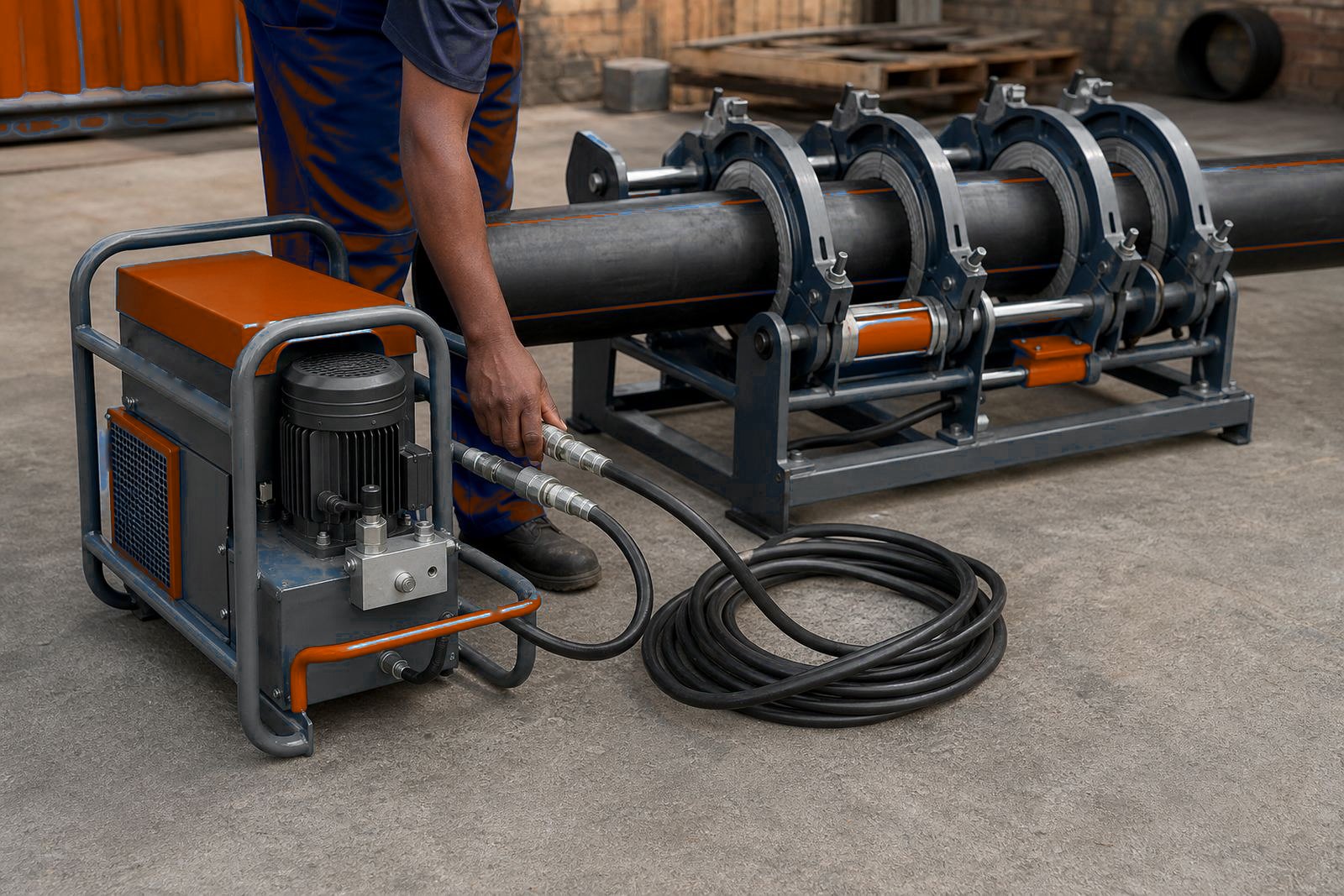
- Clamping can be manual or hydraulic, depending on the machine and pipe size
- Adjustable legs or support bars help on uneven ground and trench edges
- Frames are matched to SDR and pipe wall thickness so the grip is firm without marking the pipe
Short work lengths or long pipe rests with rear support are both available. A proper aligner keeps the pipe line stable, even when the site surface is rough or the pipe is lying slightly off level.
Where crews use alignment aids on site
Alignment aids hold a butt-fusion joint square from facing through to cool down. Trench sections with little room to join the pipe benefit most. They give a repeatable setup when multiple welds are lined up across a run.
On thinner wall pipe, even a slight drop on one side can upset the melt pattern. Set the aligners so the pipe sits level and fusion pressure stays even across the joint during changeover.
- Suitable for butt-fusion prep on HDPE pipelines
- Useful for shop-prepared spools and field joints
- Works with open-site welding setups
How the aligner fits into the fusion sequence
The aligner sits in the setup before the facer is brought in. Good alignment makes that pressure easier to hold because both sides meet evenly with no high spot on one edge.
A pipe that has moved off line or sagged during the cycle can leave an uneven bead and a weaker visual finish. The aligner helps the operator keep the ends steady until the weld has set and the clamp can be released.
- Make sure both ends are level with each other and set at the same angle
- Hold position through heating, changeover and cooling
Care, cleaning and daily checks
Pipe aligners work hard in mud, dust and wet trench conditions, so they need regular cleaning. Clamp faces should be wiped down after use, and moving parts should be checked for damage, corrosion or bent guide sections. On coastal jobs, give steel parts a light protective coat and store them dry, because salt air marks them faster.
Check hydraulic frames for leaks, hose wear and smooth movement before the shift starts. Pins, screws and clamp jaws should lock without play. A worn clamp face can let the pipe slip under pressure, which is a nuisance on site and can throw the face off line.
- Clean mud and grit from the clamp beds
- Inspect the clamp faces for scoring or wear
- Check bolts, pins and guide rails for looseness
- Store dry after work where possible
What to confirm before ordering
When a team orders pipe aligners, the pipe diameter range is the first detail to settle. Tell us whether the work is mostly small bore pipe or larger lines. The SDR range also shapes clamp grip and how the pipe sits in the frame, because wall thickness changes.
Say whether the aligner works with a specific machine, a separate facer or a hydraulic pack. If the job runs in a trench, on a pad or next to a live line, the ground clearance and leg height should be checked before the frame leaves the shop. Alignment notes can join the weld log with size, pipe class and joint number.
- Manual or hydraulic clamp preference
- Working position, trench depth and ground condition
- Compatibility with the machine, facer and heater plate in use
PlasticWelder supplies pipe aligners for HDPE butt fusion. Our team also does field checks linked to butt-fusion work.
Key facts
| Pipe size range | 63 mm to 630 mm, with larger options on request |
|---|---|
| Pipe material | HDPE pipe for butt-fusion welding |
| Clamp operation | Manual or hydraulic, depending on set and diameter |
| Frame use | Keeps pipe ends level for facing and heating |
| Typical site use | Lining up pipe before clamping |